Engineered Heavy-Duty Shelving & Industrial Racking Systems
Direct-from-mill, dimensionally calibrated storage architectures. Every upright frame, roll-formed profile, and dynamic beam is engineered to withstand rigorous cycle fatigue, severe seismic spectrums, and concentrated load thresholds.
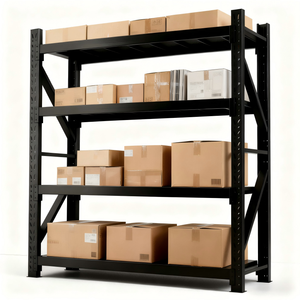
Adjustable Industrial Warehouse Stacking Racks & Shelves Cargo & Storage Equipment Multi Tier Storage Rack Shelving Units
Steel Grade: Q235B / Q355B
Payload: 500 - 2,500 kg/tier
Adjustment: 50mm / 75mm Pitch
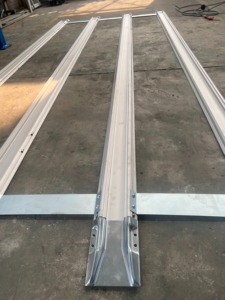
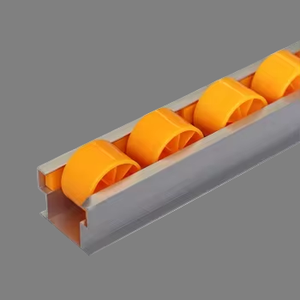
First in First Out Gravity Flow Lane Aluminum FIFO Rack Rail System for Warehouse Picking
Track System: Extruded Al-Alloy
Incline Slope: 2.5% - 4.5% Calibrated
Roller Type: Impact-Resistant POM
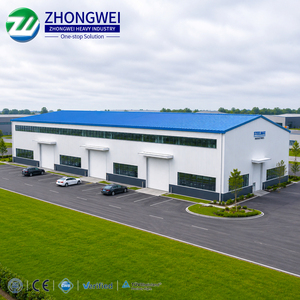
Steel Structure Building Large Span Warehouse For Industrial Storage And Logistics Warehouse Storage
Structural Bay: Up to 48m Clear Span
Wind Tolerance: Up to 0.75 kN/m²
Design Life: 50+ Years Structural
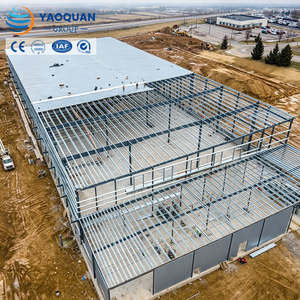
Prefab Steel Frame Cold Storage Logistics Warehouse Distribution Center Building With Mezzanine Floor Racking System
Temp Rating: Down to -30°C Oper.
Floor Loading: 300 - 1,200 kg/m²
Decking: Galvanized Grating/Plate
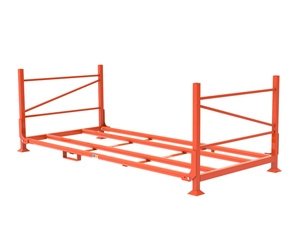
China Factory Direct Steel Pipe Storage Heavy Duty Cantilever Rack for Sale
Arm Capacity: Up to 1,500 kg/arm
Profile: H-Beam Welded Steel
Application: Pipes, Profiles, Timber
Racking System Gravity Flow Racks Pallet Flow Roller Shelving Carton Flow Industrial Warehouse Modular Metal Heavy Duty Storage
Braking: Integrated Speed Brakes
Density Gain: +60% Volume vs Static
Throughput: Strict FIFO Automation
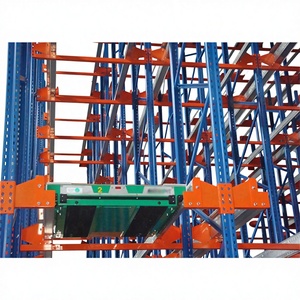
Heda High Density Shuttle Rack System Shuttle Racking System Double Deep Steel Pallet Rack Storage Racking System
Carrier Speed: 0.8 - 1.1 m/s (Loaded)
Battery: Lithium-Ion Quick-Swap
Channel Depth: Up to 40 Pallets Deep
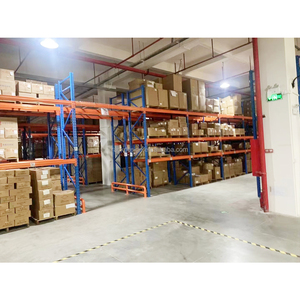
Warehouse Industrial High Bay Selective Heavy Duty Racking Systems Industrial Storage Shelves 24" Pallet Rack Upright
Clear Access: 100% Pallet Selectivity
Height Reach: Up to 15m Continuous
Safety Standard: FEM 10.2.02 / RMI
Metallurgical Integrity, Structural Finite Element Analysis (FEA), and Load Deflection Mechanics
In high-bay industrial distribution centers and commercial logistics facilities, industrial racking systems function not as passive furnishings, but as safety-critical structural steel frameworks. As a certified OEM/ODM producer, our manufacturing methodologies are governed by international structural engineering mandates including EN 15512:2020 (European Steel Racking Code), RMI ANSI MH16.1:2021 (Specification for the Design, Testing and Utilization of Industrial Steel Storage Racks), and AS 4084:2023 (Steel Storage Racking Standards).
Critical Engineering Principle: Every structural profile is designed to limit vertical beam deflection to less than L/200 (where L is the clear span distance between columns) under maximum rated uniformly distributed load (UDL). Upright column stability factors integrate second-order P-Delta structural effects, torsional flexural buckling criteria, and dynamic forklift impact resistance margins.
Raw steel selection forms the backbone of structural safety. We strictly source prime coils of structural carbon steel conforming to standard GB/T 700 Q235B and high-strength low-alloy structural steel Q355B (equivalent to EN 10025-2 S355JR and ASTM A572 Grade 50). With nominal yield strengths exceeding 355 MPa and controlled chemical compositions minimizing sulfur and phosphorus embrittlement, our upright extrusions absorb high kinetic impacts without brittle micro-fracturing along cold-rolled bends.
| Racking Architecture | Primary Cold-Formed Steel Profile | Nominal Steel Yield Strength | Dynamic Safety Factor (RMI / FEM) | Corrosion Protection Regimes | Primary Industrial Sector |
|---|---|---|---|---|---|
| High-Bay Selective Racking | Omega-Section Uprights (90-140mm width, 1.8-3.0mm thickness) | 355 N/mm² (Q355B Hot-Rolled Strip) | 1.65 – 1.95 Ultimate Limit State | Pre-treatment + 80μm Polyester Powder | Third-Party Logistics (3PL), Fast-Moving Consumer Goods |
| Heavy-Duty Cantilever | Hot-Rolled H-Beams / Welded Box Profiles | 235 – 355 N/mm² Structural Flange | 1.80 Structural Arm Inelastic Ratio | Outdoor Hot-Dip Galvanizing (85μm min) | Structural Steel Pipes, Timber Bundles, Heavy Coils |
| Multi-Tier Mezzanine Platforms | Composite C/Z Purlins, Heavy Universal Beams | 355 N/mm² High-Tensile Structural Deck | 2.0 Live Dynamic Floor Loading | Zinc-Phosphated Electrostatic Shield | E-Commerce Fulfillment Centers, Automotive Spare Parts |
| Radio Shuttle Automation | Continuous Cold-Formed Shuttle Guide Rails | 355 N/mm² Wear-Resistant Micro-Alloy | 1.75 Cyclic Dynamic Impact Factor | Dual-Stage Anti-Oxidation Primer + Topcoat | Refrigerated Cold Chains (-30°C), Food & Beverage Hubs |
| FIFO Gravity Pallet Flow | Sloped Cold-Formed Structural Channel | 235 N/mm² Base Structural Steel | 1.60 Continuous Rolling Load Margin | Pickled & Phosphated Polymer Coat | Pharmaceutical Cleanrooms, High-Turnover Perishables |
Emerging Engineering Paradigms & Global Procurement Trends
Strategic warehouse infrastructure is shifting from static steel skeletons to automated, data-integrated intralogistics ecosystems. Analyze how modern manufacturing hubs are navigating these macro shifts.
1. High-Tensile Thin-Walled Micro-Alloys
Global procurement directors increasingly demand optimized weight-to-payload ratios to compress landed maritime freight costs without compromising structural safety. Modern continuous roll-forming lines leverage advanced high-yield micro-alloyed steels, enabling 15% thickness reduction while retaining identical section moduli.
- Reduced deadweight structural loading on building slabs
- Lower CO₂ embodied carbon per pallet capacity
- 40HQ ocean shipping volume optimization
2. AMR & AS/RS Hybrid Integration
The boundary between pure racking and material handling robotics has permanently dissolved. Next-generation shelving systems must feature tighter mill tolerances (±0.5mm) across laser-punched pitch alignments, accommodating high-speed Autonomous Mobile Robots (AMRs) and automated shuttle carriers operating along multi-directional axes.
- Dynamic shuttle track leveling within ±1.0mm per 10m
- Integrated optical guidance targets & RFID docking
- Extreme high-cycle fatigue dissipation design
3. Nanoceramic Corrosion Pre-Treatments
Environmental regulations and aggressive coastal warehouse environments (such as Latin American ports in Santos, Callao, and Valparaíso) are driving the phase-out of traditional heavy metal phosphate tanks. Advanced OEM mills utilize zirconium nanoceramic silane washes, enhancing powder paint adhesion and exceeding 1,000-hour ASTM B117 salt spray ratings.
- Zero heavy-metal hazardous sludge emission
- Resistance against sub-zero condensation cycling
- Anti-microbial and cleanroom-compliant coatings
Direct-from-Source Industrial Capacity & Quality Governance
Founded in 2001, Guangzhou Heda Shelves Co., Ltd. operates an integrated 30,000 square meter primary manufacturing complex. With an engineering and technical workforce exceeding 300 professionals and a monthly capacity of 30,000 metric tons, we bridge structural engineering precision with mass industrial scalability.
In-House Roll-Forming Lines
We house continuous automated cold-roll-forming profile lines capable of executing multi-stage progressive punching, shaping, and precision flying shearing on cold-rolled steel coils up to 4.0mm thickness with sub-millimeter tolerances.
Automated Surface Passivation
Our computerized finishing shop incorporates an automated ten-stage immersion pre-treatment line (pickling, phosphating, water washing, surface conditioning) followed by dual-booth electrostatic powder coating with gas-fired curing up to 220°C.
Structural CAD & Seismic FEA
Every commercial proposal includes structural validation. Our dedicated structural design division utilizes proprietary 3D CAD rendering, ANSYS finite element modeling, and localized seismic calculations conforming to Chilean NCh 433, Colombian NSR-10, and Peruvian E.030.
Certified Compliance & Traceability
Our quality management ecosystem is audited and verified under ISO 9001:2015 (Certificate No. 18624Q00169R0M) and European Structural CE (Certificate No. 2435-CPR-8605159), providing heat-batch mill test reports (MTR) for all incoming structural steel.
Dynamic Seismic Design Considerations for High-Bay Storage Racks
Industrial storage racks are flexible, unbraced structures along the down-aisle direction and braced along the cross-aisle direction. In seismically active zones across the Pacific Rim (including the Andean corridor, Japan, and western North America), warehouse racking structures are subject to substantial base shear forces that can trigger progressive structural collapse if improperly calculated.
Our structural design calculations account for three dynamic interaction phenomena:
During ground acceleration, pallets do not act as rigid lumped masses. Friction slip between wooden/plastic pallet bases and steel load beams creates non-linear energy dissipation. We calculate effective seismic weight factors (typically 0.67 to 0.85 per RMI MH16.1) to avoid over-stiffening the structure.
The down-aisle stability relies entirely on the semi-rigid moment connection between multi-prong beam connectors and perforated upright columns. We calibrate connection stiffness through cantilever load testing, measuring moment-rotation curves to ensure ductile displacement without shearing.
Base plates are engineered with heavy-gauge steel (10mm - 20mm) and anchored with chemical wedge anchors or seismic-rated undercut anchors. Overturning moments are checked against concrete slab compressive strength and breakout cone limits.
Frequently Asked Questions for B2B Importers & Contractors
Critical engineering criteria, maritime logistics protocols, mill capabilities, and international certification standards addressed directly by our structural engineering division.
How does your factory verify structural load ratings and safety factors?
Our internal testing laboratory executes destructive physical compression and shear tests on upright frames, beam connectors, and pallet supports per EN 15512 and RMI standards. Furthermore, we run finite element modeling (FEA) using ANSYS to determine stress concentration nodes, natural frequency modes, and buckling coefficients under combined dead, live, seismic, and accidental impact loads.
What documentation is provided to support municipal and building approvals?
We supply complete structural design dossiers for review by local professional engineers (PE) and municipal building authorities. This includes 2D CAD layouts, 3D structural perspective models, static and dynamic structural calculation reports, mill test certificates (MTR) showing yield and tensile properties, and ISO 9001 / CE conformity declarations.
What are the lead times for custom OEM/ODM roll-formed racking projects?
Standard profile manufacturing runs are typically completed within 2 to 4 weeks following formal approval of production drawings. For complex, multi-tiered mezzanine structures or large-scale projects exceeding 1,000 tons, production is dispatched in scheduled phased container batches to synchronize with the client's concrete curing and site assembly milestones.
How are components protected against salt-spray corrosion during sea transit?
Every structural profile undergoes chemical pickling, acid etching, and zinc-iron phosphating prior to electrostatic polyester powder coating. For ocean freight, components are nested with protective polyethylene corrugated spacing, banded with tensioned steel strapping, wrapped in moisture-barrier VCI plastic films, and anchored securely into 40ft High Cube containers to prevent contact abrasion.
Can you manufacture custom upright and beam profiles to match existing systems?
Yes. As a specialized OEM/ODM supplier, we engineer custom roll-forming tooling, punch dies, and connector brackets to seamlessly interlock with legacy commercial systems, including teardrop, slotted, hex-hole, and European speedlock profiles. Precision sample scanning and custom die calibration ensure exact dimensional tolerances.
What floor information is required to begin engineering an optimized layout?
To prepare a professional 3D layout, our engineering team requires: architectural floor plan with column grid coordinates and clear ceiling heights, warehouse floor slab thickness and compressive rebar capacity, unit load dimensions (width, depth, height including overhang), maximum gross pallet weight, forklift model and reach mast specifications, and the project's geographic seismic zone.
Connect Directly with Our Warehouse Structural Engineers
Accelerate your project with comprehensive engineering support. Share your warehouse floor plan and load specifications to receive complimentary 3D layout renders, detailed CAD structural drawings, and itemized mill-direct cost projections within 24 business hours.
Get a Quote