Precision-Engineered Industrial Shelving & Racking Systems
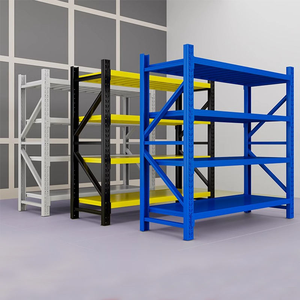
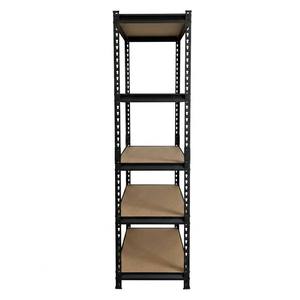
From robust screw-assembly boltless platforms to automated multi-tier mezzanine frameworks, our certified manufacturing lines deliver heavy-duty storage configurations customized to international structural parameters and pallet profiles.
Factory-Direct Engineering Rigor Built for Global Importers
From structural finite element analysis to coastal anti-corrosion finishes, partnering directly with our manufacturing facilities eliminates supply chain intermediaries and guarantees audited performance.
Structural FEA & Seismic Design
In-house structural calculations calibrated for localized seismic codes (including Chile NCh 433/2369, Peru E.030, and Colombia NSR-10). Upgraded base plates, anchors, and bracing ensure dynamic safety.
Certified SS400/Q235B Steel
Direct mill purchasing of high-yield cold-rolled steel coils. Batch testing for tensile yield strength, elongation, and structural elasticity ensures zero deformation under static and seismic loads.
10-Stage Surface Treatment
Complete multi-tank pickling, chemical degreasing, zinc phosphating, and electrostatic epoxy-polyester powder coating (60–80μm). Delivers salt-spray and condensation resistance for coastal and tropical operations.
Optimized Ocean Load Planning
Custom nesting software creates maximized container load plans for 40ft HQ shipping. High-density steel nesting cuts freight per unit by up to 22%, protected by multi-layer bubble film and steel strapping.
Technical Whitepaper: Industrial Shelving Procurement & Structural Architecture
Modern warehousing operations face unprecedented structural demands driven by e-commerce SKUs, rapid inventory turnover, and escalating industrial real estate lease costs. For enterprise procurement managers, distributors, and EPC warehouse contractors, choosing between standard boltless hand-loaded shelving, longspan heavy-duty systems, pallet-supported mezzanines, and semi-automated drive-in platforms represents a multi-million-dollar operational decision. The structural viability of an industrial shelving installation is determined not merely by gauge thickness, but by beam profile engineering, upright cross-sectional moments of inertia, weld penetration integrity, and connector connector design.
Under international standards (including EN 15512:2020 for steel static storage systems, RMI ANSI MH16.1, and local seismic building codes), industrial racking must withstand static dead loads, dynamic live pallet loads, forklift impact forces, and seismic accelerations. Our manufacturing facilities utilize high-precision continuous roll-forming lines capable of handling certified Q235B and SS400 cold-rolled structural steel, maintaining post-punching tolerances within ±0.2mm across continuous 12-meter upright lengths. Uprights are stamped with 50mm or 75mm teardrop, butterfly, or hexagonal pitch geometries, enabling flexible beam reconfigurations as product SKU velocities evolve.
Surface longevity represents another critical engineering boundary. Inferior factory coatings suffer pinhole flaking, leading to rapid subsurface oxidation in humid distribution centers or cold-storage environments. Our integrated 10-stage automated finishing facility incorporates alkaline cleaning, high-pressure rinsing, acid pickling to remove hot-rolled scale, iron phosphating for micro-crystalline adhesion, and curing at 180°C–200°C. The resulting thermosetting powder coat provides an impact-resistant barrier with superior scratch resistance, dielectric protection, and compliant chemical safety verified under global RoHS parameters.
Future Trends in Global Industrial Shelving & Warehouse Racking
Strategic supply chain directors must anticipate technical and economic shifts before commissioning capital infrastructure investments. Here is how industrial storage engineering is evolving through 2026–2030.
1. Transition to AS/RS & Shuttle-Ready Engineering
Manual forklift operations are rapidly migrating toward semi-automated radio shuttle carts, autonomous mobile robots (AMRs), and automated storage/retrieval cranes (AS/RS). Future-proof industrial shelving requires tighter deflections (<1/500 of span), laser-aligned running rails, and embedded sensor mounting channels capable of integrating IoT telematics.
2. Multi-Tier Rack-Supported Space Optimization
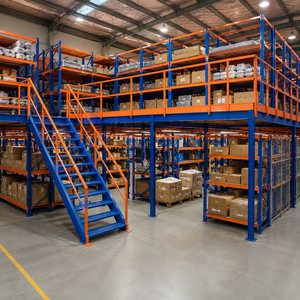
With industrial land valuation at all-time highs across logistics hubs, horizontal warehouse expansion has become cost-prohibitive. Procurement is shifting dramatically toward 2-to-4 level rack-supported mezzanines and high-bay structures that exploit vertical clearances up to 16 meters, multiplying usable storage square footage by 200% to 300% without new building footprints.
3. Green Steel & Sustainable Lifecycle Procurement
Global carbon border adjustment mechanisms and ESG audits demand transparent material sourcing. Tier-1 buyers increasingly mandate lower embodied-carbon steel, solvent-free heavy-metal-free electrostatic powder compounds, and fully modular boltless assemblies that can be decommissioned, reconfigured, or recycled with minimal scrap generation.
System Engineering Specifications & Architectural Application Matrix
Evaluate load capabilities, structural footprints, and operational fit across industrial racking and shelving topologies.
| Storage System Category | Standard Steel Grade | Typical Load Range | Aisle Clearance Requirement | Access Methodology | Optimal Industrial Use-Case |
|---|---|---|---|---|---|
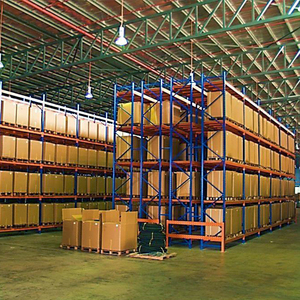
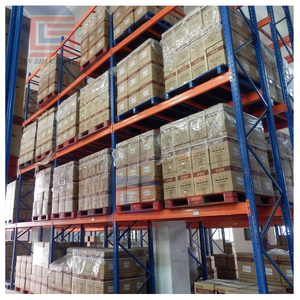
| Selective Pallet Racking | Q235B Cold Rolled Steel | 1,000 – 4,000 kg / level | 3.0m – 3.8m (Standard Forklift) | 100% Direct SKU Selectivity | High-throughput distribution hubs, retail FMCG, multi-client 3PLs |
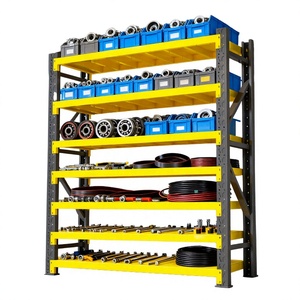
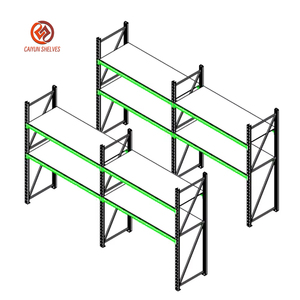
| Longspan Heavy Duty Shelving | SPCC / Q235B High Tensile | 300 – 800 kg / level | 1.0m – 1.5m (Manual Picking) | Hand-loaded Direct Picking | Automotive aftermarket, hardware distribution, tools, e-commerce bins |
| Multi-Tier Mezzanine Platform | Q345B / Q235B Structural Steel | 300 – 1,000 kg / m² | Integrated staircases & catwalks | Multi-level manual / AMR | Garment fulfillment, light assembly, carton sortation, parts storage |
| Drive-In / Shuttle High Density | Q235B Heavy Formed Section | 1,000 – 2,000 kg / pallet | Single entry / exit lane | LIFO / FIFO Deep Storage | Cold chain logistics, seasonal raw agricultural bulk, beverage bottling |
| Heavy Cantilever Racking | Hot Rolled H-Beam / Q235B | 500 – 3,000 kg / arm | Wide-aisle side loader access | Continuous Open Facade | Steel tubing, PVC pipes, lumber, architectural aluminum extrusions |
Controlled 6-Stage Manufacturing & Global Export Workflow
Rigorous traceability and inspection check-points prevent field installation delays and dimensional mismatches.
CAD Layout & FEA Load Simulation
Our structural engineering department develops bespoke 3D CAD models and Finite Element Analysis based on your warehouse architectural drawings, column grid positions, ceiling heights, and floor slab load ratings.
Precision Roll-Forming & Punching
Continuous CNC automatic punching machines and cold roll-forming lines process structural coil steel, maintaining hole pitch pitch precision within ±0.2mm to ensure tool-free locking pin alignment.
Robotic Welding & Ultrasonic Testing
Beam connectors and base plates are joined using robotic multi-axis MAG welding. Critical stress joints undergo destructive weld penetration testing and ultrasonic defect validation.
Automated Phosphating & Powder Curing
Components pass through our automated 10-stage chemical cleaning, acid pickling, rust removal, and phosphate pre-treatment line before receiving high-voltage electrostatic epoxy-polyester powder coating cured at 200°C.
Batch Load Testing & Dimensional QA
Sample uprights and beam pairs undergo 1.5x working load deflection testing, coating adhesion cross-hatch checks, and dimensional verification prior to receiving QA dispatch release certificates.
Protective Export Packaging & Ocean Logistics
Uprights and beams are bundled with shock-absorbing corrugated buffers, heavy-gauge steel corner protectors, and moisture-barrier shrink wrapping, fully optimized for seamless container handling at destination ports.
Frequently Asked Questions by Industrial Shelving Importers
Answers to essential technical, logistics, and quality assurance inquiries regarding direct manufacturer sourcing.