Engineered Pallet Racking & Industrial Systems
Direct factory manufacturing with custom profile tooling, certified high-tensile steel grades (Q235B / Q355B), automated multi-station cold roll forming, and structural verification for worldwide fulfillment logistics.
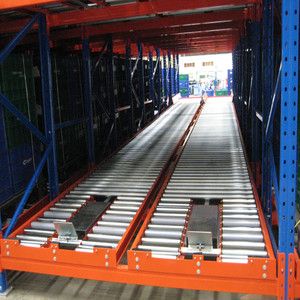
Factory Steel Durable Heavy Duty CE Certified Warehouse Gravity Carton Pallet Flow Roller Sliding Rack
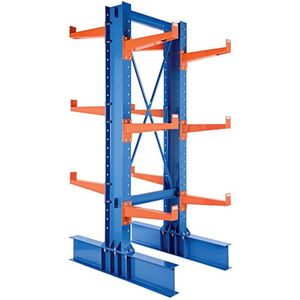
Adjustable Arm Height Heavy Load Bearing Cantilever Rack Solid Wood Timber Pallet Free Storage Cantilever Racking
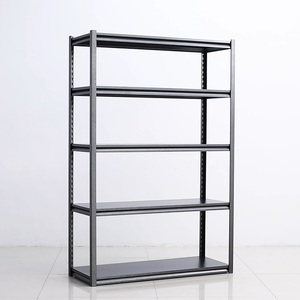
5 Tier Heavy Duty Adjustable Racks Steel Storage Shelf Warehouse Garage Metal Shelving Units Shelves
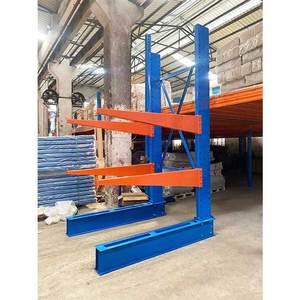
Heavy Duty Storage Cantilever Shelving Cyclocross Frame Cantilever Storage Storage Steel Industrial Hanging Cantilever Rack
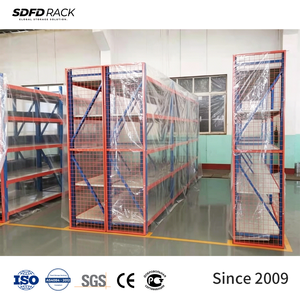
Wholesale Hot Selling 2400x600x2200 Medium Duty Longspan Warehouse Shelves 4 Layers/400kg Load Capacity Industrial Storage Racks
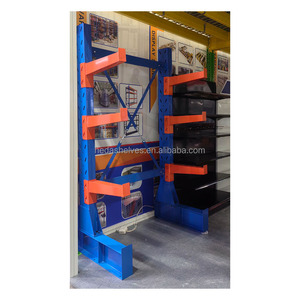
Wholesale Heda Heavy Duty Cantilever Storage Racks Cantilever Racking Systems Solution Selective Racking System
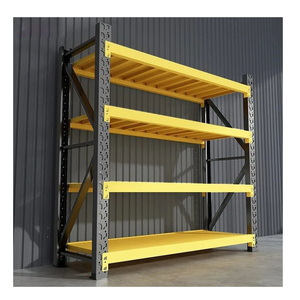
Factory Price 5 Layer Adjustable Steel Warehouse Storage Rack Shelving Units 200kg-500kg Stacking Racks & Shelves Metal Material
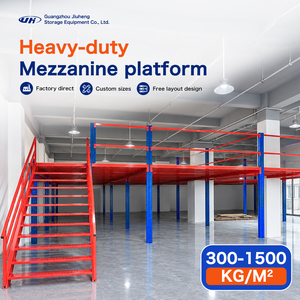
Multi Tier Warehouse Mezzanine Rack Heavy Duty Steel Storage Platform Industrial Shelving Space Saving Customized System
Structural Calculation Paradigms, Sectional Modulus & Second-Order Effects
Modern high-bay storage procurement requires moving past simple weight tables. Structural stability in industrial steel storage racks relies on complex column stability, semi-rigid beam-to-column rotational stiffness, elastic-plastic local buckling thresholds, and dynamic seismic modeling under both static and live operational conditions.
The engineering validation of industrial pallet rack framing demands rigorous attention to both ultimate limit state (ULS) and serviceability limit state (SLS) criteria. Under standard international design specifications—notably the European Standard EN 15512:2020, the American Standard ANSI/RMI MH16.1, and the Australian Code AS 4084—pallet racks behave as semi-rigid, unbraced or partially-braced steel structures in the down-aisle direction.
Because the upright frames contain recurring arrays of punch perforations designed for beam-connector adjustment (typically on 50mm, 75mm, or 76.2mm center increments), the true net cross-sectional properties cannot be analyzed using standard hot-rolled structural mechanics. Instead, cold-formed design principles must account for distortional buckling, local flange wrinkling, and torsional-flexural buckling modes using calibrated stub-column physical testing and high-precision non-linear Finite Element Analysis (FEA).
"Rotational stiffness (Cbe) and beam-connector moment resistance (Mbe) are the primary determinants of down-aisle rack stability. A 10% reduction in connector claw engagement can induce a 35% increase in secondary P-Delta sway moments under full service load."
At Guangzhou HEDA Shelves Co., Ltd., our engineering teams configure frame columns using high-purity, structural-grade strip coils conforming to Q235B and Q355B (tensile strength up to 510 MPa, minimum yield strength 355 MPa). By engineering specialized profile cross-sections with up to 12 distinct cold-bent folds along a single upright column face, we drastically improve the radius of gyration and cross-sectional inertia without adding unnecessary dead load weight. This structural efficiency translates to lower freight costs and safer operations in high-throughput distribution environments.
Seismic risk mitigation is a paramount engineering priority for storage racks across active seismic regions—including South America's Pacific rim (Chile, Peru, Ecuador, Colombia), the Western United States, and Japan. Storage racks act as high-mass, lightly-damped structural oscillators. When loaded to total operational capacity, the interaction between liquid or dry stored products and the flexible steel frame can cause significant seismic acceleration amplifications.
Our custom seismic engineering protocols implement dual-tier design parameters: modal response spectrum analysis according to NCh 2369 / NCh 433 (Chile), NSR-10 (Colombia), and E.030 (Peru). We utilize heavy-gauge ductile base plates, anchored with chemical shear-expansion anchors sized precisely for seismic pull-out and concrete slab edge shear limits.
Furthermore, upright splice locations are structurally isolated away from high-bending-moment zones, maintaining continuous moment-resisting load paths. Beam-locking mechanisms use high-shear spring steel retaining pins capable of withstanding severe cyclic vertical uplift forces caused by vertical seismic wave components ($A_v$) without accidental dislodgement.
Environmental resistance is equally critical. For cold-chain logistics facilities operating at -30°C, structural steel faces serious risks of low-temperature brittle fracture. HEDA Shelves addresses this through strict impact test certifications (Charpy V-Notch testing $\ge 27\text{ J}$ at -20°C or -40°C), specialized micro-alloyed steel formulations, and multi-stage continuous hot-dip galvanizing or zinc-rich primer powder coating systems that prevent stress corrosion cracking.
Future Global Procurement Trends in Industrial Storage (2025–2035)
How supply chain directors, industrial EPC contractors, and multinational logistics operators are redefining pallet rack specifications, factory contracts, and risk management.
Automation-Ready Modular Racking
Procurement is moving rapidly away from standalone static racking toward modular frames pre-engineered for AMR (Autonomous Mobile Robots), AGV interfaces, and radio shuttle integration, requiring millimeter-level fabrication tolerances.
ESG & Low-Carbon Green Steel
Global logistics REITs and corporate end-users require Scope 3 emissions reporting. Steel mills offering electric arc furnace (EAF) feedstock and non-effluent electrostatic powder coating lines hold a major competitive advantage in large-scale tenders.
Optimized Sea Freight & Nesting
Volatile ocean shipping rates have made nested frame profiles essential. Advanced OEM suppliers engineer structural uprights and step beams that interlock tightly, achieving up to 98.4% 40ft High-Cube container volume utilization.
Integrated Digital Traceability
Modern supply contracts mandate individual heat-number batch traceability, mill test reports (MTR) according to EN 10204 Type 3.1, and cloud-accessible 3D Tekla BIM files for zero-clash installation on site.
Structural Comparison Matrix: Storage Systems Architecture
Standard Engineering Tolerances: FEM 10.2.02 / EN 15620| Storage System Type | Floor Space Efficiency | Selectivity Profile | Maximum Reach Clear Height | Aisle Width Requisite | Deflection Limit (L/d) | Primary Industrial Sector |
|---|---|---|---|---|---|---|
| Selective Pallet Racking | 40% – 45% (Standard) | 100% Immediate Direct Access | Up to 14.5 Meters | 3.0m – 3.5m (Reach Truck) | L / 200 (Span/200) | FMCG, 3PL Distribution, E-Commerce |
| Double Deep Pallet Racking | 55% – 60% (Moderate High) | 50% (Two Pallets Deep per Bay) | Up to 12.0 Meters | 3.0m – 3.4m (Deep Reach) | L / 200 (Span/200) | Cold Storage, Dry Grocery Bulk |
| Drive-In / Drive-Through | 70% – 80% (Very High) | Low (LIFO / FIFO Bulk Lane) | Up to 11.0 Meters | Aisle-Eliminated Density | Rail Deflection L / 350 | Beverage, Produce, Cold Chain |
| Radio Shuttle Automation | 80% – 85% (Ultra High) | High Batch Selectivity (FIFO/LIFO) | Up to 24.0 Meters | Shuttle Channel Navigation | Tight Rail Tolerance (<2mm) | Meat, Dairy, Pharma Cold Storage |
| Gravity Pallet Flow | 75% – 85% (Continuous High) | 100% Strict FIFO Flow | Up to 12.5 Meters | Dedicated Load / Unload Faces | Track Slope: 3.2% Controlled | Perishables, Fast Turnover Retail |
| Rack-Supported Mezzanine | 100% – 200% Usable Footprint | Hybrid: Pallet + Picking Floors | Up to 4 Tiers (16m+) | Configurable Access Aisles | Main Beam: L / 300 to L / 400 | Automotive Spares, Apparel Sorting |
Enterprise Advantages: HEDA Shelves Manufacturing Ecosystem
Combining 25+ years of production experience, 30,000 square meters of specialized manufacturing facilities, and comprehensive structural design to deliver unmatched reliability.
Continuous Automated Roll-Forming
Our workshop features specialized multi-station cold roll-forming lines capable of rolling high-strength coil steel up to 3.0mm thickness into complex, multi-fold upright profiles. This preserves molecular grain structure, minimizes internal stresses, and guarantees straightness tolerances within 1/1000 of length.
Chemical Pretreatment & Electrostatic Coating
Corrosion protection begins with an automated multi-stage immersion: ultrasonic degreasing, acid pickling, rinsing, and zirconium phosphating. Next, high-grade thermosetting polyester powder is electrostatically applied and cured at 200°C, producing an 80–120μm dry film thickness tested to withstand 500+ hours of ASTM B117 salt spray exposure.
Turnkey Engineering & Global Seismic Sizing
Our in-house design office provides full CAD layouts, 3D renderings, and structural calculations within 24–48 hours. We engineer specifically for your regional building codes (such as Chile's NCh 2369, Peru's E.030, or Europe's EN 15512), taking clear ceiling height, slab thickness, and seismic spectrum into account.
Crucial Questions Asked by Industrial Storage Engineers & Buyers
Direct technical answers covering structural integrity, factory tolerances, coating longevity, and export documentation.
What steel grades are used, and can you provide mill test certificates?
We source structural steel coils strictly from top-tier primary domestic mills conforming to Q235B (comparable to ASTM A36 / S235JR) and Q355B (comparable to ASTM A572 Grade 50 / S355JR). Every production batch is accompanied by genuine EN 10204 Type 3.1 Mill Test Certificates (MTC) detailing carbon equivalent, phosphorus, sulfur limits, yield point, and elongation.
How do your engineering teams calculate beam deflection limits?
In accordance with EN 15512 and ANSI MH16.1 specifications, beam maximum elastic vertical deflection is engineered not to exceed L/200 (length of beam divided by 200) under full design working load. For automated shuttle lanes and AGV operations, we stiffen tolerances to L/300 or L/400 to prevent automated vehicle sensor trips.
Can custom profiles be rolled to match an existing legacy racking system?
Yes. As an OEM/ODM specialist, our tooling engineers design custom cold-roll-forming dies and automated punching dies to replicate teardrop, diamond, omega, or bespoke European connector hook geometries. Tooling setup, sample extrusion, and mechanical testing are completed in-house within 21 to 30 days.
How are containers packed to prevent surface abrasion during long voyages?
All beams and uprights are bundled with dense protective corrugated wraps, specialized plastic buffer shoes between contact surfaces, edge corner protectors, and heavy PET strapping. Load plans are 3D-modeled using container load optimization software to prevent load shifting and surface friction during transit.
What parameters do you require to design a customized warehouse layout?
To produce an engineered CAD drawing and structural proposal, we require: warehouse layout dimensions (columns, clear height to truss/fire suppression), concrete slab thickness and rebar strength, pallet dimensions (W x D x H) including overhang, maximum load per pallet, forklift model specifications, and site geographic location for seismic zoning.
What guarantees and quality certifications support your manufacturing?
Guangzhou HEDA Shelves Co., Ltd. operates under certified ISO 9001:2015 Quality Management Systems (Certificate No. 18624Q00169R0M) and holds European CE Factory Production Control Certification (CE No. 2435-CPR-8605159). Our powder coatings are fully RoHS certified for clean food and pharmaceutical distribution.
Connect Directly with Our Racking Engineering Team
Looking for a proven OEM/ODM pallet rack manufacturer for your next logistics development, tender bid, or regional warehouse project? Submit your layout specs or pallet schedule to receive a comprehensive structural proposal, 3D BIM rendering, and factory-direct pricing within 24 hours.