Featured Industrial Pallet Racking & Heavy Shelving
Direct-from-factory OEM/ODM structural storage systems designed for high vertical clearance, dynamic seismic stability, and custom pallet load capacities from 500 kg to over 5,000 kg per tier.
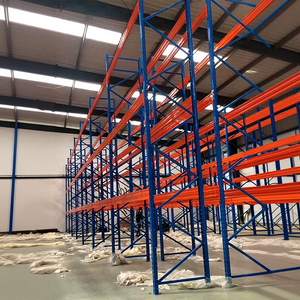
Heavy Duty Metal Racking 4 Tier Boltless Adjustable Steel Storage
- Layer Capacity: 300–800 kg/tier
- Upright Pitch: 50 mm Adjustable
- Assembly: No-bolt Knock-down
- Finish: Powder Coated RAL
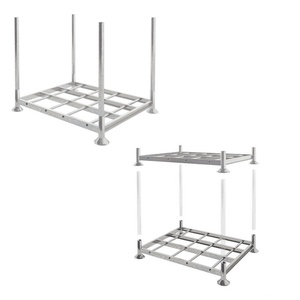
Heavy Duty Metal Stacking Truck Tire Pallet Rack System
- Payload: 1,000–2,500 kg/unit
- Stackability: 4 to 6 Layers High
- Foldability: Demountable Posts
- Application: Tires & Bulk Heavy Cargo
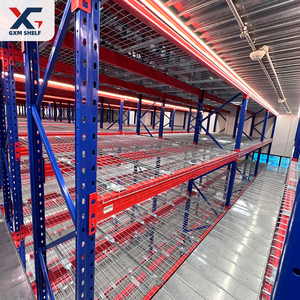
Heavy Duty Three-Dimensional Warehouse Pallet Racking
- Max Beam Load: Up to 4,500 kg/pair
- Structure: Q235B / Q355B Steel
- Bay Height: Up to 15 Meters
- Access: 100% Direct Selective
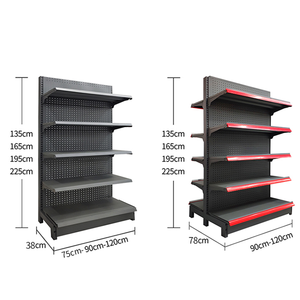
Custom Heavy Duty Double-Sided Gondola Shelving Rack
- Deck Type: Reinforced Steel Panels
- Per Layer: 80–200 kg capacity
- Corrosion Proof: Phosphating Pretreatment
- Customization: Pegboard / Slatwall / Wire
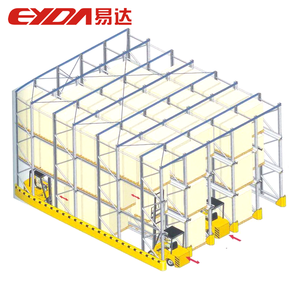
Heavy Duty 5-Layer Drive-In / Drive-Thru Pallet Rack System
- Floor Utilization: Up to 80% Capacity
- Rail Profile: Structural Galvanized Rail
- Depth: 2 to 10 Pallets Deep
- Suitability: Cold Storage & Food Depot
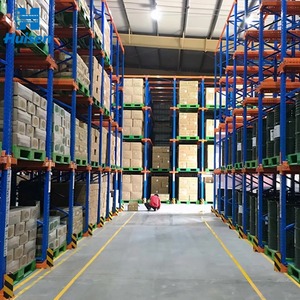
Industrial Heavy-Load Multi-Level ISO Certified Pallet Rack
- Upright Profile: 90/100/120 mm Omega
- Safety Standard: FEM 10.2.02 / RMI
- Load Class: Up to 5,000 kg/tier
- Export Pack: Banded Steel Bundling
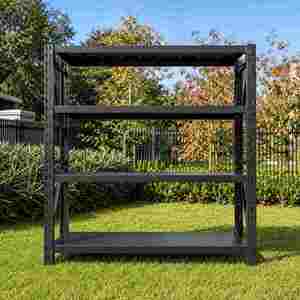
Custom 4-Tier 300–500 kg/Layer Black Metal Storage Shelving
- Layer Rating: 300–500 kg UDL
- Surface: Matte Texture Powder Coat
- Beam Section: Step Beam + Steel Deck
- Application: E-Commerce & Auto Parts
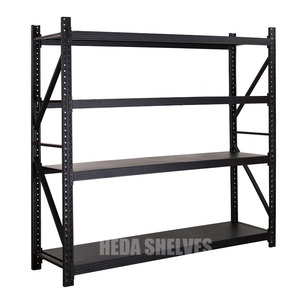
Customizable Medium Duty Steel Warehouse Shelving System
- Span Width: 1,200–2,500 mm
- Deck Options: Steel / Mesh / MDF
- Modular Unit: Starter + Add-on Bays
- Supply: Wholesale OEM Container
Engineering Industrial Pallet Racks for High Seismic & Automated Environments
In modern supply chain architecture, static storage has transitioned into an active engineering component of structural logistics. Specifying pallet racking systems is no longer a rudimentary commodity purchase; it requires rigorous finite element analysis (FEA), dynamic torsional resistance calculation, and metallurgical certification according to strict international codes.
As an OEM/ODM manufacturer operating since 2001, Guangzhou Heda Shelves Co., Ltd. builds structural systems engineered to absorb high impact energy from material handling equipment, counter ground accelerations in active seismic belts across Latin America and the Pacific Rim, and preserve surface integrity against aggressive industrial or refrigerated environments.
Structural Design Compliance Matrix
Our dedicated engineering department designs and validates all upright frames, load-bearing box beams, bracing patterns, and anchorage baseplates in compliance with the following international structural building specifications:
- RMI (MH16.1): Specification for the Design, Testing and Utilization of Industrial Steel Storage Racks.
- EN 15512 / FEM 10.2.02: European Steel Static Storage Systems - Adjustable pallet racking systems principles for structural design.
- AS 4084-2023: Australian Standard for Steel Storage Racking.
- Seismic Building Codes: Chilean NCh 2369, Peruvian E.030, Colombian NSR-10, and US IBC/UBC seismic lateral load simulations.
- Quality & Safety: Factory production certified under CE Certificate No. 2435-CPR-8605159 and ISO 9001:2015.
Comparative Operational Parameters by Pallet Racking Class
Selecting the correct racking morphology dictates lifetime operational expense (OPEX), space utilization rate, and picking throughput. Compare technical fundamentals below:
| System Type | Space Utilization | Stock Rotation | SKU Selectivity | Floor Load Profile | Handling Equipment Required | Seismic Adaptability |
|---|---|---|---|---|---|---|
| Selective Pallet Racking | 40% – 50% | FIFO / LIFO | 100% Direct | Concentrated Point | Standard Counterbalance / Reach | Excellent (Cross-bracing modular) |
| Double-Deep Racking | 55% – 65% | LIFO | 50% Immediate | High Concentrated | Pantograph Reach Forklift | High (Tied back-to-back bays) |
| Drive-In / Drive-Thru | 75% – 85% | LIFO / FIFO | Low (Bulk SKU) | Channel Linear | Narrow Counterbalance / Reach | Requires Top Tie & Portal Bracing |
| Radio Shuttle Racking | 80% – 90% | Both FIFO & LIFO | Medium-High (By Lane) | Continuous Channel | Standard Forklift + Automated Cart | Superior (Rigid rail integrated box) |
| Gravity Pallet Flow | 70% – 80% | Strict FIFO | High per lane | Gradient Point Load | Standard Forklift (Separated Aisles) | Moderate (Requires brake rollers) |
| Push-Back (Cart/Roller) | 65% – 75% | LIFO | 1 SKU per lane (2–6 deep) | Dynamic Incline | Standard Reach Truck | High (Interlocking nested steel carts) |
| Heavy Duty Cantilever | 50% – 60% | FIFO / LIFO | 100% Frontal Access | High Base Moment Load | Side Loader / Four-Directional | Engineered Column Moment Connection |
Why Global Tier-1 Logistics Trust HEDA OEM/ODM Capabilities
With over two decades of heavy steel fabrication experience in Guangzhou, our production workflows combine CNC robotic consistency with European metallurgy standards.
Custom Roll-Forming Lines
Continuous cold-roll profiling lines producing upright columns with custom teardrop, hexagonal, or diamond punching patterns with pitch increments down to 50 mm / 75 mm.
- Omega section profile width up to 140 mm
- Cold-rolled thickness: 1.5 mm to 3.5 mm
- In-line CNC punch tolerance: ±0.2 mm
Robotic High-Penetration Welding
Automated welding robot workcells guarantee continuous, spatter-free weld beads between beam connector claws and double-C interlocking beam profiles, eliminating stress risers.
- Automatic 3 or 4-prong claw joining
- CO2 gas shielded arc welding
- 100% penetration weld inspection
9-Stage Pretreatment & Coating
State-of-the-art chemical pickling, degreasing, and phosphating tunnels ensure optimal steel surface energy before automated electrostatic epoxy powder application.
- Coating thickness: 60 to 90 microns
- 500-hour salt spray ASTM B117 compliance
- Hot-dip galvanizing (HDG) for chillers
Free 3D Engineering & FEA
Our engineering bureau delivers full structural CAD drawings, 3D BIM-compatible models, and static load calculation sheets tailored to your warehouse slab capacity.
- Seismic acceleration verification
- Custom flanged beam profiles
- Turnaround within 24 to 48 hours
Precision Manufacturing from Raw Coil to Ocean Freight
Our 30,000 m² Guangzhou manufacturing workshop operates under a strict ten-stage Quality Assurance framework to guarantee flawless on-site assembly overseas.
Steel Coil Testing
Yield & tensile verification on prime Q235B/Q355B hot-rolled coils.
Precision Slitting
High-speed slitting to exact strip widths with de-burred edges.
CNC Column Punching
Multi-station automated high-speed hydraulic hole punching.
Roll-Form Profiling
Multi-pass continuous roll forming for tight dimensional radii.
Beam Interlocking
Dual C-channel interlock roll forming for high moment resistance.
Robotic Welding
Multi-axis robotic arm welding of beam connectors and footplates.
Chemical Wash
Immersion pickling, ultrasonic degreasing, and zinc phosphating.
Powder Coating
Electrostatic robotic powder deposition and 200°C curing oven.
Rigorous Batch QC
Cross-hatch adhesion, thickness gauging, and deflection tests.
Export Packaging
Protective corrugated separators, steel strapping & 40HQ stuffing.
Future Procurement Trends Shaping Pallet Racking Systems
Global supply chain shocks, land cost inflation, and rapid warehouse automation are transforming how racking infrastructure is specified, sourced, and financed.
1. Convergence of AS/RS Tolerances with Conventional Racking
Procurement directors are increasingly mandating "Automation-Ready" specifications for traditional selective and drive-in racks. Warehouses built today anticipate retrofitting automated four-way shuttles or Autonomous Mobile Robots (AMRs) within 3 to 5 years. This requires tightening fabrication and installation tolerances from standard FEM Class 400 (pallet racking) to FEM Class 100/200 (automated crane storage), restricting vertical plumb deviation to under ±1.5 mm over a 12-meter height.
2. High-Strength Micro-Alloyed Steel Sourcing (Q355B / S355JR)
With ocean shipping rates volatile and raw material costs fluctuating, engineering emphasis has shifted toward high-yield cold-formed micro-alloy steels. By transitioning critical upright sections from conventional Q235B (yield strength 235 MPa) to low-alloy Q355B or ASTM A572 Grade 50 (yield strength ≥355 MPa), structural engineers reduce total steel weight by 12% to 18% while maintaining identical Euler buckling resistance and lateral stiffness, substantially trimming freight cost per container.
3. Decarbonization & EPD Environmental Certification
Enterprise 3PL operators and multinational retailers require suppliers to document the embodied carbon of their warehouse storage infrastructure. Procurement tenders now frequently require Environmental Product Declarations (EPD) and compliance with green building standards (LEED / BREEAM). Factory powder-coating lines operating closed-loop water treatment and low-VOC thermo-setting polyester powders will capture significant market share over archaic solvent-based operations.
4. Multi-Shuttle & Deep-Lane Density in Urban Infill Logistics
The relentless growth of quick-commerce and parcel distribution centers near urban cores has inflated square-meter industrial rents. Consequently, buyers are abandoning single-selective layouts in favor of radio-shuttle high-density channels capable of operating in depths of 10 to 30 pallets. This reduces the number of access aisles by 60%, maximizing cubic space efficiency while preserving semi-automated SKU turnover speed.
5. Full-Lifecycle Seismic Risk & Base-Plate Anchoring Audits
In earthquake-prone regions such as Latin America, New Zealand, Turkey, and Japan, insurers refuse underwriting for warehouses that lack localized seismic certification. Modern procurement protocols require third-party peer review of dynamic finite element simulations, enlarged baseplates with heavy chemical anchor arrays, and structural K-bracing systems engineered to dissipate seismic energy without catastrophic ductile failure.
Technological Innovations in Pallet Rack Manufacturing
How smart manufacturing, structural metallurgy, and digital twins are upgrading passive steel racks into intelligent assets.
IoT Smart Upright Impact Sensing
Integrating tri-axial MEMS accelerometers directly inside upright column profiles at forklift impact zones (0.3m to 1m height). Real-time telemetry alerts facility managers via cloud dashboard whenever a collision exceeds structural deformation thresholds, triggering proactive maintenance before failure.
Sub-Zero Anti-Embrittlement Alloys
In blast freezers and cold storage facilities down to -30°C, ordinary structural carbon steel suffers severe ductile-to-brittle transition issues. Our OEM cold-chain racks utilize aluminum-deoxidized structural grades that retain Charpy V-notch impact toughness (≥27J at -20°C), eliminating sudden beam rupture risks.
BIM & Digital Twin Native Integration
Every custom racking production project is compiled into native Autodesk Revit / IFC models, complete with parameterized load limits, sprinkler pipe clearance routes, and seismic node characteristics. This enables seamless clash detection with MEP systems during the initial architectural design phase.
Frequently Asked Questions on Pallet Rack Procurement
Authoritative engineering insights to assist procurement directors, EPC contractors, and warehouse project managers.
What are the key technical differences between bolted and welded upright frame designs? +
In modern industrial storage, knock-down bolted upright frames have overwhelmingly replaced fully shop-welded frames for international export. Bolted frames consist of separate cold-rolled omega-section columns joined by high-tensile Grade 8.8 bolts through dynamic diagonal and horizontal C-channel bracing. This offers two decisive advantages:
- Container Packing Efficiency: Upright components are flat-packed in high-density bundles, increasing container weight utilization to the 26-ton limit and reducing shipping cost per bay by over 400% compared to shipping rigid welded frames.
- Local Maintenance & Repairability: In the event of forklift damage, individual column sections or lower bracing diagonals can be safely unbolted and replaced without having to scrap the entire frame or perform hazardous hot-work welding inside an operational warehouse.
How do you calculate permissible beam deflection according to FEM 10.2.02 and RMI standards? +
Under both FEM 10.2.02 and RMI MH16.1 specifications, beam deflection under maximum design Uniformly Distributed Load (UDL) must satisfy the elastic deflection criterion:
δ ≤ L / 200 for conventional selective pallet racking served by manual counterbalance or reach trucks (where L is the clear span distance between upright columns; for example, a 2,700 mm beam has a maximum permissible deflection of 13.5 mm).
However, when racks interface with automated crane guidance (AS/RS) or turret trucks in Very Narrow Aisle (VNA) configurations, the allowable deflection threshold is tightened to δ ≤ L / 300 or L / 400 to prevent sensor misalignment and excessive mast sway during pallet extraction.
Can your factory engineer pallet racking systems for high-intensity seismic zones? +
Yes. Guangzhou Heda Shelves Co., Ltd. regularly designs and fabricates heavy pallet rack systems engineered for seismic zones throughout the Pacific Ring of Fire, including Chile (NCh 433 / NCh 2369), Peru (Norma E.030), Colombia (NSR-10), and the western United States (IBC / ASCE 7). Our structural engineers incorporate the site-specific Spectral Acceleration coefficients (Ss, S1), seismic importance factors, and soil classification into dynamic finite element calculations.
Structural upgrades for seismic zones include enlarged footplates (minimum 12 mm to 20 mm plate thickness), multi-anchor expansion or epoxy chemical anchoring, upgraded back-to-back cross bracing (K-bracing and X-bracing along spine rows), and heavy-duty 4-prong and 5-prong beam connector claws with oversized locking pins to resist horizontal shear dislodgement.
What surface treatment is recommended for refrigerated and blast freezer warehouses? +
For standard cold storage operating at steady sub-zero temperatures (-18°C to -25°C) with low relative humidity, our 9-stage electrostatic polyester powder coating with zinc-phosphating pretreatment provides excellent adhesion and service life, provided the atmosphere remains below freezing without cyclic condensation.
However, for dock-adjacent cold anterooms, blast freezers with frequent defrost condensation, or marine cold stores (e.g., seafood and meat processing), we strongly specify Hot-Dip Galvanizing (HDG) in compliance with ISO 1461 / ASTM A123. The resulting zinc-iron alloy coating provides a minimum thickness of 65–85 μm, delivering cathodic sacrificial protection that prevents rust even if the steel profile experiences superficial mechanical abrasion from pallet skids.
What steel grades are used in manufacturing, and do you supply mill test certificates? +
We source prime, hot-rolled and cold-rolled structural steel coils exclusively from premier domestic mills (such as Baosteel, Shougang, and Ansteel). Primary grades include:
- Q235B (equivalent to ASTM A36 / EN S235JR): Yield strength ≥ 235 MPa, Tensile strength 370–500 MPa. Utilized for horizontal beams, bracing members, shelf decks, and light-to-medium load profiles.
- Q355B (equivalent to ASTM A572 Grade 50 / EN S355JR): Yield strength ≥ 355 MPa, Tensile strength 470–630 MPa. Specified for heavy-gauge high-bay upright columns, heavy cantilever arms, and structural mezzanine beams.
Every export shipment is accompanied by standard EN 10204 Type 3.1 Mill Test Certificates (MTC) verifying chemical composition (carbon, manganese, phosphorus, sulfur) and mechanical tensile, yield, and elongation performance.
What is the standard OEM/ODM production lead time and container packing efficiency? +
With an operational monthly capacity exceeding 30,000 metric tons, our standard production lead time for full-container-load (FCL) orders is typically 2 to 4 weeks following CAD technical drawing and color sign-off.
Our logistical team prepares computerized 3D container stuffing simulations for each order. Upright frames are disassembled into nested column stacks, and box beams are banded in tight wooden-dunnage cradles wrapped in anti-chafing geotextile membranes. This ensures that every 40-foot High Cube (40' HQ) container reaches its maximum allowable gross weight limit (26,000 to 28,000 kg depending on target port limits) or volumetric capacity, substantially lowering your landed freight cost per pallet location.
How does your factory support installation supervision and contractor training overseas?
We provide a comprehensive installation support suite for every overseas procurement project:
- Full Assembly Drawings & Component Marking: All upright bundles, beams, and accessory crates are tagged with distinct color-coded, alpha-numeric part numbers directly matching the warehouse layout blueprint.
- Detailed Installation Manuals & Step-by-Step Video Guides: High-definition video tutorials detailing frame assembly, beam clipping, baseplate shimming, diagonal squaring, and torque limits for anchor bolts.
- Remote Engineer Video Support: Real-time teleconference guidance during critical layout chalk-line snapping and initial bay erection.
- On-Site Lead Installation Supervisors: For projects exceeding 5,000 pallet locations or automated multi-tier mezzanines, we dispatch certified structural installation engineers directly to your job site to manage local labor crews.
Can you manufacture customized accessories and offer OEM distributor branding? +
Yes. We offer turnkey OEM/ODM services for racking distributors, material handling dealers, and system integrators worldwide. Custom branding options include laser-cut logos on column frame protectors, custom powder-coat RAL matching for your corporate identity, customized product labels, and neutral export packaging. Furthermore, we fabricate complete specialized accessories: wire mesh decking, drop-in pallet support bars, pallet flow lanes, column wrap protectors, heavy-duty tubular aisle crash barriers, and steel guide rails for VNA wire/roller guidance.
Ready to Engineer Your Warehouse Racking Infrastructure?
Send your warehouse floor plan, ceiling height, and pallet load parameters. Our senior structural engineers will supply a comprehensive 3D layout, CAD drawing, and competitive factory-direct quote within 24 hours.