Factory-Direct Pallet Racking Portfolio
Explore our core OEM and ODM industrial warehouse rack series. Designed with certified Q235B/Q355B structural steel, tailored beam connectors, and customizable loading limits up to 5,000 kg per bay.
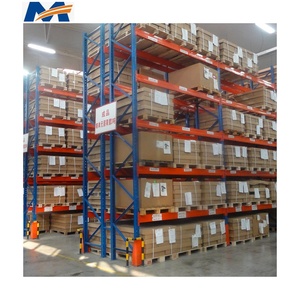
Pallet Racking System Warehouse Shelves Heavy Duty, Warehouse Picking Shelves Rack
- Load Rating: 1,000–3,000 kg / level
- Access Method: 100% Selective / Hand Picking
- Pitch Adjustability: 50mm / 75mm increments
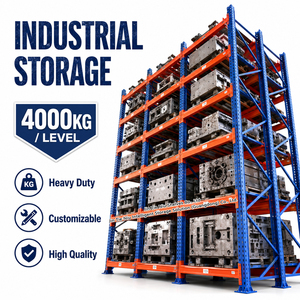
4000KG Heavy Duty Warehouse Rack Pallet Storage System Adjustable Beam Racking
- Beam Section: Box Beam 80–160mm
- Upright Column: 90×70 / 120×95 mm profile
- Surface Coating: Epoxy Powder Coating (60–80μm)
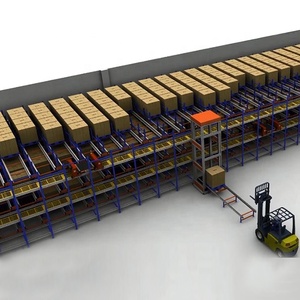
Automatic Radio Shuttle Rack System Heavy Duty Industrial Warehouse Storage Shelf Racking CE Certified
- Automation: Radio Controlled Carrier
- Throughput Mode: FIFO & LIFO configurable
- Certification: CE Certified (EN 15512)
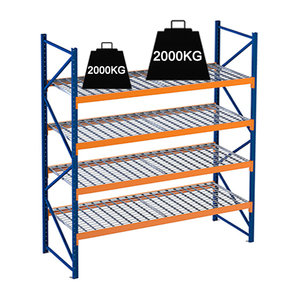
Stackable Storage Rack Pallet Racking Systems Warehouse Equipment 1000KG 2000KG 3000KG Pounds Tons
- Design Feature: Movable & Nestable Post Pallets
- Space Saving: Folds flat when unoccupied
- Load Verification: Tested 1.5× Dynamic Safety
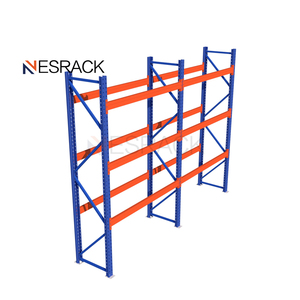
Customized Industrial Warehouse Pallet Rack Multi-Layer Adjustable Steel Shelves Units Metal Heavy Duty Selective Pallet Racking
- Profile Configuration: Multi-tier Upright frames
- Access Method: Direct Reach / Counterbalance
- Custom Colors: Full RAL Range Available
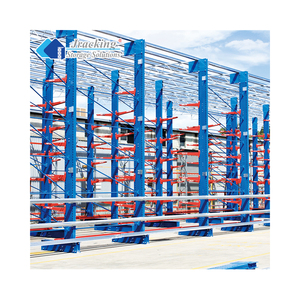
Jracking Industrial Warehouse Storage Shelves Rack Durable Heavy Duty Cantilever Racks For Industrial Material Organization
- Arm Capacity: 500–1,500 kg / arm
- Target Stock: Pipes, Tubing, Timber, Profiles
- Design Type: Single-Sided or Double-Sided
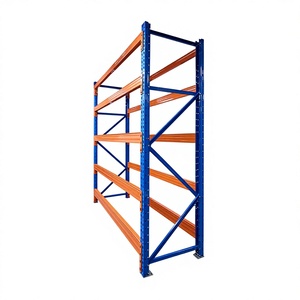
Warehouse Racking Large Capacity Selective Racking System Double Deep Pallet Racking Warehouse Storage
- Aisle Utilization: Reduces Aisle Ratio by 30%
- Forklift Class: Pantograph Reach Truck
- Structural Standard: AS4084 & FEM 10.2.02
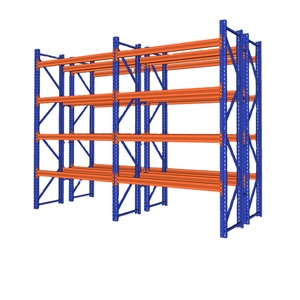
Heavy Duty Storage Rack Pallet Rack System Shelf for Industrial Storage Rack
- Customization: Full OEM Dimensioning
- Safety Factor: 1.65 against structural yield
- Footplate Type: Heavy Welded Baseplates
25 Years of Precision Storage Engineering & Global OEM Capabilities
Founded in 2001, Guangzhou HEDA Shelves Co., Ltd. operates a modernized 30,000 square meter primary manufacturing hub staffed by over 300 senior structural engineers, precision machinists, and export specialists. Operating with an average monthly rolling capacity exceeding 30,000 metric tons, we provide end-to-end original equipment manufacturing (OEM) and original design manufacturing (ODM) services to international logistics providers, rack distributors, and industrial contractors worldwide.
-
High-Tensile Prime Steel Sourcing
Every beam, upright column, and bracing element is cold-formed exclusively from certified Q235B or Q355B structural coil steel, delivering high elasticity and verified yield points compliant with ISO 9001:2015.
-
Multi-Station Automated Continuous Roll-Forming
Equipped with 18 automated CNC roll-forming lines capable of maintaining cold-bending precision within ±0.2mm tolerances, ensuring seamless slot alignment across upright frames over 12 meters in height.
-
Automated Surface Pretreatment & Electrostatic Powder Line
Our 7-stage surface preparation incorporates alkaline degreasing, acid pickling, rust removal, and phosphate passivation, followed by thermosetting polyester powder coating baked at 200°C for enhanced salt spray resistance.
-
Third-Party Audited Quality Certification
All HEDA structural load tables, welding seams, and deflection safety parameters carry valid CE certification (Certificate No. 2435-CPR-8605159) alongside ISO 9001:2015 and RoHS compliance protocols.
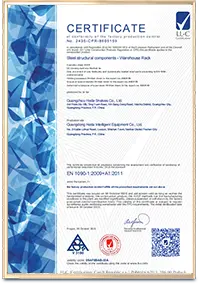 CE Cert 2435-CPR
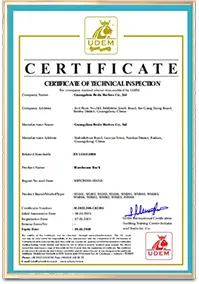 ISO 9001:2015
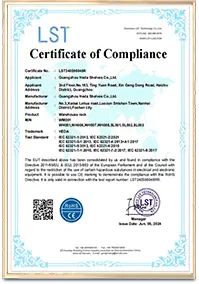 Quality Assurance
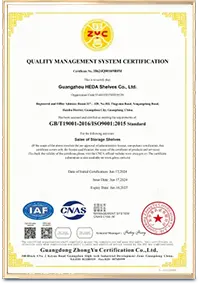 RoHS & Load Audit
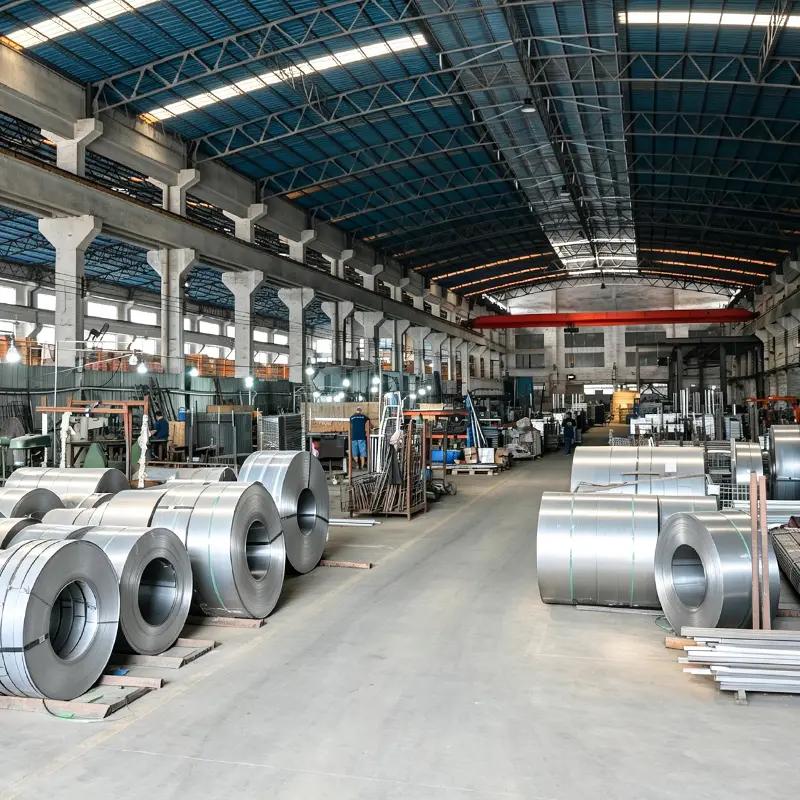
10-Stage Precision Production Workflow
From initial hot-rolled coil spectral analysis to continuous roll forming and export seaworthy pallet packaging, every operation is managed in-house to protect structural integrity and lead-time reliability.
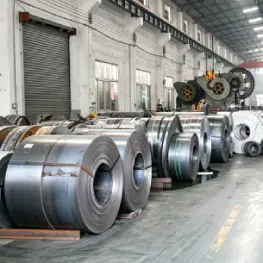
Raw Material QC
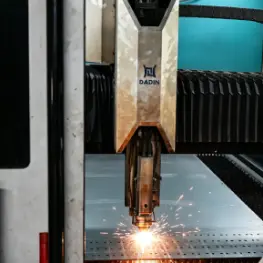
CNC Steel Cutting
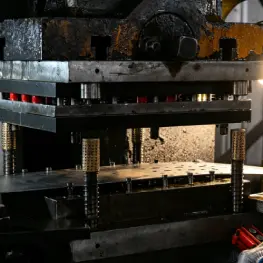
Automated Punching
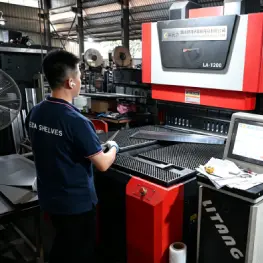
Cold Bending
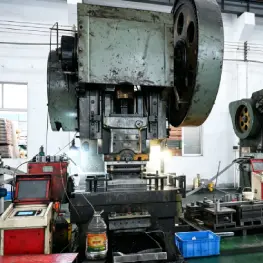
Profile Forming
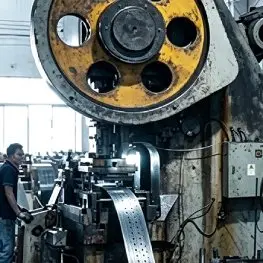
Edge Polishing
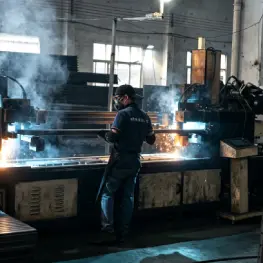
Robotic Welding
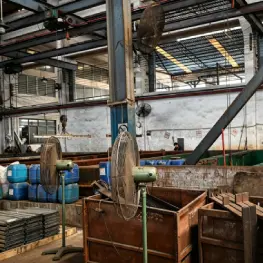
Phosphating Wash
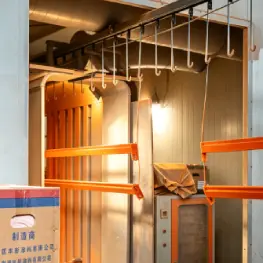
Powder Coating
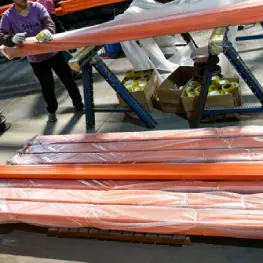
Final QC & Pack
Comparing Industrial Storage Architectures
Evaluate key technical trade-offs across selective, dense dynamic, and cantilever racking systems to match warehouse throughput, SKU selectivity, and capital investment.
| Storage System Type | Direct Selectivity | Floor Space Efficiency | Floor Load Profile | Recommended Pallet Rotation | Compatible Material Handling | Seismic Resistance |
|---|---|---|---|---|---|---|
| Standard Selective Pallet Racking | 100% (Direct) | 35% – 45% Utilization | 1,000 – 4,500 kg / level | FIFO (First-In, First-Out) | Counterbalance, Reach Trucks | Moderate to High |
| Double Deep Pallet Racking | 50% Direct | 50% – 60% Utilization | 1,000 – 3,200 kg / level | LIFO (Last-In, First-Out) | Deep-Reach Pantograph | High Structural Bracing |
| Automatic Radio Shuttle Racking | Lane Selective | 75% – 85% Utilization | Up to 1,500 kg / pallet | Configurable FIFO / LIFO | Standard Forklifts + Shuttles | Exceptional (Dense Grid) |
| Heavy Duty Cantilever Racks | 100% Open Access | Custom Linear Density | 500 – 1,500 kg / arm | Batch / Selective Order | Side Loaders, Overhead Cranes | Engineered Column Base |
| Drive-In / Drive-Through Systems | Low Selectivity | 65% – 75% Utilization | 1,000 – 2,000 kg / level | LIFO (Drive-In) / FIFO (Drive-Thru) | Specialized Narrow-Chassis Trucks | Requires Top Tie Bracing |
Emerging Trends Reshaping Industrial Racking Procurement
Global logistics modernization and shifting warehouse economic factors dictate structural rack purchasing. Warehouse operators and procurement directors must evaluate six macro developments.
Automation & AMR Integration
Traditional static racking is giving way to automation-ready engineering. Modern tenders demand lower beam deflection ratios (L/300 to L/400) and laser-guided baseplate anchoring to accommodate Autonomous Mobile Robots (AMRs), automated pallet shuttles, and mini-load crane tolerances.
Strict Regional Seismic Codes
Procurement teams across seismic active zones (such as Chile's NCh2369, Peru's E.030, Colombia's NSR-10, and US RMI MH16.1) mandate structural finite element calculations (FEA) factoring spectral ground accelerations, upgraded footplates, dual-plane bracing, and anchor shear metrics.
Surging Cold Chain Demands
Refrigerated warehouse space costs roughly 3 to 4 times more to power than ambient distribution centres. OEM buyers are shifting investments toward ultra-dense radio shuttle and dynamic gravity flow racking to compress cubic footprint while maintaining low-temperature steel toughness down to -30°C.
High-Tensile Steel Optimization
By leveraging micro-alloyed Q355B cold-rolled structural steel, uprights achieve higher structural buckling limits with reduced gauge thickness. This lowers deadweight, curtails ocean shipping container volume, and mitigates overall carbon emissions per pallet position.
Modular Mezzanine Co-Deployment
High industrial land costs force brownfield expansions vertical. Buyers increasingly request hybrid rack-supported mezzanines and catwalk structures integrated over selective pallet tiers to combine ground-floor heavy pallet storage with upper-level piece-picking platforms.
Container Freight Density Engineering
Rising sea freight volatility makes packaging engineering a primary purchasing factor. We design upright sections and nesting beams with custom protective spacers to achieve over 95% 40ft High Cube container volumetric filling efficiency without damaging coatings.
Engineering Evolution: Steel Profiles, Safety Factors & FEA Modeling
Understanding the mechanical characteristics and quality controls that differentiate tier-1 OEM pallet racking manufacturers from commodity fabricators.
1. Cold-Formed Steel Upright Geometry and Torsional Rigidity
Modern industrial racking relies on cold-formed open thin-walled steel columns featuring multi-flanged cross sections. Standard upright profiles manufactured by HEDA employ up to 12 cold-rolled bending facets along the column perimeter. These multiple bends relocate the profile's shear center closer to its centroid, reducing vulnerability to torsional-flexural buckling under combined vertical gravity loads and lateral impact forces. In accordance with EN 15512:2020 testing directives, every upright section undergoes stub-column compression tests, upright frame shear tests, and beam-to-column connector moment resistance validation.
2. Beam-End Connector Semi-Rigid Joint Performance
A racking system's longitudinal stability depends directly on the rotational stiffness ($C_i$) of the connector claw attaching the horizontal load beam to the vertical column. HEDA utilizes heavy-duty 4-claw and 5-claw high-strength forged connectors equipped with spring-steel safety locks. The connection functions as a semi-rigid joint, distributing bending moments safely through the upright web. Standard beam design maintains an operational deflection limit below L/200 under full design load, while automated system components operate under a stricter L/300 threshold to prevent automated vehicle misalignment.
3. Durability, Pretreatment & Anti-Corrosion Chemistry
Surface degradation poses an insidious threat to steel rack capacity, particularly in seaside transit hubs, high-humidity regional microclimates, and cold-storage operations with chronic condensation cycles. While low-end manufacturers rely on simple solvent wipes, HEDA implements an automated 7-stage immersion conversion line:
Frequently Asked Questions for Commercial Buyers
Essential guidance covering technical calculations, customization boundaries, ocean logistics, installation, and international compliance standards.
What exact structural steel grades do you use, and do you supply mill test certificates (MTC)?
+
Can your engineering team calculate custom seismic loads according to our regional building code?
+
What are your OEM branding and custom color capabilities for racking distributors?
+
What is the standard production lead time for full-container-load (FCL) orders?
+
How do you pack components to prevent scratch damage and corrosion during long ocean transits?
+
What detailed inputs are required from the client to receive an accurate layout and structural quotation?
+
Request an Engineered Layout & Factory-Direct Quote
Partner with Guangzhou HEDA Shelves for your next project. Receive free 2D/3D CAD design drawings, structural finite element load calculations, and competitive factory-direct pricing within 24 hours.