Heavy-Duty Warehouse Storage & Roller Systems
Precision-fabricated in our 30,000 m² state-of-the-art manufacturing facility. Engineered for rapid pallet rotation, dynamic FIFO gravity handling, and optimal structural resilience under severe dynamic loads.
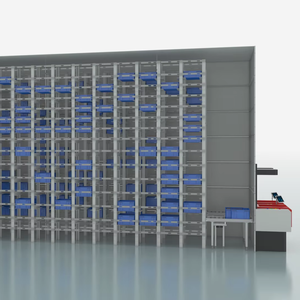
Factory Direct Steel 50kg Load Capacity Zinc Galvanized Smart Warehouse Shelving System for Small Parts and Tools Organization
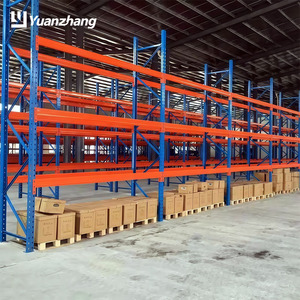
YZ Adjustable Light/weight Steel Shelving Multi-layer Heavy Industrial Metal Heavy-duty Pallet Rack Customizable Storage Shelves
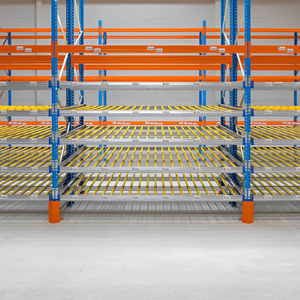
Gravity Flow Racks Flow Racking Carton Shelving Warehouse FIFO Industrial Storage System
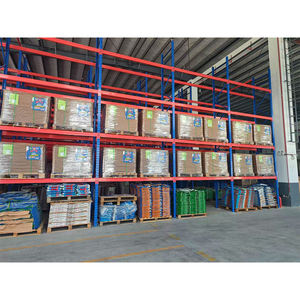
Drive in Rack Warehouse Rack Heavy Duty Metal Drive in Pallet Racking System Heavy Duty Rack Roller Display
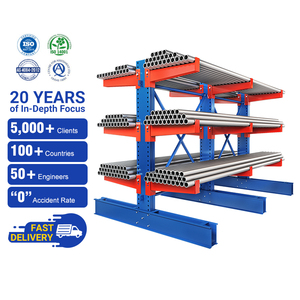
Durable Heavy-Duty Industrial Shelving Unit Durable Adjustable Cantilever Arm Racks Racking System for Warehouse Storage
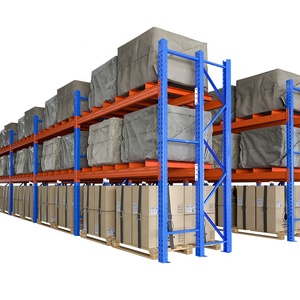
Custom Adjustable Pallet Rack Warehouse Storage Heavy Duty Shelving Pallets Racking for Warehouse Storage
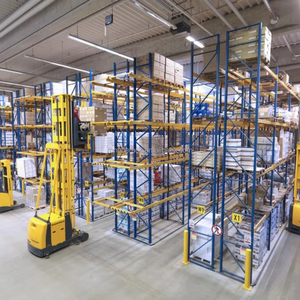
Custom Euro Very Narrow Aisle Racking System VNA Galvanized Narrow Pallet Racking for Warehouse Solution
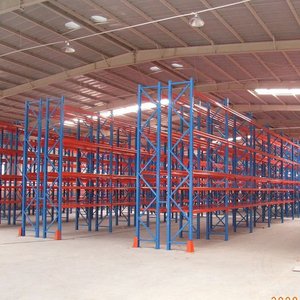
Cold Rolled Steel 5 Layer Heavy Duty Industrial Warehouse Storage Anti-corrosion Adjustable Bolt Free Standard Pallet Shelf
Kinetic Energy Dissipation & Pitch Gradient Dynamics in Roller Racks
Roller racking systems—broadly categorized into Pallet Flow Racks and Carton Live Storage—leverage gravitational potential energy to facilitate continuous, self-replenishing inventory flows. Unlike static drive-in or selective shelving, dynamic roller racking introduces kinetic variables that mandate exacting engineering calculation.
At the heart of an industrial roller system is the slope gradient profile. Standard installations maintain an incline of 2.5% to 3.5% (approx. 1.5° to 2.0°) for conventional GMA/Euro wooden pallets. However, excessive velocity results in dangerous end-of-lane impacts, while insufficient declination leads to pallet stall midway through deep lanes.
For supply chain directors and warehouse system integrators, selecting the correct roller track configuration involves assessing three technical factors: bottom-deck pallet deflection, dynamic wheel bearing load limits, and ambient thermal variances (especially in cold-storage sub-zero conditions down to -30°C where standard synthetic lubricants seize).
Eddy-Current Speed Controllers
Frictionless magnetic brake rollers eliminate mechanical wear. They dynamically adjust counter-torque based on pallet weight, ensuring uniform descent rates whether moving 300kg or 1,500kg pallets.
Separating Pallet Stops
Integrated mechanical separators isolate the discharge pallet from upstream queue pressure, alleviating back-pressure forces so forklifts extract pallets without shear drag or upright twisting.
Cold-Formed Alloy Rollers
Zinc-electroplated steel rollers rated at 150kg to 250kg dynamic rating per individual roller, featuring dual labyrinth dust seals and low-temperature synthetic grease resistant to crystallization.
Seismic Dynamic Anchorage
Structural baseplates engineered to NCh 433 (Chile), NSR-10 (Colombia), and Eurocode 8 standards to mitigate seismic acceleration harmonic amplification in high-density roller arrays.
System Architecture Comparative Analysis
Comprehensive engineering evaluation for intralogistics procurement teams comparing dynamic roller racking with conventional static and semi-automated storage regimes.
| Storage Regimes | Stock Rotation | Floor Space Efficiency | Forklift Cycle Time | Operational Energy Cost | Primary Bottlenecks |
|---|---|---|---|---|---|
| Pallet Gravity Roller Racks | Strict FIFO (100%) | 80% – 85% Density | Fastest (Separate load/unload) | Zero (Passive Gravity) | Pallet quality variations |
| Carton Live Flow Racks | Strict FIFO (100%) | 70% Picking Cube | Instant hand/tote pick | Zero (Passive Gravity) | Split-case carton dimension limits |
| Drive-In Racking System | LIFO Only | 75% – 80% Density | Slow (Mast entry inside bays) | Low (Forklift fuel only) | Frequent structural upright collision |
| Radio Shuttle Racking | FIFO or LIFO | 85% – 90% Density | Moderate (Cart cycle dependent) | Battery charging + maintenance | Electronic shuttle downtime risk |
| Selective Pallet Racking | Arbitrary / Open | 40% – 45% (Aisle-heavy) | Direct 100% SKU access | Zero (Static) | Massive warehouse footprint waste |
Future Procurement Trends in Dynamic Roller Racking
Procurement leaders are evolving beyond upfront CAPEX per pallet location. Modern warehouse capital deployment demands systems with long-term ESG compliance, digital telemetry, and AMR interoperability.
Total Lifecycle Cost (TCO) Over Steel Weight
Historic procurement selected racking purely based on tender weight and lowest cost-per-ton. However, dynamic roller systems present lifecycle maintenance realities. Buyers now calculate ROI by factoring in the replacement cycle of bearings, brake drum failure rates, and pallet snag damage. Sourcing high-grade cold-formed continuous roller tracks with modular snap-in components reduces 10-year maintenance OPEX by up to 42% compared to low-cost welded alternatives.
Procurement Shift #1AMR & AGV Roller Discharge Interfaces
With the rapid proliferation of Autonomous Mobile Robots (AMRs) and counterbalanced AGVs in 3PL and fast-moving consumer goods (FMCG) distribution centers, roller racking is shifting from human forklift interfaces to sensor-synchronized extraction. Contemporary tenders require customized front-stop assemblies with photoelectric target windows and optical reflector cutouts, ensuring robotic forks or tow-pins engage pallets without sensor occlusion.
Procurement Shift #2Decarbonization & Circular Steel Specs
Global ESG mandates are filtering directly into warehouse structural tenders. Multinational corporations now require Environmental Product Declarations (EPDs) for Q235B and Q355B structural steel. In response, our facility incorporates electric arc furnace (EAF) steel sourcing, high-solids powder coating free from volatile organic compounds (VOCs), and RoHS-certified non-toxic zinc plating, empowering buyers to qualify for LEED and BREEAM industrial building certifications.
Procurement Shift #3Technological Innovations in Roller Racking Architecture
From materials science advances in polymer chemistry to micro-telemetry on gravity tracks, discover how next-generation roller racking solves legacy warehouse friction points.
Non-Contact Magnetic Braking
Traditional centrifugal friction brake rollers suffer from mechanical lining degradation and heat buildup in high-frequency conveyor zones. Breakthroughs in permanent neodymium magnetic array integration generate eddy currents within conductive copper/aluminum drums. This produces proportional, contact-free deceleration that requires zero maintenance, operates identically in ambient and deep-freeze environments, and eliminates brake dust contamination in pharmaceutical clean-rooms.
Material ScienceIoT-Enabled Bed Telemetry & Jam Detection
Deep-lane gravity flow tracks (15 to 30 pallets deep) have historically had limited visibility between the loading charge face and the pick face. Modern OEM systems incorporate low-power, self-harvesting piezo-electric kinetic sensors embedded along the roller guide rails. These transmit real-time lane occupancy, speed anomalies, and pallet stall alerts directly to the facility's Warehouse Execution System (WES), directing staff to resolve jams before picking lines starve.
Smart LogisticsEngineered Composite Polymer Rollers
While heavy galvanized steel rollers remain the standard for 1,500kg industrial loads, carton live flow and lightweight picking operations have migrated toward specialized high-density polyurethane and acetal copolymers. These composites reduce roller rotational inertia by 65%, allowing ultra-light pharmaceutical cartons (<200g) to glide smoothly without stalling, while cutting operational decibels in busy multi-tier picking mezzanines down to under 58 dBA.
Acoustic & Weight OptimizationWhy Top Global Brands Partner with HEDA Shelves
Founded in Guangzhou in 2001, we provide industrial clients with single-source accountability. From metallurgical cold-roll forming to precision structural calculation and global shipping logistics.
30,000 Ton Monthly Output
Operating across modern manufacturing workshops equipped with automated continuous cold-bending profile roll lines, CNC robotic punching arrays, and multi-gun automated powder coating lines.
300+ In-House Engineers
Full-service structural and intralogistics engineering team. We supply customized 3D CAD drawings, static and dynamic stress analysis, beam deflection calculations (L/200), and seismic verification.
CE & ISO 9001:2015 Audited
Independent structural conformity under CE Certificate No. 2435-CPR-8605159 and ISO 9001 quality management certification. Batch metallographic testing and coating adhesion testing on every heat lot.
Container Load Optimization
Direct container stuffing at our factory. Every bundle is numbered, strapped, and nested to maximize maritime container space utilization up to 98%, cutting transoceanic landed freight costs.
Roller Racking Procurement & Engineering FAQ
Definitive answers to common technical, logistics, and compliance inquiries from warehouse architects, procurement managers, and mechanical installation supervisors.
Request an Engineering Consultation & 3D Layout
Connect directly with our structural engineering team. Send your building floor plan, pallet dimensions, and operational rotation profile to receive a full CAD layout, pitch calculation, and factory-direct quotation within 24 hours.