High-Capacity Pallet Racking Systems
Explore our export-grade standard configurations manufactured from certified Q235B and Q355B cold-rolled structural steel, optimized for load safety and global shipping container pack-out.
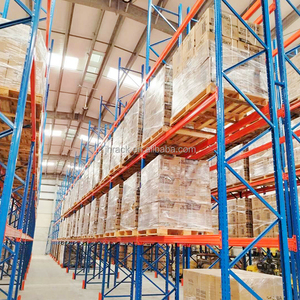
European Standard Heavy Duty Pallet Racking with Anti-Corrosion Protection
- Pitch Interval:50mm Adjustable
- Load Range:1,000 - 4,500 kg/level
- Compliance:EN 15512 / CE Standard
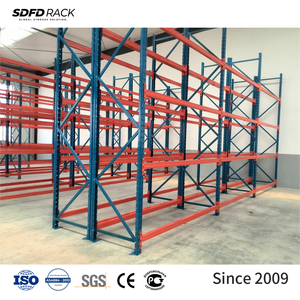
American Standard Teardrop Selective Pallet Rack System (1,000kg - 3,000kg)
- Hole Pattern:2-inch (50.8mm) Teardrop
- Beam Section:Step Beam for Wire Decking
- Safety Factor:RMI ANSI MH16.1 Certified
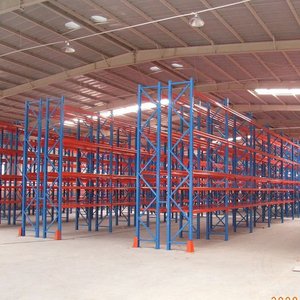
Cold Rolled Steel 5-Layer Bolt-Free Industrial Pallet Storage Shelf
- Assembly:Boltless Interlock System
- Surface:Electrostatic Epoxy Coating
- Application:Rapid-Assembly Distribution
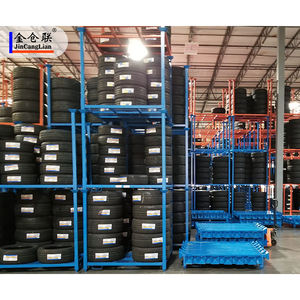
High-Standard Tubular Steel Warehouse Pallet Racking & Stacking System
- Profile:Heavy Gauge Structural Tube
- Finish:Hot-Dip Galvanized / Powder Coated
- Environment:High Humidity / Cold Storage
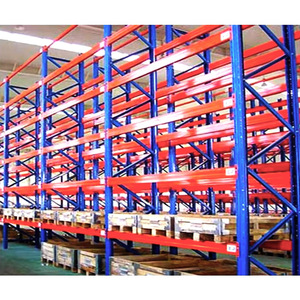
Modular Industrial Warehouse Pallet Racking System with Rapid Lock Pins
- Safety Lock:Automated Spring Pin Locking
- Beam Section:80mm - 160mm Box Profiles
- Modularity:100% Scalable Upright Extenders
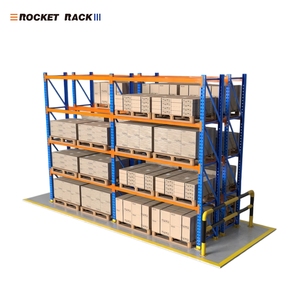
CE-Certified Heavy Duty Pallet Racking System for Dynamic Distribution Centers
- Steel Grade:SS400 / Q235B Cold Rolled
- Max Frame Load:Up to 24,000 kg Frame Rating
- Inspection:Ultrasonic Weld Verified
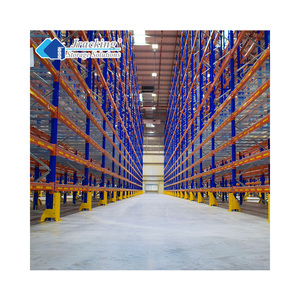
High Tensile Q355B Steel 50mm Pitch EURO Pallet Rack for Industrial Storage
- Yield Strength:fy ≥ 355 MPa Structural Grade
- Pitch Spec:50mm Continuous Pitch
- Standard:ISO 9001:2015 / CE Certified
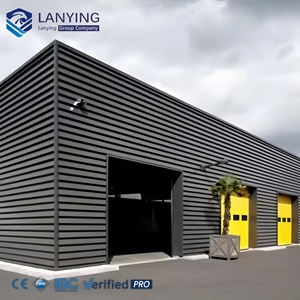
Integrated Prefabricated Steel Structure Industrial Logistics Warehouse Facility
- Engineering:Rack-Clad Supported Building Option
- Design Codes:AISC 360 / Eurocode 3 Compliant
- Span Capability:Clear Spans up to 48 Meters
Integrated Manufacturing Infrastructure Since 2001
Operating a vertically integrated 30,000 m² production campus, we provide end-to-end quality control from raw coil slit-rolling to multi-stage surface pretreatment and robotic automated welding.
Global Code Alignment
Every system is designed according to specific local building criteria, including European EN 15512, American RMI ANSI MH16.1, and Australian AS 4084-2012, eliminating compliance hurdles during municipal building inspections.
Seismic FEA Verification
We deploy ANSYS dynamic finite element analysis to compute base-plate shearing, anchor rod pull-out tensions, and beam connector moment rotation curves under intense lateral earth vibrations (PGA up to 0.45g).
Full OEM / ODM Customization
From custom beam connector claw configurations (3-claw, 4-claw, 5-claw) to specialized paint formulations matching corporate RAL color palettes, our tooling shops deliver exact bespoke fabrications.
Container Nesting Optimization
Export packaging incorporates specialized steel cradles, continuous cushioning layers, and 3D computer-simulated packing matrices that maximize container volume (up to 96% cubic efficiency) while guarding paint finish against maritime salt corrosion.
Engineering Standard Specifications & Metallurgical Criteria
A rigorous breakdown of structural tolerances, steel classifications, and safety coefficients implemented in our automated manufacturing pipelines.
| Engineering Parameter | European Specification (FEM / EN) | American Specification (RMI / ANSI) | Our OEM/ODM Factory Standard |
|---|---|---|---|
| Primary Steel Grade | EN 10025 S235JR / S355JR | ASTM A1011 / A36 / SS Grade 50 | Certified Q235B & Q355B Cold Rolled Coil with Mill Certificates |
| Beam Deflection Limit | L / 200 (Span / 200 maximum) | L / 180 (Span / 180 maximum) | Tight Tolerance: L / 220 under Maximum Rated Working Load |
| Upright Cold Roll Forming | Omega profile with return flanges | Modified C-channel with open seam | 12-Fold Continuous Roll-Formed Section for Maximum Torsional Rigidity |
| Surface Pretreatment | Degrease & Zirconium/Iron Phosphate | Acid Pickling & Rinse | 8-Stage Immersion Pickling, Phosphating, Deionized Double Rinse |
| Powder Coating Thickness | 50 - 70 μm Epoxy-Polyester | 60 - 80 μm Polyurethane | 65 - 90 μm High Cross-Link Electrostatic Powder Coating |
| Welding Quality Standard | EN ISO 5817 Level C | AWS D1.1 Structural Welding Code | Automated OTC Robotic MIG Welding with 100% Penetration Inspection |
In standard pallet racking structural engineering, the interaction between the beam connector and the upright column represents the critical determinant of system integrity. Unlike rigid frame buildings, pallet racks utilize semi-rigid beam-to-column connections. Our research and development facility performs empirical cantilever testing (in accordance with EN 15512 Annex A) to calibrate rotational stiffness ($C_d$) and design moment resistance ($M_{Rd}$). By maintaining tight roll-forming tolerances ($\pm 0.5\text{mm}$ profile deviation), we ensure that the locking tabs seat completely into the column slots, minimizing localized bolt shear failure and mitigating risk from forklift impacts during rapid turnover operations.
Future Global Procurement Trends in Pallet Racking
As enterprise logistics operations adjust to automation, supply chain volatility, and carbon border adjustments, pallet racking procurement is moving from transactional commodity purchasing to strategic structural engineering partnerships.
1. Convergence of Standard Racks with AMR & AGV Systems
Traditional manual forklift warehouses are transitioning to hybrid facilities where standard selective pallet racking must accommodate Autonomous Mobile Robots (AMRs) and automated reach trucks. This requires higher vertical plumbness tolerances (better than 1/1000 versus the traditional 1/500 allowable tilt) and continuous floor-level sensor channels.
Procurement teams are prioritizing rack manufacturers who design integrated guidance rails, bottom-clearance optimization, and laser-reflective target mounting surfaces directly into the standard upright column tooling.
2. Cold-Chain Durability & Advanced Pre-Galvanized Steel
With global cold-chain logistics expanding to support perishables and pharmaceuticals, blast freezers operating between -25°C and -35°C reveal the structural limitations of standard powder-coated mild steel, which can suffer low-temperature embrittlement and paint spalling.
Procurement departments are switching specifications to high-grade continuous hot-dip pre-galvanized coils (Z275 to Z600 coatings) or specialized low-temperature alloyed steels that prevent micro-fracturing along continuous cold-formed roll corners under dynamic thermal fluctuations.
3. Decarbonized Steel Verification & Modular Longevity
International environmental mandates (such as the EU Carbon Border Adjustment Mechanism - CBAM) are compelling corporate logistics builders to calculate the embodied carbon within their warehouse steel framing. Buyers require Scope 1, 2, and 3 emission reports from their overseas racking partners.
Concurrently, modularity has become a primary purchasing driver. Rack designs utilizing standard interchangeable component geometries enable logistics operators to adjust beam levels, expand bay depths, or reconfigure storage bays without scrapping intact steel upright frames.
Development Trajectory: The Modern Standard Pallet Rack
Trace the transition from traditional bolted angle-iron frameworks to contemporary high-tensile, automated, and digitally integrated storage infrastructures.
Bolted Frameworks & Mild Steel
Heavy reliance on field-bolted structural angles, low yield strength steels (215 MPa), high labor installation costs, and basic solvent-based wet spray paints susceptible to rapid scratching, chipping, and environmental corrosion.
Cold-Roll Formed Interlocking Systems
Adoption of specialized continuous cold-roll forming lines producing 50mm and 76.2mm pitch columns. Universal introduction of interlocking connector clips, electrostatic epoxy powder coats, and standard design safety factors based on RMI and FEM testing.
High-Tensile Micro-Alloy & Digital Twins
Transition to high-tensile micro-alloyed structural steels (yield strength $\ge 355\text{ MPa}$) delivering weight savings without compromising payload capacity. Integrated RFID load verification sensors, digital-twin structural health tracking, and zero-defect robotic weldments.
Frequently Asked Questions in Global Racking Procurement
Comprehensive engineering and commercial guidance compiled by our senior export logistics directors to assist international purchasing agents, system integrators, and facility planners.
Plan Your Standard Pallet Racking Project
Send us your warehouse CAD drawings, pallet dimensions, load weights, and forklift specifications. Our licensed structural team will provide a complete 3D layout, load calculation sheet, and container-optimized export proposal within 24 business hours.