Enterprise Logistics & High-Density Racking Systems
Manufactured under strict ISO 9001:2015 protocols, every system integrates seamlessly with turret trucks, reach trucks, and automated guided vehicles (AGV).
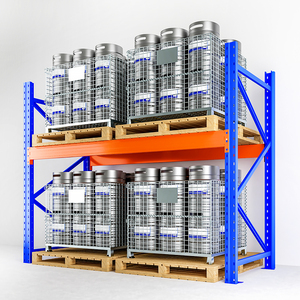
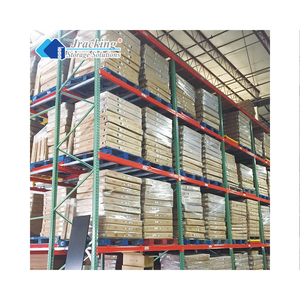
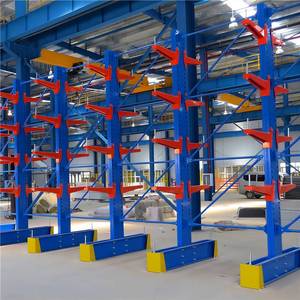
Very Narrow Aisle (VNA) Engineering: Kinematics, Tolerances & Steel Physics
A comprehensive engineering review of high-density structural calculations, guide rail dynamics, and cold-formed profile behavior under cyclic industrial loads.
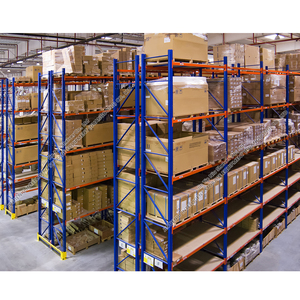
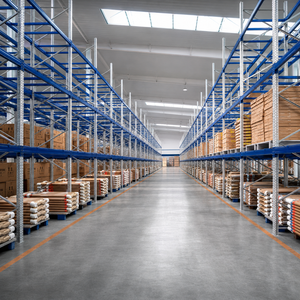
In modern supply chain architecture, logistics facilities face an acute paradox: astronomical per-square-meter land acquisition costs coupled with skyrocketing consumer throughput demands. Conventional selective pallet racking systems dedicate up to 65% of available footprint purely to material handling equipment (MHE) maneuvering corridors, requiring aisle clearances ranging from 3.2 to 3.8 meters. The Very Narrow Aisle (VNA) racking system redefines volumetric storage efficiency by compressing operating aisles down to between 1,500 mm and 1,800 mm, recapturing over 45% of dead aisle space and expanding vertical utilization upwards to 18+ meters.
However, elevating high-capacity dynamic loads across narrow profiles introduces severe physical and metallurgical challenges. As high-reach turret trucks (man-up or man-down) traverse compressed corridors at speeds surpassing 12 km/h, the structural frame must absorb kinetic vibrations, sway harmonics, and concentrated wheel-load transfers without experiencing torsional buckling or dynamic resonance. Factory-direct engineering requires precision cold-roll-forming using high-tensile Q235B to Q355B structural steel, coupled with automated CNC multi-station continuous piercing to secure millimeter-exact beam connector interlocking.
| Evaluation Parameter | Standard Selective Racking | Drive-In Racking System | VNA High-Bay Racking System |
|---|---|---|---|
| Operating Aisle Width | 3,200 mm – 3,800 mm | 3,000 mm – 3,200 mm | 1,500 mm – 1,800 mm |
| Warehouse Height Utilization | Up to 8.0 meters | Up to 10.0 meters | Up to 18.0+ meters |
| SKU Selectivity & Access | 100% Direct Accessibility | LIFO / Poor Individual Access | 100% Direct Accessibility |
| Flooring Tolerance Requirement | DIN 18202 Table 3 Group 3 | DIN 18202 Table 3 Group 3 | DIN 15620 / VDMA Guidelines |
| MHE Equipment Integration | Standard Counterbalance Forklifts | Standard Reach Trucks | Turret Trucks / AGV / Wire Guidance |
| Volumetric Efficiency Index | Baseline (1.0x) | 1.6x (Selective Bottlenecks) | 2.2x – 2.6x Footprint Density |
Unlike standard selective systems, high-bay VNA installations function as an integrated electro-mechanical assembly where the structural steel columns, floor leveling plates, and guide rails (mechanical angle steel or inductive inductive wire loops) operate under microscopic tolerances. A minor horizontal floor deviation of merely 2 mm at the floor level can magnify into an alarming 30 mm lateral tilt at a lift elevation of 15 meters. Consequently, our OEM/ODM design office incorporates specialized anchor embeds, rigid base-plate shimming geometries, and cold-formed omega-profile upright sections boasting high section modulus values to counter bending moment stresses.
Direct-From-Factory Manufacturing Authority
Founded in 2001, Guangzhou Heda Shelves Co., Ltd. operates an advanced 30,000 m² industrial facility supporting OEM/ODM projects across 120+ countries.
Free 3D Layout & Structural CAD
Our in-house design engineering department drafts full 3D AutoCAD, SolidWorks, and BIM models within 24–48 hours, customized to your floor load limits, pallet profiles, and specific seismic coefficients.
Accredited CE & ISO Quality
Certified under CE Certificate No. 2435-CPR-8605159 and ISO 9001:2015 No. 18624Q00169R0M. Steel coils undergo rigorous tensile verification, Charpy V-notch impact tests, and coating adhesion validation.
10-Stage Precision Production
Every structural member passes through CNC precision slitting, continuous multi-roller profile bending, automated robotic welding, multi-tank pickling/phosphating, and curing in an automated powder-coating line.
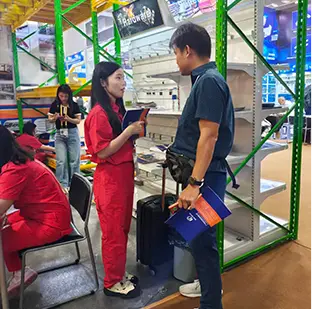
Kinematic Design
Comprehensive analysis of building clear height, MHE turn radius, and live-to-dead load ratios.
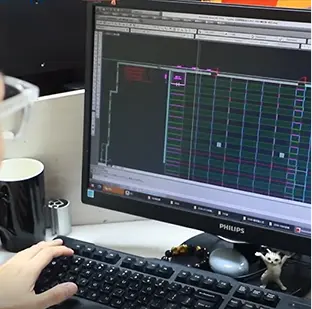
FEA Verification
Finite element stress simulations ensuring zero beam sag beyond L/200 and zero column buckle.
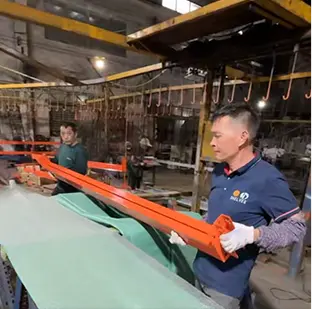
CNC Fabrication
Automated stamping lines and electrostatic powder lines ensuring 60–80 μm durable film thickness.
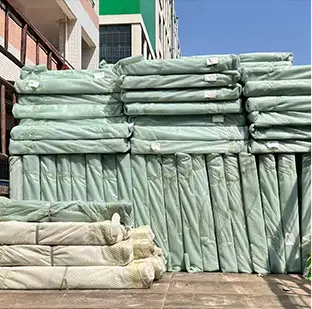
Global Dispatch
Anti-chafing sea packaging, bundle tracking tags, and turnkey export shipping to worldwide ports.
Future Procurement Trends in High-Bay VNA Architecture
Key technological transformations driving warehouse retrofits, automated guided logistics, and enterprise storage procurement over the next decade.
Integration of Hybrid Autonomous VNA AGVs
Modern procurement is rapidly pivoting from manually steered turret trucks to hybrid autonomous VNA guided vehicles. Racking profiles must integrate continuous floor-level magnetic guidance strips or optical reflectors, requiring tighter beam level clearances and precision beam stop positioning.
High-Altitude Seismic & Dynamic Damping
With warehouses pushing storage heights beyond 15 meters in seismically active regions, procurement briefs mandate dynamic energy-dissipating base connections and engineered horizontal cross-bracing frameworks capable of absorbing high-frequency earth accelerations.
Corrosion-Resistant Cold-Chain High-Bays
As cold-chain logistics hubs expand for pharmaceutical and fresh food distribution, structural racking steel faces cyclic condensation and sub-zero brittleness. Sourcing trends favor specialized low-temperature Q355D steel grades combined with duplex hot-dip galvanized or epoxy coating systems.
As automation transforms intra-logistics, warehouse stakeholders can no longer treat steel racking as static commodity hardware. Modern VNA installations serve as the rigid structural skeleton for multimillion-dollar automated guided material handling fleets. Selecting an OEM/ODM manufacturing partner with deep metallurgical mastery, automated roll-forming equipment, and verifiable seismic calculation capabilities is vital to ensuring safe, lifelong warehouse operational throughput.
Frequently Asked Questions on VNA Racking Systems
Authoritative technical guidance compiled by senior HEDA structural engineers to assist purchasing teams, warehouse directors, and supply chain consultants.
What floor flatness specifications are required for VNA installations?
Because turret trucks operate at heights exceeding 12 to 18 meters, standard industrial concrete floors are insufficient. Floors must conform to DIN 15620, VDMA 26870, or ACI F-min 75 to 100 superflat tolerances. High spots and dips cause amplified mast oscillation, which can lead to equipment collision or premature shutdown of mast height limiters.
How do mechanical steel guide rails compare to inductive wire guidance?
Mechanical guide rails (typically L-shaped structural angle profiles anchored along aisle bases) offer physical, fail-safe impact protection for upright frames and lower initial capital outlay. Inductive wire guidance embeds a low-frequency signal line in the floor cut, eliminating mechanical floor obstructions, streamlining pallet pick clearances, and decreasing tyre wear on turret trucks.
Can existing selective pallet racking be converted into a VNA layout?
Yes, provided the building height and concrete slab depth permit. Conversion requires re-engineering aisle spacing, installing top-tie bracing beams across double rows to balance lateral stiffness, upgrading upright base plates to withstand higher point-load pressures, and integrating aisle guidance systems.
What parameters must be provided to initiate an engineering layout?
To produce an exact 3D layout and structural quote, our engineers require: warehouse architectural CAD drawings (detailing column grids and obstacle heights), clear height to lowest roof obstruction, pallet dimensions and maximum payload, preferred MHE make and turning radius, and local seismic zone data.
What is the standard production timeline for international container orders?
Backed by our 30,000-ton monthly capacity, standard VNA custom profiles are manufactured within 2 to 4 weeks after drawing sign-off. Phased batch production and containerization are readily scheduled to synchronize with your site’s slab pouring and facility construction schedules.
How is vertical defection and structural safety assured under full load?
We perform rigorous Finite Element Analysis (FEA) compliant with EN 15512 and RMI standards. Every box beam profile is manufactured with an engineered upward camber to offset dead and dynamic live loads, maintaining deflection safely below the rigorous L/200 structural threshold.
Transform Your Floor Plan into a High-Density VNA Asset
Connect directly with senior structural racking engineers. From comprehensive warehouse volumetric modeling to custom OEM/ODM roll-formed sections, our technical team supplies verifiable engineering calculations and direct factory pricing.
Request a Layout Review
Receive a fully engineered 3D CAD schematic and structural quote within 24 hours.
Get a Quote