Engineered Heavy-Duty Industrial Racking & Pallet Systems
Explore our precision-manufactured storage equipment designed for extreme payloads, high-throughput logistics terminals, and multi-tier distribution warehouses across global supply chains.
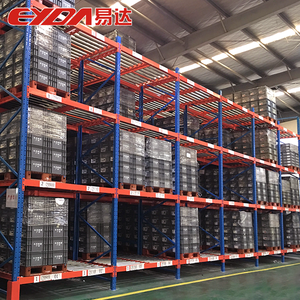
5 Layer Metal Pallet Flow Rack Gravity Storage Racks Heavy Duty Multi-Level Warehouse Industrial Cargo Storage Equipment
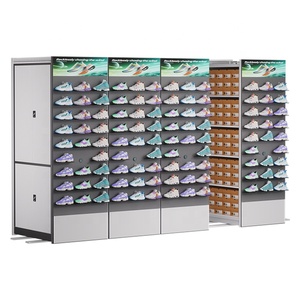
Shoes & Clothes Retail Mobile Shelving Customized Sliding Roller Shelf System Electric Storage Compact Shelving for Space Saving
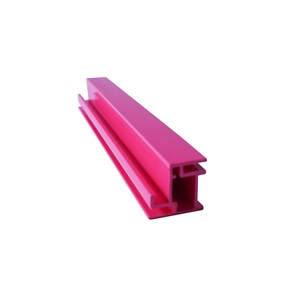
Shelving Guide Rail Industrial Flow Rail Roller Track Sliding Shelf System for Warehouse Gravity Flow Rack
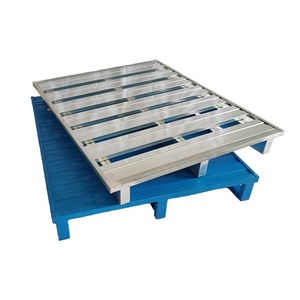
Hot Sale 1000-1500Kgs Long Life Warehouse Powder Coating Industrial Heavy Duty Forklift Storage Galvanized Steel Metal Pallets
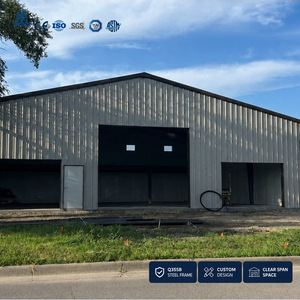
Prefabricated Steel Warehouse High Bay Storage Building Pallet Racking System Distribution Facility Space Planning
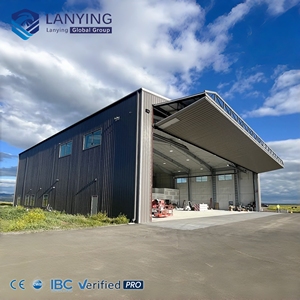
Fireproof Prefab Metal Frame Building Heavy-Duty Industrial Storage Workshop Garage Shed Steel Structure Warehouse Hangar
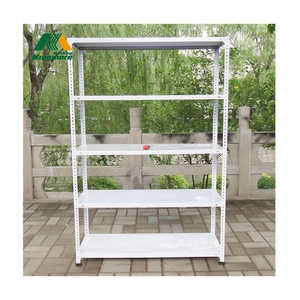
Warehouse Storage Metal Light Duty Slotted Angle Racking Shelf
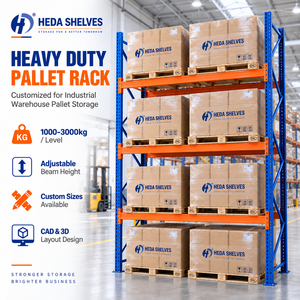
Heavy Duty Pallet Rack Industrial Warehouse Storage Racking System for High Load Pallet Storage
Structural Mechanics & Load Dynamics of Industrial Cantilever Racking
Unlike conventional selective pallet racking that relies on front upright columns to transfer axial compressive loads directly to concrete slab footings, a warehouse cantilever racking system operates as an externally unbraced, pure moment-resisting structural assembly. By eliminating the front vertical column, cantilever racks unlock uninhibited linear access for irregular, cumbersome, and long-span materials such as structural steel tubes, extruded aluminum profiles, lumber timber packs, PVC conduits, and sheet metal crates.
However, eliminating front support introduces severe rotational moments, arm deflection stresses, and unbraced column torsion. In professional OEM/ODM cantilever fabrication, our mechanical engineers calculate upright moments of inertia ($I_x$ and $I_y$) under maximum Uniformly Distributed Loads (UDL) to limit elastic arm deflection to less than $L/250$ or $L/300$ per the stringent guidelines of ANSI MH16.1 (RMI standard) and EN 15512 (FEM 10.2.02).
Every cantilever column produced in our Guangzhou factory is fabricated from certified hot-rolled structural I-beams (IPE, HEA, or UB profiles) or heavy-gauge cold-formed Q355B high-tensile steel, paired with massive counter-weighted bases anchoring with multi-point anchor bolts capable of handling seismic shear loads in compliance with local structural building codes.
Roll-Formed vs. Hot-Rolled Structural Cantilever Systems
A critical technical choice during the procurement and OEM/ODM engineering stage is selecting between Cold Roll-Formed Steel and Hot-Rolled Structural Steel (I-Beams). Understanding their structural behavior prevents cost overruns and material handling hazards:
- Roll-Formed Cantilever (Light-to-Medium Duty): Fabricated from cold-rolled steel coils with punched teardrop or keyhole pattern slots at 76.2mm or 100mm increments. Ideal for loads from 300 kg to 800 kg per arm. It offers cost efficiency, lightweight handling, and tool-free arm adjustability for retail distribution and plumbing wholesalers.
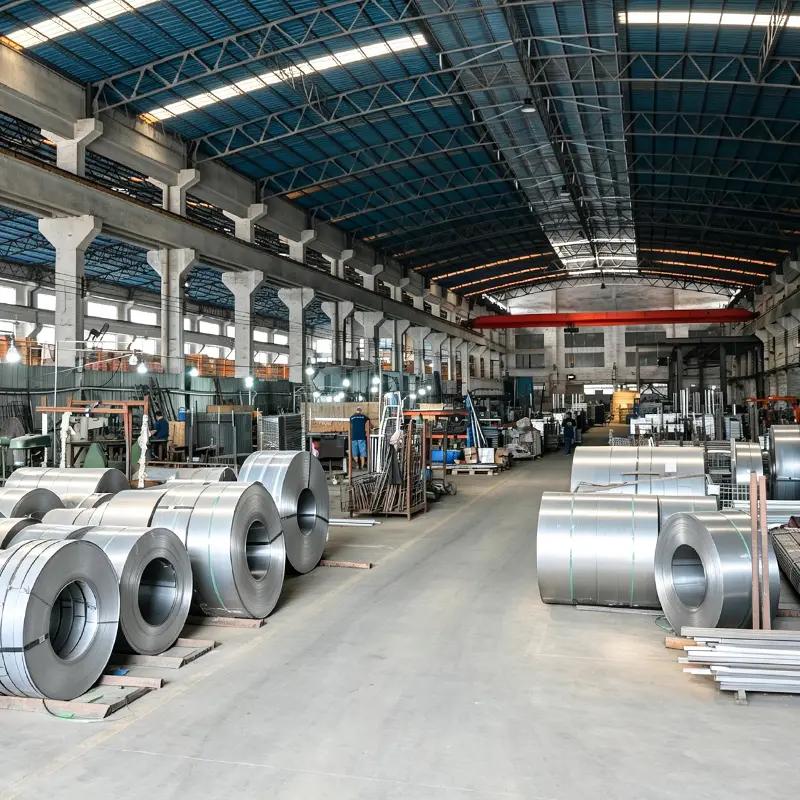
- Structural I-Beam Cantilever (Heavy-to-Extra Heavy Duty): Fabricated using hot-rolled wide flange I-beams (Q235B / Q355B or ASTM A572 Grade 50). Arms are bolted with high-strength Grade 8.8 or 10.9 structural bolts. Capable of handling 1,000 kg to 5,000+ kg per arm (up to 20,000 kg per upright column). Essential for heavy steel coil yards, lumber supply, forging workshops, and outdoor marine facilities.
Structural I-beam profiles provide exceptional impact resistance against accidental forklift collision—a vital safety advantage in aggressive warehousing environments where reach trucks maneuver heavy over-length steel bundles.
Cantilever Racking System Specification Matrix
Direct structural engineering parameters across our factory standard and custom OEM/ODM cantilever classes.
| Class Type | Material Profile | Arm Load Capacity | Column Height Range | Arm Pitch / Adjustability | Standard Surface Finish | Seismic Rating Capability |
|---|---|---|---|---|---|---|
| Light-Duty Series | Cold-Rolled C-Profile (Q235B) | 200 – 500 kg / Arm | 1,800 – 3,500 mm | 76.2 mm Pin Spacing | Electrostatic Powder (60-80μm) | Zone 1 – 2 (ASCE 7) |
| Medium-Duty Roll-Formed | Reinforced Box Profile (Q235B/Q355B) | 500 – 1,000 kg / Arm | 2,500 – 6,000 mm | 100 mm Keyway Adjust | Epoxy-Polyester Hybrid | Zone 2 – 3 (Eurocode 8) |
| Heavy Structural I-Beam | Hot-Rolled IPE/HEA Beams (Q355B) | 1,000 – 3,000 kg / Arm | 3,000 – 9,000 mm | 100 mm / 150 mm Bolted Pitch | Powder Coat or HDG (ISO 1461) | Zone 4 (NSR-10, NCh 2369) |
| Extra-Heavy Automated AS/RS | Custom Welded Box / Heavy H-Section | 3,000 – 6,000+ kg / Arm | 6,000 – 18,000 mm | Engineered Fixed / Pin Joint | Hot-Dip Galvanized (>85μm) | Zone 4+ Full Dynamic FEA |
OEM/ODM Manufacturing Infrastructure & Enterprise Authority
Backed by over 25 years of specialized racking manufacturing since 2001, Guangzhou Heda Shelves Co., Ltd. operates a premier 30,000 m² state-of-the-art intelligent manufacturing facility, producing over 30,000 tons of structural steel storage equipment every month.
End-to-End In-House Fabrication
Zero outsourcing. From automated continuous multi-station roll-forming lines and robotic laser profile cutting to robotic arm welding cells and heavy automated punching presses.
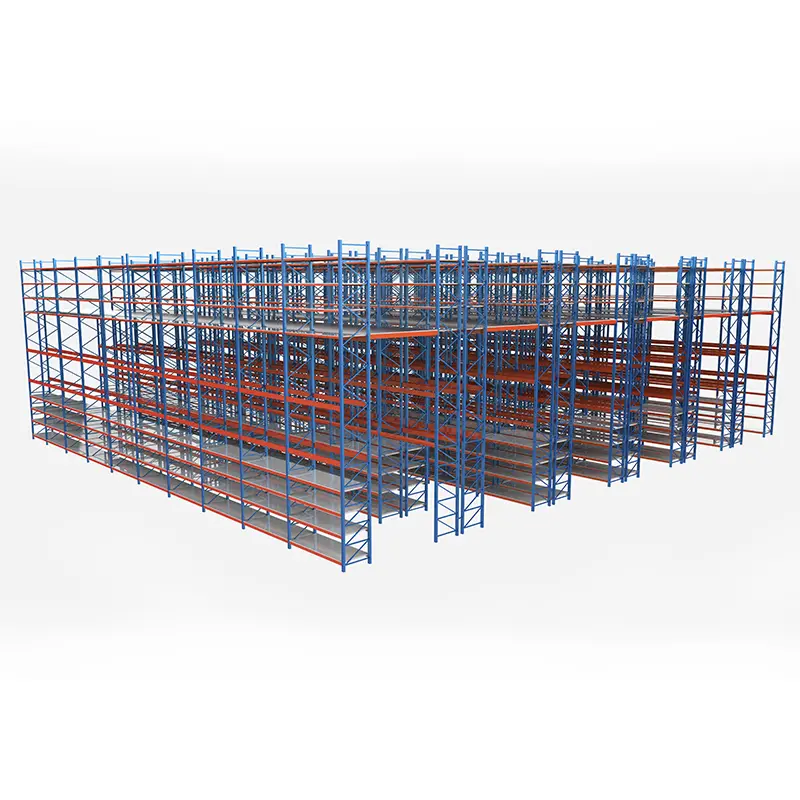
Free 3D Layout & Seismic Design
Our team of 300+ technical specialists delivers full CAD floor plans, 3D renderings, and structural engineering calculation books factoring in your local seismic coefficients within 24 hours.
Certified Rigorous Quality Control
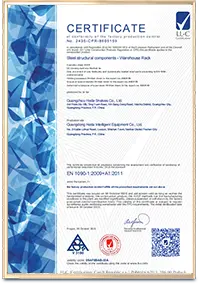
Fully compliant with CE Certificate (No. 2435-CPR-8605159), ISO 9001:2015 (No. 18624Q00169R0M), and RoHS environmental standards. Strict batch raw material spectrometry verification.
Global Sea Freight Optimization
Strategic export engineering with custom container loading blueprints. High-density component bundling and protective wrapping minimize freight volume and eliminate transit scratching.

Future Technological & Procurement Trends (2025–2030)
How progressive warehouse operators, structural steel wholesalers, and logistics directors are designing long-span cantilever infrastructure for the next generation of automation and sustainability.
AS/RS Cantilever Stacker Crane Systems
Traditional forklift aisle widths (3.8m to 4.5m) consume over 50% of floor space when handling 6-meter steel pipes. The rapid adoption of Automated Storage and Retrieval Cantilever Systems (AS/RS) uses automated single/double mast cranes with telescopic forks or vacuum handling attachments operating in narrow aisles (under 2.2m). Uprights reach heights beyond 18 meters, quadrupling volumetric density while eliminating human collision damage.
Digital Twin & Strain Telemetry
With industrial insurance audits tightening worldwide, premium cantilever projects now integrate micro-electromechanical systems (MEMS) sensors and fiber-optic strain gauges on base arm connections. These wireless telemetry nodes continuously broadcast real-time deflection data to cloud-based Digital Twin platforms, issuing preventative warnings before dangerous dynamic arm overload or forklift impact stress cracks occur.
Marine-Grade Hot-Dip Galvanizing
As manufacturing plants expand near coastal logistics zones and humid tropical regions (Southeast Asia, Latin America, Middle East), standard single-coat powder finish is insufficient for outdoor yards. High-performance Duplex Surface Protection—consisting of thermal acid pickling, hot-dip galvanization to ISO 1461 standards (>85μm zinc thickness), followed by polyester TGIC architectural powder coating—offers 30+ years of rust immunity against salt fog and industrial SO₂.
Cantilever Racking Procurement & Engineering FAQ
Authoritative answers to the most critical technical, safety, logistical, and custom OEM/ODM questions asked by industrial procurement directors and project engineers.
What calculations determine whether to choose Roll-Formed or Structural I-Beam Cantilever?
How do you calculate permissible arm deflection under ANSI MH16.1 and EN 15512 codes?
$$\delta = \frac{w \cdot L^4}{8 \cdot E \cdot I}$$
Where $w$ is load per unit length, $L$ is arm length, $E$ is modulus of elasticity of steel ($2.1 \times 10^5 \text{ N/mm}^2$), and $I$ is cross-sectional moment of inertia. Structural codes mandate that $\delta$ must never exceed $L/250$ under static service load, and the arm must never deflect downwards past horizontal (0°). To ensure this in real installations, HEDA Shelves engineers fabricate cantilever arms with a built-in pre-camber or upward pitch angle of 2° to 3.5°. When the design capacity is fully engaged, the tip settles smoothly to horizontal, ensuring zero risk of product slide-off.
Can HEDA Shelves cantilever racking be customized to meet high seismic zones (Chile, Peru, California, Japan)?
What are the exact differences between Single-Sided and Double-Sided Cantilever base stability?
Double-Sided Cantilever Racks: Feature symmetric arms extending from both front and rear faces of a central column, placed down the center of warehouse aisles. When both sides are loaded uniformly, overturning moments cancel each other out, transferring pure axial compressive load straight through the column into the floor slab. However, our engineering calculations always design for the worst-case scenario: 100% full payload on one side and 0% payload on the opposite side, ensuring structural equilibrium without tipping even during unbalanced operational loading.
What is the standard production lead time, and how is sea freight container space maximized?
Can roof canopies and outdoor weather cladding be directly mounted onto Cantilever systems?
Engineer Your Heavy-Duty Cantilever Racking System Today
Send your warehouse floor plans, material dimensions (length, depth, weight), and handling equipment specs. Our structural engineering team will deliver a comprehensive 3D layout, static load calculations, and a transparent factory-direct quotation within 24 hours.