Featured Heavy-Duty & Automated Storage Systems
Precision-engineered cold-rolled steel racking designed in strict compliance with FEM 10.2.02, EN 15512, and RMI standards. Inspect our premier adjustable industrial solutions below.
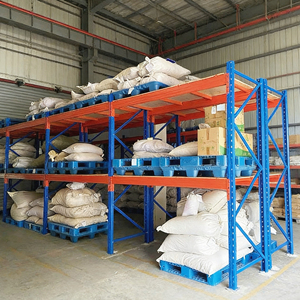
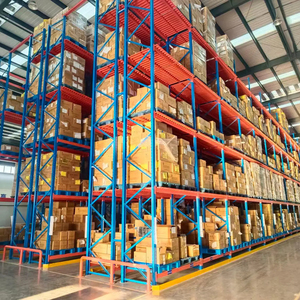
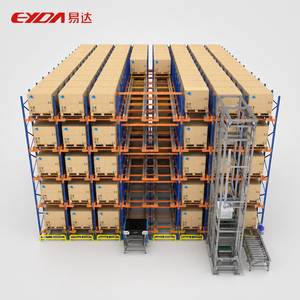
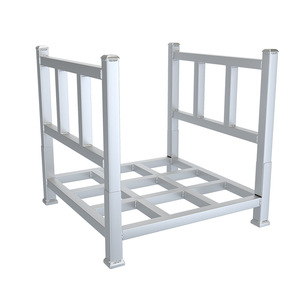
The Paradigm Shift in Adjustable Warehouse Shelving Engineering & Global Procurement
In modern supply chain architecture, modern industrial warehousing has shifted from passive storage footprint to active throughput optimization. The contemporary logistics landscape, marked by escalating land acquisition costs, dynamic SKU proliferation, and rapid e-commerce omnichannel delivery benchmarks, has fundamentally rewritten the procurement specifications for adjustable warehouse shelving and industrial pallet racking systems. Today's global distribution centers, third-party logistics (3PL) hubs, and cold-chain infrastructure require structural modularity that adapts to variable volumetric packaging, seasonal inventory spikes, and automated material handling equipment (MHE) integration without structural rebuilding.
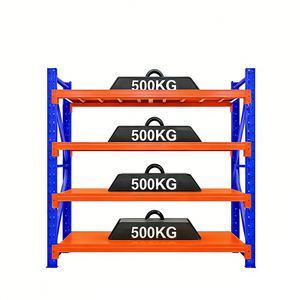
Adjustable warehouse shelving systems represent an intricate intersection of cold-formed thin-walled structural metallurgy, finite element structural analysis (FEA), and mechanical connection engineering. Unlike static welded platforms, an adjustable system derives its structural integrity, deflection limit compliance, and lateral stability from mechanical beam-to-column interlocking connectors, reinforced base plate anchorages, and triangulated cross-bracing frameworks. The engineering imperative requires that every horizontal load level remain vertically adjustable—typically on 50mm, 75mm, or 76.2mm (3-inch) pitch increments—while preserving load-bearing capacities exceeding 4,000 kg per beam pair and cumulative bay loadings surpassing 20,000 kg.
Critical Engineering Insight (FEM 10.2.02 / RMI Standard): Beam end connectors must incorporate multi-claw locking tangs forged from high-ductility structural plate alongside automated safety locking pins engineered to withstand an upward unseating shear force of at least 5.0 kN. This ensures frame rigidity under cyclic forklift impacts, prevents accidental beam dislodgement, and maintains the rotational stiffness coefficient ($C_d$) used in frame stability calculations.
Metallurgical Specifications: Upright Omega Profiles and Box Beams
The life-safety and functional longevity of adjustable industrial shelving depend directly upon coil metallurgy and cold roll-forming tolerances. Leading global manufacturers deploy certified Q235B, Q355B, or high-tensile European standard S355JR structural steel. The primary upright column is roll-formed through continuous multi-station rolling lines into an optimized "Omega" (Ω) profile. This cross-section features multiple longitudinal stiffening ribs, returns, and flanges designed to eliminate local torsional buckling and micro-flexing under heavy eccentric compression loads.
Simultaneously, the horizontal load beams are engineered either as dual-C interlocked step beams (specifically for drop-in wire mesh decking or steel shelving panels) or twin-groove roll-formed box beams with welded high-strength end connectors. Welding must be executed by robotic arc welding stations to eliminate hydrogen cracking, uneven throat thickness, and stress concentrations. The design must maintain a mid-span elastic deflection safety factor strictly conforming to $\delta \le L/200$ (with many pharmaceutical and automated installations enforcing a conservative $\delta \le L/300$ deflection threshold under maximum permissible design working load).
Seismic Engineering Integration Across Global Fault Lines
A decisive differentiator among premier racking exporters is the capacity to model and certify adjustable shelving under site-specific dynamic seismic loading. Across geologically volatile regions—including the Pacific Rim, the Andean belt of South America (Chile, Peru, Ecuador, Colombia), and seismically active regions across the Mediterranean and North America—racking is legally classified as an engineered building structure.
Exporters must conduct non-linear pushover and dynamic response spectrum analyses following building regulations such as Chile's NCh 2369 / NCh 433, Peru's E.030, Colombia's NSR-10, and the American ASCE 7 / RMI MH16.1 codes. Structural adjustments include augmenting the footprint of heavy-gauge baseplates, introducing epoxy chemical resin embedment anchoring, sizing oversized diagonal bracing nodes, and stiffening the semi-rigid beam-to-column connector moment parameters.
Top 10 Adjustable Warehouse Shelving Manufacturers & Global Exporters
Evaluating the world's most capable industrial shelving manufacturers requires scrutinizing factory-direct fabrication capacity, international certification portfolios, seismic engineering capabilities, and global logistical fulfillment. The matrix below benchmarks the top 10 manufacturing entities dominating industrial supply chains worldwide.
Structural Performance Benchmark: Standard vs Automated Shelving Profiles
When evaluating suppliers, procurement engineers must benchmark structural specifications against operating parameters. Below is a detailed technical comparison of standard adjustable selective racking versus compact automated shuttle systems.
| Performance Parameter | Selective Adjustable Pallet Racking | Very Narrow Aisle (VNA) Shelving | Semi-Automated Radio Shuttle System | High-Bay AS/RS Clad Structure |
|---|---|---|---|---|
| Direct Pallet Selectivity | 100% Immediate Accessibility | 100% Immediate Accessibility | Lane Dependent (FIFO / LIFO) | 100% Software Optimized (Computerized) |
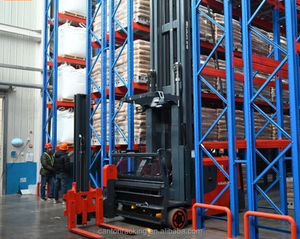
| Typical Aisle Width (mm) | 3,000 – 3,500 mm (Counterbalance) | 1,600 – 1,900 mm (Turret Truck) | 2,800 – 3,200 mm (Transfer Only) | 1,400 – 1,600 mm (Crane Mast) |
| Vertical Bay Height Max | Up to 12 meters | Up to 18 meters | Up to 15 meters | Up to 40 meters |
| Floor Footprint Utilization | 40% – 45% Active Storage | 55% – 65% Active Storage | 70% – 80% Active Storage | 85% – 90% Active Storage |
| Seismic Damping Upgrades | Baseplate + Splice + Back X-Bracing | Top Tie-Beams + Rail Anchors | Heavy Horizontal Plan Bracing Ties | Full Dynamic FEM Clad Integration |
| Surface Pretreatment & Finish | Pickling + Phosphating + Powder (65μm) | Epoxy-Polyester Electrostatic (75μm) | Galvanized Rails + Powder Frames | Continuous In-Line Hot-Dip Galvanizing |
Future Sourcing & Procurement Trends (2025–2030)
How forward-thinking procurement directors are reshaping structural storage specifications to adapt to AI, robotics, carbon footprints, and supply chain shocks.
Near-Zero Deflection for AMRs
The explosive adoption of Autonomous Mobile Robots (AMRs) and robotic reach trucks requires millimetric structural stability. Tolerances on floor anchor alignment, beam level deflection under dynamic braking, and plumbness ratios are shifting from standard 1:500 to ultra-strict 1:1000 operational deviation tolerances.
Modular Cold-Chain Expansion
With global demand for frozen food, fresh agricultural export, and temperature-sensitive biologics rising, cold-room adjustable shelving must withstand temperatures down to -30°C. Buyers are transitioning away from standard low-cost carbon steels toward modified notch-tough steels that resist cryogenic brittle fracture.
Decarbonization & Green Steel
Multinational corporate supply chains are factoring Scope 3 carbon metrics into infrastructure tenders. Factory-direct exporters using scrap-based Electric Arc Furnace (EAF) steel and solvent-free, zero-VOC powder-coating lines are earning decisive advantages in large-scale government and Fortune 500 logistics bids.
Digital Twin & Embedded IoT
Future adjustable rack uprights are actively incorporating embedded strain-gauge sensors and RFID tags. Real-time telemetry detects accidental forklift impacts, alerts facility managers to critical frame deflection, and validates live warehouse weight distributions against dynamic structural load limits.
Factory-Direct Engineering & Export Infrastructure
Rooted in over 25 years of specialized structural fabrication, Guangzhou Heda Shelves Co., Ltd. delivers verified structural safety, volume manufacturing capacity, and complete export documentation for worldwide ports.
Over two decades of dedicated R&D, precision tooling, and intralogistics system fabrication servicing 10,000+ commercial projects across 120 countries worldwide.
Operating out of a 30,000m² specialized manufacturing base with 300+ technical personnel, automated multi-station cold rolling mills, and continuous laser cutting lines.
Holding official CE Mark No. 2435-CPR-8605159 and ISO 9001:2015 Certification No. 18624Q00169R0M, guaranteeing strict traceability and compliance with structural building codes.
Our dedicated engineering group provides complete 3D warehouse layout renderings, aisle optimization simulations, and seismic static load calculations before steel fabrication commences.
Factory-Controlled 10-Stage Fabrication & Surface Treatment Protocol
Structural steel durability requires rigorous control over each chemical and mechanical phase of manufacturing. At Heda Shelves, every batch follows an uninterrupted in-house production sequence:
1. Raw Coil Metallurgy Inspection: Hot-rolled strip steel is verified for yield strength, elongation, and carbon equivalent values via batch spectrometry.
2. High-Precision Slitting & Blanking: Master coils are slit to exact millimetric tolerances using CNC automated slitting blades.
3. Continuous Multi-Station Rolling: Upright profiles pass through up to 24 cold roll-forming stages to form the stiffened Omega cross-section.
4. Automated CNC Column Punching: Precision teardrop or butterfly slot patterns are punched simultaneously to guarantee uniform 50mm or 75mm level pitch alignment.
5. Twin-Box Beam Seam Forming: Continuous automated high-frequency seam closure produces rigid box beam load profiles.
6. Robotic Welding Cells: Heavy-gauge multi-claw connector brackets are welded to beams with calibrated Panasonic robotic MIG stations.
7. Multi-Stage Chemical Acid Pickling: Steel components undergo chemical bath immersion to eliminate scale, rust, and surface oxides completely.
8. Zinc Phosphating Pre-Treatment: Creates a dense micro-crystalline zinc-phosphate conversion layer for maximum powder adhesion and moisture resistance.
9. Electrostatic Powder Application: Thermosetting epoxy-polyester powder is uniformly sprayed in automated booths to achieve 65–85 μm dry film thickness.
10. High-Temperature Infrared Curing & Packing: Cured at 200°C for high impact, cross-hatch scratch resistance, then nested with bubble wrap and steel strapping for container shipment.
Frequently Asked Questions for Industrial Buyers & Importers
Direct answers from our structural engineering and export logistics departments covering trade compliance, freight nesting, structural certification, and project execution.
How do you optimize 40ft High Cube (40HQ) container utilization for bulky racking?
Adjustable shelving components present varied geometries: long upright frames and horizontal beams create nested volumetric challenges. Our logistics engineers run 3D container packing software for every order, nesting beams within upright bundles, utilizing custom steel cradles to avoid scratching powder coatings, and ensuring weight distribution is strictly within standard gross road-weight limits (typically 24–26 metric tons per 40HQ container). This minimizes landed freight costs per pallet location.
Can your engineering team calculate seismic parameters for South America and the Pacific Rim?
Yes. We routinely incorporate local seismic acceleration parameters ($S_s, S_1$, site soil class factors) directly into our finite element structural models. For projects in Chile (NCh 433 / NCh 2369), Peru (E.030), Colombia (NSR-10), and the USA (ASCE 7), we upgrade baseplate surface areas, specify Hilti or Fischer chemical capsule anchor bolts, thicken bottom upright wall gauges, and integrate triangulated spine-plane cross-bracing frameworks.
What documentation is provided to satisfy local building authority permitting?
Every commercial racking contract includes comprehensive project documentation: detailed 2D CAD architectural layouts, structural cross-sections, 3D spatial renders, engineering calculation sheets demonstrating compliance with beam deflection limits ($\delta \le L/200$) and column capacity charts, mill test certificates (MTC) detailing steel yield points, CE declarations of conformity, and official ISO 9001:2015 quality certificates.
How is rust and corrosion prevented in coastal warehouses and cold-storage freezers?
Standard indoor warehousing benefits from our 10-stage chemical pickling, zinc phosphating, and 70μm electrostatic epoxy-polyester powder finish. For high-humidity coastal sites (e.g., Santos, Guayaquil, Buenaventura) or refrigerated cold rooms experiencing condensation cycles, we supply pre-galvanized or full hot-dip galvanized (HDG per ASTM A123 / ISO 1461) beam and upright components for lifetime rust prevention.
What is the standard production lead time for utility and high-bay projects?
Backed by our 30,000-ton monthly capacity, standard selective pallet racking orders of 1 to 5 full container loads (FCL) are fabricated and dispatched within 15 to 25 business days following CAD drawing and color sign-off. High-bay AS/RS systems and complex multi-tier mezzanine structures requiring specialized tooling or thick-walled hot-rolled channels are scheduled in phased container dispatches tailored to your construction milestones.
How do you manage overseas installation and assembly verification?
All manufactured structural uprights, beams, row spacers, and diagonal braces are tagged with embossed or color-coded component part numbers matching the supplied assembly manuals. We supply complete 3D exploded-view installation drawings. For large distribution centers and complex radio shuttle or mezzanine platforms, we provide direct video engineering consultations or dispatch senior installation supervisors directly to your site.
What crucial data is required to generate a tailored warehouse layout?
To deliver an engineered 3D floor plan and static structural calculation, we require: (1) Warehouse architectural drawings showing column grid locations, clear eaves height, and slab load capacity; (2) Pallet specifications (width, depth, overall load height including pallet, and maximum gross weight); (3) Material handling equipment profile (forklift model, minimum turning aisle width, and maximum lift height); (4) Inventory turnover strategy (FIFO vs. LIFO).
Are customized OEM/ODM profiles and custom RAL colors available?
Yes. As a true factory-direct manufacturer, we offer complete OEM and ODM customization. We can match existing warehouse profiles, manufacture proprietary connector hooks for regional distributors, roll-form bespoke upright dimensions, and match corporate brand aesthetics with precise electrostatic powder coating across the entire industrial RAL color spectrum (standard safety orange RAL 2004, gentian blue RAL 5010, silver grey RAL 7035, and signal yellow RAL 1023).
Design Your Optimized Industrial Warehouse Layout Today
Partner directly with an established engineering manufacturer. Submit your facility floor plan, clear ceiling heights, and pallet specifications to receive a comprehensive, complimentary 3D layout simulation, structural load calculation, and direct FOB/CIF container price quotation within 24 hours.