Featured Gravity Flow & High-Density Racking Systems
Engineered for dynamic pallet acceleration control, maximum cubic storage utilization, and seamless First-In, First-Out (FIFO) material handling.
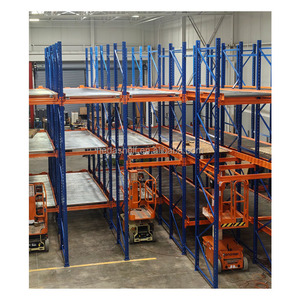
Heda Manufacturer Wholesale Heavy Duty Steel Gravity Flow Rack Customizable Warehouse Racking System FIFO
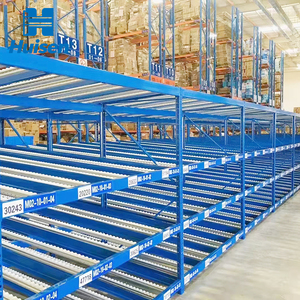
Automated Adjustable Durable Heavy Duty High Density Gravity Roller Shelves Steel Flow Rack Shelving System
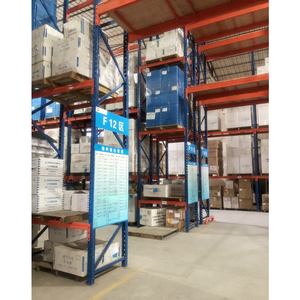
Custom Height Layer Beam Pallet Racking Rust Proof Surface Treatment Heavy Duty Cargo Stacking Rack
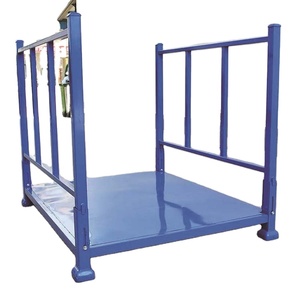
Stacking Heavy Duty Pallet Rack Gravity Racking Folding Logistics Freight Storage Equipment Blue
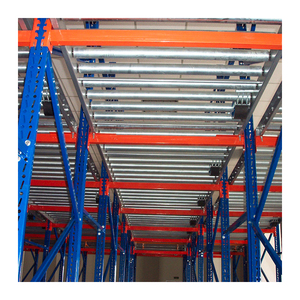
Pallet Flow Rack High Quality FIFO Warehouse Storage Racks Gravity Pallet Flow Racking First In First Out System
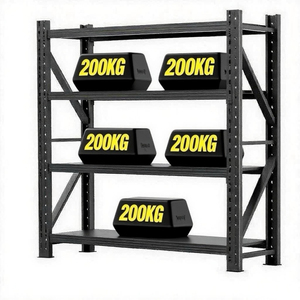
Boltless Racking System Cold-rolled Steel Anti-Rust Powder Coated Freestanding Commercial Rack
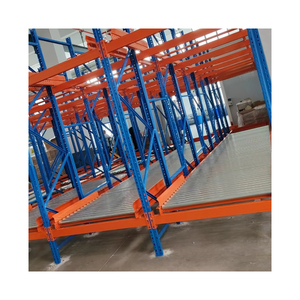
High Quality FIFO Gravity Carton Flow Rack Pallet Rack System Pallet Flow Racking Warehouse Equipment
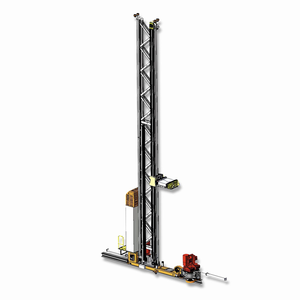
Pteris Miniload-Single Column-High Speed Warehouse Racking Systems ASRS Automated Shuttle Pallet Racking
Engineering Architecture & Kinematic Principles of Gravity Racking
A deep dive into structural mechanics, slope physics, deceleration dynamics, and payload friction coefficients for industrial gravity flow systems.
A Gravity Racking System (commonly designated as Gravity Flow or Pallet Flow Racking) represents the pinnacle of unpowered high-density dynamic storage engineering. Operating on the principle of controlled kinetic energy utilization via Earth's gravitational force, these structures utilize inclined roller tracks—typically set at a precision pitch gradient of 2.5% to 4.0% (1.5° to 2.3°)—allowing unit loads to glide automatically from the loading (rear) interface to the discharge (front) pick face.
Inclined Track Kinematics
Precision-calculated slope dynamics prevent structural hang-ups while controlling terminal momentum. Engineered roller bearings compensate for bottom-board deflection across GMA, EUR, and custom wooden or plastic pallets under loads exceeding 1,500 kg per position.
Magnetic Braking Deceleration
Indirect magnetic centrifugal or friction speed controllers are strategically placed along the lane every 1.2m to 1.5m. These safety brakes regulate downhill glide speed to a safe velocity of under 0.3 m/s, mitigating dynamic impact forces at the unloading face.
Pallet Separator Safety Locks
Heavy-duty mechanical separation mechanisms physically isolate the front discharging pallet from rear line-pressure loads. By removing back-pressure (which can equal up to 300% of single pallet mass on deep lanes), forklifts extract pallets without friction bind or tipping hazards.
Information Gain: Mechanical Load Calculation Formula for Deep-Lane Gravity Flow
When engineering lanes exceeding 10 pallet positions deep, line pressure ($P_{line}$) exerted on the front pallet face must be mitigated. The mathematical relationship governing unseparated line pressure is expressed as:
Pline = N × W × (sin(θ) - f × cos(θ))
Where N = number of trailing pallets, W = unit weight per pallet (kg), θ = lane inclination angle, and f = rolling coefficient of friction (typically 0.025 for heavy-duty zinc-plated steel rollers with sealed precision ball bearings). Without mechanical pallet separators, line pressure on a 15-lane system holding 1,200 kg pallets can exceed 600 kg of lateral pressure against the leading unit, posing severe risks during forklift tilt and extraction movements.
Structural & Operational Comparison: Gravity Flow vs. Alternative High-Density Systems
| Performance Metric | Gravity Flow Racking | Drive-In Racking | Push-Back Racking | Radio Shuttle Racking |
|---|---|---|---|---|
| Inventory Rotation Logic | Strict FIFO (First-In, First-Out) | LIFO (Last-In, First-Out) | LIFO (Last-In, First-Out) | Configurable (FIFO & LIFO) |
| Storage Density Efficiency | Very High (Up to 85% Floor Utilization) | High (Up to 65% Floor Utilization) | Moderate-High (2–6 Pallets Deep) | Extreme (20+ Pallets Deep) |
| Forklift Travel inside Aisles | Zero (Dedicated Load/Unload Aisles) | High (Forklift drives inside racks) | Zero (Front aisle loading/unloading) | Zero (Shuttle carries pallets inside) |
| Risk of Structural Damage | Ultra-Low (External aisle access) | High (Upright collision frequency) | Low (Front entry only) | Ultra-Low (Automation guided) |
| Operating Energy & Power Cost | Zero Electricity (100% Gravity Powered) | Zero Electricity | Zero Electricity | Requires Li-ion Battery Charging |
| SKU Selectivity Ratio | High per lane (Ideal for medium SKUs) | Low (Requires full aisle dedications) | Moderate per lane | High per channel |
Top 10 Gravity Racking System Factory & Supplier Evaluation Matrix
Key structural criteria procurement directors must audit when evaluating global original equipment manufacturers (OEM/ODM) vs. regional engineering integrators.
Selecting an industrial gravity flow racking manufacturer requires rigorous vetting beyond surface-level pricing. Gravity flow systems are dynamic structural assemblies subjected to continuous kinetic impacts, rolling stress fatigue, and vibration loading. Below are the critical engineering benchmarks used by global supply chain auditors to classify top-tier factories:
1. High-Tensile Structural Steel Standards
Top factories exclusively use certified cold-rolled structural steel, such as SS400, Q235B, or Q355B grades. Uprights must feature continuous cold-roll forming profiles with multi-ribbed bend cross-sections to maximize section modulus ($Z_x$) and resist flexural torsional buckling under full load conditions.
2. Advanced Surface Pre-Treatment & Powder Coating
Durable roller tracks and steel uprights must undergo a 9-stage automated surface pre-treatment sequence—including acid pickling, degreasing, zinc phosphating, and nano-ceramic rinsing—followed by thermosetting electrostatic epoxy-polyester powder coating (60–90 μm thickness) or hot-dip galvanization for cold storage (-30°C) environments.
3. Certified Roller Track Mechanics & Braking QC
Every roller assembly must be rated for dynamic load endurance testing over 100,000 continuous gravity cycles. Speed controller brake mechanisms must utilize precision magnetic eddy-current or internal friction drag rings to guarantee non-fading braking performance across fluctuating ambient temperatures.
4. Seismic Structural Design & International Compliance
Leading suppliers deliver full engineering calculations aligned with FEM 10.2.02, RMI (Rack Manufacturers Institute), AS4084-2012, or Eurocode 3 (EN 1993-1-3). Systems destined for seismic zones (e.g., Chile NCh 2369, Peru E.030, US IBC) must integrate upgraded base plates, anchor bolts, and rear diagonal bracing towers.
Future Sourcing & Technological Trends in Gravity Flow Storage
How next-generation material science, smart sensor networks, and hybrid automation are transforming gravity racking into an intelligent node for Industry 4.0 logistics.
IoT Gravity Sensors & Real-Time Stock Telemetry
The integration of ultra-low-power micro-load cells and optical time-of-flight (ToF) gravity sensors directly inside roller beds enables real-time physical inventory counting. As pallets slide forward, gravity triggers instant data transmissions to Warehouse Management Systems (WMS), eliminating manual cycle counting in cold rooms and FMCG hubs.
Hybrid AMR/AGV Load & Unload Interfaces
Modern gravity flow systems are moving toward full integration with Autonomous Mobile Robots (AMRs) and Automated Guided Vehicles (AGVs). Customized entry guide funnels and precision mechanical stop plates allow AGV forks to automatically deposit and extract pallets from gravity channels with sub-millimeter positioning accuracy.
Sustainable Eco-Coatings & Modular Circularity
Procurement departments are enforcing strict Scope 3 carbon emission requirements. Future gravity racking manufacturing prioritizes 100% recyclable cold-formed structural steel, zero-VOC powder coatings, and modular boltless roller tracks that can be disassembled, re-pitched, and expanded without structural cutting or field welding.
Why Partner with HEDA Shelves: Global OEM & Engineering Leadership
Direct factory capabilities, end-to-end quality control, and tailor-made structural storage solutions engineered since 2001.
Founded in 2001, Guangzhou Heda Shelves Co., Ltd. stands as a world-class designer, manufacturer, and global exporter of high-density warehouse storage systems. Operating out of a state-of-the-art 30,000 m² production base supported by over 300 skilled engineers and technical specialists, HEDA Shelves delivers verified factory-direct strength to importers, logistics integrators, and enterprise facility operators worldwide.
30,000 Tons Monthly Capacity
High-speed automated roll-forming lines, robotic welding stations, and continuous punching equipment ensure on-time delivery for mega-scale distribution hubs.
ISO 9001:2015 & CE Certified
Strict internal quality assurance verified by international inspection bodies. Full raw material mill test reports (MTR) provided for every production batch.
Free 3D & CAD Layout Engineering
Our in-house structural engineers prepare customized 3D BIM models, CAD floor plans, and seismic clearance simulations within 24 hours of inquiry.
Global Port & Logistics Optimization
Specialized export packing and nested steel component loading protocols maximize container payload density, drastically reducing ocean freight costs per pallet position.
Frequently Asked Questions (Technical & Sourcing FAQ)
Expert answers to common engineering, procurement, installation, and operational queries regarding gravity flow storage installations.
What is the optimal pitch angle for gravity flow pallet racking lanes? +
How do speed controllers prevent pallets from runaway acceleration on deep lanes? +
Why is a pallet separator mandatory on deep gravity flow lanes? +
Can gravity racking systems operate reliably inside cold storage & freezer rooms? +
What pallet types are compatible with gravity flow roller beds? +
How does gravity racking compare in cost per pallet position against selective racking? +
What maintenance routine is required for gravity flow roller tracks? +
What lead time and shipping options does HEDA Shelves offer for international orders? +
Whether you are retrofitting an existing distribution warehouse or engineering a greenfield cold-chain logistics facility, partner with Guangzhou Heda Shelves Co., Ltd. for high-performance, precision-engineered gravity racking systems built to international safety standards.
Send an Inquiry