Direct from certified manufacturing centers: Structural I-beam and roll-formed cantilever solutions, automated high-bay warehouses, and heavy-duty industrial framing built to ISO 9001:2015 and CE standards.
Top 10 Heavy Duty Cantilever Racking System Manufacturers & Exporters
An objective, technical evaluation of world-class cantilever system fabricators, examining steel structural grades, engineering compliance, export infrastructure, and project execution capacity.
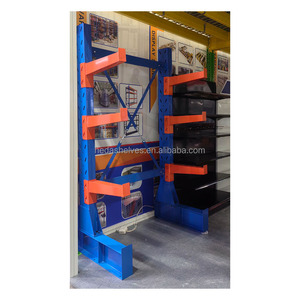
Cantilever racking systems represent the structural backbone for storing non-standard, long-span materials such as structural steel tubes, lumber packs, PVC profiles, sheet metals, and extruded aluminum. Unlike standard pallet racks that rely on front upright columns, cantilever designs feature an open-front profile supported by central vertical towers and high-moment cantilever arms. Sourcing these massive load-bearing frames requires an in-depth understanding of engineering certifications (EN 15512, RMI MH16.1, FEM 10.2.02, NCh 2369) and global logistics capabilities. Below is an exhaustive structural evaluation of the leading global manufacturers and exporters dominating the sector.
1. HEDA Shelves (Guangzhou, China)
Established in 2001, Guangzhou Heda Shelves Co., Ltd. operates a high-capacity 30,000 m² automated facility delivering 30,000 tons monthly. Renowned for custom structural I-beam cantilever configurations capable of supporting over 3,000 kg per arm, HEDA excels in engineering seismically fortified systems for demanding logistical zones across South America, Southeast Asia, and Europe. Fully certified under CE (2435-CPR-8605159) and ISO 9001:2015.
2. OHRA Regalanlagen (Kerpen, Germany)
Globally recognized as the pioneer of the articulated clipping cantilever arm, OHRA focuses exclusively on heavy hot-rolled structural steel profiles (HEB/IPE profiles). Their systems feature self-releasing swinging arms that pivot on impact to eliminate structural mast deflection during forklift collision in high-density European lumber and steel distribution centers.
3. SSI SCHAEFER (Neunkirchen, Germany)
A global intralogistics powerhouse, SSI SCHAEFER engineers heavy-duty cantilever systems integrated with automated guided vehicle (AGV) interfaces and automated cranes. Their heavy designs incorporate multi-tier roof-supported rack architecture, converting outdoor cantilever storage into full-enclosure weather-protected facilities without secondary structural columns.
4. Mecalux (Barcelona, Spain)
Mecalux operates massive manufacturing networks throughout Europe and the Americas. Their cantilever systems offer both light-duty roll-formed arms and extra-heavy hot-rolled structural steel towers. Mecalux pairs its mechanical racking with proprietary Easy WMS software, optimizing long-load put-away pathways for side-loader and multi-directional trucks.
5. Frazier Industrial Company (Long Valley, NJ, USA)
Recognized across North America as the standard for structural steel storage, Frazier exclusively utilizes structural channel steel (minimum 50,000 PSI yield) rather than roll-formed sheet. Their heavy-duty cantilever racks feature rigid structural upright columns bolted to heavy wide-flange bases, engineered to resist severe forklift impact in harsh operating environments.
6. Stow Group (Spiere-Helkijn, Belgium)
Stow delivers high-precision engineered cantilever systems adhering strictly to European FEM design codes. Their product architecture features high-torsion resistance bases and arms equipped with integrated retention pins, removable stoppers, and custom roll-off limiters specifically tailored for aluminum extrusion distributors and aerospace bar storage.
7. Kimer Racking (Valencia, Spain)
Kimer distinguishes itself through high-grade cold-formed and hot-rolled hybrid designs engineered via proprietary finite element analysis (FEA). Their cantilever arms utilize double-tapered profiles that optimize steel mass distribution, ensuring that maximum cross-sectional resistance is focused at the column-arm moment connection where stress concentrates.
8. Steel King Industries (Stevens Point, WI, USA)
A trusted fabricator across the American manufacturing landscape, Steel King manufactures both standard roll-formed and heavy-duty structural cantilever systems. Their tubular steel bracing packages provide high torsional resistance under asymmetric dynamic arm loads, making them ideal for heavy steel coils, sheet packs, and automotive dies.
9. Dexion (Constructor Group, Norway/Germany)
Operating under Gonvarri Material Handling, Dexion provides versatile cantilever systems tailored for timber yards, PVC pipe manufacturing, and plumbing supply operations. Dexion emphasizes modularity with adjustable pitch spacing (typically 75mm or 100mm) and an extensive suite of specialized arm end stops, deck bridges, and pipe axle saddles.
10. Ross Clarke Material Handling (Salinas, CA, USA)
Specializing in custom outdoor cantilever installations, Ross Clarke manufactures rugged structural racking engineered with hot-dip galvanization and comprehensive canopy roof trusses. Their designs integrate rain shedding, snow load calculations, and wind overturning engineering for agricultural piping and heavy timber yards located in harsh environments.
Engineering Specifications
Structural Cantilever Design Matrix: Hot-Rolled I-Beam vs. Roll-Formed Steel
Future Procurement & Engineering Trends in Cantilever Storage (2026–2030)
How automated material handling, green steel procurement, and IoT load sensors are transforming long-load management.
1. Autonomous Cantilever Stacker Cranes & AGVs
The manual handling of 6-meter steel beams via side-loaders carries substantial workplace safety risks. Warehousing operations are shifting toward cantilever AS/RS where automated stacker cranes with telescopic forks navigate ultra-narrow cantilever aisles (VNA), managed via direct WCS integration.
Dynamic strain-gauge sensors embedded directly into high-moment cantilever arm root joints allow warehouse safety managers to track real-time deflection. Early warning IoT systems flag accidental point-overloading before arm plastic deformation or catastrophic upright tower buckling occurs.
Global procurement teams prioritize vendors offering verifiable carbon footprints. Forward-thinking manufacturers are adopting low-emission electric arc furnace (EAF) certified steel billets alongside heavy metal-free, zero-VOC thermosetting powder coatings that resist coastal humidity.
Enterprise Distinction
Why Global Supply Chains Trust HEDA Shelves
Over two decades of precision manufacturing, strict structural certifications, and dedicated export logistics.
25+ Years Industrial Heritage
Founded in 2001, HEDA Shelves combines quarter-century structural engineering know-how with modern manufacturing infrastructure to eliminate design vulnerabilities.
30,000t Monthly Output
Our 30,000 m² facility features automated laser-cutting, multi-axis automated column punchers, and continuous pre-treatment powder coating lines for short lead times.
Seismic Structural Compliance
Every cantilever project undergoes bespoke load verification against specific site seismic zones, including South American standards (NCh 2369, E.030, NSR-10) and European EN 15512.
Free 3D & CAD Engineering
Supply your architectural layout and inventory profile to receive accurate 3D spatial renders, structural calculation models, and container optimization manifests within 24 hours.
Procurement Due Diligence
Frequently Asked Questions: Heavy Duty Cantilever Racking
Answers to common structural, logistics, and compliance questions faced by global engineering teams.
How do you calculate cantilever arm deflection under distributed loads?
Cantilever arm deflection (δ) is calculated using structural beam formulas where δ = (w · L4) / (8 · E · I), with w representing uniform load per unit length, L being arm length, E representing Modulus of Elasticity (210,000 N/mm² for steel), and I representing the cross-sectional moment of inertia. Global standards dictate that maximum deflection under full static rated load must not exceed L/200 to L/300, avoiding dangerous load slope slippage.
What is the key difference between Roll-Formed and Hot-Rolled Cantilever systems?
Roll-formed cantilever systems are manufactured by passing cold coil sheet through roll tooling, providing cost-efficient, adjustable solutions for light-to-medium loads (furniture, light PVC). Hot-rolled structural cantilever uses heavy structural I-beams (such as IPE or HEA profiles) with solid steel base connections. Hot-rolled systems are far more resilient against heavy forklift impact and are required for heavy steel tubing, dies, rebar bundles, and outdoor lumber facilities.
Can cantilever systems be designed for high seismic zones (e.g., Chile, Peru, California)?
Yes. Heavy duty cantilever systems installed in earthquake-prone regions must withstand significant dynamic overturning moments caused by horizontal seismic acceleration. Structural engineers reinforce the column base plates, incorporate high-tensile chemical wedge anchors into reinforced floor slabs, and construct rigid heavy X-braced vertical towers to prevent cross-aisle and down-aisle structural collapse.
What surface treatments protect outdoor cantilever racks from corrosion?
For outdoor lumber and piping yards, hot-dip galvanization conforming to ISO 1461 / ASTM A123 is the gold standard. The molten zinc bath coats inner cavities and outer surfaces, offering 20–50 years of sacrificial cathodic protection against salt air, rain, and UV degradation. For controlled internal warehouses, a multi-stage pickling, phosphating, and electrostatic thermosetting powder coat (80–100 μm) is recommended.
How are heavy duty cantilever components packed for international shipping?
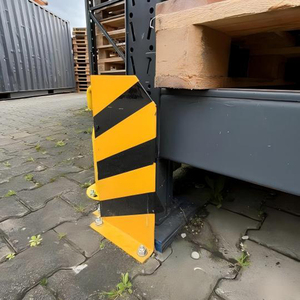
Heavy structural masts and base beams are systematically strapped using steel banding on timber dunnage skids, with vulnerable contact points protected by fluted corrugated board and heavy protective corner guards. High-capacity arms are nested and bundle-wrapped, and all connector hardware is crated in reinforced wooden cases. Packing manifests are organized by container sequence to streamline unloading and staging.
What key data must be provided to receive a compliant cantilever quotation?
To produce an engineering design and formal quotation, provide: (1) Material dimensions [Length × Width × Height × Weight], (2) Number of arm storage tiers per mast, (3) Center-to-center column distance, (4) Operating forklift specifications and mast lift height, (5) Indoor vs. outdoor environment (wind and snow factors), and (6) Warehouse floor slab thickness and concrete compressive strength (f’c).
Transform Your Warehouse Footprint with Engineered Cantilever Systems
Consult directly with our structural engineering team. Receive comprehensive CAD layouts, structural FEA stress models, and a detailed landed-cost proposal within 24 hours.