Engineered Industrial Racking & Spatial Platforms
Precision-formed high-tensile steel solutions certified to global seismic and static structural safety benchmarks.
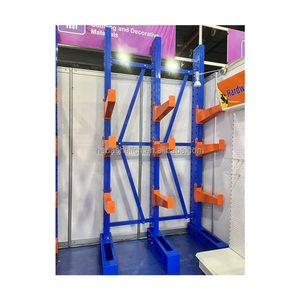
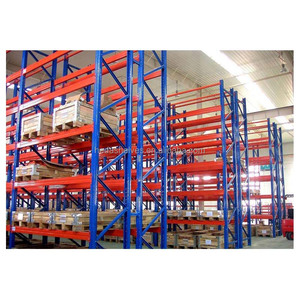
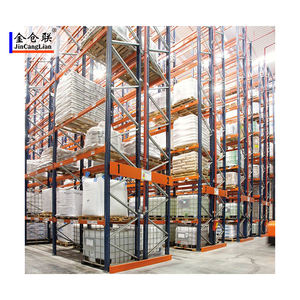
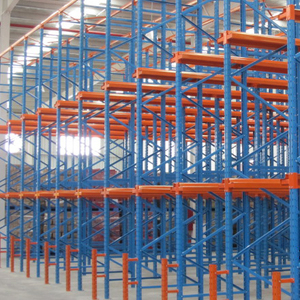
Strategic Evaluation of Top 10 Industrial Warehouse Racking Factories & Exporters
The modern logistics and fulfillment environment requires a total paradigm shift in physical storage infrastructure. As industrial facilities evolve to absorb escalating land rents, higher inventory velocity, and strict seismic safety mandates, selecting a competent manufacturing partner has become a high-stakes engineering endeavor. This report provides facility directors, chief logistics officers, and supply chain procurement specialists with the technical criteria necessary to vet the top 10 industrial warehouse racking factories and exporters globally, contrasting primary manufacturing hubs across Asia, North America, and Europe.
1. Primary Manufacturing Hubs & Structural Metallurgical Comparison
Global warehouse racking fabrication is concentrated in major industrial corridors: East Asia (predominantly Guangzhou, Jiangsu, and Shandong), North America (the US Midwest and Northern Mexico), and Western/Central Europe (Germany, Spain, and Poland). When procurement executives evaluate the top 10 exporters, the primary differentiator lies not merely in cold-forming aesthetics, but in the metallurgical pedigree of raw structural coils and quality assurance during punch-forming.
| Regional Cluster | Primary Steel Grades | Design Standards | Fabrication Lead Times | Cost Baseline & Container Logistics |
|---|---|---|---|---|
| China (Guangzhou Hub - e.g., HEDA Shelves) | Q235B, Q355B (Certified Cold-Rolled Carbon) | FEM 10.2.02, EN 15512, RMI MH16.1, CE, ISO 9001 | 2–4 Weeks (Scalable batches via 30,000t/mo capacity) | Optimized high cube container packing; lowest total landed cost per pallet slot. |
| North American Manufacturers | ASTM A1011, ASTM A36 / Structural 50 | RMI MH16.1, ANSI/AISI S100, IBC Codes | 10–18 Weeks (Subject to regional steel allocation) | High baseline labor cost; favorable inland domestic freight; expensive for ocean lanes. |
| European Manufacturers | S235JR, S355JR (EN 10025 compliance) | EN 15512, EN 15620, DIN Eurocodes | 8–14 Weeks (High automation, fixed modular toolings) | Premium tooling costs; specialized in automated clad-rack warehouses. |
2. Advanced Engineering: Seismic Dissipation, Torsion, & Dynamic Fatigue
Top-tier racking manufacturers distinguish themselves through advanced civil and structural engineering calculations. In high-risk seismic environments—such as the Pacific Rim corridor running along the western coasts of South and North America—racking is governed as an engineered building interior structure. Upright column-to-beam connectors must provide verifiable moment-rotation characteristics (ductility) to absorb dynamic vibrational energy rather than failing in brittle sheer fracture.
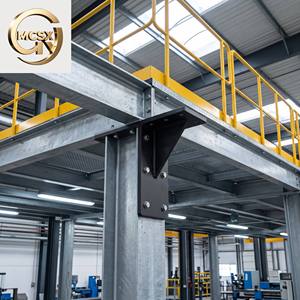
Reputable tier-one exporters implement Finite Element Analysis (FEA) to simulate extreme load distributions, beam deflections (strictly adhering to L/200 or L/250 criteria), and cyclic earthquake spectrum loads. Engineering portfolios must verify footplate thickness (up to 12mm–16mm structural base plates), heavy-gauge mechanical sleeve anchors (such as Hilti or wedge anchors with minimum embedment depths), and reinforced horizontal and diagonal K-bracing schemes to resist catastrophic twisting and frame collapse.
3. Surface Treatment Metallurgy: Phosphating, Powder Coating & Galvanization
Corrosion failure is an insidious threat, particularly across food processing distribution, maritime port warehouses, and uninsulated cold storage distribution centers. Leading exporters deploy automated 9-to-11-stage chemical pre-treatments comprising hot alkaline degreasing, acid pickling, zinc phosphating, and deionized water flushes prior to electrostatic powder application.
For standard distribution centers, AkzoNobel or PPG polyester powder cures to a standard 60–80 μm dry film thickness, resisting salt spray testing up to 500 hours without blistering. In high-humidity coastal zones (such as Santos, Callao, or Guayaquil) or sub-zero blast-freezing environments (-28°C), premier factories provide either high-yield Continuous Hot-Dip Galvanizing (HDG) to ASTM A123 / ISO 1461 standards or low-temperature thermoset polyurethanes designed to avoid micro-cracking and subsequent sub-surface rust creeping.
Warehouse Automation & Material Handling Trends
Transformational supply chain trends shaping multi-million dollar fulfillment center investments through 2030.
1. Convergence of Racking & AMR / ASRS
Facilities are pivoting from pure manual reach-truck access to automated shuttle matrices, Autonomous Mobile Robots (AMRs), and mini-load ASRS. Exporters must produce uprights with micron-level hole pitch tolerances to allow sensor calibration and smooth rail traversing.
2. Seismic & Climate-Resilient Engineering
With stringent global building codes (IBC 2024, NSR-10, NCh 2369, Eurocode 3), industrial racking is increasingly audited for catastrophic dynamic ground acceleration. Factories now integrate active moment-resisting ductile connections and oversized base plate anchors as standard.
3. High-Density Micro-Fulfillment
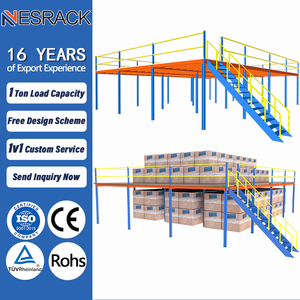
Urban real estate constraints are compelling logistics operators to exploit high vertical clear spaces via multi-tiered, rack-supported structural mezzanines and deep carton-flow dynamic runs, achieving 300% floor-area efficiency without expanding warehouse footprint.
4. Decarbonized Structural Steel Procurement
Corporate ESG policies increasingly require Scope 3 emissions tracing. Tier-one exporters are transitioning to electric arc furnace (EAF) steel with documented Life Cycle Assessments (LCAs), non-toxic heavy metal-free powder finishes, and recyclability guarantees.
5. Turnkey BIM Digital Twin Integration
Modern procurement demands structural Building Information Modeling (BIM) files up front. Top exporters deliver clash-detected 3D Revit models, ensuring beam runs do not conflict with HVAC ducts, ESFR fire sprinklers, or automated lighting grid sensors.
Enterprise Advantages of Partnering with Guangzhou Heda Shelves
Operating as a distinguished global manufacturer and premier export partner since 2001, Guangzhou Heda Shelves Co., Ltd. exemplifies the technical and logistical benchmark expected of a world-class racking factory. Situated in a sprawling 30,000 m² state-of-the-art production complex staffed by more than 300 structural engineers, precision machine operators, and project supervisors, Heda Shelves eliminates supply chain friction from conceptual CAD layouts to multi-container port discharges.
30,000 Tons Monthly Output
Continuous-feed high-speed automated roll-forming lines, automated punching matrices, and dual-track electrostatic powder booths ensure that even 10,000-pallet fulfillment contracts complete within reliable 2-to-4-week fabrication windows.
Certified Global Compliance
Structural reliability confirmed through independent accredited bodies: European CE Mark (Certificate No. 2435-CPR-8605159), ISO 9001:2015 Quality Management Systems (No. 18624Q00169R0M), and strict RoHS eco-compliant surface finishes.
Bespoke Seismic & Load Verification
Complimentary proprietary 3D CAD and structural load certifications provided for every proposal. Every beam profile, frame cross-section, and anchor point is verified against client pallet metrics, material handling equipment (MHE) turning radiuses, and site-specific seismic accelerations.
With an extensive track record spanning over 10,000 successful projects delivered to 120+ countries—spanning distribution complexes in São Paulo, cold-chain meat processors in Buenos Aires, mining spare parts depots in Arequipa, and mega-retail hubs in Santiago—Heda Shelves provides true factory-direct engineering accountability without middleman markups.
Frequently Asked Questions on Heavy-Duty Racking Procurement
Direct technical answers to common engineering, customs, freight, and structural safety inquiries.
Our engineering division utilizes site-specific spectral acceleration parameters (such as Sds and Sd1 coefficients) provided by structural engineers. We adjust column upright profiles, widen base plate footprints up to 16mm thickness, install double-anchor patterns, and incorporate reinforced horizontal and diagonal bracing to comply with codes like IBC (USA), NSR-10 (Colombia), NCh 433/2369 (Chile), and E.030 (Peru).
We use certified high-yield cold-rolled structural carbon steel Q235B and Q355B from national tier-one mills (equivalent to ASTM A36 and ASTM A572 Grade 50). Full original chemical analysis and tensile yield mill test certificates (MTCs) according to EN 10204 Type 3.1 are supplied with every project dispatch for auditor verification.
Each 40ft High Cube (40HQ) container utilizes 3D packing simulation software to maximize volume and avoid exceeding local road weight limits. Beam bundles are interlocked with non-abrasive high-density foam padding and steel banding, while upright frames are crated to prevent contact friction during 30–45 day sea transits.
Under normal indoor operating conditions and adherence to rated uniformly distributed loads (UDL), structural longevity exceeds 20 to 25 years. We recommend semi-annual structural audits focusing on upright base deflections from forklift collisions, torque verification of floor anchors, and beam safety locking pin integrity.
Wire mesh decking provides 70%+ open area, allowing overhead early suppression fast response (ESFR) ceiling sprinklers to penetrate water directly down to lower rack levels without pooling, fulfilling strict NFPA 13 fire code standards. Additionally, wire mesh prevents dust accumulation and permits light transmission for forklift operators.
Yes. Standard deep drive-in racking channels can often be converted to semi-automated radio shuttle operations by retrofitting precision-aligned heavy-gauge galvanized guide rails, allowing high-density FIFO/LIFO shuttle carts to traverse lanes without altering existing upright frames if load calculations permit.