High-Density Storage & Live Gravity Racking Configurations
Engineered to precise load ratings, seismic tolerances, and high-throughput operational profiles. Select tested industrial racking systems manufactured for severe industrial environments.
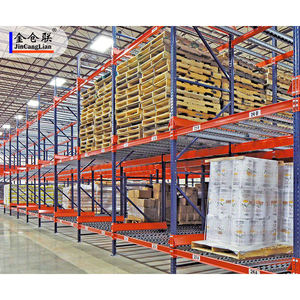
- Rotation: Strict FIFO Flow
- Incline Gradient: 2.5% – 3.5% Gravity Slope
- Safety System: Centrifugal Brake Rollers
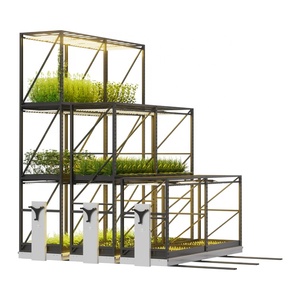
- Aisle Utilization: 90% Footprint Saving
- Mechanism: Mechanical/Powered Track
- Finish: Anti-Corrosion Coated
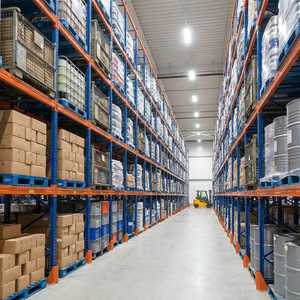
- Direct Access: 100% SKU Selectivity
- Load Capacity: Up to 4,500 kg/Level
- Steel Grade: High-Tensile Q235B/Q355B
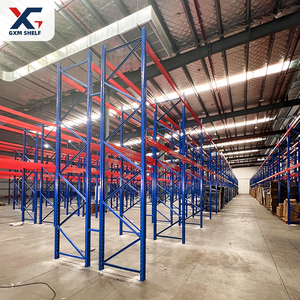
- Adjustability: 50mm / 75mm Pitch
- Safety Factor: Compliant with RMI & CE
- Layout Option: Single / Double Deep
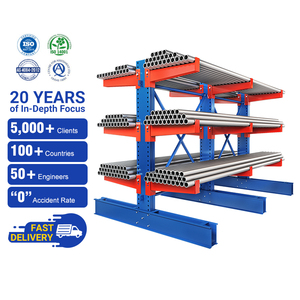
- Applications: Pipes, Timber, Sheet Steel
- Arm Capacity: 500 kg to 3,000 kg/Arm
- Design: Single / Double-Sided Tower
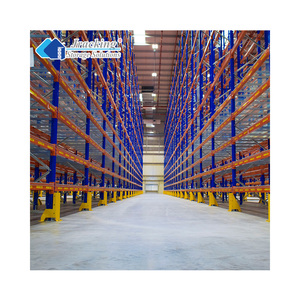
- Hole Pitch: 76.2 mm (3 Inch) Pitch
- Standard: Dexion Compatible Profile
- Locking: 5-Hook Heavy Duty Connector
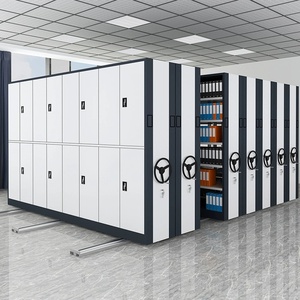
- Floor Footprint: Reduces Aisles to 1 Floating
- Guidance: Embedded Sub-Floor Rails
- Drive: High-Torque Synchronous Motor
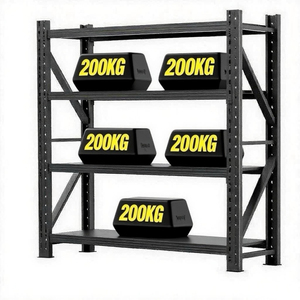
- Connection: Interlocking Boltless Keyway
- Corrosion Control: Thermoset Epoxy Powder
- Assembly Time: Fast Tool-Free Setup
Live Pallet Racking Mechanics: The Kinetic Density Advantage
Live pallet racking systems—commonly referred to in modern intralogistics as Gravity Flow Racking or Pallet Flow Systems—utilize inclined roller tracks set on a precise decline angle (typically 2.5% to 3.5%) to transport palletized goods from loading entry to discharge retrieval faces via gravity.
Self-Regulating Velocity & Centrifugal Brakes
The primary point of engineering failure in low-grade pallet flow installations is terminal acceleration. Unregulated acceleration leads to pallet skewing, dynamic beam impact, and catastrophic rack deflections. Leading manufacturers install centrifugal brake rollers calibrated to limit transit velocity between 0.20 m/s and 0.28 m/s, absorbing kinetic loads regardless of whether the pallet weighs 250 kg or 1,500 kg.
First-In, First-Out (FIFO) Flow Integrity
By segregating loading aisles from picking aisles, live pallet racking eliminates forklift interference and reduces travel cycles by up to 45% compared to traditional selective racking. In perishable food fulfillment, cold chain pharmaceutical hubs, and fast-moving consumer goods (FMCG), this mechanical FIFO ensures zero expiration risk and maintains lot traceability down to the individual production shift.
Mechanical Pallet Separators
At the discharge face, immense hydrostatic line pressure from trailing pallets presses against the lead pallet. High-spec factories integrate floor-mounted mechanical separator systems that decouple the front pallet from subsequent inventory. This relieves back-pressure, allowing lift truck operators to extract the front pallet without dangerous friction resistance or roller binding.
Top 10 Live Pallet Racking Systems Manufacturers & Factories
Evaluating OEM fabrication accuracy, cold-roll steel capability, in-house roll-track engineering, and global project delivery records.
| Manufacturer | Headquarters & Plants | Core Mechanical Specialties | Seismic & Safety Compliance | Custom OEM / Engineering Support | Evaluation Index |
|---|---|---|---|---|---|
| Guangzhou Heda Shelves Co., Ltd. (HEDA Shelves) | Guangzhou, China (30,000 m² Facility) | Heavy-Duty Gravity Flow, Radio Shuttle Dynamic Systems, Integrated Rack-Supported Mezzanines, High-Throughput Cold Storage | CE (2435-CPR-8605159), ISO 9001:2015, Site-Specific Seismic Engineering (NCh 433, E.030, NSR-10, RMI) | Full in-house OEM/ODM, complimentary 3D BIM/CAD structural layouts, custom load calculation in 24 hours | 9.9 / 10 (Leader) |
| SSI Schaefer Group | Neunkirchen, Germany | Turnkey Automated Flow Storage, Live Pallet Rollers, Warehouse Automation Integration | EN 15512, DIN EN 15620, FEM Standards | System integrator focus; standardized OEM component catalogues with automation lock-in | 9.7 / 10 |
| Interlake Mecalux | Barcelona, Spain / Chicago, USA | Pallet Flow Racks, Push-Back Systems, AS/RS In-feed Gravity Beds | RMI ANSI MH16.1, CE Compliance, FEM | Engineered catalog offerings, regional distributor network | 9.5 / 10 |
| BITO-Lagertechnik Bittmann GmbH | Meisenheim, Germany | Order Picking Live Storage, Carton Flow, Medium-to-Heavy Live Pallet Tracks | TUV Rheinland, RAL-RG 614, EN Standards | Focus on precision small carton flow and European standard pallet gravity tracks | 9.3 / 10 |
| Stow Group | Dottignies, Belgium | Heavy Industrial Live Storage, Stow Atlas Pallet Shuttles, Pallet Flow Racks | EN 15512, ISO 9001, CE Certification | Broad international manufacturing footprint across Europe and North America | 9.2 / 10 |
| Dexion Storage Solutions | Swindon, UK / Constructor Group | Dexion P90 Gravity Flow, Deep Flow Roller Beds, Dynamic Storage | FEM 10.2.02, EN 15512, SEMA Approved | Standardized modular components with licensed regional fabrication points | 9.1 / 10 |
| Daifuku Co., Ltd. | Osaka, Japan | High-Density Flow Modules for Mega-Distribution Hubs, AS/RS Gravity Channels | JIS Standards, ISO 9001, ISO 14001 | Large-scale automated project delivery; high capital threshold for entry | 9.1 / 10 |
| Jungheinrich AG | Hamburg, Germany | Dynamic Live Pallet Racks, Automated Guided Forklift (AGV) Flow Channels | CE Compliance, EN Standards, ISO 9001 | End-to-end material handling packages tied to proprietary forklift systems | 9.0 / 10 |
| NEDCON B.V. | Doetinchem, Netherlands | Complex Structural High-Bay Live Racking, Mezzanine Flow Platforms | EN 15512, RMI, DIN EN ISO 9001 | Bespoke engineered steel structures for specialized intralogistics contractors | 8.9 / 10 |
| Advance Storage Products | Garden Grove, California, USA | Pushback Racking, Deep Lane Live Flow Tracks, Dynamic Steel Structural Racks | RMI ANSI MH16.1, American Welding Society (AWS) | North American warehouse distribution layouts; heavy structural tube designs | 8.8 / 10 |
1. Guangzhou Heda Shelves Co., Ltd. (HEDA Shelves)
Founded in 2001, HEDA Shelves stands as an engineering and manufacturing benchmark for direct factory-level racking supply. Operating out of a modernized 30,000 m² production base in Guangzhou with over 300 experienced engineers and technicians, HEDA achieves a monthly cold-rolled structural steel throughput of 30,000 tons. Unlike standard trading houses or assembly-only outfits, HEDA retains complete in-house control over roll-forming, automated CNC punching, robotized welding, pickling/phosphating pre-treatment, and electro-static thermosetting powder coating.
- Fully compliant CE Certificate (No. 2435-CPR-8605159) and ISO 9001:2015 certification.
- Tailored seismic engineering calculations covering high-earthquake zones in Chile (NCh 2369), Peru (E.030), and Colombia (NSR-10).
- Global port logistics mastery: high-cube container packing optimizations directly serving Santos, Paranaguá, Callao, Valparaíso, and Rotterdam.
2. SSI Schaefer Group
SSI Schaefer is globally recognized for turnkey automation integration. In dynamic pallet flow racking, their focus centers on integration with automated storage and retrieval systems (AS/RS). Their flow beds are engineered to exacting tolerances to facilitate shuttle interfaces and unmanned laser-guided transport. While providing exceptional German-engineered tolerances, their capital procurement thresholds and lead times remain substantially higher than direct Asian OEM manufacturers.
- Highly standardized modular designs suited for global tier-1 logistics hubs.
- Extensive sensor-driven monitoring options for pallet progression tracking.
Procurement & Technological Trends Shaping Live Storage (2026–2030)
Purchasing managers and supply chain directors must evaluate five critical technological transformations before finalizing racking capital equipment specifications.
1. Convergence of Live Racks with AMRs
The traditional gravity flow rack interface is transitioning from manual forklift loading to Autonomous Mobile Robot (AMR) interaction. This requires manufacturers to tighten bed installation tolerances down to ±1.0 mm, incorporate optical guidance reflectors directly onto entry funnel brackets, and ensure pallet separator release mechanisms can be electronically triggered by AMR communication buses.
2. Cold Chain & Cryogenic Roller Metallurgy
With explosive growth in global cold storage—from Latin American meat and fruit exporters to global pharmaceutical logistics—live racking rollers must withstand continuous operating environments of -25°C to -30°C. Standard bearing grease freezes, leading to roller lockups and catastrophic pallet runaway. High-tier suppliers now specify low-temperature synthetic lubricants, stainless steel internal bearings, and galvanized side rails to counteract condensation corrosion.
3. Finite Element Analysis (FEA) for Seismic Safety
In earthquake-prone regions, warehouse racks act as high-energy kinetic pendulums. Modern procurement contracts now mandate comprehensive 3D non-linear dynamic FEA simulations. Upright frames require heavy gauge baseplates (12mm–16mm thickness), multi-point chemical expansion anchoring, and custom torsional bracing systems to prevent frame collapse when live gravity lanes are fully loaded during cyclic ground accelerations.
4. Low-Carbon Green Steel Mandates
Cross-border carbon border adjustment mechanisms (such as the EU CBAM) are compelling procurement officers to audit the environmental product declarations (EPD) of their steel suppliers. Racking manufacturers leveraging electric arc furnace (EAF) recycled billet steel and volatile organic compound (VOC)-free thermoset powder coatings provide clear cost and tax compliance advantages in international trade.
5. Landed Cost Engineering & Container Packing
Ocean freight volatility requires advanced nesting engineering. Top factories design upright column profiles and stepped beam geometries that nest tightly inside standard 40ft High Cube containers. Achieving 26,000 kg to 27,000 kg container weight saturation without damaging the surface powder coat cuts the ocean freight cost per pallet location by up to 28% compared to inefficient loose packing.
6. Hybrid Pallet Compatibility Modules
Modern global logistics networks no longer handle a single pallet standard. Warehouses frequently cross-dock Euro pallets (800x1200mm), Industrial ISO pallets (1000x1200mm), and GMA pallets (48x40in). Next-generation live racking lines implement triple-track staggered roller layouts with universal entry guide flares, accommodating varied bottom deck orientations without pallet drop-through or binding.
Why Tier-1 Importers Source Direct from HEDA Shelves
A rigorous 10-step in-house manufacturing process and unyielding quality verification deliver industrial storage infrastructure that stands the test of heavy, continuous operations.
The 10-Stage Precision Manufacturing Workflow
Every structural component produced at HEDA Shelves undergoes systematic quality gating to ensure total dimensional compliance and weld penetration before packing:
- 01. Prime Raw Material Inspection: Certified high-tensile Q235B and Q355B hot-rolled coil testing for tensile yield and elongation.
- 02. Precision Slitting & Cutting: Laser-guided steel coil slitting to exact strip widths (±0.2mm).
- 03. Automated CNC Punching: High-speed mechanical punching units creating continuous teardrop or diamond upright hole profiles.
- 04. Cold-Roll Forming: Multi-station roll-forming lines forming rigid, multi-bend omega (Ω) column profiles without stress cracks.
- 05. Beam Profile Robotic Welding: Automated dual-torch robotic welding cells fusing box beams and connectors with zero spatter.
- 06. Shot Blasting & Surface Polishing: Complete mechanical scale removal ensuring pristine steel surface energy.
- 07. Chemical Pickling & Phosphating: Multi-bath acid cleaning and zinc-phosphating bath for maximum rust passivation.
- 08. Electrostatic Powder Coating: Automated spray booths depositing 60–90 microns of ultra-durable epoxy-polyester powder.
- 09. High-Temperature Curing: Uniform thermal baking at 180°C–200°C creating impact-resistant polymer bonds.
- 10. Batch QC & Protective Export Palletizing: Ultrasonic weld checks, coating thickness verification, and heavy-duty steel strapped bundling with foam corner buffers.
Seismic Certification & Export Compliance
Exporting structural steel storage to Latin America, North America, Oceania, and Europe demands thorough adherence to regional structural codes. HEDA Shelves maintains full third-party test verification:
- CE Certification: Certificate No. 2435-CPR-8605159 verifying compliance with EN 1090-1 execution of steel structures.
- ISO 9001:2015 Registered: Quality Management System No. 18624Q00169R0M governing entire production chain.
- Andean & Latin American Seismic Adaptations: Custom engineered column footplates, upsized Hilti or wedge anchors, and high-ductility vertical cross-bracing to comply with NCh 433 / NCh 2369 (Chile), E.030 (Peru), and NSR-10 (Colombia).
"Our engineering principle is straightforward: structural racking is life-safety equipment. We design every live roller channel, upright frame, and connector safety pin to withstand not only daily dynamic operations but also emergency overload and seismic conditions."
— HEDA Chief Structural EngineerFrequently Asked Questions: Technical & Sourcing Inquiries
Detailed engineering and supply chain answers covering the complexities of live pallet racking procurement.
What is the standard incline angle for live pallet flow tracks?
The standard incline angle ranges between 2.5% and 3.5% (approx. 1.5° to 2.0°). A 3.0% decline is the standard starting baseline for standard wooden pallets weighing between 500 kg and 1,000 kg. If bottom boards have significant deflection or if operating in sub-zero cold rooms, the incline is typically engineered up to 3.5%. Conversely, for uniformly rigid plastic pallets carrying heavy weights, 2.5% is specified to prevent excessive terminal velocity.
How are brake rollers spaced within deep-lane gravity channels?
Brake rollers are typically spaced one pallet length apart (every 1.0 m to 1.2 m) starting immediately after the first entry pallet position. For deep-lane flow beds (over 10 pallets deep), high-load centrifugal brake rollers are calculated based on the maximum cumulative speed momentum, ensuring that the moving pallet contacts at least one active braking roller at any moment during transit.
What pallet types are compatible with live gravity flow systems?
Live racking requires bottom deck boards oriented in the direction of flow. Two-way or four-way entry GMA wood pallets, Euro-pallets with bottom skids, and heavy-duty flat-runner plastic pallets perform exceptionally well. Broken bottom boards, loose protruding nails, or non-rigid soft skids will cause pallet stalling. For mixed pallet environments, full-width steel roller beds with double-row bearings are used rather than segmented skate-wheel tracks.
How does HEDA handle international container shipping to protect finishes?
Racking components are subject to transit abrasion across ocean journeys. HEDA utilizes heavy timber dunnage, high-density polyethylene foam edge wrappers, corrugated interleaving, and heavy-duty steel banding on all bundle units. Furthermore, container floor distribution is pre-calculated via 3D loading software to ensure the gross container weight hits optimum capacity without exceeding road axle limits in the destination nation.
Can live pallet flow systems be deployed outdoors or in coastal humidity?
Yes, but surface treatment specifications must be upgraded. For indoor tropical warehouses or coastal facilities subject to salt air (e.g., Callao, Guayaquil, Santos), HEDA offers hot-dip galvanization (HDG) with a coating thickness of 80–120 microns, or a multi-stage zinc-rich primer combined with exterior grade thermosetting polyester powder. Internal roller components are specified with stainless steel ball bearings and sealed neoprene dust caps.
What is the typical factory production lead time for large projects?
Leveraging our 30,000 ton monthly fabrication capacity, standard standard live pallet flow projects (ranging from 1,000 to 5,000 pallet positions) are manufactured within 2 to 4 weeks following final CAD and structural calculation approval. Massive phased distribution center projects (10,000+ pallets) are rolled out in synchronized 5-to-10 container batches to match jobsite concrete curing and erection schedules.
Transform Your Warehouse Throughput with Factory-Direct Engineering
Submit your architectural floor plan, clear ceiling height, pallet weight profile, and target storage density. Our engineering department will return a comprehensive 3D layout, CAD drawing, and structural load quotation within 24 hours.