Engineered Heavy-Duty Racking & Longspan Systems
Precision-fabricated utilizing certified Q235B cold-rolled steel, high-durability electrostatic thermoset powder coatings, and dynamic slot connectors. Engineered to pass strict deflection tolerances (L/200 according to EN 15512 and FEM 10.2.02 codes).
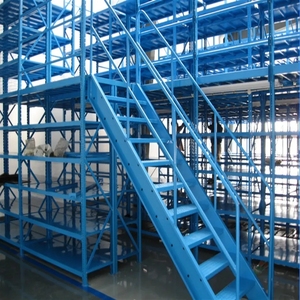
Adjustable Selective Storage Rack Anti-Rust Steel Mezzanine System
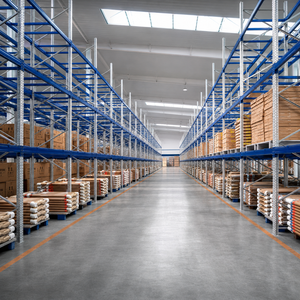
Schwerlastregal Adjustable Multi-Level Heavy Duty Pallet Rack
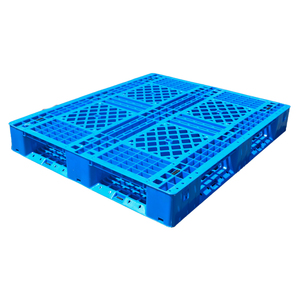
1200x800mm Reinforced HDPE Recyclable Racking Plastic Pallet
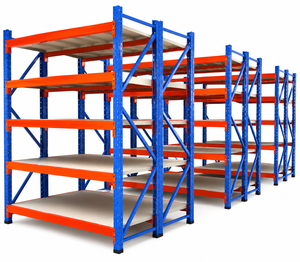
Multi-Tier 3-5 Layer Extra-Strong Load Industrial Longspan Racks
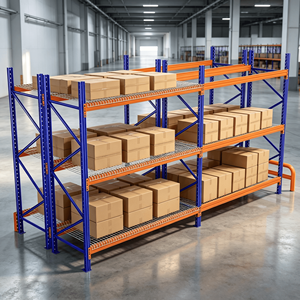
Custom Heavy Duty Industrial Steel Pallet Racking Storage System
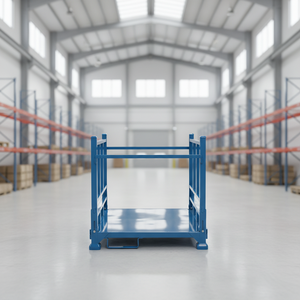
Portable Foldable Steel Stacking Rack for Long Profile Logistics
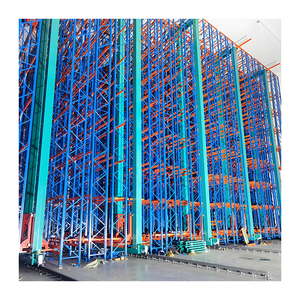
High-Density Pallet Shuttle Racking Semi-Automatic Steel Frame
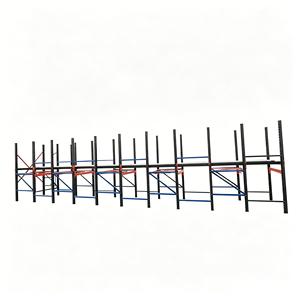
Custom High-Strength Drive-In / Drive-Through Warehouse Rack
1. Engineering Baseline: Defining a World-Class Long Span Shelving Manufacturer
In contemporary supply chain logistics, long span shelving systems bridge the critical engineering gap between lightweight boltless shelving and heavy-duty structural pallet racks. Specifying a system requires comprehensive mechanical evaluation of structural profiles, yield strength tolerances, cold roll-forming precision, and beam-to-column locking interlocks. When supply chain directors and structural engineering consultants audit a factory to identify a top 10 long span shelving system factory & exporter, their primary criteria extend far beyond base tonnage pricing.
Premier manufacturers operate fully automated CNC-controlled roll-forming mills that ensure cold-formed profile tolerances within ±0.5mm along a 12,000mm upright length. The structural upright must feature an optimized Omega (Ω) cross-section or specialized closed-tube geometry with engineered stiffening ribs. These ribs mitigate lateral-torsional buckling under concentrated manual picking or carton live storage loads. Steel grades must strictly align with mill-certified Q235B (equivalent to ASTM A36 or EN 10025 S235JR) or higher-tensile Q355B (equivalent to EN S355JR), providing minimum yield strengths of 235 MPa and 355 MPa respectively.
| Engineering Attribute | Heavy-Duty Long Span (Tier 1 Factory) | Standard Commercial Shelving | Compliance & Test Code |
|---|---|---|---|
| Steel Grade & Yield Strength | Q235B / Q355B Cold-Rolled ($f_y \ge 235-355\text{ MPa}$) | Commercial Grade Q195 ($f_y \le 195\text{ MPa}$) | EN 10025 / ASTM A36 |
| Upright Profile Geometry | Complex 8-12 fold Ω column with stiffeners | Simple 4-fold open C-channel | FEM 10.2.02 / RMI MH16.1 |
| Connector Engagement | 3-to-4 claw drop-in lug with positive safety pin | Friction fit or unrated hex bolts | EN 15512 Shear Test |
| Deflection Limit Ratio | Deflection ratio strictly $\le L/200$ to $L/250$ | $\ge L/150$ (Noticeable sag under load) | ISO 9001 / CE Mark CPR-8605159 |
| Surface Pretreatment & Coat | Pickling, phosphating + 60-80μm electrostatic coat | Manual wipe + single-pass air spray | ASTM B117 Salt Spray (500 hrs) |
| Decking Substrate Versatility | Reinforced steel panels, heavy wire mesh, 18-25mm B1 chipboard | Thin unreinforced corrugated sheet | Uniformly Distributed Load (UDL) FEA |
Moreover, beam profile geometry dictates total deflection behavior. Premier factories employ specialized "Step Beams" or twin-welded box profiles featuring inset lips where drop-in galvanized steel shelf panels, flush wire decks, or high-density timber boards seat securely. Unlike sub-standard suppliers who rely on simple angle brackets, an authoritative manufacturer equips their longspan beams with precision-stamped 3-prong or 4-prong structural connector claws. When inserted into the upright's 50mm or 75mm teardrop/diamond pitch slots, these claws establish a rigid moment connection, transferring vertical gravitational loads directly through the column center while resisting accidental forklift snag impacts via spring-steel safety locks.
2. Enterprise Advantages: Guangzhou Heda Shelves Engineering Dominance
Backed by more than 25 years of structural engineering and manufacturing expertise (founded in 2001), Guangzhou Heda Shelves Co., Ltd. exemplifies what international procurement officers demand in a tier-one long span shelving system factory and global exporter. Anchored by a 30,000 square meter standardized production complex, the facility maintains an active monthly capacity of 30,000 tons of fabricated steel profiles, ensuring complete autonomy from steel coil decoiling to automated final container strapping.
In-House CAD & 3D FEA
Our engineering team provides complimentary structural calculations, dynamic seismic load checks, and full 3D layout renderings prior to steel cutting.
Certified Quality Audits
Fully accredited under CE Certificate No. 2435-CPR-8605159, ISO 9001:2015 No. 18624Q00169R0M, and comprehensive RoHS environmental material compliance.
Automated Continuous Lines
Automated multi-station roll-forming lines, automated plasma cutting, robotic welding bays, and 300-meter continuous electrostatic powder coating tunnels.
Seismic-Aware Engineering
Tailored baseplate thicknesses, heavy-duty Hilti wedge anchoring arrays, and heavy-gauge diagonal bracing configured for high-risk seismic zones worldwide.
For overseas EPC contractors, cross-dock logistics developers, and national storage equipment distributors, importing warehouse infrastructure involves managing significant ocean transit lead times, freight economics, and on-site assembly overhead. Guangzhou Heda Shelves solves these logistical bottlenecks by executing mathematically optimized 3D container load plans. Uprights are bundled with protective wooden spacers and heavy-duty strapping, while beam pairs and steel deck tiers are palletized to guarantee that 40-foot High Cube (40HQ) containers achieve maximum payload utilization (up to 26-28 metric tons) without risking transit deformation or micro-scratch corrosion.
3. Factory Tour: The 10 Controlled Stages of Longspan Manufacturing
Consistency in load-bearing performance is directly determined by metallurgical integrity and process repeatability. At our Guangzhou production complex, every upright post, structural shelf beam, and lateral brace completes an unbroken 10-step quality assurance pipeline before export crating:
Chemical pretreatment represents a critical differentiator. Many low-cost workshops bypass thorough acid pickling, coating powder directly over mill oil and micro-scale rust. Within months of deployment in high-humidity or coastal maritime regions, subsurface oxidation causes powder delamination, flaking, and rapid structural pitting. Our continuous multi-stage phosphating bath forms an insoluble crystalline zinc-phosphate conversion layer across the steel substrate, delivering over 500 hours of ASTM B117 salt spray resistance and maximizing mechanical adhesion for decades of heavy warehouse operation.
4. Future Procurement Trends: How Enterprise Buying is Shifting
Global industrial storage procurement is undergoing structural transformations spurred by the expansion of cross-border e-commerce micro-fulfillment centers, escalating warehouse square-meter rental costs, and heightened ESG sustainability auditing. Buyers seeking top longspan shelving exporters are realigning their procurement RFPs around several overarching macro trends:
AMR & AGV Floor Integration
Modern longspan systems are no longer designed solely for human picker ergonomics. Forward-thinking operators procure shelving engineered with laser-aligned lower beam clearance, flush-fitting baseplates, and barcode tracking targets designed for Goods-to-Person Autonomous Mobile Robots.
Multi-Tier Shelving Mezzanines
With industrial land costs rising rapidly in urban consumption hubs, procurement heads are bypassing single-level shelving in favor of rack-supported multi-tier mezzanine floors. Integrating 2-tier or 3-tier catwalks directly into longspan upright frames doubles or triples picking footprints without expansion.
Low-Carbon Circular Metallurgy
Tier-one multinational corporations now demand environmental product declarations (EPD) and RoHS-compliant heavy-metal-free powder coatings. Recyclable Q235B cold-rolled steel profiles with solvent-free coatings are becoming mandatory qualification criteria in institutional bids.
Boltless Interlocking Hardware
Escalating on-site installation labor costs across North America, Europe, and Australia have turned rapid boltless connectivity into a key ROI factor. Advanced step-beam drop-in connections and tool-free beam safety pins reduce mechanical site installation timelines by up to 35%.
BIM & FEA Pre-Construction Modeling
Procurement teams increasingly require complete Building Information Modeling (BIM) files and Revit families alongside Finite Element Analysis (FEA) reports before cutting steel. This prevents mechanical clashes with fire suppression sprinklers and warehouse HVAC ducts.
Hybrid Pre-Galvanized Components
Demanding environments—such as semi-open mining depots, agrochemical storage facilities, and refrigerated cold chain operations—are accelerating demand for pre-galvanized upright frames combined with epoxy-coated beams to ensure zero red rust over 20+ year asset cycles.
5. Technological Evolution: Next-Gen Structural Design & Smart Shelving
The future of long span shelving systems centers on mechanical refinement through advanced computing and integrated IoT inventory sensing. Structural engineers are moving away from conservative, heavyweight profiles toward high-strength, thin-walled cold-formed steel profiles with strategically positioned stiffening ribs. By utilizing advanced Finite Element Analysis (FEA), our engineering department simulates localized buckling, torsional deformation, and beam-end connection plastification under ultimate limit states (ULS) and serviceability limit states (SLS).
In automated distribution centers, physical shelving is converging with digital warehouse management systems (WMS). Next-generation long span designs feature pre-punched structural raceways that cleanly conceal low-voltage cabling for pick-to-light (PTL) LED modules, optical carton sensors, and integrated dynamic strain gauges. These embedded strain gauges continuously monitor distributed load levels across critical tiers, transmitting real-time load alerts to warehouse management if manual picking crews accidentally exceed safe working limits. This level of structural safety and data transparency transforms static storage racks into intelligent logistics assets.
6. Frequently Asked Questions: Industrial Shelving Procurement & Engineering
Key technical and logistical clarifications compiled directly from our structural engineering division to assist international procurement teams in drafting clear, risk-free specifications:
What parameters are required to calculate the exact load capacity per shelf level?
Can your long span systems be engineered to comply with regional seismic building codes?
What is the standard production lead time for full-container export orders?
How do you prevent surface corrosion during 30 to 45 days of ocean maritime transit?
What is the primary operational difference between steel deck panels and wire mesh decking?
How are accidental beam dislodgements prevented during rapid warehouse picking?
Are customized dimensions, upright colorways, and OEM branding options supported?
What engineering documentation is delivered alongside export shipments?
Request an Engineered 3D Layout & Load Calculation
Send your warehouse floor plans, ceiling clearance heights, and pallet/carton load requirements. Our structural engineering team will prepare a comprehensive CAD layout, seismic check, and factory-direct quotation within 24 business hours.