Certified Pallet Racking Systems & Upright Assemblies
Precision-engineered cold-formed upright profiles built from high-tensile Q235B and Q355B structural steel, tested to CE and ISO quality benchmarks.
Engineering Analysis: Sourcing Pallet Rack Uprights at Global Scale
Pallet rack upright frames constitute the foundational structural backbone of every modern logistics facility, distribution hub, and automated fulfillment center. As global warehouse infrastructure pushes higher vertical boundaries—often exceeding clear heights of 12 to 18 meters—the mechanical integrity of the upright frame ceases to be merely a racking attribute and becomes a matter of life-safety and operational continuity. A single catastrophic failure in an upright profile under maximum dynamic payload can cause continuous collapse across entire storage aisles, resulting in millions of dollars in asset losses and terminal workflow interruption.
Global logistics directors and procurement engineers evaluating the Top 10 Pallet Rack Upright Manufacturers & Factories face complex structural parameters. From metallurgical steel grade selection (such as Q235B, Q355B, SS400, or ASTM A36) to cold-roll forming profile geometry, punch-hole pattern deformation, and seismic resilience verification, specifying upright assemblies demands rigorous adherence to international standards including RMI (Rack Manufacturers Institute) MH16.1, EN 15512, and AS 4084.
Upright Column Profile Mechanics: Multi-Bend Geometries and Hole Tolerances
The load-bearing capacity of a pallet rack upright column is determined by its sectional area, steel yield strength, and profile cross-section geometry. Advanced manufacturers utilize continuous multi-stage cold-roll forming mills with 16 to 24 rolling stations. This cold work hardens the strip steel at every fold, creating an Omega (Ω) or modified C-profile with internal return lips. These internal stiffening bends radically increase the column's radius of gyration, resisting torsional-flexural buckling under extreme vertical axial loads.
A critical engineering consideration lies in punch-hole geometry. Tear-drop, hexagon, or diamond-slotted patterns punched into the front and side faces of the upright allow adjustable beam placement (typically at 50mm, 75mm, or 76.2mm pitches). However, excessive or poorly toleranced punch perforations remove vital cross-sectional steel. Tier-one factories utilize automated CNC continuous rotary punching dies that maintain punch centers within a ±0.1mm tolerance, preserving the net effective section (Aeff) calculation mandated by AISI cold-formed steel specifications.
Bracing Trusses, Baseplates, and Anchor Load Redistribution
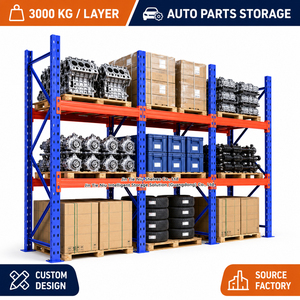
An upright frame functions not as an isolated column, but as a vertical plane truss. It comprises two roll-formed upright columns interconnected by diagonal and horizontal C-channel bracing members, secured by grade 8.8 high-tensile structural bolts. In precision-engineered upright frames:
- K-Bracing and Z-Bracing Geometry: The angle of diagonal bracing is calculated between 40° and 55° to optimize shear transfer caused by forklift impacts, uneven floor settling, and horizontal seismic acceleration.
- Engineered Footplates: Uprights transmit massive concentrated loads to the warehouse concrete slab. Heavy-duty seismic footplates distribute vertical point loads over a broader concrete surface area, providing dual anchor points to mitigate pull-out failure.
- Floor Shim Leveling: High-precision slotted steel shims ensure frame plumbness within 1/1000 of upright height, preventing P-Delta second-order moments that degrade column capacity.
Pallet Rack Upright Procurement & Engineering Trends
How automation integration, high-yield metallurgy, and green surface treatments are redefining storage procurement through 2030.
High-Yield Micro-Alloy Steel (Q355B / High Strength)
Global supply chains are migrating from traditional commercial grades toward Q355B and micro-alloyed hot-rolled strips. This allows manufacturers to reduce gauge thickness without sacrificing frame axial load capacity, lowering shipping freight weight by 12–18% per container.
ASRS & High-Tolerance Upright Profiles
With automated storage and retrieval systems (ASRS) operating at rapid horizontal speeds, upright straightness tolerances have tightened to 1/1500. Advanced manufacturers utilize laser monitoring sensors on roll-forming lines to prevent twist and camber over continuous 12m upright lengths.
Anti-Corrosion Surface Advances
For high-humidity tropical zones and sub-zero cold-storage facilities, electrostatic pure polyester powder coatings are supplemented by continuous in-line zinc phosphating. Pre-galvanized and hot-dip galvanized (HDG) upright frames are increasingly specified to prevent subsurface red rust.
10-Step Quality-Controlled Upright Fabrication
Direct factory fabrication ensures every batch of steel meets structural yield tolerances before export packaging.
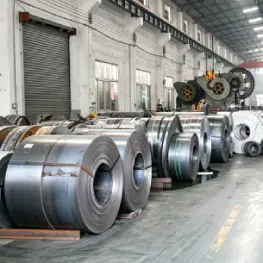
Raw Steel QC
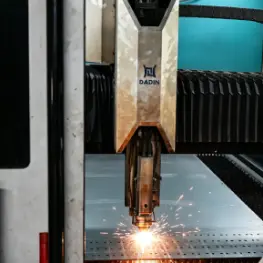
Precision Slitting
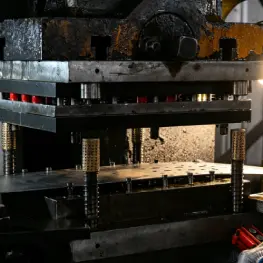
CNC Punching
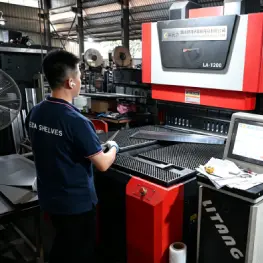
Roll Forming
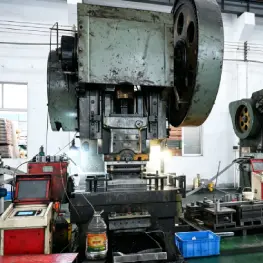
Profile Sizing
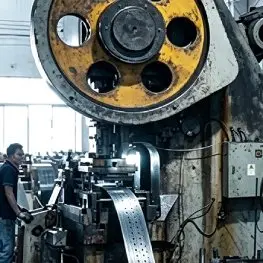
Shot Blasting
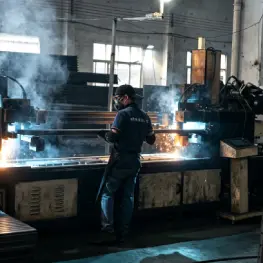
Baseplate Welding
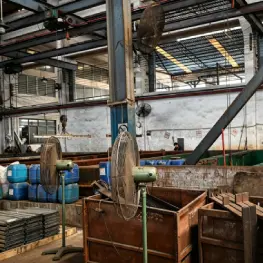
Phosphating
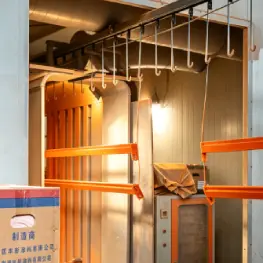
Powder Coating
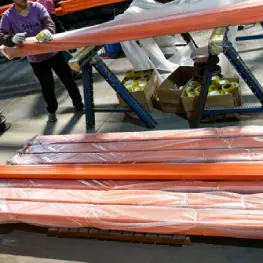
Export Bundle QC
Guangzhou HEDA Shelves Co., Ltd.
Established in 2001, HEDA Shelves manages a 30,000 square meter intelligent manufacturing center with over 300 experienced engineers and structural fabricators. We provide end-to-end engineered storage frameworks for logistics enterprises, distributors, and EPC contractors worldwide.
- Free 3D Modeling & CAD Layouts
- Seismic Structural Calculations
- Factory-Direct Cost Control
- Global Port Shipping Logistics
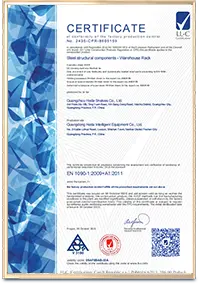 CE 2435-CPR-8605159
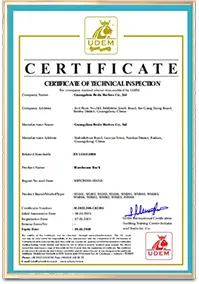 ISO 9001:2015 System
Frequently Asked Questions on Pallet Rack Uprights
Technical guidance to assist procurement teams in vetting upright profiles, load ratings, and international certifications.
What steel grade should be specified for high-bay pallet rack uprights?
How does beam spacing impact the maximum load rating of an upright frame?
What is the difference between open-back roll-formed and structural steel uprights?
Can upright frames be engineered for severe seismic zones?
How are upright components bundled and protected for transoceanic container shipping?
Design Your Custom Racking Facility With Engineering Precision
Send our structural team your warehouse CAD drawings, ceiling clearances, and pallet loading parameters to receive a certified 3D layout and load-distribution calculation within 24 hours.
Contact Us