Factory Direct Double Deep & High-Density Pallet Systems
Explore heavy-duty, certified industrial racking assemblies custom fabricated from Q235B and Q355B structural steel, tailored for reach trucks, pantograph systems, and high-turnover logistics hubs.
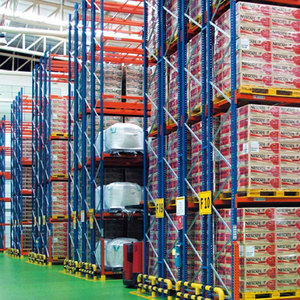
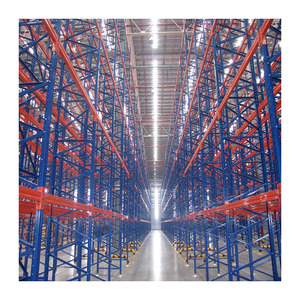
The Mechanics of Double Deep Storage: Balancing Density & Throughput
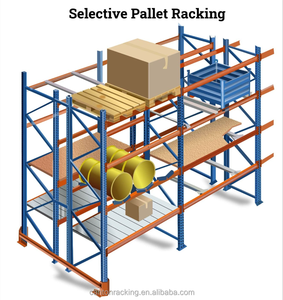
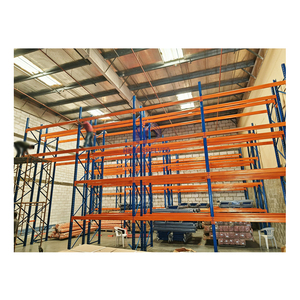
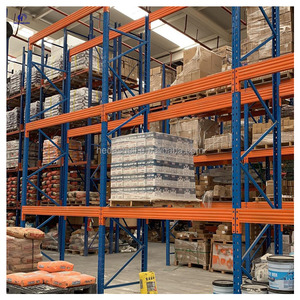
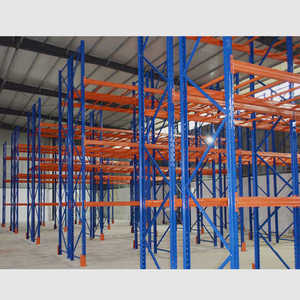
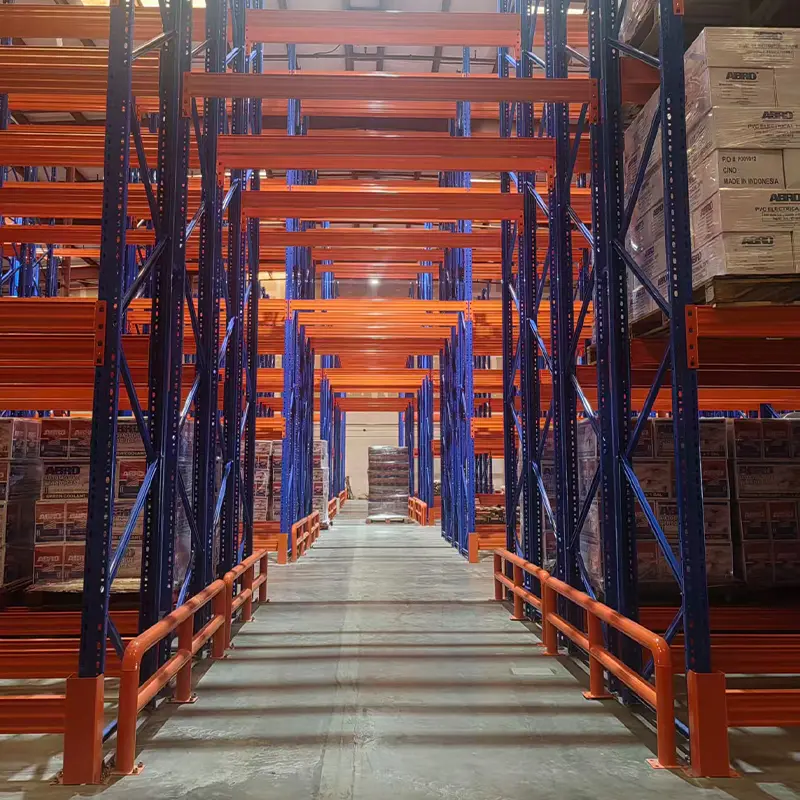
Double Deep Pallet Racking systems are created by storing pallet loads two deep per aisle side instead of single deep, effectively creating four pallet depths between access aisles. By eliminating alternating operating aisles, this design reduces aisle floor consumption by up to 50% compared to standard selective pallet racking while maintaining 50% immediate pallet selectivity.
For modern supply chain operations balancing high square-meter real estate leases with dynamic inventory flow, double deep systems serve as the optimal sweet spot between single-selective flexibility and high-density, low-selectivity drive-in or radio-shuttle configurations.
- Density Improvement: Increases overall storage cube utilization up to 60–65% of the total facility envelope.
- Forklift Equipment Synergy: Operates efficiently with specialized reach forklifts equipped with pantograph scissor extensions or telescopic forks.
- Rotation Topology: Ideal for warehouses operating on a 2-to-4 pallet SKU profile using Last-In, First-Out (LIFO) batch rotation.
Storage Topology Comparison: Selecting the Optimal System
A data-backed evaluation of space utilization, forklift requirements, selectivity, and capital expenditure across standard industrial racking configurations.
| Storage System Type | Floor Space Utilization | Immediate Selectivity | Forklift Equipment Needed | Stock Rotation Logic | Relative CAPEX / Pallet |
|---|---|---|---|---|---|
| Standard Selective Rack | 40% – 45% | 100% Direct Access | Counterbalance / Standard Reach | Strict FIFO | Baseline ($) |
| Double Deep Pallet Racking | 60% – 65% | 50% Immediate Access | Pantograph / Deep Reach Truck | Batch FIFO / LIFO | Low-Medium ($$) |
| Drive-In / Drive-Through | 65% – 75% | 15% – 20% Lane-Dependent | Counterbalance / Standard Reach | Strict LIFO (Drive-In) | Medium ($$) |
| Push-Back Rack System | 70% – 75% | 20% – 25% Face-Dependent | Standard Counterbalance | LIFO Gravity Fed | High ($$$) |
| Radio Shuttle Automation | 80% – 85% | Automated Channel Access | Standard Lift + Autonomous Cart | Programmable FIFO / LIFO | Very High ($$$$) |
Guangzhou HEDA Shelves: Engineered Excellence Since 2001
As one of China's premier heavy-duty pallet racking manufacturers, Guangzhou HEDA Shelves Co., Ltd. combines more than 20 years of structural fabrication prowess with cutting-edge automated roll-forming and robotic welding technology.
Free 3D Layout & CAD Load Simulation
Our senior engineering group uses proprietary finite element analysis (FEA) to calculate deflection limits (L/200 standard), seismic shear forces, and floor slab load distributions before production begins.
30,000 Tons Monthly Capacity
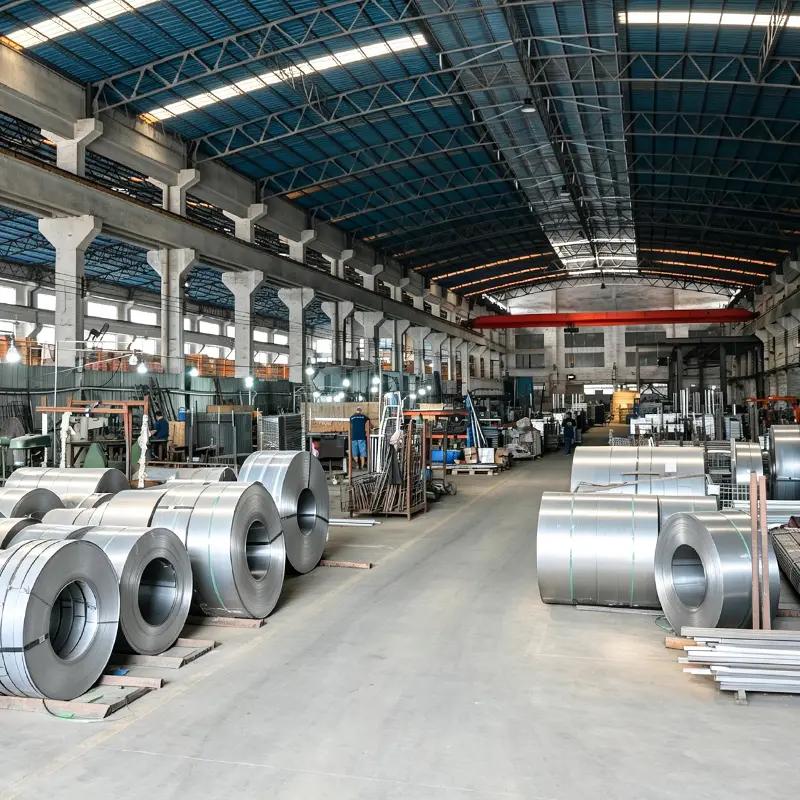
Spanning 30,000 square meters, our factory houses continuous CNC cold-roll-forming lines, automated punch presses, and multi-axis laser profiling stations capable of handling massive port-scale deployments.
CE & ISO 9001:2015 Verified Quality
Every upright, box beam, safety connector, and baseplate conforms to strict European EN 15512, FEM 10.2.02, and American RMI safety guidelines under CE Certificate No. 2435-CPR-8605159.
Export Logistics & Staging Mastery
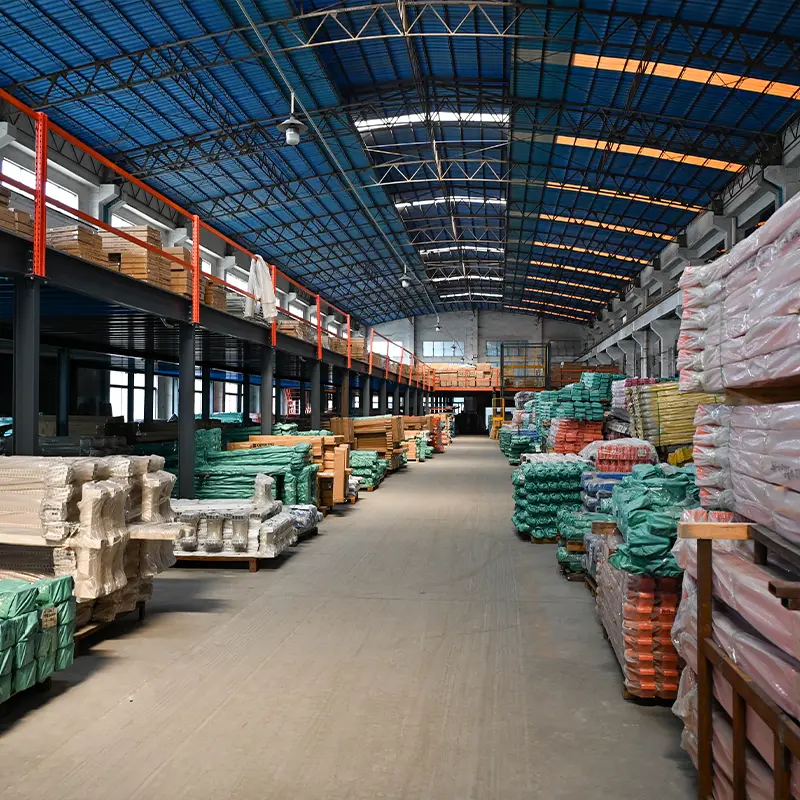
From flat-pack container optimization to sea-freight humidity barrier wrapping, we protect electrostatic powder-coat finishes across shipments bound for South America, Southeast Asia, the Middle East, and Europe.
Seismic Engineering & Extreme Environment Customization
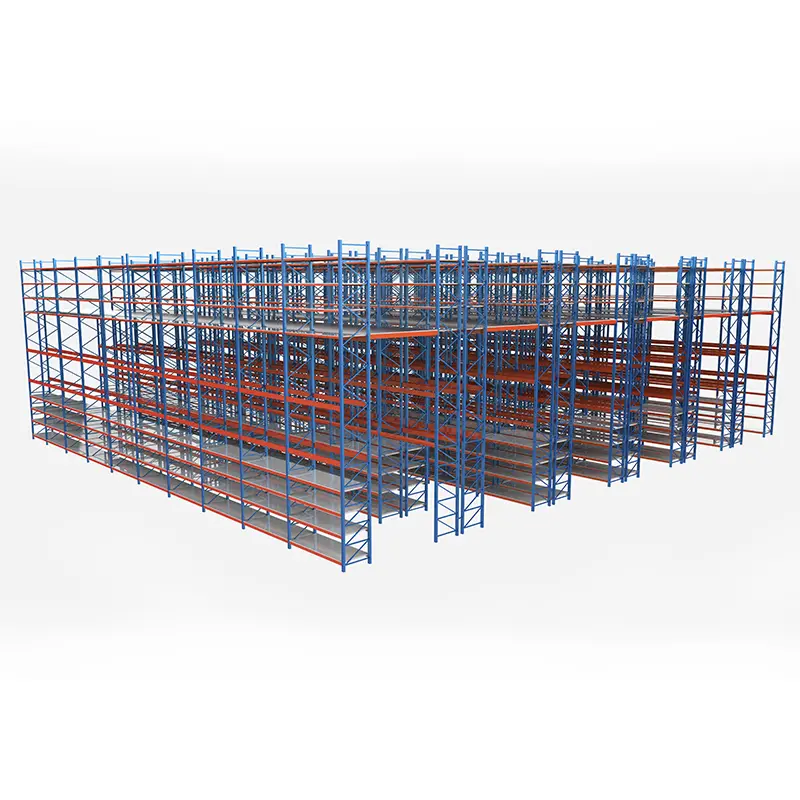
Double deep racking racks place increased cantilever deflection and torsional shear on upright columns when reach trucks extract rear-depth pallets. HEDA engineers engineer reinforced upright columns with deeper Omega profiles, high-yield baseplates, and seismic back-bracing systems custom tailored to regional building codes including NCh 2369 (Chile), NSR-10 (Colombia), E.030 (Peru), and UBC/IBC seismic zones.
For cold storage environments down to -30°C or coastal humidity zones, our electrostatic powder coating is preceded by automated multi-stage hot immersion pickling and phosphating, guaranteeing 100+ micron protective layer adhesion and zero brittle micro-fractures under cyclic freezing loads.
Future Procurement Trends in Double Deep Warehouse Systems
Anticipate technology transitions, structural metallurgy advancements, and supply chain dynamics influencing global warehouse racking procurement over the next decade.
Transition from Q235B to High-Yield Q355B Steel
Procurement teams are shifting away from conventional hot-rolled coils toward low-alloy high-strength Q355B structural steel. This upgrade yields up to 22% higher load-to-weight ratios, slimming frame tonnage while preserving structural resistance against forklift impact and dynamic torsional loads.
Autonomous Mobile Reach AMR Integration
The standard reliance on manual pantograph reach operators is rapidly transitioning to 3D LiDAR-guided Double Deep Autonomous Reach Trucks (AMRs). Modern double-deep beam designs now routinely incorporate photoelectric reflective sensors, optical guiding lines, and mechanical pallet centring stops.
Thermal-Optimized Cold Chain Infrastructure
As cold-chain energy expenditures soar, double deep layouts have become the baseline standard for temperature-controlled facilities (-18°C to -30°C). By clustering pallet mass without the mechanical complexity of shuttle batteries, warehouses achieve maximum thermal inertia and reduced refrigeration cubic requirements.
The Next Generation of Racking Engineering: Sensor-Embedded Smart Racks
Driven by ISO 45001 warehouse safety protocols and insurance risk mandates, racking buyers are prioritizing built-in structural health monitoring. Guangzhou HEDA Shelves is actively engineering impact-sensor telemetry nodes embedded directly inside front-row upright columns. These battery-free NFC/LoRa tags alert facilities management whenever a forklift impact exceeds allowable elastic deflection thresholds.
Additionally, sustainable procurement guidelines demand epoxy-polyester hybrid powder formulations cured at lower oven temperatures, cutting embedded carbon footprints by up to 18% per metric ton of installed steel.
Warehouse Sizing & Specification Checklist for Double Deep Layouts
Before issuing an RFP or approving final fabrication drawings, verify these critical physical, mechanical, and logistical parameters to ensure flawless on-site installation and certification.
1. Pallet Envelope & Rear Deflection
Measure exact width, depth, overall height, and overhang of both standard EUR (800x1200mm), ISO (1000x1200mm), or industrial GMA (40x48") pallets. Calculate minimum 100mm horizontal flue clearances between inner back-to-back pallets to prevent puncture during deep-fork insertion.
2. Forklift Pantograph Capacity Curve
Pantograph reach mechanisms experience dramatic forward tipping moments when extending heavy loads into position 2. Confirm your forklift manufacturer’s derated load curve at maximum lift elevation (e.g., a 2,000kg truck may only support 1,100kg at a 9-meter elevation in the rear depth).
3. Slab Point Loading & Flatness
Double deep configurations increase floor concentrated loads because four pallets transfer down adjacent upright baseplates. Ensure concrete slab compressive strength reaches at least 25–30 MPa with floor flatness adhering to DIN 18202 Table 3 or ASTM E1155 FF/FL standards.
Essential Accessories for Safe Double Deep Operation
Because reach truck operators have reduced visual depth perception when accessing the second pallet layer at heights over 6 meters, HEDA Shelves recommends integrating essential structural safety accessories directly into the manufacturing BOM:
- Heavy-Duty Pallet Support Bars: Two or three welded galvanized support bars per pallet location to prevent pallet bottom board deflection or misplaced drops.
- Rear Back-Stop Beams & Flue Gas Mesh: Heavy-gauge horizontal safety stops and anti-collapse wire mesh to maintain code-required 150mm clear flue space for sprinkler penetration.
- Floor-Mounted Upright Column Protectors: Formed steel wrap-around shields (5mm thick) bolted directly into concrete to shield entry columns from heavy mast grazing.
Frequently Asked Questions: Double Deep Racking Sourcing
Comprehensive engineering, logistics, and installation answers provided directly by HEDA Shelves senior structural racking technicians.
What is the specific aisle width required for Double Deep Pallet Racking systems?
How does HEDA Shelves calculate seismic load resistance for overseas distribution projects?
Can Double Deep Pallet Racking operate effectively in cold storage facilities?
What is the standard production lead time and monthly export capacity?
How are components packed and staged to prevent container transit damage?
What installation guidance and certifications are supplied with the shipment?
How does HEDA handle OEM / ODM brand manufacturing for regional distributors?
Transform Your Warehouse Capacity with HEDA Engineering
Send your warehouse architectural CAD plan or dimensional requirements today. Our senior structural engineers deliver a comprehensive 3D storage layout, seismic load calculation, and factory-direct quotation within 24 business hours.