Strategic Sourcing White Paper
Engineering Paradigms in Modern High-Density Warehouse Racking
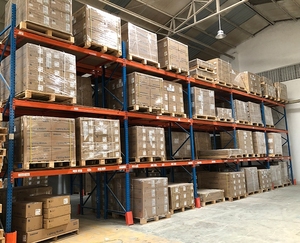
The contemporary intralogistics landscape is experiencing a structural revolution driven by spiraling industrial real estate valuations, labor supply constraints, and exponential SKU proliferation. For logistics directors, supply chain VPs, and warehouse infrastructure engineers, transitioning from conventional wide-aisle pallet racks to high-density storage architectures is no longer an optional space-saving measure—it is a critical determinant of warehouse cubic yield, inventory throughput speed, and long-term operating profitability.
As premier Chinese high-density warehouse racking manufacturers and global engineering exporters, Guangzhou Heda Shelves Co., Ltd. (HEDA Shelves) produces high-performance structural storage systems engineered to balance volumetric density, dynamic seismic resilience, and total operational safety. Establishing a world-class warehouse infrastructure requires an in-depth understanding of steel metallurgy, structural finite element modeling (FEA), connection moment resistance, and surface pre-treatment chemistries.
Comparative Structural Matrix: High-Density Racking Topologies
Selecting the optimal racking system requires cross-evaluating footprint density against SKU accessibility, capital expenditure (CAPEX), and operational picking methodology. Below is an engineering benchmark outlining the primary industrial topologies fabricated in our production facilities:
| System Architecture |
Floor Space Utilization |
Stock Rotation Method |
SKU Selectivity Index |
Forklift / Automation Interface |
Ideal Industry Use Cases |
| Selective Pallet Racking |
35% - 40% Floor Coverage |
FIFO (First-In, First-Out) |
100% Immediate Direct Access |
Standard Counterbalance / Reach |
General retail, 3PL FMCG, rapid mixed picking |
| Drive-In / Drive-Through |
65% - 75% Floor Coverage |
LIFO / FIFO Operational |
Low (Batched SKU Depth) |
Specialized Narrow-Chassis Counterbalance |
Cold storage, beverage bottling, bulk agricultural grain |
| Push-Back Cart Systems |
60% - 70% Floor Coverage |
LIFO (Last-In, First-Out) |
Moderate (By Lane Channel) |
Standard Reach / Counterbalance |
Food distribution, chemical drums, buffer staging |
| Radio Shuttle Automation |
75% - 85% Floor Coverage |
Flexible FIFO & LIFO |
High channel selectivity |
Semi-automated shuttle + Forklift fleet |
Industrial cold chain, pharmaceutical reserves, dairy |
| Pallet Flow (Gravity Roller) |
70% - 80% Floor Coverage |
Strict Dynamic FIFO |
High lane-level selectivity |
Standard Forklifts (Separate load/retrieve) |
Perishable groceries, cosmetics, high-turnover goods |
| Automated AS/RS High-Bay |
85% - 92% Volumetric Cube |
Fully Automated Dynamic |
100% Automated Micro-Access |
Automated Stacker Cranes & Rail Shuttles |
Mega fulfillment hubs, automotive assembly, e-commerce |
Structural Engineering: Mechanics of Cold-Rolled Steel Profiles
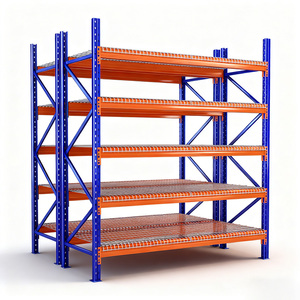
The structural integrity of industrial warehouse racking relies fundamentally on the mechanical properties of cold-formed thin-walled steel sections. At our Guangzhou automated production workshops, racking columns are roll-formed from premium certified Q235B and Q355B hot-rolled structural steel coils. Cold working induces strain hardening, noticeably increasing the yield strength (Reh) while maintaining critical ductility required for seismic energy dissipation.
Key design considerations engineered into our componentry include:
Omega Column Geometry
Features 13–15 continuous cold-bend fold facets distributing vertical axial compression and resisting torsional-flexural buckling under non-uniform floor settlements.
Moment-Resistant Connectors
Equipped with 4 to 5 high-shear interlocking cast-steel connector claws with cold-punched spring safety retention locks to eliminate accidental dislodgment from vertical pallet impact.
Seismic Anchor Dissipation
Reinforced seismic base plates precision laser-cut up to 20mm thickness, matched with high-grade Hilti or chemical anchors engineered for dynamic shear and uplift forces in seismically active regions.
Anti-Corrosion Surface Treatment: The 10-Stage Protection System
Warehouse racking in coastal logistics corridors, equatorial zones, and refrigerated sub-zero cold stores faces harsh atmospheric moisture, sulfur oxides, and saline exposure. A simple spray coat inevitably yields under-film corrosion creeping and eventual catastrophic structural softening.
HEDA Shelves eliminates this vulnerability by routing every structural beam, column, bracing chord, and base plate through an industrial automated 10-stage pre-treatment and electrostatic finishing line. The metal substrate undergoes alkaline bath degreasing, twin high-pressure rinses, immersion acid pickling (eliminating all thermal rolling scale), surface conditioning, and zinc phosphate conversion. This molecularly prepares the crystalline surface for robotic powder application using lead-free polyester resin thermoset cured at 180°C - 200°C. The resulting finish exhibits superior mechanical properties: salt spray testing exceeding 500 hours without blistering, 4H pencil hardness resistance, and exceptional impact ductility against direct forklift rub.
Enterprise Reliability & Track Record
Why International Buyers Partner with HEDA Shelves
Established in 2001 in Guangzhou, China, Guangzhou Heda Shelves Co., Ltd. has grown into an international benchmark for heavy-duty storage manufacturing, engineered logistics layout design, and large-scale structural steel exports. With an expansive manufacturing base covering over 30,000 square meters, our facility delivers an unmatched monthly output of over 30,000 tons of structural steel componentry.
25+
Years Manufacturing Excellence (Since 2001)
30,000t
Monthly Structural Steel Production Capacity
10,000+
Global Enterprise Storage Projects Delivered
120+
Export Destination Countries & Seaports
Full-Lifecycle Engineering & Export Specialization
Unlike trading intermediaries, HEDA Shelves provides deep technical accountability from concept sketch to site assembly. We specialize in addressing the complex engineering constraints inherent to international maritime shipping, seismic code verifications, and extreme climatic variations across global markets including South America, Southeast Asia, the Middle East, Europe, and North America.
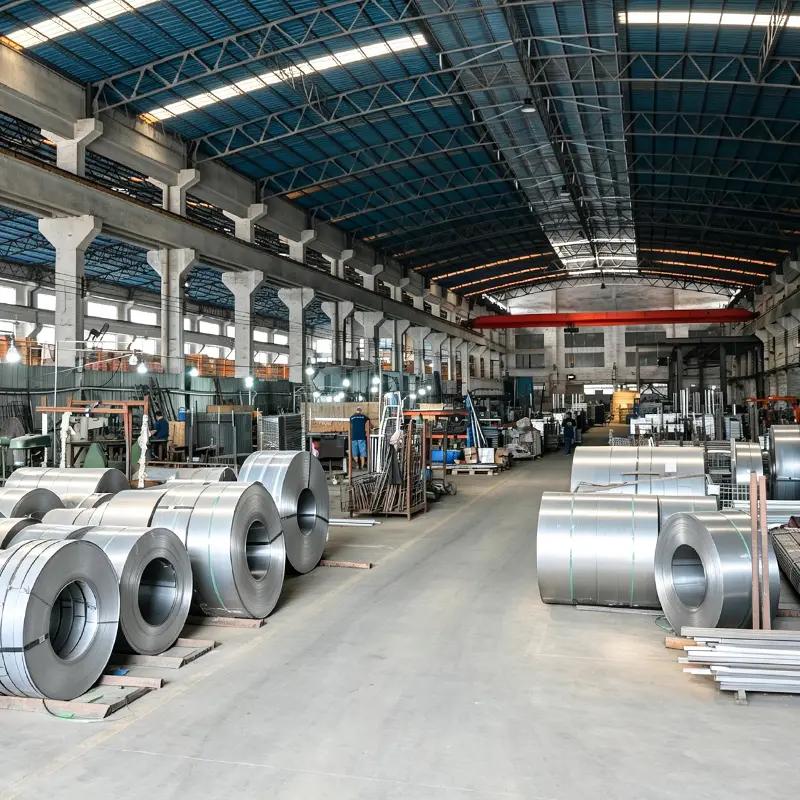
Bespoke Seismic Engineering
Our structural team adapts anchor footings, diagonal portal bracing, and moment frame connections to conform to rigorous seismic building codes worldwide—including Chile (NCh 433/2369), Peru (E.030), Colombia (NSR-10), and European Eurocode 8.
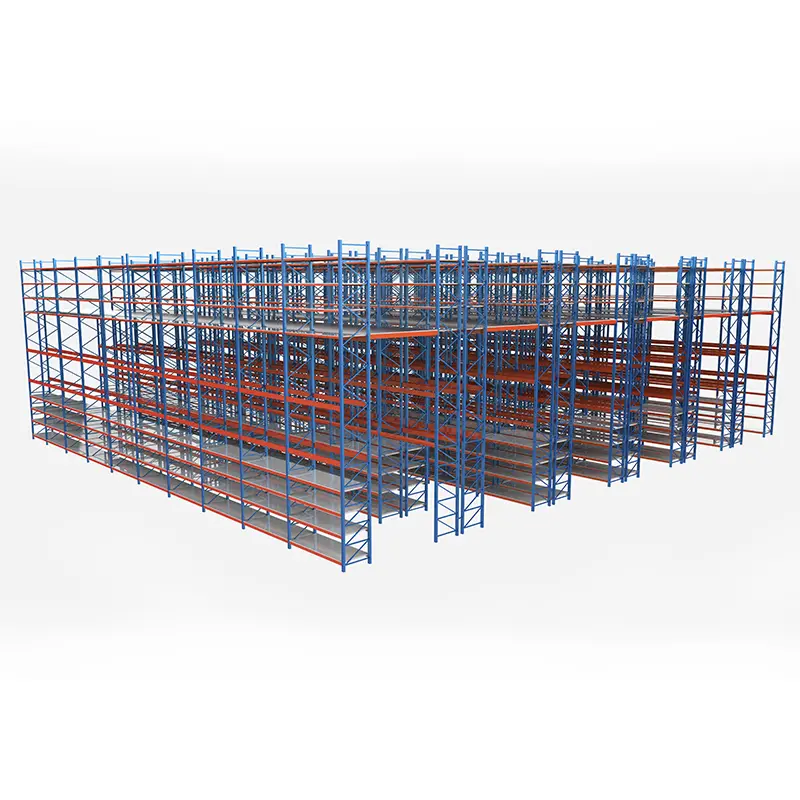
Free Comprehensive 3D & CAD Design
Before contracts are inked, our engineers create fully optimized CAD floor plans, dynamic aisle clearance calculations, and realistic 3D architectural renderings tailored specifically to your exact pallet metrics and forklift turning radii at zero cost.
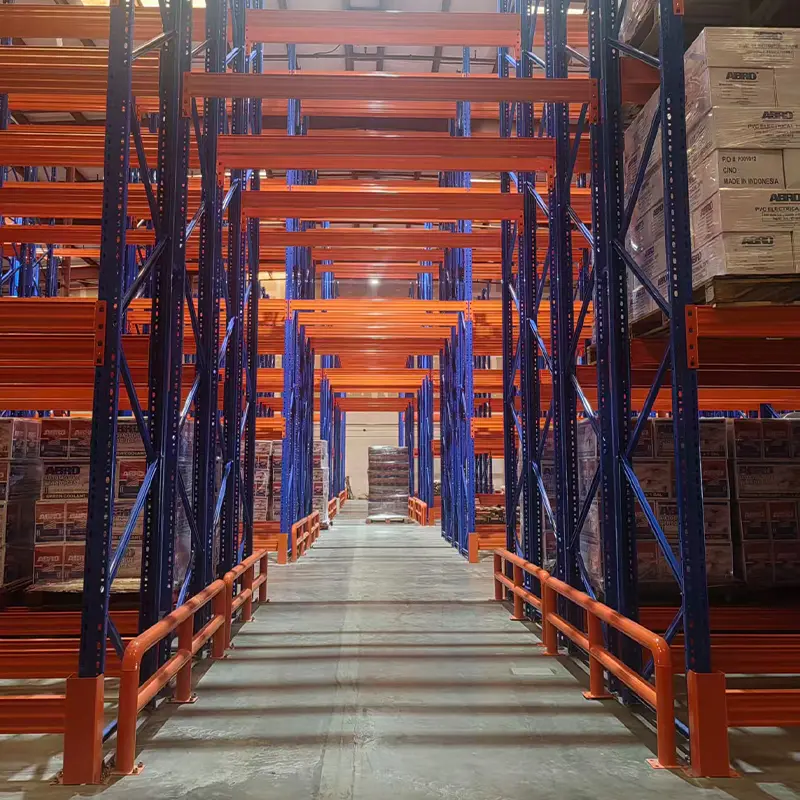
Precision Containerization & Logistics
Exporting structural steel demands scientific container stuffing plans. We pack heavy profiles using custom steel dunnage, protective plastic strapping, and shock-absorbent corner guards to prevent maritime transit friction while maximizing 40HC container tonnage.
What international quality and structural engineering certifications do your racking systems maintain?
▼
HEDA Shelves products are manufactured strictly in accordance with premier international structural logistics codes. We maintain active CE Certification (Certificate No. 2435-CPR-8605159), verifying compliance with the Construction Products Regulation for structural steel componentry, and an accredited ISO 9001:2015 Quality Management System (Certificate No. 18624Q00169R0M). Our coating formulas conform to stringent RoHS environmental safety limits. Furthermore, all beam-column finite element calculations conform with EN 15512 (European Steel Static Storage Systems), RMI MH16.1 (USA Rack Manufacturers Institute standards), and Australian Standard AS 4084-2023. Certified Mill Test Certificates (MTC) matching EN 10204 Type 3.1 are supplied with each production heat.
How do you engineer racking structures for seismically active regions across South America and the Pacific Rim?
▼
For clients operating in active seismic belts—such as Chile, Peru, Ecuador, Colombia, Mexico, the Philippines, or Japan—standard static load equations are strictly inadequate. Our senior structural engineers incorporate project-specific ground acceleration coefficients (PGA), building importance factors, and soil category classifications into dynamic response spectrum analysis. We structurally upgrade the installation by widening base plate footprints, applying thicker structural steel plates (up to 16mm-20mm), installing dual heavy-duty anchor bolt assemblies per column foot, incorporating vertical portal tie-beams, and integrating longitudinal and transversal cross-bracing frameworks. The resulting calculations are formatted for rapid sign-off by local registered professional structural engineers (e.g., verifying Chilean NCh 2369 / NCh 433 or Colombian NSR-10).
What steel grades are used, and how is load-bearing capacity guaranteed without beam sagging?
▼
We source high-grade Q235B and Q355B (equivalent to European S235JR and S355JR, or ASTM A36 and A572 Grade 50) high-tensile structural carbon steel directly from China's top tier state-owned steel mills (such as Baosteel and Shougang). Beam deflection is engineered not to exceed L/200 (1/200th of the clear beam span) under maximum uniformly distributed load (UDL), well within the stringent safety thresholds mandated by international safety councils. Every production run undergoes destructive batch load testing, weld penetration ultrasonic checks, and continuous digital vernier caliper thickness verification to ensure guaranteed load capacities ranging from 1,000 kg up to 5,000 kg per beam level.
What is the typical production lead time and global shipping transit schedule?
▼
Backed by our 30,000-ton monthly workshop throughput, standard customized high-density racking projects (such as 10 to 30 shipping containers of selective or drive-in racking) are manufactured within 2 to 4 weeks following engineering drawing approval. Large-scale automated mezzanine floors or multi-level shuttle systems typically require 4 to 6 weeks. Ocean shipping departure originates directly from the Pearl River Delta ports of Guangzhou (Nansha) or Shenzhen (Yantian/Shekou). Average ocean transit durations range from 12–18 days to Southeast Asia, 20–28 days to the Middle East and Europe, and 30–42 days to major South American hubs including Santos, Callao, San Antonio, and Buenaventura.
How is onsite installation managed for overseas turn-key projects?
▼
To ensure error-free assembly, our export shipments feature comprehensive component labeling systems where each bundle corresponds directly with the engineering CAD master assembly drawings. We provide step-by-step 3D assembly sequence illustrations, high-definition instructional video walk-throughs, and torque tightening specifications for anchor bolts. For complex installations—such as structural mezzanines or radio shuttle racking networks—we provide real-time remote engineering video conferences and can dispatch seasoned bilingual installation supervisors to direct your local installation contracting team onsite.
What surface finish options are available for humid, outdoor, or sub-zero cold room environments?
▼
For standard ambient indoor distribution environments, our automated electrostatic polyester powder coating provides a durable, chip-resistant 100–140 micron finish. For sub-zero cold rooms (-20°C to -30°C) where thermal condensation accelerates oxidation, we formulate specialized low-temperature flexible epoxy powders that resist brittle thermal cracking. For coastal warehouses subjected to severe saline air or outdoor semi-sheltered yard storage, HEDA provides complete Hot-Dip Galvanized (HDG) components treated according to ISO 1461, achieving a minimum zinc coating thickness of 65–85 microns for up to 25+ years of corrosion immunity.
What specific warehouse data is needed to obtain a free customized 3D CAD design proposal?
▼
To enable our engineering team to calculate your layout within 24–48 hours, please provide:
(1) Architectural warehouse CAD drawing or hand sketch indicating interior dimensions, clear eaves height, building column grid lines, and dock door locations;
(2) Pallet specifications including width, depth, total loaded height, and gross weight per pallet;
(3) Inventory SKU diversity and rotation methodology (FIFO vs. LIFO);
(4) Existing or proposed forklift model, maximum lift height, and minimum aisle turning radius;
(5) Concrete slab thickness, compressive rating (e.g., 25–30 MPa), and geographic location (to define seismic zone requirements).