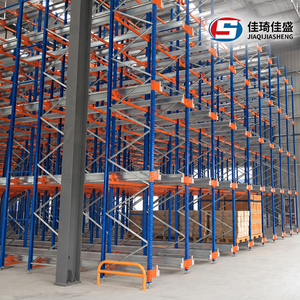
Industrial-Grade Intralogistics & Structural Storage Solutions
As modern distribution hubs, cold storage networks, and automated fulfillment operations scale globally, structural storage assets must perform under dynamic operational stresses. Direct sourcing from qualified Chinese fabrication hubs enables end-to-end load modeling, seismic compliance, and significant capital expenditure efficiency.
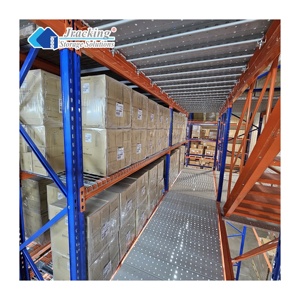
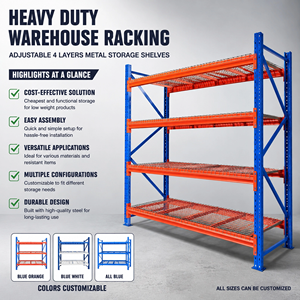
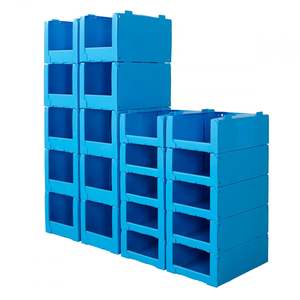
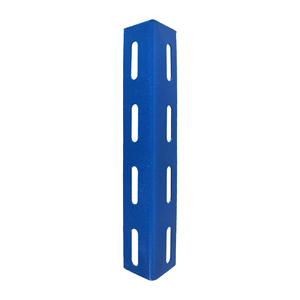
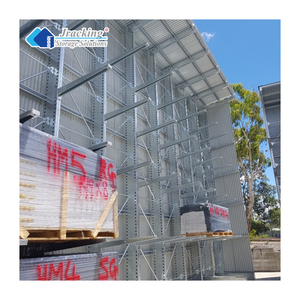
25+
Years Industry Manufacturing
30,000t
Monthly Steel Processing
10,000+
Delivered Global Installations
100%
Batch Ultrasound & Load Tested
Manufacturing Excellence
End-to-End Enterprise Racking Production & Metallurgical Control
Procuring warehouse racking internationally requires rigorous vetting of raw material yield strengths, cold-roll profile consistency, and precision automated punching to ensure structural stability under cyclic warehouse loading.
Certified High-Tensile Steel
We source certified Q235B and Q355B hot-rolled structural steel coils directly from tier-one domestic mills. Each production run includes full chemical composition certification and tensile yield validation to ensure full structural compliance with European EN 15512 and American RMI safety parameters.
Automated Profiling & Punching
Operating proprietary continuous roll-forming lines with multi-station inline CNC punching, our facility achieves column pitch tolerances within ±0.1mm. This eliminates frame twist and residual cold-forming stress, ensuring high-speed automated cranes and standard reach trucks operate smoothly.
Pre-Treatment & Powder Coating
Components undergo an automated 10-stage pre-treatment cycle, including deep chemical degreasing, acid pickling, and zirconium-based phosphating. Electrostatic Swiss Gema powder coating creates a cured thickness of 60–90μm, resisting impact, peeling, and corrosion in coastal, tropical, or cold-chain environments.
Industry Analysis
Future Procurement Trends in Industrial Storage Systems
Warehouse automation, rising commercial real estate rates, and supply-chain nearshoring are fundamentally changing how global buyers procure warehouse storage systems.
| Evaluation Parameter | Legacy Selective Racking | High-Density Shuttle / Flow Systems | ASRS & Multitier Integrated Mezzanines |
|---|---|---|---|
| Spatial Volume Utilization | Low to Moderate (35% - 40% Floor Footprint) | High (Up to 75% Total Volume Density) | Maximum (85%+ High-Bay Vertical Clearance) |
| Inventory Rotation Model | 100% Selectivity / FIFO Dependent | Strict FIFO (Flow) or Bulk LIFO (Push Back) | Software-Managed Continuous Dynamic FIFO |
| Forklift Aisle Clearances | 3.2m to 3.8m Standard Counterbalance | Consolidated Single Transfer Bay Aisles | Narrow VNA (1.6m) or Rail-Bound Automated Cranes |
| Future Capex Payback Horizon | Baseline Cost / Standard Utility | 18 - 24 Months via Labor & Energy Reduction | Aggressive Long-Term Return via Lights-Out Operation |
1. Convergence of Pallet Racking with AS/RS
Standalone selective racking is steadily being replaced by automated storage and retrieval systems (AS/RS) and semi-automated four-way radio shuttle bays. Warehouses require structural rack designs engineered to tighter tolerances to reliably handle robotic load handlers and dynamic inertial stresses.
2. Digital Twin Layouts & FEA Verification
Global procurement teams now expect finite element analysis (FEA) models and structural load calculations prior to steel cutting. Custom floor plans must be checked against dynamic seismic factors (such as Chilean NCh 2369, European Eurocode 3, or American RMI 2012) to verify system integrity under load.
3. Containerization & Landed-Cost Planning
With shipping rates fluctuating, smart nesting design and flat-pack manufacturing are critical. Optimized bundle profiles and pre-fitted sub-assemblies maximize container cubic space, lowering the per-bay freight cost from factory to job site.
Technical Q&A
Industrial Racking Sourcing FAQ
Key technical, engineering, and logistic questions evaluated by global supply chain executives and warehouse facility directors.
How do you calculate structural load capacities for international projects?
Calculations use static structural modeling under EN 15512 or ANSI MH16.1 specifications. We account for base plate dimensions, dead weight, dynamic live loads, forklift impact factors, and regional seismic criteria (e.g., UBC or Eurocodes). Certified calculation sheets are submitted alongside shop approval drawings.
What certifications and QA inspection reports are provided per container?
Every export shipment includes raw material mill test certificates (MTCs), dry-film coating thickness reports, dimensional tolerance verification, and load-test documentation. Our facility operates under ISO 9001:2015 and CE certification (EN 1090 structural steel execution standards).
What surface treatment options protect racks in refrigerated warehouses?
For temperatures between 0°C and -30°C with high condensation risk, we recommend hot-dip galvanization (HDG) per ASTM A123/ISO 1461, or cold-resistant zinc-rich epoxy primers paired with architectural polyester powder coatings to prevent embrittlement and under-film rust.
Can system components interface with existing European or US racking brands?
Yes. Our engineering department manufactures OEM/ODM profiles matching standard 50mm, 75mm, and 76.2mm (3-inch) pitch hole patterns, including teardrop, speedlock, and box-beam connections, allowing integration with existing facility expansions.