Dynamic Intralogistics: Engineering Live Storage Systems
Evaluating engineering structural integrity, European FEM standard certifications, high-density live pallet flow thermodynamics, and total cost of ownership (TCO) benchmarks for global supply chain engineers.
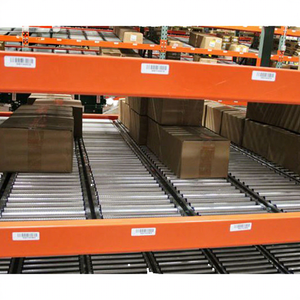
In modern industrial logistics, live storage racking—predominantly categorized into gravity pallet flow racking and carton flow dynamic systems—represents the pinnacle of space utilization and operational turnover. Operating strictly on the First-In, First-Out (FIFO) stock rotation mechanism, live storage channels leverage calibrated roller beds set at engineered pitch angles (typically 3% to 4%) to harness gravitational kinetic energy without requiring dedicated aisle transit for interior retrieval.
As international supply networks transition toward lean manufacturing, rapid cold-chain turnaround, and automated distribution fulfillment, sourcing live storage racking systems from certified Chinese manufacturing hubs has shifted from purely price-based arbitrage to sophisticated structural and metallurgical partnerships. Procurement managers must evaluate structural column profiling, mechanical brake roller longevity, corrosion mitigation across variable ambient conditions, and international seismic parameters (such as Chile's NCh 2369, Peru's E.030, and European EN 15512).
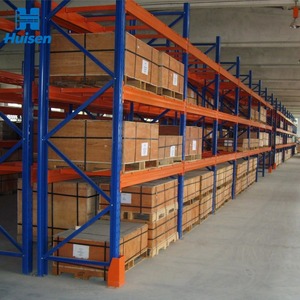
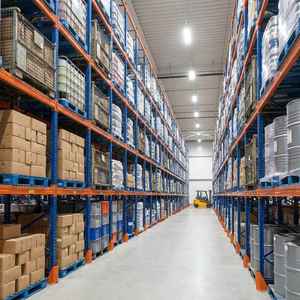
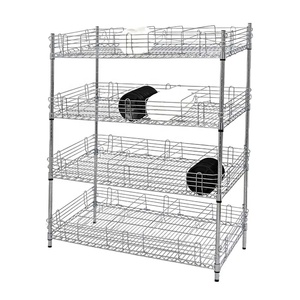
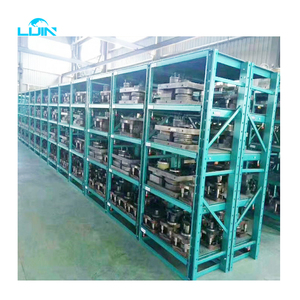
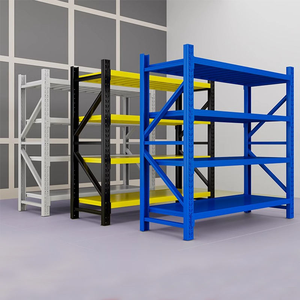
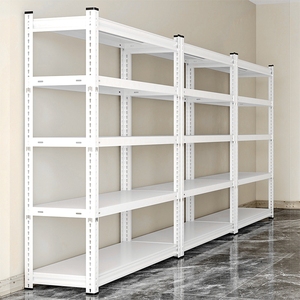
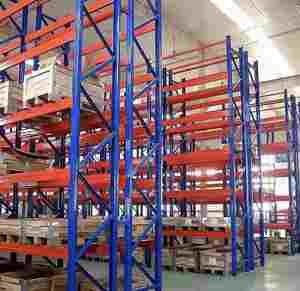
Featured Live Storage & Heavy-Duty Warehouse Systems
Precision-manufactured structural racking solutions certified for international logistics hubs, high-density cold storage, and heavy industrial warehousing.
Future Procurement Trends in Industrial Live Storage
Key shifts observed by engineering procurement directors sourcing live pallet storage and gravity flow solutions globally.
Total Cost of Velocity (TCV)
Procurement frameworks are abandoning initial-capital-only evaluations in favor of TCV metrics. By reducing internal forklift transit time by up to 45% and eliminating travel aisles, high-density live flow systems recover capital investment within 14 to 22 months under active distribution environments.
Cold-Chain Dynamic Integration
Refrigerated energy overhead is an escalating cost driver across Latin America, North America, and Europe. Buyers increasingly specify live storage equipped with specialized low-temperature synthetic lubricants (-35°C rating) and hot-dip galvanization to maximize cubic refrigeration efficiency.
Certified Seismic Compliance
Dynamic live racking incurs complex hydraulic and pendulum forces during seismic events due to rolling pallet momentum. Engineering audits now mandate finite element analysis (FEA) checking dynamic roll acceleration against local codes such as NSR-10 (Colombia) and EN 1998.
Live Storage System Matrix vs. Conventional Alternatives
Objective comparative benchmarks for warehouse architects and procurement executives.
| System Type | Inventory Rotation | Space Efficiency | Forklift Cycle Time | Primary Industrial Application |
|---|---|---|---|---|
| Gravity Pallet Live Storage | 100% Strict FIFO | Up to 85% Cubic Use | Ultra-Low (Separated Loading/Unloading) | Perishable Food, Pharma, High-Turnover Distribution |
| Carton Flow Live Shelving | 100% Strict FIFO | High Picking Density | Zero Forklift Entry (Manual/Conveyor) | E-commerce Piece Picking, Automotive Assembly Kitting |
| Push-Back Live Cart Racking | Strict LIFO | Up to 75% Floor Use | Moderate (Single Aisle In/Out) | Medium SKU Depth, Raw Materials Buffer |
| Radio Shuttle Automation | Flexible (FIFO / LIFO) | Up to 90% Cubic Use | Minimal Aisle Driving | Extreme Cold Stores, High-Volume Single SKU Blocks |
| Selective Pallet Racking | Unrestricted Access | Low (35-40% Floor Use) | High Aisle Congestion Potential | Diverse SKU Profiles, General Logistics Buffers |
Technological Trajectories in Live Storage Racking
Mechanical breakthroughs driving safety, throughput longevity, and automated material flow.
Dynamic live storage racking is fundamentally an electromechanical and civil engineering synthesis. Recent innovations focus on eliminating common operational pain points: pallet line drift, violent end-of-run impact, roller failure under sub-zero thermal cycling, and structural fatigue from cyclic kinetic braking.
Speed-Regulated Magnetic Braking
Traditional centrifugal friction brakes suffer from thermal decay and pad abrasion over intense operational cycles. The adoption of eddy-current magnetic brake rollers ensures touchless, contactless speed regulation, providing consistent 0.25 m/s pallet descent irrespective of load variance (from 250 kg up to 1,500 kg).
Mechanical Pallet Separation Stops
Line pressure accumulation in deep-lane gravity flow channels can exert destructive forces upon the lead pallet. Automatic end-stop separators isolate the pick face from the upstream queued pallets, reducing extraction resistance to zero and safeguarding automated picking robots or reach-truck masts.
Digital Twin & Flow Simulation
Advanced Chinese engineering exporters leverage discrete event simulation (DES) to model pallet rollability based on underside beam deflection, pallet timber species, moisture content, and ambient warehouse temperature curves prior to cold-roll forming and punching.
Why Global Importers Partner With Our Factory Direct Network
Over two decades of precision manufacturing excellence based in Guangzhou, China.
25+ Years Industrial Heritage
Established in 2001, our 30,000 m² modern manufacturing facility integrates over 300 technical specialists, delivering complete racking and structural mezzanine projects to more than 120 countries worldwide.
30,000 Ton Monthly Scale
In-house continuous roll forming, automated robotic punching, and dual-line electrostatic powder coating ensure standard commercial projects achieve production turnaround within 2 to 4 weeks with absolute metallurgical traceability.
Certified Quality Compliance
Backed by audited CE Certification (Certificate No. 2435-CPR-8605159), ISO 9001:2015 management systems, and chemical RoHS compliance. Every export lot undergoes structural load validation and multi-point QC reporting.
Bespoke 3D & Seismic Design
Complimentary full-scale 3D CAD modeling, pallet deflection analysis, and seismic base-plate optimization tailored directly to your facility's geotechnical profile and national building standards.
Frequently Asked Questions: Sourcing Live Storage Systems
Critical technical answers addressing engineering verification, international freighting, and on-site assembly.
What are the key technical parameters required to design a live storage flow bed?
How is pallet flow descent velocity controlled to prevent high-impact collisions?
What anti-corrosion treatments are applied for tropical, maritime, and sub-zero environments?
How do you package and protect roller tracks during ocean container transit?
Can live storage racking integrate directly with Automated Storage and Retrieval Systems (ASRS)?
Engineer Your Dynamic Warehouse Layout Today
Submit your warehouse layout, SKU matrix, and load parameters. Our senior structural engineers deliver a comprehensive 3D layout, structural load calculation report, and export cost projection within 24 business hours.
Get Catalog