Engineering Structural Reliability in High-Bay Intralogistics
In modern high-density warehouse storage, the pallet rack upright frame represents the single most safety-critical structural member. Carrying cumulative axial compression loads often surpassing 25,000 kg per column line, upright performance governs systemic facility safety, seismic compliance, and continuous operational uptime. This guide evaluates engineering criteria, fabrication metallurgy, and manufacturer competencies from China's leading industrial rack fabrication plants.
High-Performance Pallet Racks & Specialized Upright Systems
Engineered cold-formed steel frames designed to withstand intense dynamic impact, variable pallet depths, and high-altitude seismic loadings across global distribution centers.
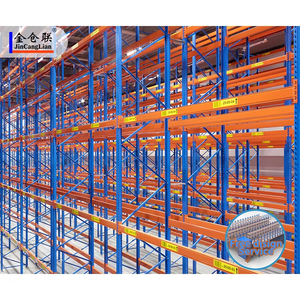
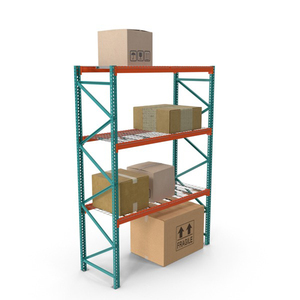
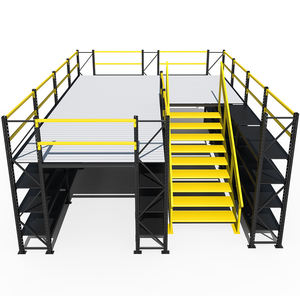
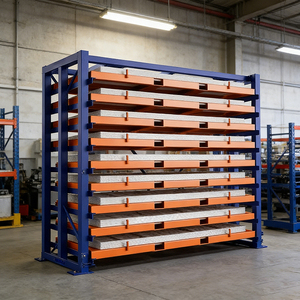
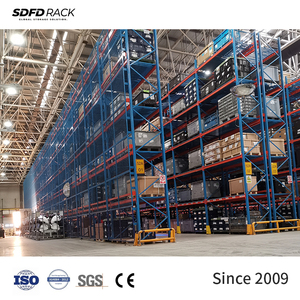
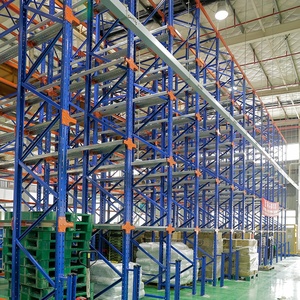
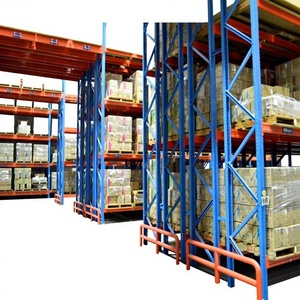
Structural Design Parameters of Cold-Formed Upright Frames
Evaluating the mechanical limits: sectional profile geometry, yield strength variance, and load redistribution behavior during seismic disturbance.
Sectional Geometry & Flange Design
Modern upright columns utilize multi-bend omega (Ω) or modified channel profiles. The number of return bends directly elevates the frame’s torsional rigidity and resistance to local buckling under high compressive point loads.
- Continuous 12-bend stiffening ribs
- Optimized column widths: 80mm to 140mm
- Wall thicknesses from 1.5mm to 3.0mm
Perforation Pitch & Connection Mechanics
Upright punching profiles dictate beam connection shear values. Leading manufacturers offer 50mm, 75mm, or 76.2mm pitches engineered via CNC precision dies to preserve net cross-sectional steel integrity without micro-cracking.
- Teardrop, diamond, or metric butterfly slotting
- Automated progressive punching accuracy < 0.1mm
- Positive-locking safety pins against accidental lift
Bracing Trusses & Seismic Anchorages
Upright performance relies entirely on system bracing lattices. Triangular K-truss or D-bracing arrangements using C-shaped roll-formed tube segments ensure shear loads transfer directly down to enlarged seismic floor plates.
- Grade 8.8 M8/M10 high-tensile locking bolts
- Dual anchor-hole heavy baseplate configurations
- Verified for FEM 10.2.02 and RMI MH16.1 compliance
| Upright Column Type | Material Standard | Yield Strength (MPa) | Max Frame Capacity (kg) | Optimal Deployment | Global Standard Code |
|---|---|---|---|---|---|
| Light-Duty Upright (80 Series) | Cold-Rolled Q235B | ≥ 235 MPa | Up to 8,000 kg | Manual Picking & Mezzanines | ISO 9001 / CE |
| Standard Medium (90-100 Series) | Hot-Rolled Strips Q235B | ≥ 235 MPa | Up to 15,000 kg | Selective Pallet Racking | FEM 10.2.02 |
| Heavy-Duty High Bay (120 Series) | High-Strength Q355B | ≥ 355 MPa | Up to 24,000 kg | VNA & Drive-In Systems | RMI MH16.1 / CE |
| Automated AS/RS (140+ Series) | Low-Alloy Q355B / SS400 | ≥ 355 MPa | Up to 32,000+ kg | High-Bay Clad AS/RS Warehouses | EN 15512:2020 |
Future Procurement Trends in Industrial Storage Systems
Strategic analysis on global supply chain shifts, digital structural validation, and evolving material requirements in China's manufacturing corridor.
1. Transition to Ultra-High-Yield Micro-Alloy Steels
To reduce global freight tariffs and ocean container weight limits, international racking procurement is moving away from excessive wall thicknesses toward micro-alloyed, high-yield steels (Q355B and Q460). This shift enables a 15-20% drop in total frame deadweight while retaining equal or superior section moduli and buckling margins.
2. Digital Twin Calibration & FEA Load Simulation
Traditional static calculations are increasingly superseded by non-linear finite element analysis (FEA) calibrated to exact site seismic spectra. Tier-1 Chinese manufacturers now deliver certified 3D calculation packages modeling sway instability, torsional-flexural coupling, and base-plate rotational stiffness before sheet rolling begins.
3. Anti-Corrosion Technologies for Harsh Environments
Standard indoor epoxy powders are evolving. Cold storage installations, fertilizer logistics, and maritime coastal hubs now demand multi-stage pre-treatments—including zinc phosphating and thermosetting polyester-polyurethane hybrid coatings—or continuous pre-galvanized high-yield steel coils capable of withstanding 1,000+ hours in salt spray testing.
Enterprise Advantages & Industrial Production Capabilities
Combining 25+ years of structural fabrication heritage with comprehensive factory-direct engineering and global export logistics.
25+ Years Manufacturing Heritage
Established in 2001, Guangzhou Heda Shelves operates a state-of-the-art 30,000 m² production base backed by over 300 experienced engineers, cold-forming technicians, and QC inspectors.
Massive Capacity (30,000 t / Month)
Multiple automated continuous roll-forming lines, automated punching stations, and dual powder-coating tunnels enable rapid turnaround times of 2 to 4 weeks on major high-bay installation orders.
Verified Independent Certification
Production is governed by certified ISO 9001:2015 quality management systems and European CE Mark (Certificate No. 2435-CPR-8605159) compliance for standardized structural steel elements.
Free 3D Layout & Structural FEA
Every layout includes complimentary AutoCAD spatial planning, realistic 3D renderings, and precise seismic structural load checks verified against regional building and racking standards.
Direct Ocean Load Optimization
Professional container packing software ensures optimal bundle nesting, protective corner buffering, and maximum cubic meter container utilization to reduce ocean freight expense per pallet place.
Complete Turnkey Engineering Support
From component color coding and numbered installation drawings to remote video guidance and bilingual engineering consultation, installations proceed quickly and accurately on site.
Frequently Asked Questions on Upright Frame Procurement
Comprehensive engineering insights for procurement directors, logistics engineers, and warehouse operations managers.
What steel grades are used for industrial pallet rack upright frames in China? +
How do seismic codes influence upright frame and baseplate engineering? +
What are the key differences between teardrop, diamond, and butterfly hole profiles? +
How is corrosion prevented in humid, coastal, or cold-chain operations? +
What essential data is required to calculate upright capacity and obtain a CAD quote? +
How are upright frames packed to avoid transit damage during container shipping? +
Planning a high-bay warehouse expansion or looking for certified OEM pallet rack manufacturing?
Send an Inquiry