[email protected] Serving Brazil · Chile · Peru · Colombia · Argentina · Ecuador
Follow us
Industrial Storage White Paper · 2026/2027

Top China Push Back Racking System Factories & Exporter

High-Density Material Handling Engineering: Cold-Formed Structural Integrity, Dynamic Flow Mechanics, and Comprehensive Logistics Architecture from Guangzhou HEDA Shelves Co., Ltd.

Direct Manufacturing Authority

Push Back Racking Systems: Industrial Engineering & Kinematics

Operating between standard selective racking and high-density drive-in systems, push back racking systems utilize nested rolling carriages positioned on inclined rails, offering unprecedented volumetric efficiency without entry wear.

25+
Years OEM / ODM Expertise
30,000t
Monthly Rolling Output
Q235B+
Certified Baosteel Grade
10,000+
Global Facilities Installed

Dynamic Nested Cart Geometry

Fabricated using precision robotic laser indexing and multi-stage brake forming. Each secondary cart rests inside the primary tier along low-profile structural steel tracks inclined at a 2.5% to 3.5% gradient to optimize passive roll-down gravitation without kinetic shock loads.

2 to 6 Pallets Deep Shielded Ball Bearings Self-Centering Guides

Structural Integrity & Seismic Design

Engineered strictly to RMI (Rack Manufacturers Institute), FEM 10.2.02, and EN 15512 safety protocols. Upright frames are roll-formed with omega profile cross-sections, bolstered with heavy-duty baseplates calculated for seismic zones (Chile NCh 2369, Peru E.030, Colombia NSR-10).

CE Certified ISO 9001:2015 High-Yield Steel Uprights

Throughput Optimization (LIFO Matrix)

By eliminating forklift transit into the rack interior, Push Back Racking reduces standard cycle times by 40% compared to Drive-In racks. Each SKU lane operates autonomously, shielding upright columns from forklift truck mast impacts and reducing operational structural failures.

Zero In-Rack Transit Rapid Pallet Presentation Multi-SKU Management
Factory Inventory & Engineered Systems

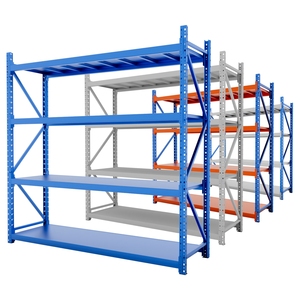
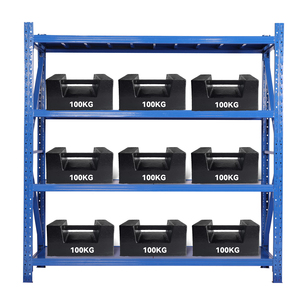
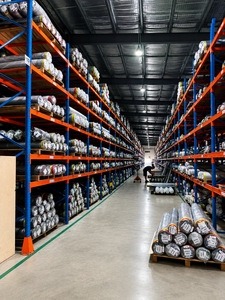
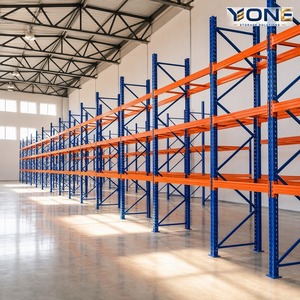
Comprehensive Heavy-Duty Warehouse Storage Catalog

Explore our export-ready product series. Manufactured with high-yield Chinese Q235B steel, multi-step acid pickling phosphating, and automated electrostatic powder coating for optimal corrosion resistance.
Strategic Procurement White Paper

Emerging Trends in High-Density Warehouse Racking (2026–2030)

Global supply chain volatility, real estate cost inflation, and cold-chain compliance are radically driving the technological evolution of dynamic racking systems manufactured in China.

1. Cold Chain Densification & Thermal Efficiency

Refrigerated logistics hubs require extreme floor-space utilization to minimize thermal dissipation costs per cubic meter. Push back racking systems engineered with specialized sub-zero structural steel fasteners and low-temperature synthetic lubricants now operate reliably at temperatures down to -30°C without mechanical seizure.

2. Hybrid Automation Integration (AGV/AMR Co-Working)

Modern push back configurations are incorporating digital pick-to-light interfaces and autonomous mobile robot (AMR) loading protocols. Precision cantilever stop-plates and photoelectric sensor targets allow automated guided forklifts to deposit and extract pallets on nested dynamic carts without manual operator intervention.

3. Digital Twin Structural Modeling & Lifecycle FEA

Advanced finite element analysis (FEA) and dynamic simulation software ensure that customized upright profiles and beam connections withstand cyclic stress fatigues. Procurement teams increasingly demand parametric structural calculation reports to satisfy international building permits before container dispatch.

Execution Protocols

The Engineering & Export Verification Workflow

A rigorous four-phase project lifecycle from architectural spatial analysis to port clearance, minimizing landed costs and guaranteeing dimensional compliance upon arrival.

01

Civil Survey & 3D Modeling

Review of warehouse slab capacity, clear heights, sprinkler clearances, and forklift turn radii. Generation of comprehensive 3D CAD layout files to map slot utilization and throughput lanes.

02

Structural FEA Calculation

Dynamic simulation under seismic, dead, and live dynamic payload constraints. Optimization of beam connectors, heavy-duty baseplates, and mechanical safety buffers.

03

Precision CNC Fabrication

Automated multi-station punch-forming, robotic jig welding, acid bath pickling, phosphating pre-treatment, and multi-layer electrostatic polyester powder coating.

04

Container Optimization & Dispatch

3D bundle packaging designed to maximize 40ft High Cube container cube volume. Bundled components arrive numbered, matching bilingual installation blue-prints.

Procurement Due Diligence

Frequently Asked Questions: Push Back System Sourcing

Technical and commercial answers addressing common engineering hurdles, logistics guarantees, and factory verification parameters.

How does a push back rack compare structurally with drive-in racking?+
Push back racks eliminate the need for forklift trucks to enter the storage aisle, confining travel entirely to the outer access lane. This dramatically reduces structural collisions against uprights. While drive-in racks suit low-turnover single-SKU configurations, push back racks provide independent SKU access for each vertical and horizontal lane, offering up to 90% space utilization without operational bottlenecks.
Can HEDA Shelves accommodate custom seismic zones (e.g. Chile, Peru, Mexico)?+
Yes. Our in-house engineering team calculates structural baseplate thickness, chemical anchor embedment depths, cross-aisle bracing, and frame beam gauge variations based on regional seismic acceleration factors (including NCh 2369, NSR-10, and IBC codes). Structural calculation calculation calculation packages can be submitted directly to municipal building examiners for permitting.
What pallet configurations and weight ratings are supported?+
Our push back systems handle standard Euro pallets (800x1200mm), GMA standard pallets (40x48 inches), and custom industrial steel skids. Payloads typically span from 500 kg to 1,500 kg per pallet position, nested from 2 to 6 pallets deep. Welded structural wheel carriages feature sealed high-capacity bearings designed for zero-maintenance operation.
What surface treatment is utilized for cold-chain or humid environments?+
All steel components undergo a strict pre-treatment cycle including acid pickling to eliminate scale, followed by iron-phosphating to prevent sub-surface oxidation. Standard racks receive high-grade electrostatic polyester powder coating cured at 200°C. For sub-zero blast freezers or coastal warehouses exposed to salt spray, hot-dip galvanized rails and nested carriages are engineered to ensure complete anti-rust longevity.
What is the typical ocean container shipping timeline from China?+
Manufacturing lead time for standard project sizes (5 to 20 containers) ranges between 2 to 4 weeks after CAD approval. Ocean freight transit to Pacific South American ports (San Antonio, Callao, Buenaventura) is roughly 28–35 days, and to Atlantic hubs (Santos, Paranaguá) 35–45 days. Load distribution plans ensure complete transport utilization without cargo crushing.
How is installation executed in international warehouses?+
Every shipment arrives accompanied by marked component tags, detailed dimensional exploded CAD drawings, and step-by-step video manuals. Our bilingual engineers host remote technical video briefings with your local contractor team. For multi-tier complex installations or high-bay facilities, on-site supervision engineers can be deployed on demand.

Engineering Your High-Density Warehouse Solution

Send us your architectural CAD floor plan, floor slab specifications, forklift parameters, and pallet payload profiles. Our senior structural team will deliver a comprehensive 3D layout, load safety calculation, and full factory FOB/CIF quotation within 24 hours.

Send an Inquiry Direct Factory Pricing · Free 3D CAD Design