Engineered Warehouse Storage & Pallet Racking Portfolios
Sourcing industrial storage solutions from an established China warehouse pallet rack supplier demands strict compliance with international mechanical codes, certified material yield integrity, and customizable vertical footprints. Explore our eight enterprise-grade product lines engineered for heavy payloads and seamless SKU rotation.
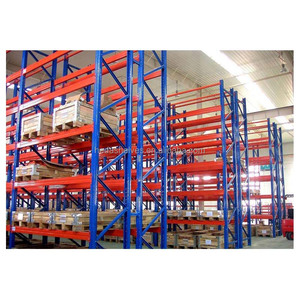
Warehouse Heavy Duty Pallet Shelving System
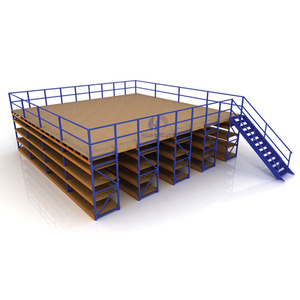
Steel Mezzanine Racking Industrial Platform
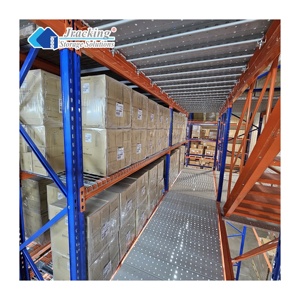
Heavy Duty Steel EU Pallet Racking System
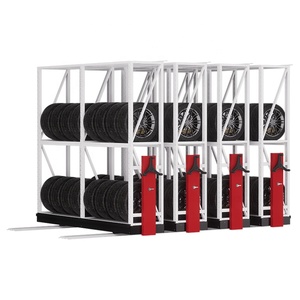
Compact Mobile Rail & Tire Storage Shelving
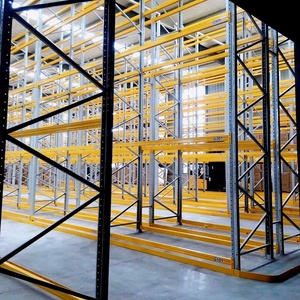
VNA Narrow Aisle High-Bay Pallet System
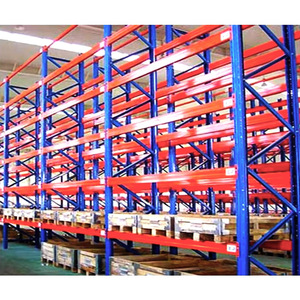
Modular Quick-Assembly Heavy Industrial Rack
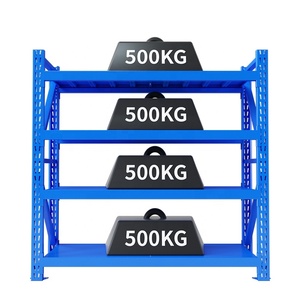
Adjustable Steel Storage Racking Tier System
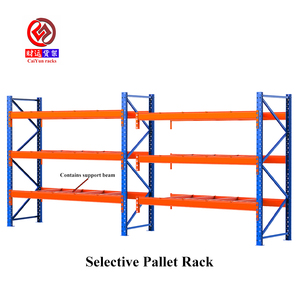
Powder-Coated Reinforced Heavy Beam Rack
Why Top Global Brands Partner With Guangzhou HEDA Shelves
Since 2001, Guangzhou Heda Shelves Co., Ltd. has established itself as an authoritative leader in intralogistics manufacturing, operating a modern 30,000 square meter production facility equipped with automated profiling, cold-roll lines, and multi-stage surface treatment systems.
Certified Structural Compliance
Fabricated strictly under ISO 9001:2015 Quality Management standards and certified under CE Standard EN 15512 / EN 15620. Structural finite element analyses (FEA) ensure dynamic load resistance and building code safety for every installation.
Free 3D Layout & Seismic Engineering
Every proposal is backed by a complimentary 3D CAD visualization and structural calculation review. We calibrate anchor plates, frame thicknesses, and bracing to meet high-risk seismic criteria (such as Chile NCh 2369, Peru E.030, and Colombia NSR-10).
Optimized Export Container Stowing
Cross-ocean freight efficiency can determine overall project feasibility. Our specialized logistics engineering team drafts nested strapping layouts to maximize container volume up to 98% while avoiding transit impact and finish abrasion.
Future Procurement Trends in Industrial Storage Systems
Global supply chain directors and industrial buyers are shifting procurement strategies to navigate volatile raw material costs, nearshoring developments, and regional building codes.
Total Landed Cost vs. Steel Tonnage
Forward-thinking procurement teams no longer compare quotes purely by initial ex-works kilogram price. Modern buyers factor in steel yield strength (e.g., Q355B vs. lower-grade coils), freight loading cubic meter efficiency, and component durability over 15+ operational years.
Site-Specific Seismic Demands
Distribution hubs established near active fault zones require custom anchor sizing, heavier baseplates, and reinforced beam clips. Procurement workflows now mandate certified engineering calculations matched to local building authorities prior to contract sign-off.
Pre-Approved Modular Architecture
Purchasers favor standardized beam-to-column connector profiles that allow seamless cross-bay expansions. Modular frameworks ensure that ongoing facility expansions integrate cleanly with existing upright assemblies without requiring custom machining.
| Evaluation Parameter | Tier-1 China Factory Direct (e.g., HEDA) | Generic Trading Intermediaries | Local Domestic Fabricators |
|---|---|---|---|
| Steel Grade Verification | Certified Q235B / Q355B with verified mill test certificates (MTC) | Inconsistent sourcing; varying gauge tolerances | Standard domestic alloys; high localized material premiums |
| Pre-Treatment & Coating | 10-step line: Shot blasting, phosphating & electrostatic polymer | Basic manual dip paint or single-coat spray finish | Variable coating quality; galvanization at high surcharge |
| Lead Times (Large Runs) | 2–4 weeks (30,000 tons monthly throughput capacity) | 6–10 weeks (subject to sub-contractor capacity) | 8–16 weeks (constrained localized workshop volume) |
| Engineering & Layout Support | Dedicated in-house structural engineers; complimentary 3D/CAD | Third-party designers with limited load modeling | Available, but often billed separately as engineering fees |
Product Development Trends in Modern Warehouse Racking
The rise of automated material handling, cold-chain logistics, and ultra-high-density distribution is fundamentally changing pallet rack engineering.
ASRS & Autonomous Mobile Robot Integration
Traditional manual racking is evolving toward automated storage and retrieval systems (ASRS). Modern upright columns feature laser-punched tolerances within ±0.5mm, accommodating high-speed crane shuttles and autonomous reach trucks without binding or structural deflection.
Radio Shuttle High-Density Systems
Radio shuttle technologies are rapidly displacing traditional drive-in racking. Self-powered carts maneuver inside deep storage channels over precision-leveled rails, eliminating forklift structural impact, accelerating retrieval cycles, and operating reliably down to -25°C in frozen food warehouses.
Corrosion-Resistant Surface Engineering
Warehouses in coastal or condensation-prone environments demand superior finish treatments. Upright profiles now use advanced pre-treatment lines—combining degreasing, zinc-manganese pickling, and thermo-cured epoxy powders—alongside hot-dip galvanized structural steel for long-term corrosion resistance.
Frequently Asked Questions by Industrial Racking Buyers
Get direct technical guidance regarding container logistics, seismic compliance, production lead times, and structural specifications.