Engineered Heavy-Duty Industrial Racking & High-Density Storage Solutions
From first-in-first-out (FIFO) dynamic gravity roller lanes to 4-way deep shuttle logistics and heavy-duty structural cantilevers, our factory supplies fully certified warehouse installations worldwide.
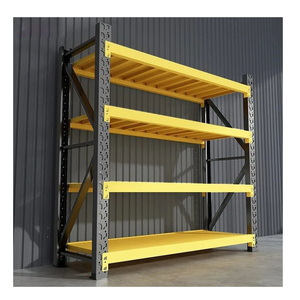
Factory Price 5 Layer Adjustable Steel Warehouse Storage Rack Shelving Units 200kg-500kg Stacking Racks & Shelves Metal Material
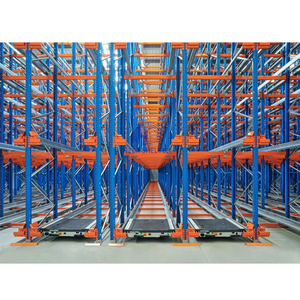
Warehouse High-Density Shuttle Rack System Asrs 4-Way Shuttle Racking Four Way for Cold Storage Shuttle Rack FIFO & LIFO
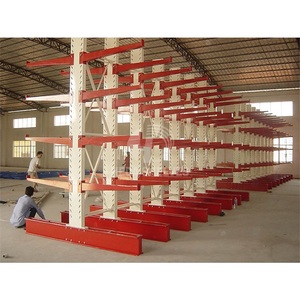
Heavy Duty Cantilever Racking Custom Cantilever Shelving Racking System Warehouse Cantilever for Industrial Storage
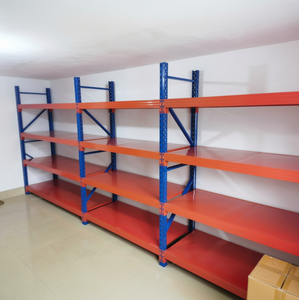
Industrial Heavy Duty Racking with Steel Shelf Decking Screw Assembly Storage Shelving System for Warehouse Garage Facto
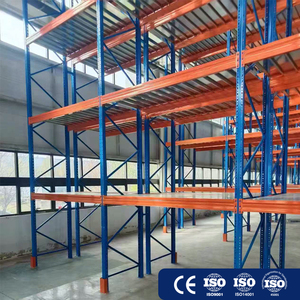
Warehouse Storage Rack System Q235B Steel Heavy Duty Selective Pallet Racking System Industrial Racks Customized Solutions
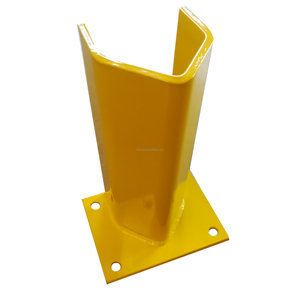
Warehouse Pallet Racking Guard Storage Upright Guard Protector Metal Post Protectors Pallet Edge Protector
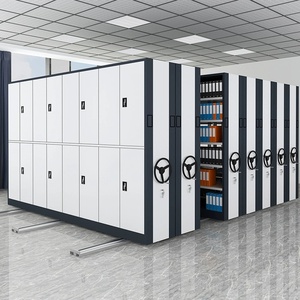
Space Saving Mobile Storage Rack High Density Compact Shelving System Heavy Duty Warehouse Rack
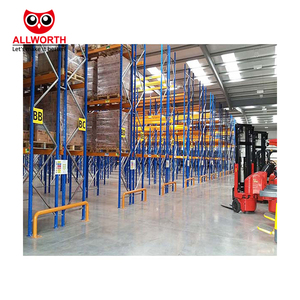
High Quality Heavy Duty Warehouse Drive-in Pallet Rack Project Industrial Material Handling Storage Solution
Engineering Principles of Gravity Roller Racking & Dynamic Live Storage Systems
In modern high-velocity distribution centers, material handling throughput is dictated by inventory rotation speed, floor area utilization, and the mitigation of forklift travel distances. Warehouse Roller Racking Systems—conventionally classified as Pallet Flow, Gravity Flow, or Live Dynamic Racking—represent the pinnacle of passive automation. By harnessing the physical force of gravity on an engineered decline plane (typically set between 2.5% and 4.0%), these systems automatically convey loaded pallets and carton totes from the loading face (replenishment) to the extraction face (dispatch), executing an uncompromising First-In, First-Out (FIFO) or First-Expired, First-Out (FEFO) stock rotation strategy.
As China’s foremost industrial racking manufacturer and exporter, our engineering division integrates finite element analysis (FEA) into cold-formed steel section profiling, dynamic roller friction calculations, and centrifugal speed regulation. The mechanical heart of any roller racking configuration comprises heavy-duty cylindrical rollers mounted with precision sealed ball bearings, matched with magnetic or centrifugal brake rollers distributed along deep storage lanes (up to 30 pallets deep). This arrangement eliminates pallet runaway kinetics and assures absolute operational safety.
Kinematic Velocity Formula in Gravity Roller Lanes
The controlled descent of a unitized pallet load relies on balancing gravitational acceleration against viscous resistance and brake absorption: F_net = m·g·(sin θ - μ_k · cos θ) - F_brake. Where θ denotes the structural decline angle, μ_k the dynamic rolling friction coefficient of steel or poly-coated rollers, and F_brake the retarding torque generated by centrifugal or eddy-current brake drums. Our factory calibrates roller spacing and braking profiles to restrict pallet descent velocity to a strictly controlled 0.15–0.30 m/s, safeguarding fragile cargo and racking structural uprights alike.
Structural Comparison: Roller Flow Racking vs. Alternative High-Density Systems
Evaluating capital expenditures (CAPEX) against operating expenditures (OPEX) is paramount for supply chain executives and warehouse logistics planners. The following matrix details how engineered roller racking measures against competing storage architectures:
| Racking Architecture | Storage Density Index | Inventory Principle | Forklift Travel Time | Energy Consumption | Throughput Speed |
|---|---|---|---|---|---|
| Gravity Roller Pallet Flow | Ultra-High (up to 85% volumetric) | Strict FIFO / FEFO | Lowest (Dedicated load/pick aisles) | Zero (Gravity powered) | Maximum Continuous Flow |
| Radio Shuttle System | Ultra-High (up to 88% volumetric) | FIFO or LIFO Selectable | Low (Aisle staging only) | Low-Medium (Lithium battery charging) | High (Restricted by shuttle count) |
| Drive-In / Drive-Through | High (65% - 75% volumetric) | Primarily LIFO | High (Forklift drives inside bays) | Zero (Manual handling) | Low to Moderate (Aisle congestion) |
| Push-Back Cart Racking | Medium-High (up to 70% volumetric) | Strict LIFO | Moderate (Single aisle load/retrieval) | Zero (Spring/Gravity assist) | Moderate (Max 5-6 pallets deep) |
| Selective Pallet Racking | Low (35% - 40% volumetric) | 100% Random Access | Highest (Extensive aisle network) | Zero (Standard infrastructure) | High for low-volume diverse SKUs |
Critical Engineering Subsystems in Heavy-Duty Gravity Roller Racks
Manufacturing export-grade pallet roller systems requires microscopic attention to mechanical component metallurgy, cold-roll steel tolerances, and dynamic impact damping. At our Guangzhou automated production hub, each lane is assembled from synchronized sub-assemblies:
Heavy-Duty Rollers & Shafts
Rollers are fabricated from precision electric-resistance welded (ERW) steel tubes (Ø50mm, Ø60mm, or Ø76mm) with wall thicknesses from 1.5mm to 3.2mm. Outfitted with labyrinth-sealed, lubricated-for-life 6002-2RS bearings, they absorb static and impact loads of up to 1,500 kg per pallet position.
Centrifugal & Eddy-Current Brakes
Brake rollers operate completely without external power, utilizing internal gearboxes with centrifugal flyweights or permanent magnetic induction. When a pallet accelerates above nominal speeds, internal frictional engagement increases proportionally, regulating speeds evenly.
Time-Delay Pallet Separators
In deep storage lanes, line pressure accumulated from rear pallets can impart dangerous hydrostatic forces onto the lead pallet during extraction. Our mechanical separators isolate the discharge pallet from upstream cargo, releasing the subsequent unit only after the fork truck has completed pick-up.
Self-Centering Entry Guides
Heavy-gauge steel guides flared at the charging end direct imperfectly positioned pallets centrally onto the roller tracks. Integrated ramp stops with rubber cushions ensure positive retention at the retrieval discharge end without damaging pallet perimeter boards.
Guangzhou Heda Shelves Co., Ltd. – Engineered Reliability Since 2001
Operating a dedicated 30,000 m² high-precision fabrication base with more than 300 technical engineers and certified welders, HEDA Shelves processes over 30,000 tons of structural steel monthly. Our factory houses automated CNC column perforation lines, continuous cold-roll forming mills, robotic CO₂ gas-shielded welding workstations, and a multi-stage Swiss Gema automated electrostatic powder coating line.
Industrial Storage Manufacturing Excellence Delivered to 120+ Sovereign Markets Worldwide
Get CatalogIndustry-Specific Implementations of Roller Racking Systems
Roller racking architecture is adapted to unique thermal, volumetric, and operational dynamics across demanding logistics verticals.
Cold Storage & Refrigerated Warehouses
Refrigerated cubic capacity is among the costliest real estate in logistics. Standard selective racks waste up to 60% of chilled air space in access aisles.
- Rated for continuous sub-zero operation to -30°C
- Synthetic low-temperature roller grease prevents bearing lock-up
- Hot-dip galvanized profiles resist condensation oxidation
- Yields up to 80% higher pallet storage density per kW of refrigeration
Fast-Moving Consumer Goods (FMCG) & Food
Strict shelf-life deadlines demand automated FIFO stock rotation to eradicate dead-stock write-downs in dairy, beverage, and packaged goods.
- Gravity-assisted continuous inventory rotation
- Zero handling collisions inside storage lanes
- Instant SKU replenishment without interfering with pick faces
- Supports case-picking carton flow integration on lower tiers
Automotive Assembly & Industrial Manufacturing
Just-in-Time (JIT) manufacturing requires synchronized buffer storage directly adjacent to active vehicle assembly and stamping lines.
- Carton flow tracks accommodate Euro totes and KLT bins
- Split roller channels allow customized return dunnage lanes
- Customized floor loading for steel container bins up to 2,000kg
- Direct ergonomic presentation to production line operatives
Future Procurement & Technological Trends in Warehouse Roller Systems (2026–2035)
As automated material handling merges passive dynamics with intelligent digital supply chains, global buyers are targeting four transformative technological evolutions.
IoT-Enabled Smart Rollers & Thermal Telemetry
Traditional passive gravity lanes are evolving through the integration of embedded micro-sensors within speed controller brake rollers. Future procurement specifications increasingly demand integrated Bluetooth Low Energy (BLE) or RFID sensor nodes within the roller hub. These sensors harvest rotational kinetic energy to continuously monitor internal bearing temperatures, load cycle counts, and roller vibration patterns, transmitting predictive maintenance data directly to warehouse management systems (WMS) before catastrophic mechanical seizures occur.
AMR and Autonomous Forklift Interface Optimization
The standard interface between human-operated counterbalanced forklifts and roller rack discharge stations is shifting toward driverless Autonomous Mobile Robots (AMRs) and Automated Guided Vehicles (AGVs). Procurement demands specify tighter positional tolerances (±2mm), optical retro-reflective sensors on roller end-stops, and electro-pneumatic pallet pop-up stops that release pallets on digital handshakes. This hybrid architecture pairs the low capex of gravity storage with high-precision automated pallet handling.
Decarbonized High-Tensile Q355B Steel & Eco-Coatings
Global environmental mandates, notably EU Carbon Border Adjustment Mechanism (CBAM) benchmarks, are transforming structural steel sourcing. Forward-looking logistics tenders require the transition from standard Q235B steel to cold-formed high-tensile Q355B and Q460 steel grades. This structural alloy upgrade allows a 15–22% gauge reduction while maintaining equivalent flexural rigidity. Simultaneously, solventless, zero-VOC electrostatic powder coatings and recycled zinc cold coatings are setting new baseline procurement standards.
Modular Quick-Change Drop-In Cassette Roller Beds
Supply chain volatility mandates physical agility. Fixed-welded roller bed assemblies are being displaced by drop-in modular track cassettes equipped with universal snap-in brackets. Logistics operators can alter lane pitches, convert pallet flow channels into multi-lane carton flow systems, or re-angle decline slopes (from 3.0° to 3.8°) within hours, without structural torch cutting or beam disassembly, protecting capex assets across multiple client contracts.
Total Cost of Ownership (TCO) & Export Container Load Optimization
Purchasing warehouse racking systems from China involves far more than comparing ex-factory metric ton prices. A truly optimized procurement model considers the total delivered and installed lifecycle cost over a 15-year operational envelope.
1. Freight Density & Container Nesting: Uprights, load beams, and roller frame channels must be structurally dimensioned to maximize 40-foot High Cube (40HQ) maritime container utilization. Our packaging engineering team utilizes 3D container packing software to nest interlocking upright frames and bundle roller track tracks using custom wood dunnage and heavy-duty shrink film. This increases container volume utilization to 92–96%, saving up to $1,800 per 40HQ in transoceanic freight costs.
2. Seismic Engineering Compliance for Overseas Civil Codes: Racking installed throughout the seismically active Pacific Ring of Fire—including Chile (NCh 2369 / NCh 433), Peru (E.030), Colombia (NSR-10), New Zealand (NZS 3404), and the Western United States (RMI MH16.1)—requires heavy-duty baseplates, upgraded expansion anchor diameters (M16/M20), and FEA-calculated diagonal portal bracing. HEDA Shelves engineers execute full seismic dynamic simulations, ensuring our calculation packages gain swift approval from local municipal structural reviewers.
3. Energy & Labor Amortization: Unlike fully motorized automated storage and retrieval systems (ASRS) that consume significant electrical power and require round-the-clock mechatronic technicians, gravity roller racks consume precisely zero kilowatt-hours during pallet transfer. By separating loading traffic from picking traffic into separate aisles, forklift travel distances are slashed by an average of 35% to 45%, reducing fleet tire wear, battery charging cycles, and operator hours.
Frequently Asked Questions (FAQ) for Warehouse Racking Procurement
Clear, engineering-grade clarity on technical specifications, pallet mechanics, factory lead times, and global port logistics.
What specific pallet specifications are required for reliable gravity roller flow operation? +
How do your engineers determine the optimal slope angle for roller racking lanes? +
How do brake rollers function, and what is their recommended spacing along the lane? +
What is the difference between Q235B and Q355B steel in structural racking design? +
Can your roller racking systems be installed inside sub-zero food cold rooms? +
What lead times, shipping options, and installation support do you provide for international orders? +
What information is required to generate a complimentary 3D warehouse layout and quotation? +
Accelerate Your Warehouse Velocity with Custom-Engineered Roller Systems
Connect directly with HEDA Shelves' structural engineers. Submit your floor dimensions and pallet parameters today to receive a comprehensive structural load calculation, custom 3D CAD layout, and factory-direct price quotation within 24 business hours.