Featured Industrial Drive-In & Drive-Through Racking Solutions
Precision-formed heavy-duty structural steel systems designed for rigorous duty cycles, strict FIFO/LIFO turnover rates, and maximum cubic space utilization across global distribution centers.
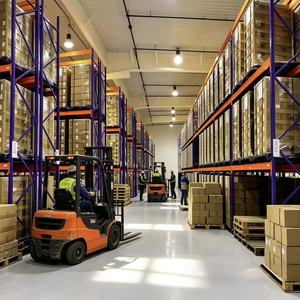
Drive-in Racking System High Density Warehouse Storage Rack Custom Industrial Heavy Duty Metal Adjustable Pallet Rack
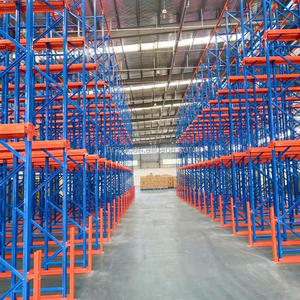
Wholesale Price Industrial Storage Shelf Drive-In Rack Steel Stacking Pallet Racking Vendors For Chemical Industry Warehousing
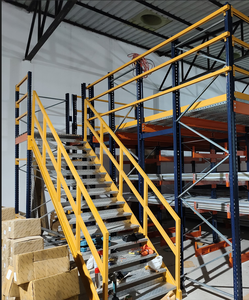
Rack Rollers Heavy Duty Steel Polished Stackable Double-Sided Drive-Through Pallet Rack Blue Mezzanine Floor System High Load
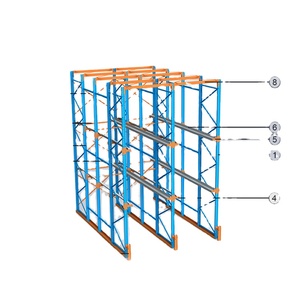
Factory Directly Provide Warehouse Storage Drive In/through Racking System Heavy Duty Steel Pallet Rack
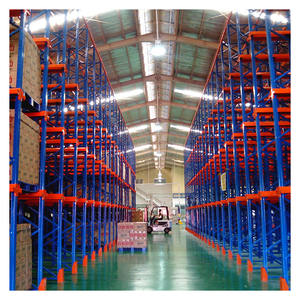
China Professional Industrial Racking Manufacturer Custom Cheap Drive in Pallet Rack System
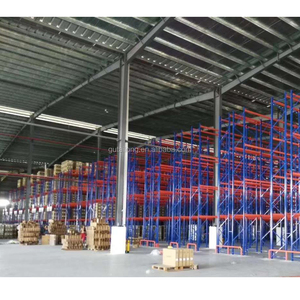
Drive-Through Pallet Racking Heavy Duty Steel Corrosion Protection 3-Layer High Capacity Adjustable Plug-In Industrial Rack
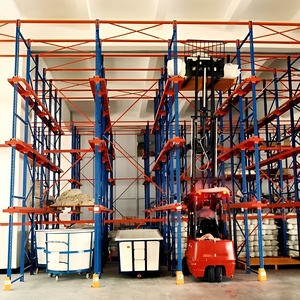
Top Quality Pallet Racking System Warehouse Storage Drive in Pallet Rack Drive Through Racking System
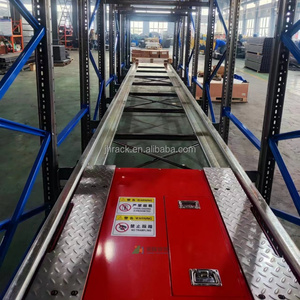
Automated Stackable Metal Shelves Storage Racks & Shelving Units Warehouse Asrs Pallet Shuttle Racking System
Drive-Through vs. Drive-In Racking: Structural Mechanics & Kinetic Logistics
Deconstructing load distribution, structural integrity without continuous horizontal beam ties, and exact turnover modeling for high-density modern facilities.
In modern industrial storage design, high-density compact storage represents the ultimate solution to sky-rocketing commercial land prices and refrigeration energy costs. However, facility managers and logistics engineers frequently conflate Drive-In Racking Systems with Drive-Through Racking Systems. While both systems utilize deep storage tunnels supported by cantilevered support arms and side rails, their operational topologies and structural engineering profiles differ fundamentally.
A Drive-In racking system features a singular entrance/exit portal per storage bay, naturally enforcing a Last-In, First-Out (LIFO) rotation model. In contrast, an authentic Drive-Through racking system features completely open access at opposing ends of each tunnel. Lift trucks load pallets from the charging aisle and retrieve them sequentially from the discharging aisle. This architectural breakthrough establishes a true First-In, First-Out (FIFO) pipeline within a high-density, aisle-free storage cube.
Critical Engineering Principle: Because Drive-Through racks lack cross-bay horizontal load beams within the lane tunnels to permit vehicular travel, structural sway stiffness relies entirely on top portal bracing, rear and upper perimeter plan bracing, reinforced base anchor assemblies, and heavy-gauge omega-profile upright columns. Partnering with a certified tier-1 manufacturer capable of comprehensive 3D finite element structural analysis (FEA) is paramount to preventing frame twisting and progressive structural collapse under dynamic forklift operations.
Continuous FIFO Stock Turnover
Enforces automated expiration dating and inventory integrity for perishable foods, pharmaceutical compounds, fast-moving consumer goods (FMCG), and seasonal agrochemical products without compromising floor footprint density.
Seismic & Impact Hardening
Integrated floor guide rails (structural angle iron or heavy tubular guides), wraparound column shields, and seismic-dissipating baseline anchor plates mitigate severe material handling vehicle impacts common in narrow drive tunnels.
80% Floor Utilization Ratio
By eliminating alternating working access aisles required by traditional selective pallet racking, drive-through systems slash aisle overhead from 60% of warehouse floor area down to less than 20%, dramatically cutting climate conditioning kWh costs.
Drive Through Racking Technical Specification Matrix
Engineered according to global structural racking mandates: European FEM 10.2.02, American RMI MH16.1, and International ISO 9001:2015 quality frameworks.
| System Component | Standard Specification | Heavy-Duty Industrial Grade | Safety Engineering Impact |
|---|---|---|---|
| Upright Upstanding Columns | 80×60mm, 90×70mm Cold-rolled | 100×70mm, 120×95mm Omega 13-fold profile | Resists lateral torque & secondary axis buckling under maximum tunnel load. |
| Steel Raw Material Grade | Q235B Carbon Structural Steel | Q355B High-Yield Low Alloy Steel (Yield ≥ 355 MPa) | Provides superior dynamic elongation before rupture and low-temp ductile endurance. |
| Pallet Cantilever Rails | 2.0mm–2.5mm Formed Steel Rails | 3.0mm–3.5mm Continuous Heavy Flange Rails | Prevents rail sagging; guarantees stable pallet centering across 8+ storage tiers. |
| Top & Back Structural Bracing | Tubular Cross Bracing (Dia. 32mm) | Box-Section & Diagonal Portal Bracing (Dia. 42mm+) | Suppresses longitudinal drift without obstructing vehicular pass-through lanes. |
| Surface Protection Finishes | 60–80μm Electrostatic Powder | 80–120μm Powder Coat or Hot-Dip Galvanizing (≥65μm) | Immunity against high-humidity condensation, washdowns, salt fog, and sub-zero cold room frost. |
| Floor Anchor Fastening | M12×100mm Expansion Anchors | M16×120mm Mechanical Wedge or Hilti Chemical Anchors | Critical moment transfer capacity capable of absorbing seismic shock waves. |
Procurement Trends & Technological Evolution in Drive Through Racking
How supply chain disruptions, soaring cold-chain energy expenditures, and warehouse robotics are reshaping high-density procurement through 2030.
Global procurement teams are transitioning away from evaluating racking manufacturers solely on base price per metric ton of steel. As intralogistics ecosystems become smarter and more capital-intensive, the total cost of ownership (TCO) calculation for drive-through systems has evolved. Enterprise procurement executives now evaluate structural reliability over 20-year cycles, adaptability to warehouse automation, and supply chain decarbonization.
AGV & AMR Autonomous Interoperability
Traditional human-driven counterbalance forklifts present the single highest risk for drive-through tunnel damage. Next-generation procurement heavily weights racking systems engineered with millimeter-precise laser-guided entry tolerances, high-visibility reflective targets, and widened channel mouths optimized for driverless Automated Guided Vehicles (AGVs).
Hybridization with Pallet Shuttle Technology
Rather than having forklifts physically enter deep tunnels, modern warehouses increasingly specify hybrid drive-through bays equipped with automated radio shuttle carts. The shuttle moves pallets through the tunnel along internal running tracks, combining the extreme volumetric density of drive-through racking with zero forklift tunnel collisions.
Cold-Chain Energy Density Metrics
Refrigerated warehouse facilities consume up to 65% of their operational budget on thermal maintenance. Drive-through racking slashes cubic air cooling demands by consolidating inventory into thermal mass blocks. Specifying manufacturers with in-house galvanized dipping ensures long-term metallurgical endurance against cryogenic embrittlement down to -30°C.
Guangzhou Heda Shelves: World-Class Engineering & Direct Manufacturing
Established in 2001, providing complete end-to-end industrial storage engineering, direct export logistics, and structural safety verification for global industry leaders.
CE & ISO 9001:2015 Audited
Certified under CE No. 2435-CPR-8605159 and ISO 9001:2015 No. 18624Q00169R0M. Every production batch is submitted to rigorous yield point, weld integrity, and coating salt spray testing.
Full 3D CAD & Load Verification
Our senior engineering department provides complimentary custom CAD layouts, seismic simulation analysis, and photorealistic 3D renderings within 24 business hours to derisk project approval.
30,000 Ton Monthly Output
With an expansive 30,000 square meter facility and over 300 technical specialists, automated roll-forming and robotic welding cells fulfill massive warehouse projects within 2 to 4 weeks.
Global Port Delivery Optimization
Delivered to over 120 nations with precision container nesting schemes that cut ocean freight expenses, preserve high-gloss powder finishes, and streamline site assembly with color-coded component tagging.
Frequently Asked Questions (FAQ) on Drive-Through Racking
Direct technical answers addressing clearance calculations, forklift compatibility, seismic engineering codes, and total operational safety.
What is the key functional difference between Drive-In and Drive-Through racking systems?
What types of forklifts are compatible with drive-through racking tunnels?
How do structural engineers maintain frame stability without standard cross-beams?
Can drive-through racking be customized for seismic zones and extreme low temperatures?
What essential safety accessories are required to protect against forklift collisions?
What site parameters are required to generate an accurate 3D CAD design and quotation?
Ready to Maximize Your Warehouse Cubic Storage Density?
Connect directly with our senior structural storage engineers. Receive a comprehensive CAD floor layout, 3D visualization, and structural load analysis tailored to your specific SKU metrics and forklift fleet.