Featured Flow & Heavy-Duty Warehouse Storage Systems
Explore factory-certified structural racking solutions designed to optimize floor velocity, eliminate travel bottlenecks, and streamline First-In, First-Out (FIFO) material flows across heavy logistics yards and cold chains.
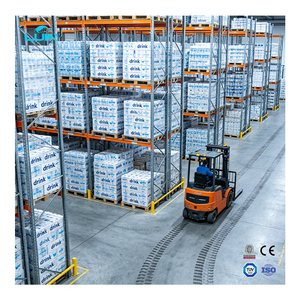
Heavy Duty Structural Racking System Warehouse Storage Rack Factory Wholesale
Hot-rolled structural channel steel design built to withstand high forklift impacts and aggressive seismic loads in demanding warehouse yards.
- Capacity: Up to 5,000 kg / level
- Steel Grade: Q235B / Q355B Hot-Rolled
- Finish: Electrostatic Powder / HDG
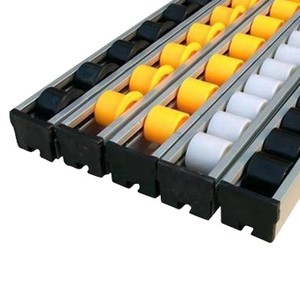
China Customized High Quality PE Fluency Bar Sliding Flow Rail For Flow Storage Rack Conveyor Wheel
High-density polyethylene (HDPE) roller tracks featuring ultra-low rolling friction for carton flow picking lanes and ergonomic assembly workstations.
- Roller Material: High-Grade Polyethylene (PE)
- Profile Base: Galvanized Steel / Aluminum
- Load Index: 15–60 kg per wheel axle
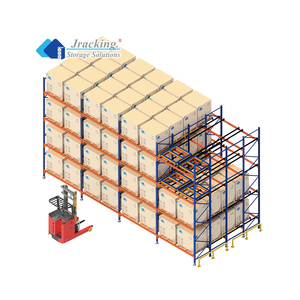
Jracking Push Back Racking Push-in Racking Pallet Racking Warehouse Storage System
Nested cart carrier system operating on inclined rails, providing deep density 2 to 6 pallets deep without forklift entry into the lane.
- Depth Capacity: 2 to 6 Pallets Deep
- Operating Principle: Gravity-fed LIFO Cart System
- Safety Feature: End-Stop Dampeners Included
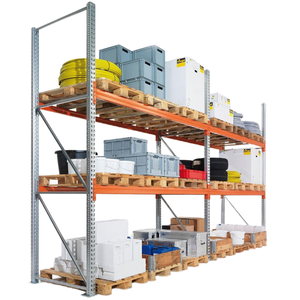
Factory Direct Metal Selective Pallet Racks Shelf Adjustable Warehouse Storage Racking Multi-layer Workshop Shelving Equipment
Fully modular beam-and-upright system offering 100% immediate selectivity to every unit load. Readily integrated with pick-to-light Carton Flow levels.
- Pitch Adjustment: 50mm / 75mm Beam Steps
- Beam Connections: 3/4-Lug Interlocking Connectors
- Standards: FEM 10.2.02 / RMI / AS4084
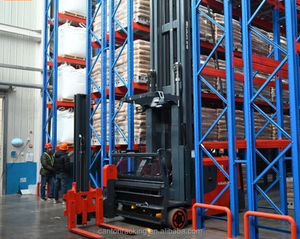
Very Narrow Aisle Racking Is Similar to Standard Rackingsystem Design, but the Aisles Are Minimized to Maximize Storage Capacity
Ultra-narrow aisle configurations operating with wire or mechanical guide rails, recapturing up to 45% of lost aisle space for live inventory.
- Aisle Clearances: 1,600mm to 1,900mm
- Height Limits: Engineered up to 16.5 Meters
- Floor Guidance: Inductive Wire / Profile Rails
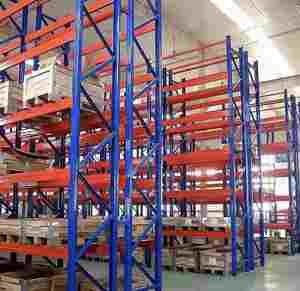
CE-Compliant Warehouse Storage Racks Heavy-Duty EU Standard Steel Pallet Racking for Cargo Yards
CE-certified heavy-duty racking built in accordance with EN 15512 static tolerances. Certified for demanding port cargo handling operations.
- Compliance: CE No. 2435-CPR-8605159
- Surface Treatment: Duplex Outdoor Epoxy / Zinc
- Safety Coeff.: 1.5 Factor on Ultimate Yield
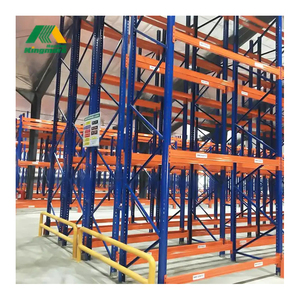
Kingmore Racking Shelves Massive Plate Type Heavy Duty Multi Layers Warehouse Pallet Rack
Reinforced solid steel decking decks designed for non-standard skids, heavy steel coils, die casting tooling, and oversized industrial goods.
- Decking Type: Formed Solid Steel / Ribbed Steel
- Level Load: Up to 4,000 kg Uniform Distribution
- Upright Profile: Omega Post Section 90-120mm
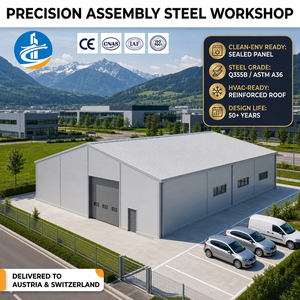
High-Bay Racking Steel Structure Warehouse for High Density Automated Storage and Logistics
Building-supported clad rack structure engineered for stacker cranes, mother-baby radio shuttles, and lights-out continuous operations.
- Building Integration: Rack-Clad Structure Capable
- Tolerances: FEM 9.831 High-Bay Automation
- Height Reach: Up to 40 Meters Vertical Storage
The Physics & Mechanical Engineering of Warehouse Flow Racking Systems
Flow racking—commonly categorized into heavy-duty Pallet Flow (Gravity Flow) and light-to-medium Carton Live Storage (Carton Flow)—operates on the principles of controlled gravitational descent. Unlike static selective racks that require active forklift entry into access aisles, flow racks utilize an inclined roller track or wheel-bed gradient between 1.5° and 3.5° (approx. 2.5% to 5.0% slope) to propel unit loads smoothly from the charging (replenishment) side to the discharging (picking) face.
For warehouse operations handling high-velocity, date-sensitive goods—such as perishable cold food, pharmaceuticals, and fast-moving consumer goods (FMCG)—gravity flow provides absolute First-In, First-Out (FIFO) stock rotation. The system achieves complete segregation between loading and unloading aisles, eliminating truck collisions, reducing forklift travel distances by up to 35%, and boosting picking operator order lines per hour by 50% or more.
Centrifugal Speed Controllers
As pallet mass ($m$) traverses down the slope length ($L$), kinetic acceleration must be counterbalanced. Hydrostatic and centrifugal brake rollers disengage at start-up friction, engaging dynamic dampening proportionally whenever velocity exceeds 0.3 m/s, preventing terminal impacts at the pick face.
Time-Delay Pallet Separators
To ensure operator safety during fork retrieval, mechanical separators uncouple line pressure. The lead pallet remains isolates at the stop while secondary trailing pallets are mechanically locked 400mm upstream until the primary pallet is completely lifted clear.
Roller Pitch & Friction Dynamics
Proper flow depends upon contacting a minimum of 3 rollers beneath pallet bottom runners at all times. Roller tubes manufactured from precision cold-drawn steel or engineered HDPE ensure rolling resistance coefficients ($\mu_r$) stay tightly calibrated between 0.015 and 0.022.
Dynamic vs. Static Storage: Technical Performance Matrix
Direct comparison of key structural, volumetric, and operational parameters across modern warehouse racking implementations to guide procurement feasibility studies.
| System Architecture | Inventory Logic | Space Utilization | SKU Selectivity | Forklift Requirement | Lane Depth Limits | Capital Cost / Pallet |
|---|---|---|---|---|---|---|
| Pallet Flow Rack (Gravity) | Strict FIFO | 80% – 85% | 1 SKU per Lane | Standard Counterbalance / Reach | Up to 25 Pallets Deep | Medium - High |
| Carton Flow (Live Picking) | Strict FIFO | 85% – 90% | High per Shelf Level | Pedestrian / Toter Cart Pickers | 1,500mm – 3,500mm Track | Low - Medium |
| Push Back Racking (Carts) | Strict LIFO | 70% – 75% | 1 SKU per Lane | Standard Forklift (No Mast Incline) | 2 to 6 Pallets Deep | Medium |
| Drive-In / Drive-Through | LIFO (Drive-In) / FIFO | 65% – 75% | Low (Bulk SKUs) | Reach Truck Enters Rack Tunnel | Up to 10 Pallets Deep | Low - Medium |
| Radio Shuttle System | Flexible FIFO / LIFO | 85% – 92% | 1 SKU per Lane Level | Standard Lift Truck + Cartridge | Up to 40+ Pallets Deep | High |
| Standard Selective Rack | Variable (Random) | 40% – 50% | 100% Direct Access | Universal Forklift Fleet | 1 Pallet Deep (2 in Double Deep) | Lowest |
Engineered Factory Direct: Guangzhou HEDA Shelves Co., Ltd.
Founded in 2001, HEDA Shelves provides end-to-end manufacturing, custom structural calculation, seismic modeling, and global container logistics for large-scale enterprise warehousing projects.
Continuous steel engineering and precision racking fabrication since 2001.
Advanced manufacturing base housing automated cold roll-forming lines.
Massive monthly steel processing capacity ensuring rapid export delivery.
Delivered to international logistics hubs across the Americas, Europe & Asia.
The HEDA Manufacturing Advantage: Structural Rigor from Coil to Container
Procuring industrial flow racking requires absolute mechanical reliability; an under-calculated beam deflection or warped roller bed can bring an entire fulfillment operation to a standstill. At HEDA Shelves, we integrate structural design, in-house roll forming, automated robotic punching, 10-stage chemical pre-treatment, and electrostatic polyester powder coating under a unified ISO 9001:2015 quality management system.
Our engineering division models every racking installation against site-specific seismic acceleration spectra, including Chilean NCh 433 / NCh 2369, Peruvian E.030, Colombian NSR-10, European EN 15512, and American RMI MH16.1 standards. Base plate thicknesses, concrete anchor embedment depths, frame diagonal bracing geometries, and structural portal ties are tailored specifically to the geotechnical soil classification of your facility.
Warehouse Flow Racks: Future Procurement & Technological Trends
Anticipate architectural shifts, supply chain resilience requirements, and intralogistics tech integrations transforming warehouse operations over the next decade.
Autonomous Mobile Robot (AMR) & AGV Integration
Modern flow racks are transitioning from pure manual operator picking faces to hybrid automated robotic loading cells. Discharging pick faces are now engineered with optical sensor gaps and precision cantilevered end-stops, allowing 3D vision-guided AMRs and automated reach forklifts to grab live pallet loads without manual staging.
Procurement teams are prioritizing roller beds with pneumatic latch releases that communicate directly with warehouse execution systems (WES) to pulse pallets forward precisely when autonomous lift units dock.
Cold Chain Energy Optimization & Galvanized Metallurgy
Refrigerated warehouse electricity costs represent up to 60% of total operational expenditure. By replacing open aisles with dense 15-to-20 pallet deep gravity flow lanes, facilities achieve dramatic thermal envelope compaction, reducing cubic refrigeration air requirements by 30% to 45%.
Procurement trends show a decisive shift away from standard carbon powder coatings toward pre-galvanized or hot-dip galvanized (HDG) steel components with specialized low-temperature synthetic lubricants inside roller bearings to prevent cold embrittlement down to -30°C.
Modular Reconfigurability & Low-Carbon Steel Sourcing
With seasonal SKU velocity volatility driven by omnichannel retail, fixed infrastructure has become an operational risk. Next-generation Carton Flow and Pallet Flow beds feature boltless, drop-in universal brackets that allow quick lane re-pitching and width repositioning in under 15 minutes per level.
Furthermore, ESG compliance initiatives across multinational brands are driving procurement guidelines to demand certified recycled-content steel (electric arc furnace EAF coils) with verifiable environmental product declarations (EPD).
Material Science & Component-Level Advancements
From advanced polymer wheel alloys to dynamic telemetry, micro-innovations within flow components yield major gains in warehouse uptime and maintenance cycles.
Ultra-High Molecular Weight (UHMW-PE) Rollers
Traditional carton flow plastic wheels are vulnerable to flange cracking under dynamic point shock loads. The latest fluency rails utilize carbon-reinforced UHMW-PE blends containing permanent conductive anti-static (ESD) additives. This prevents static buildup during high-frequency carton sliding, protecting sensitive electronics manufacturing lines while providing self-lubricating roller axle rotation across millions of cycles.
Magnetic Dynamic Eddy-Current Speed Braking
Mechanical centrifugal brake rollers rely on internal brake shoes and friction pads that inevitably wear, generating micro-dust and requiring periodic maintenance shutdowns. The latest generation of industrial pallet flow lanes employs contactless eddy-current magnetic dampeners.
These units generate opposing magnetic flux proportional to pallet velocity, guaranteeing zero mechanical contact wear, silent operation, and maintenance-free lifespan in cold storage.
Smart Roller Sensing & Real-Time Inventory Tracking
IoT-enabled roller tracks with integrated piezoelectric energy-harvesting sensors are now entering commercial testing. As pallets roll over the track, the rotation powers self-contained micro-transmitters that broadcast pallet arrival velocity, roller temperature, and lane occupancy counts to the warehouse management system (WMS).
This provides real-time FIFO stock tracking without requiring manual barcode scanning during rack replenishment.
Frequently Asked Questions on Flow Racks Procurement
Detailed engineering and procurement answers covering site evaluations, structural safety, container logistics, and installation management.
What warehouse floor specifications and slab flatness tolerances are required for dynamic flow racks?
Regarding floor levelness, while selective racking can tolerate standard floor variations via leveling shims, flow rack runways require floor flatness adhering to DIN 18202 Table 3 Group 3 or ASTM E1155 $F_F / F_L$ ratings of 35/25 minimum. Uneven foundation settlement can alter the calibrated gradient of gravity lanes, causing pallets to track laterally into side rails or stall mid-lane.
How do pallet quality and runner orientation affect pallet flow lane reliability?
For wooden Euro-pallets ($800 \times 1,200\text{ mm}$) traveling along their length or GMA pallets ($40 \times 48\text{ inches}$) traveling along their runners, full-width cylindrical steel rollers or multi-track wheel beds are selected. If four-way block pallets or plastic pallets with cruciform/perimeter bases are utilized, full-width steel roller tracks spaced at tight pitches (e.g., 75mm or 100mm center-to-center) are mandatory to ensure steady, uninterrupted roller contact.
Can flow racking systems be integrated with in-rack sprinkler systems (NFPA 13 compliance)?
HEDA Shelves designs custom structural uprights and horizontal bracing frames with factory-punched clearance portals and mounting brackets. This allows fire sprinkler pipe risers and branch lines to run safely protected within the structural upright framework, positioning quick-response large orifice (ESFR or intermediate temperature rated) sprinkler heads directly within horizontal flue channels without interfering with moving pallet loads or roller tracks.
How are seismic forces and lateral torsional buckling factored into frame engineering?
We employ oversized structural baseplates anchored by dual chemical capsule studs, heavy-gauge Omega profile columns roll-formed from certified Q355B structural steel, and rigid bolted horizontal and vertical diagonal bracing towers. Frame portal ties span across loading and unloading aisles to lock adjacent racks into a monolithic structural block, distributing lateral shear forces safely down to the concrete footings.
What is the standard manufacturing turnaround and container shipping protocol for international delivery?
For ocean freight, components are pre-bundled using steel banding, protective edge protectors, and corrugated wrap. Beams and roller beds are nested into custom steel cradles to maximize 40ft High Cube (40HQ) container utilization, preventing maritime transit abrasion and ensuring zero damage upon discharge at destination ports worldwide (such as Santos, San Antonio, Callao, Rotterdam, Dubai, or Houston).
What maintenance procedures are required to maintain factory warranties and OSHA/EN safety standards?
Bi-annually, technicians should inspect the mechanical operation of time-delay pallet separators, verifying that springs and latch linkages actuate freely, and perform operational speed tests to ensure centrifugal speed controller brake rollers engage correctly. Upright frame impact guards should be checked for forklift collision damage, with any structural deflections exceeding $1/200$ of beam span or column length immediately cordoned off for replacement.
Accelerate Your Warehouse Intralogistics with Custom-Engineered Flow Racks
Connect directly with our senior structural racking engineers. Provide your facility floor plans, pallet load specifications, and desired SKU cycle velocities to receive a certified 3D CAD layout, seismic static calculation report, and a detailed factory-direct quotation within 24 hours.