Featured Industrial Warehouse & Commercial Shelving Systems
From boltless longspan picking modules to heavy-duty cantilever racks and automated gravity flow lanes, our systems are certified under EN 15512, RMI, and AS4084 standards. Each configuration delivers verified deflection ratios under maximum payload stress.
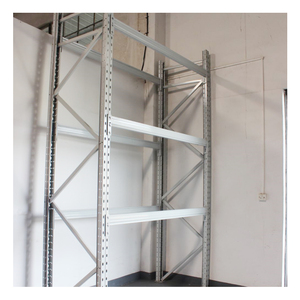
Heavy Duty Boltless Steel Warehouse Storage Rack
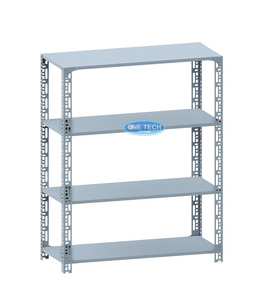
4-Tier Slotted Angle Shelving & Bolt System
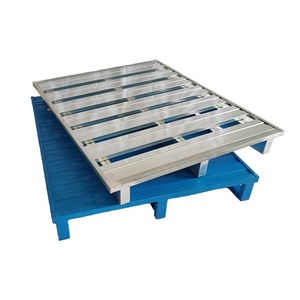
Galvanized Industrial Heavy-Duty Steel Pallets
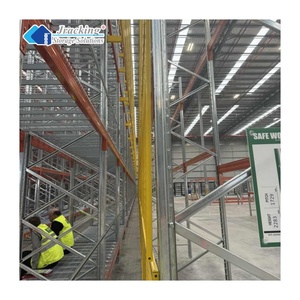
AU Standard Heavy-Duty Pallet Racking
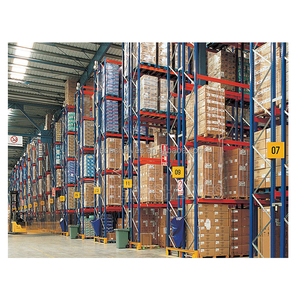
Industrial Selective Pallet Storage Rack
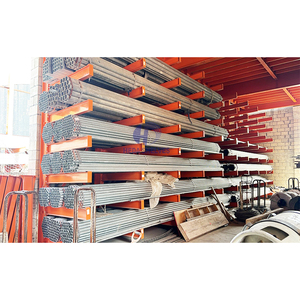
Heavy Duty Cantilever Rack for Pipes & Timber
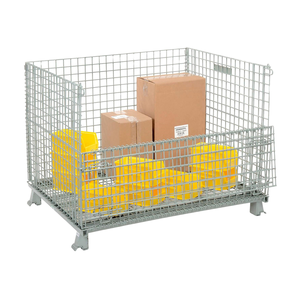
Collapsible Stackable Wire Mesh Storage Cage
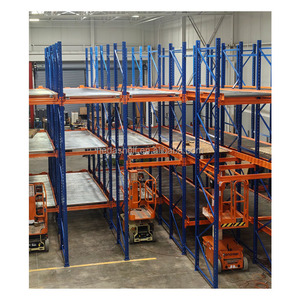
Warehouse Gravity Flow Dynamic Racking FIFO
Engineering Metallurgy & Cold-Roll Forming Precision
In industrial warehousing, structural integrity cannot rely on visual approximation. Modern industrial style shelving and heavy pallet racking require continuous roll-forming calibration within ±0.5mm dimensional tolerances. Guangzhou Heda Shelves utilizes premium Q235B (equivalent to ASTM A36) and high-tensile Q345B steel grades, subjected to rigorous finite element analysis (FEA) under static, live, and seismic dead-loads.
Our upright columns undergo continuous cold-bending on multi-stage CNC roller sets, minimizing internal residual stress and cold-work embrittlement. Uprights feature an engineered closed Omega cross-section with up to 12 cold-rolled bends, boosting the section modulus and torsional rigidity compared to standard open C-channels.
Surface pre-treatment is paramount for long-term operational safety. Prior to coating, our automated lines execute an eight-stage chemical cycle: degreasing, twin water wash, zinc phosphating, deionized rinse, and automated electrostatic powder curing at 200°C. This process delivers dry film thickness (DFT) between 65–85 μm, surpassing ASTM B117 salt spray benchmarks for 500+ hours of continuous exposure.
| Structural Metric | HEDA Industrial Spec | Generic Commercial Market |
|---|---|---|
| Steel Grade | Certified Q235B / Q345B | Recycled Scrap / Q195 |
| Yield Strength (Re) | ≥ 235 – 345 MPa | < 180 MPa |
| Permissible Deflection | L/200 (EN 15512 Strict) | L/120 to L/150 (Sag-prone) |
| Beam Connector Claws | 3 to 5 Welded Forged Claws | 2-Pin Stamped Rivets |
| Anti-Corrosion Finish | Phosphated + Epoxy 75μm | Direct Paint < 40μm |
| Seismic Validation | Site-Specific FEA Modeling | Not Analyzed |
Seismic Engineering & Global Codes
Every layout calculation accommodates local seismic design criteria: RMI MH16.1 in North America, EN 15512/15620 across Europe, NCh 433/2369 in Chile, and E.030 in the Andean belt. Sizing includes customized anchor bolt depths, heavier baseplates, and spine-bracing matrices.
Free 3D Layout & Static FEA
Before capital expenditure commitment, our engineering desk translates architectural DWG warehouse plans into high-density 3D spatial models. We optimize aisle turning radiuses for reach trucks, counterbalance forklifts, and VNA wire-guided equipment without extra consulting fees.
Strict In-House Batch QC
Operating a certified 30,000 m² factory equipped with automatic laser-cutting gantries, continuous roll formers, and robotic welding stations. Every mill production run undergoes ultrasonic weld penetration tests, tensile bar yields, and coating impact scratch resistance verifications.
Future Sourcing & Procurement Trends in Industrial Shelving
Global supply chain directors are navigating volatile freight economics, regional warehouse footprint shortages, and tightening sustainability covenants. Procurement strategies have pivoted from pure purchase price per kilogram to comprehensive Life Cycle Cost (LCC) and modular agility.
Convergence of Static Shelving & AMR Automation
The strict division between manual pick shelves and fully automated dark warehouses is dissolving. Modern distribution hubs require hybrid-ready uprights capable of carrying slotted hand-pick bins on lower tiers while structurally accommodating Autonomous Mobile Robots (AMRs) and automated tote-handling cranes above.
Procurement teams now mandate pre-punched beam profiles and standardized sensor mounting points to avoid complete structural rebuilds when robotic retrofits occur down the road.
Green Steel Certification & Circular LCA
Corporate ESG mandates in Europe and the Americas require Tier-1 logistics infrastructure suppliers to document the Scope 1, 2, and 3 embodied carbon per bay of installed shelving. The market is shifting from virgin blast-furnace profiles toward Electric Arc Furnace (EAF) scrap-blended steel and non-toxic powder chemistries.
Powder coatings must comply with RoHS and REACH regulations, eliminating volatile organic compounds (VOCs) and heavy-metal lead pigments from warehouse airspaces.
Disintermediation of Sourcing Middlemen
Import tariffs, harbor demurrage, and volatile distribution margins have accelerated the decline of multi-tier trading brokers. Enterprise procurement officers are partnering directly with integrated EPC (Engineering, Procurement, Construction) manufacturers that provide verified CAD-to-container capabilities.
Direct factory sourcing yields 25–35% landed cost savings, guaranteed mill test certificates (MTC), direct structural liability indemnification, and prioritized production windows.
Vertical Cube Utilization & Multi-Tier Mezzanines
With urban industrial land rents soaring across major global logistics corridors, expanding outward is no longer financially viable. Operators are utilizing the full clear height of existing facilities by engineering rack-supported multi-tier mezzanine floors and multi-level catwalk systems.
By converting clear ceiling heights of 8 to 14 meters into 3 or 4 tiered picking platforms, facility operators triple their active storage surface without expanding their geographic footprint.
Cold-Chain & Coastal Corrosion Immunity
Booming food exports and pharmaceutical distribution hubs have created explosive demand for shelving systems operating at sub-zero environments down to -30°C. Standard steel rapidly embrittles, and condensation induces rapid flash-rust under thermal cycling.
The procurement market is shifting toward hot-dip galvanized (HDG) components and proprietary low-temperature impact-resistant steel alloys for cold-storage corridors.
Component Serialization & Digital Twin BIM
Institutional warehouse facilities require structural assets to be integrated into Building Information Modeling (BIM) systems. Component-level QR tagging and mill batch serialization enable real-time damage inspection logging and automated structural maintenance audits.
Digital twins allow maintenance supervisors to immediately order precisely machined replacement uprights or safety locking pins with complete metallurgical compatibility.
Evolution of Industrial Shelving: From Slotted Angle to Dynamic High-Bay Racking
Over the past five decades, industrial storage systems have evolved from static, labor-intensive steel racks into dynamic, mathematically engineered structural systems. This technical shift reflects changing load densities, material handling technologies, and warehouse automation.
1. The First Generation: Slotted Angle & Bolt-Together Iron (1960s–1980s)
Early industrial shelving relied on manual bolted slotted angle iron. While versatile for workshop stockrooms, it suffered from severe structural limitations: high labor costs during re-bolting, significant sway under uneven dynamic loads, and vulnerability to joint failure under lateral shear. Maximum weight capacities rarely exceeded 150 kg per level, making it unsuitable for centralized palletized logistics.
2. The Second Generation: Boltless Teardrop & Wedge Clamping (1980s–2000s)
The introduction of precision roll-formed teardrop and keyhole punchings transformed warehouse installation speed. Patented beam end connectors with integral safety locks enabled tool-less assembly and rapid tier re-spacing. During this era, standard cold-rolled Q235 steel emerged as the baseline, supporting unit loads up to 1,000 kg per pallet tier while maintaining high structural safety factors.
3. The Modern Era: Finite Element High-Bay & Gravity Dynamic Systems (2010s–Present)
Today's industrial storage platforms are sophisticated structural systems engineered using finite element analysis (FEA). Modern high-density systems like Gravity Flow Racks and Radio Shuttle platforms utilize kinetic gravity lanes and semi-automated carriers. These configurations maximize storage density while eliminating internal forklift collisions, reducing warehouse damage costs and boosting operational safety.
Key Structural Milestones
-
•
Profile Geometry: Transition from flat iron angle to multi-flange Omega profiles featuring up to 12 cold-rolled load-bearing facets.
-
•
Deflection Tolerance: Progress from crude visual sag allowances to strict EN 15512 L/200 deflection calculations under live forklift placement.
-
•
Seismic Floor Anchorage: Transition from simple tap-screws to high-tensile wedge expansion and chemical capsule anchors engineered for cyclic earthquake shears.
-
•
Corrosion Resistance: Advancements from hand-brushed alkyd paint to multi-stage zinc phosphating, dry-powder polymerization, and continuous hot-dip zinc baths.
Industrial Shelving Procurement: Engineering FAQ
Detailed answers to crucial technical questions regarding structural calculations, international standards, shipping protection, and factory acceptance criteria.
Accelerate Your Warehouse Capacity with Direct Engineering Support
Eliminate intermediary markups and avoid costly structural sizing errors. Partner directly with Guangzhou Heda Shelves for factory-direct wholesale pricing, certified engineering calculations, and complimentary 3D CAD facility layouts tailored to your exact warehouse footprint.