Engineered Structural Pallet Racking Systems for Demanding Warehouses
Modern material handling demands verified structural integrity, precise seismic tolerances, and optimal space optimization. Explore certified storage systems engineered to meet international RMI, FEM 10.2.02, and EN 15512 standards.
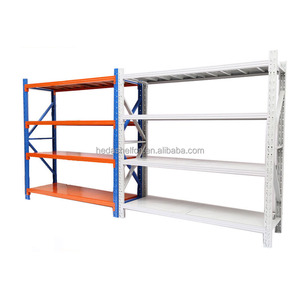
Industrial Boltless Storage Rack 4 Tier Shelving
Precision modular interlocking boltless frame designed for rapid assembly, high SKU pick accessibility, and resilient intermediate storage.
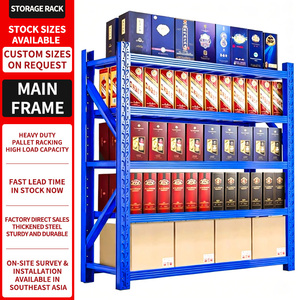
300kg Per Layer Medium Duty Storage Shelving System
Multilayer industrial steel shelf featuring adjustable pitch increments, anti-corrosive epoxy coat, and reinforced step-beam design.
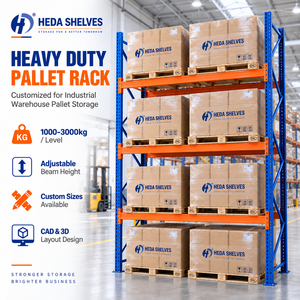
Heavy Duty Industrial Pallet Racking System
Standard high-bay selective pallet racking engineered for 100% direct pallet accessibility, flexible aisle clearance, and heavy-gauge uprights.
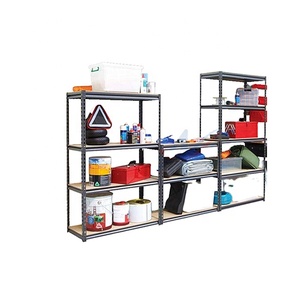
5-Layer Folding Steel Slotted Angle Storage Rack
Multi-level anti-corrosion light-to-medium utility rack with slotted corner plates for workshop parts, retail backrooms, and archives.
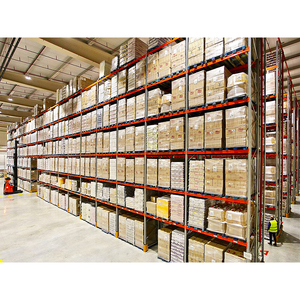
Adjustable Boltless Stainless Steel Storage Shelf
Corrosion-resistant stainless construction engineered for strict hygienic standards in cold-storage, chemical, and pharmaceutical warehouses.
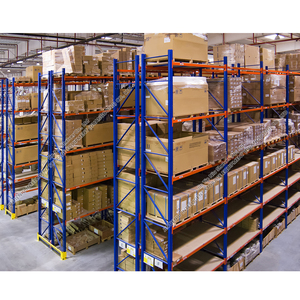
Industrial Heavy Duty Racks (1000kg - 3000kg)
Engineered for large logistics centers requiring heavy pallet loads, reinforced floor baseplates, seismic anchoring, and safety lock pins.
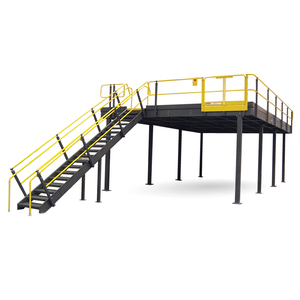
Rack-Supported Modular Steel Mezzanine Floor
High-load prefabricated raised platform creating usable 2nd and 3rd deck picking floors over ground-level pallet staging and sorting.
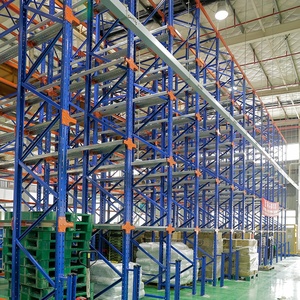
Heavy Duty Drive-In & Drive-Through Racking
Aisle-free storage matrix engineered for batch operations, cold food storage, and high-volume uniform pallet runs with continuous rails.
Enterprise Strengths: Why Global Supply Chains Trust Our Engineering
From initial structural FEA stress-testing to precision cold-roll punching, our automated manufacturing base in Guangzhou ensures zero-defect consistency across every cross beam and upright post.
In-House 10-Stage Roll Forming
Continuous automated profiling lines transform premium Q235B and Q355B coil stock into dimensionally stabilized omega upright profiles with high yield strengths and uniform wall thickness.
Site-Specific Seismic Engineering
Every bay layout is cross-verified against regional seismic acceleration coefficients (including Chilean NCh 433/2369, Peruvian E.030, and Colombian NSR-10) with upgraded ductile footings and dynamic bracing.
Dual-Action Anti-Corrosion Finish
Rigorous pre-treatment involves multi-stage immersion pickling, micro-crystalline phosphating, and 180°C electrostatic curing of epoxy-polyester powders, preventing oxidation even in humid tropical ports.
Structural Engineering Analysis: Selecting the Optimal Heavy-Duty Racking Architecture
Large-scale warehouse facility developers often face trade-offs between initial capital expenditure, volumetric floor utilization, and picking selectivity. The matrix below benchmarks primary pallet racking variants based on international logistics engineering parameters.
| Racking Architecture | Floor Space Utilization | Direct Selectivity | Forklift Compatibility | Stock Rotation Strategy | Optimal Bay Height |
|---|---|---|---|---|---|
| Standard Selective Racking | 35% - 40% | 100% Direct Access | Counterbalance, Reach Trucks | FIFO / LIFO Flexible | Up to 12.0m |
| Very Narrow Aisle (VNA) | 55% - 65% | 100% Direct Access | Articulated / Turret VNA Trucks | Strict FIFO Compatible | Up to 16.5m |
| Drive-In / Drive-Through | 65% - 75% | 20% - 30% (Batch Access) | Standard Counterbalance | Strict LIFO (Drive-In) / FIFO | Up to 10.0m |
| Radio Shuttle High-Density | 75% - 85% | 30% - 40% (Lane-by-Lane) | Standard Reach + Semi-Auto Shuttle | Software Configured FIFO/LIFO | Up to 18.0m |
| Rack-Supported Mezzanines | 100% - 150% (Multi-Tier) | 100% Manual / Carton Flow | Ground Forklift + Vertical Goods Lift | Omnichannel / Pick-to-Light | Up to 9.0m (Per Deck) |
When engineering high-bay structures exceeding 10 meters, upright buckling calculations must account for the second-order P-Delta effect under dynamic braking forces and wind/seismic lateral displacement. Our engineering team utilizes finite element analysis (FEA) to confirm beam-to-column connector torsional stiffness ($C_d$) before manufacturing starts.
Emerging Procurement Trends Shaping Large Pallet Racking in 2026–2030
Strategic enterprise procurement officers are pivoting from pure price-per-ton evaluations to total cost of ownership (TCO), carbon footprint verification, and automation-readiness.
1. Rise of Automation-Ready Hybrid Pallet Bays
Companies are designing warehouse footprints with hybrid beam slots that accommodate conventional manual reach trucks today, but feature standardized tolerance clearances, guide wire routing channels, and top-tie bracing for rapid conversion to Autonomous Mobile Robots (AMRs) and automated cranes tomorrow.
2. Decoupling Supply Chains & Containerization Optimization
Ocean freight rate volatility has shifted procurement specifications toward custom nested profile beam geometry. By nesting upright frames and utilizing demountable bolted beam step connectors, suppliers can increase 40ft High Cube container volumetric load capacity by 22%, dramatically cutting landed freight expenses.
3. Stringent Seismic Ductility Certification
Global insurance underwriters in earthquake zones across South America, Japan, and the Pacific Rim now enforce mandatory structural verification of anchor bolt shear resistance, floor slab slab-anchor pullout calculations, and low-cycle fatigue testing of welded beam connection jaws.
4. Demand for Low-Carbon Circular Structural Steel
Corporate ESG mandates require tier-1 rack manufacturers to supply mill test certificates (MTC) documenting electric arc furnace (EAF) steel sourcing, lower embodied carbon emissions, and 100% recyclable powder coating chemistry that complies with REACH and RoHS standards.
Next-Generation Engineering Innovations in Pallet Rack Manufacturing
Discover how continuous research and development in metallurgical alloying, sensory telemetry, and cold-bending mechanics are elevating warehouse safety margins.
Micro-Alloyed High-Yield Upright Sections
Adoption of vanadium-niobium micro-alloyed hot-rolled steel strips enables thinner structural wall profiles without sacrificing load-bearing capacity. These sections yield up to 450 MPa of tensile yield strength while reducing total superstructure weight by 14%.
IoT-Integrated Structural Health Monitoring (SHM)
Pilot deployments now integrate triaxial strain gauge sensors and impact-detection accelerometers on perimeter upright column protectors. These IoT transceivers automatically ping warehouse management systems (WMS) the instant a forklift impact exceeds allowable safety thresholds.
Cryogenic Zinc-Thermal Diffusion Coatings
Addressing aggressive corrosion in deep-freeze cold storage facilities (-30°C) with persistent condensation cycles, next-generation coatings employ thermal zinc diffusion, providing 3x the cathodic protection of conventional hot-dip galvanizing without hydrogen embrittlement risks.
Universal Beam-Connector Geometry Standardization
Manufacturing innovations are moving toward multi-prong, robotic-stamped locking tabs with zero-play teardrop geometry. This minimizes joint loosening caused by cyclic loading and automated pallet shuttle vibration over years of high-cycle operation.
Frequently Asked Questions: B2B Pallet Racking Sourcing
Essential technical and commercial clarifications to support procurement managers, warehouse architects, and third-party logistics (3PL) operators.
What structural data is required to generate an accurate warehouse 3D layout?
To produce an engineered proposal and CAD drawing, we require: (1) Warehouse architectural floor plans showing column grid offsets, doorways, and clear height to overhead trusses; (2) Pallet dimensions (W x D x H) including overhanging cargo; (3) Gross pallet weight; (4) Forklift mast specifications (maximum lift reach and minimum aisle turning radius); and (5) Local geographic seismic parameters.
How do you verify compliance with international seismic design codes?
Our structural design calculations strictly reference international building codes, including RMI MH16.1 in North America, EN 15512 in the European Union, and regional South American standards such as Chilean NCh 2369 / NCh 433 and Peruvian E.030. We supply complete mathematical calculation sheets detailing frame buckling, anchor bolt tension, base plate moments, and dynamic lateral deflection factors.
What is the standard production lead time for large container orders?
Supported by our 30,000-ton monthly capacity, standard selective and drive-in pallet racking projects generally ship within 2 to 4 weeks following CAD layout and engineering drawing sign-off. High-bay multi-tier mezzanine frameworks or custom automated shuttle racking installations are manufactured in staged container shipments aligned with your civil construction schedule.
How are finish durability and corrosion resistance ensured during ocean transit?
Every component undergoes automated shot blasting or continuous acid pickling to eliminate scale, followed by iron-phosphating and high-temperature cured electrostatic powder coating (60-80 microns thickness). For ocean transit and storage in high-humidity ports, uprights and beams are bundled with moisture-wicking film, corner protective sleeves, and desiccants to prevent transit corrosion.
Can you manufacture custom upright pitch hole punchings for compatibility?
Yes. We operate flexible automated CNC punching stations capable of stamping standard teardrop 2-inch increments, European 50mm / 75mm pitches, or custom hole arrays. This enables global distributors and warehouse operators to source expansion frames that seamlessly interlock with their existing racking assets without compromising structural safety.
What on-site installation support is provided for remote overseas facilities?
Each container shipment is packed according to an itemized loading plan where every upright, beam, and brace corresponds to numbered assembly drawings. We supply detailed 3D step-by-step installation manuals, video guides, and direct technical video support with our engineering leads. For major multi-million dollar projects, certified installation supervisors can be deployed on-site.
Plan Your Next High-Density Warehouse with Engineering Experts
Submit your warehouse floor plan, ceiling clear heights, and pallet load profiles. Our structural engineering team will deliver a comprehensive 3D CAD layout, load capacity calculation sheet, and direct factory-direct price quotation within 24 hours.