Standard & Custom Light to Medium Duty Storage Configurations
Precision-manufactured utilizing Q235B high-tensile cold-rolled steel, high-adherence electrostatic powder coatings, and engineered interlocking upright profiles that strictly conform to international FEM and SEMA safety parameters.
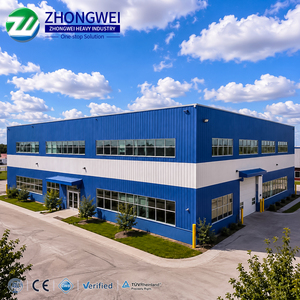
Industrial Steel Structure Warehouse Building Column Free Design Steel Frame Warehouse For Heavy Goods Store
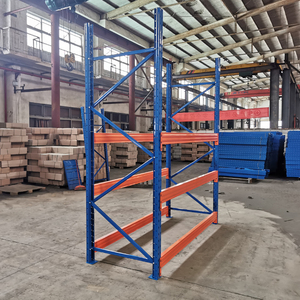
Heavy Medium Duty Industrial Warehouse Selective Metal Steel Shelving System Storage Pallet Rack Deep-Reach Pallet Rack
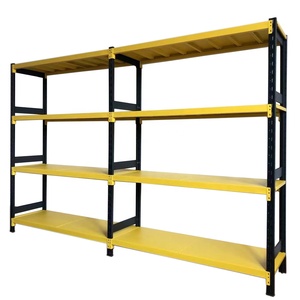
Metal Storage Shelf Rack Storage Racks Storage Shelving Units Heavy Duty 4 Tier Layers Factory Warehouse Shelves
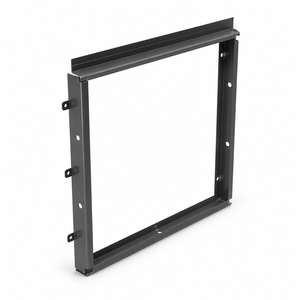
Bulk Order Tubular Subframe Metal Frames Fabrication Services Crossmember Carrier Pallet Platform Rack
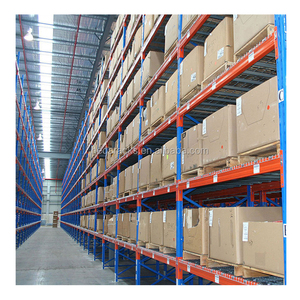
Metal Warehouse Shelf Heavy Duty Racks for Industrial Storage Pallet Racking System
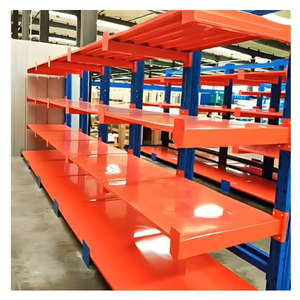
DJ Cantilever Racking Single Double-Sided Wood Hardware Aluminum Steel Shelf Arm Rack Storage Warehouse Heavy Duty
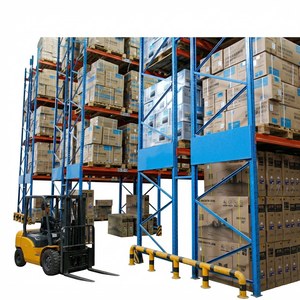
YueYang Warehouse Shelving Heavy-duty Drive-in Industrial 3-Layer Cold Rolled Steel Epoxy Powder Coated Pallet Racking System
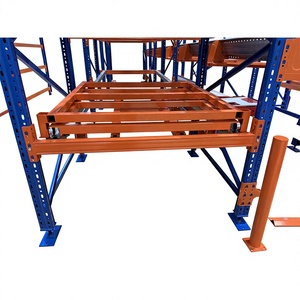
Factory Industrial Push Back Rack For Storage LIFO Rack Warehouse Racking System
Light Duty Shelving: Material Science, Load Deflection, and Profile Mechanics
In modern supply chain architecture, light duty warehouse shelving represents the operational core of high-throughput sorting, piece-picking, manual distribution centers, and modular micro-fulfillment centers (MFCs). Far from being simple utilitarian ironmongery, precision-engineered industrial light duty shelving requires uncompromising adherence to metallurgy, cold-roll profile dynamics, and structural stability factors. As a premier global manufacturer, our production lines utilize certified prime structural carbon steel coils (Grade Q235B per GB/T 700 and SPCC cold-rolled equivalents), characterized by a guaranteed minimum yield strength of $235\text{ MPa}$ and high tensile elongation thresholds that prevent catastrophic failure under sudden torsional stress or dynamic impact loading.
Structural deflection calculation for horizontal shelf decking and longitudinal tie beams is governed by strict structural deflection limits, specifically maintained within an allowable deflection of $\delta \le L/200$ up to $L/250$ under evenly distributed static loads (UDL). This mechanical precision guarantees that beam spans ranging from 900mm to 2000mm remain structurally sound without developing plastic deformation over prolonged decades of service. The upright columns are roll-formed through 16-to-22 automated continuous roller passes, creating an omega-ribbed or multi-flanged cross-section that maximizes the radius of gyration, dramatically upgrading resistance against weak-axis buckling under axial compressive forces.
Perforation & Geometry
Precision CNC progressive punch tooling guarantees a constant 50mm or 75mm pitch variation along the column axis, enabling fast tier adaptability without compromising moment-resisting beam connections.
- Upright Geometry: 38×38mm to 55×47mm Omega
- Slot Types: Butterfly, Teardrop, Diamond
- Punch Tolerance: $\pm 0.1\text{mm}$ Accu-Pitch
- Interlocking: Toolless 3-Lug Wedge Lock
Pre-Treatment & Powder
Every structural profile undergoes a continuous 9-stage automated chemical surface conversion process followed by electrostatic application of thermosetting cross-linking polyester resin.
- Pretreatment: Pickling & Phosphating
- Coating Depth: $60 - 85\text{ µm}$ Thickness
- Salt Spray Test: ASTM B117 > 500 Hours
- Adhesion: Cross-Hatch Grade 0 (ISO 2409)
Decking Versatility
Designed to support variable parcel architectures, our modular frames seamlessly seat pressed steel shelf panels, flame-retardant melamine boards, or galvanized wire mesh inserts.
- Steel Pan Thickness: 0.5mm – 1.0mm Ribbed
- Wire Mesh Decking: 50×50mm / 50×100mm Grids
- Wood Inserts: 15mm – 18mm High-Density
- Fire Rating: NFPA 13 Sprinkler Compliant
Light Duty Storage Classifications: Technical Comparison Matrix
Selecting the appropriate light duty warehousing architecture requires reconciling operational pick frequency, floor load density ($kg/m^2$), and total volumetric utilization. Below is an engineering comparison of industry standard industrial light-duty configurations manufactured at our Guangzhou production facilities:
| System Configuration | Capacity per Shelf Level | Frame Height Span | Tool Requirement | AMR / AGV Compatibility | Optimal Operating Applications |
|---|---|---|---|---|---|
| Boltless Rivet Shelving | 100 kg – 250 kg UDL | 1,500 mm – 3,000 mm | Rubber Mallet Only | Aisle-Level Interfacing | E-commerce piece-picking, automotive spare parts, parcel sorting lines |
| Light-Duty Clipped Steel Shelving | 80 kg – 180 kg UDL | 1,800 mm – 2,500 mm | 100% Tool-Free Clips | Stationary Manual Induction | Pharmaceutical active stocks, retail replenishment back-rooms, hardware bins |
| Longspan Light Industrial Shelving | 300 kg – 600 kg UDL | 2,000 mm – 5,000 mm | Drop-In Beam Pins | High (Wide Clear Aisle Design) | Bulky carton storage, fabric rolls, light industrial tooling & sub-assemblies |
| Multi-Tier Light Shelving Mezzanines | 150 kg – 400 kg UDL/level | 3,500 mm – 9,000 mm | Modular Bolted Grid | Integrated Lift & Chute Ready | High-cube urban micro-fulfillment, apparel fulfillment, 3PL logistics multi-level |
| Carton Flow Dynamic Shelving | 50 kg – 150 kg / roller track | 1,800 mm – 2,400 mm | Bracket Retaining Clips | Strict FIFO Automation Feed | Fast-moving consumer goods (FMCG), assembly line kitting, date-sensitive goods |
Future Sourcing & Procurement Trends in Light Duty Warehouse Shelving
The global logistics ecosystem is transitioning rapidly toward agility, circular asset lifecycle management, and ultra-dense micro-storage nodes. Procurement directors and supply chain engineers evaluating multi-container export contracts must look beyond upfront procurement quotes to evaluate long-term Total Cost of Ownership (TCO), adaptive reconfiguration value, and integration potential with robotic handling equipment. Our international project engineering divisions highlight four foundational purchasing trends shaping the 2025–2030 horizon:
Micro-Fulfillment & Urban Logistics
Decentralization of distribution hubs into urban infill centers requires light-duty shelving systems engineered for rapid height modularity, variable multi-tier structures, and minimal dead aisle space.
Autonomous Mobile Robot (AMR) Alignment
Modern pick operations combine manual piece-picking with autonomous robot fleets. Next-generation shelving specifies bottom base clearance, barcode target planes, and laser-guided reflective channels.
Low-Carbon Green Steel Mandates
Global decarbonization initiatives push multinational retailers to audit supply chains. Our factory utilizes scrap-recycled Electric Arc Furnace (EAF) rolled steel and VOC-free powder formulations.
Digital Twin & BIM Standard Sourcing
Enterprise procurement now mandates standard 3D CAD, Revit, and BIM families prior to manufacturing sign-off, ensuring collision-free integration with sprinklers, HVAC, and architectural spans.
Technological Milestones Driving Modern Shelving Performance
Technological evolution in cold-formed steel manufacturing has elevated light-duty warehouse shelving from static storage racks to dynamically certified structures. At Guangzhou Heda Shelves Co., Ltd., significant capital reinvestment into continuous automated production infrastructure ensures that every batch meets uniform mechanical tolerances:
1. Continuous Flying-Shear CNC Roll Forming: Traditional stamping lines introduce micro-burrs and edge deformation that compromise structural integrity. Our advanced production bays incorporate continuous roll-forming lines coupled with high-speed hydraulic punching dies. Coil steel is leveled, precision punched, and progressively folded across multiple roller stations before being cut to exact design tolerances ($\pm 0.5\text{mm}$ across standard 6-meter upright extrusions).
2. Advanced Finite Element Analysis (FEA) Simulation: Prior to steel processing, our engineering department performs thorough FEA simulations under simulated seismic, wind-uplift (for semi-open setups), and uneven eccentric payload configurations. This modeling guarantees that corner gusset connections, baseplate anchor assemblies, and shelf retainers fulfill European FEM 10.2.02 and US RMI MH16.1 specifications with generous safety margins.
3. Closed-Loop Nano-Ceramic Zirconium Pre-treatment: In response to rigorous environmental standards and demanding coastal microclimates, our electrostatic powder coating bays utilize nano-zirconium conversion chemistries. This technique provides superior molecular cross-linking between the bare cold-rolled steel and the baked epoxy polyester layer, delivering salt-fog corrosion resistance exceeding 500 hours without the heavy sludge associated with antiquated zinc phosphating.
Frequently Asked Questions: Engineering, Sourcing & Global Logistics
Direct technical answers for supply chain directors, procurement officers, and warehouse operations specialists.
What steel grades and mill certifications are provided with HEDA light duty shelving?
We source primary structural steel from top-tier state-owned mills utilizing certified Q235B (yield strength $f_y \ge 235\text{ N/mm}^2$) and SPCC cold-rolled varieties. Every production run is cross-referenced with official 3.1 Mill Test Certificates (MTC) documenting chemical composition (Carbon, Manganese, Silicon, Phosphorus, Sulfur thresholds) and verified mechanical tensile elongation tests.
How is load capacity verified, and what is the safety factor against shelf deflection?
Our light-duty shelving capacity ratings range between 100 kg to 500 kg per shelf layer under Uniformly Distributed Load (UDL). In strict compliance with SEMA, FEM 10.2.06, and ANSI/RMI MH16.1 codes, we apply a minimum safety coefficient of 1.5 to 1.65 against structural yield, with total deflection restricted to under $L/200$. Physical batch test rigs routinely subject samples to 1.5× rated loads for 24 continuous hours to verify zero residual permanent deflection.
How does the boltless assembly mechanism maintain rigidity under dynamic picking vibrations?
Our boltless upright-to-beam connection utilizes precision CNC stamped tapered lugs (butterfly or teardrop geometry). As horizontal shelf levels are weighted down, the tapered lugs seat deeper into the column perforations, creating an increasing friction-fit moment joint. For areas with seismic acceleration or heavy forklift vibration nearby, supplementary steel spring locking clips prevent any upward accidental dislodgement.
Can light duty shelving be integrated into two-tier or three-tier mezzanine pick towers?
Yes. Our light and medium-duty systems are engineered to function as multi-tier shelving-supported mezzanines. By utilizing continuous heavy-wall uprights (up to 9,000mm in single or splice-joint columns), primary catwalk support channels, punched galvanized non-skid steel catwalk planks, integrated perimeter kickplates, handrails, and safety swing gates, we can double or triple usable fulfillment square meters without requiring an independent structural steel building frame.
What anti-corrosion treatments are available for humid or coastal overseas warehouses?
For standard distribution centers, our 9-stage pre-treatment plus 60–85µm electrostatic thermoset epoxy polyester powder coating provides robust protection against chipping and ambient humidity. For coastal, cold-chain, or high-condensation environments, we offer continuous pre-galvanized sheet processing (Z120–Z275 zinc mass coating) or hot-dip galvanization for hardware to ensure lifetime corrosion protection without chalking or peel-off.
What are typical production lead times and container volumetric utilization standards?
With an active monthly output exceeding 30,000 tons across multi-shift automated roll-forming lines, standard container orders (1 to 5 FCLs) ship within 14 to 21 working days following final approval of engineering drawings. Every export consignment is pre-calculated using 3D container packing software, ensuring upright frames, horizontal beams, and shelf panels are nested securely on export skids to achieve 92% to 96% container volumetric fill rates ($62\text{ to }66\text{ CBM}$ in a standard 40HQ), dramatically driving down landed ocean freight cost per unit.