Featured Industrial Pallet Racking & Heavy Shelving
Precision-manufactured cold-rolled steel configurations tailored for high bay warehouses, ambient cold stores, third-party logistics centers, and heavy commercial distribution.
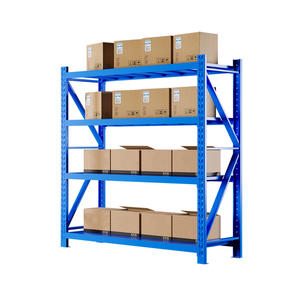
Industrial Warehouse Storage 5-Layer Pallet Racking System
- Configuration:Slotted Angle & Beam
- Payload:1,000–3,000 kg / level
- Material:Cold-Rolled Q235B Steel
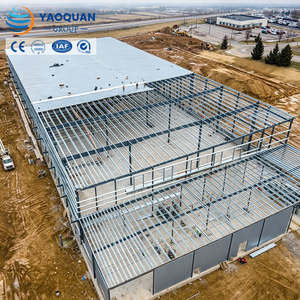
Prefab Steel Cold Storage Warehouse with Mezzanine Floor Racking
- Application:Cold Store & Distribution
- Platform Rating:300–1,000 kg / sqm
- Protection:Anti-Condensation Coating
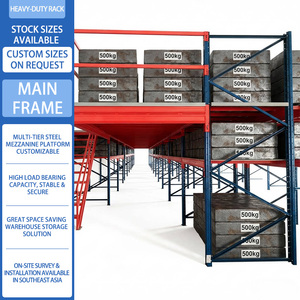
China Heavy Duty Cold Rolled Steel Pallet Rack System
- Connection:Boltless Safety Connector
- Column Spec:90/100/120mm Omega Uprights
- Finish:Electrostatic Powder Coat
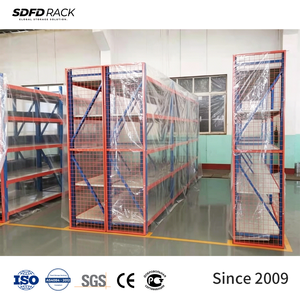
Medium Duty Longspan Warehouse Shelves (4 Layers / 400kg)
- Standard Dim.:2400 x 600 x 2200 mm
- Capacity:400 kg / layer uniformly
- Deck Option:Steel Panels or Wood
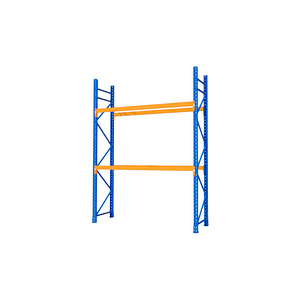
Light Duty Wire Shelving Commercial Storage Rack System
- Structure:Chrome / Zinc Mesh Wire
- Fire Safety:Full Sprinkler Penetration
- Assembly:100% Tool-Free Snap-Lock
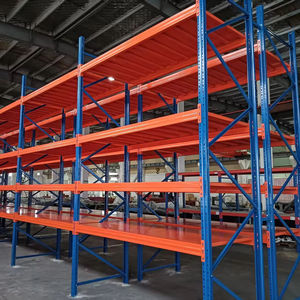
Heavy Duty Pallet Rack with Powder Coated Steel Deck Panels
- Infill Deck:Formed Box Steel Panels
- Safety Standard:EN 15512 & CE Certified
- Sector:Retail Logistics & Hardware
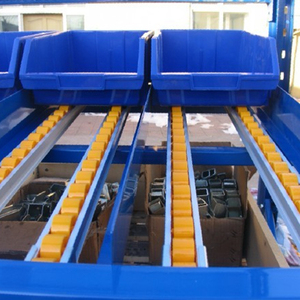
Carton Flow Rack Sliding Roller Shelf System for Picking
- Mechanism:Gravity Roller Beds / Tracks
- Fulfillment:Split-Case Fast Picking
- Throughput:Over 35% Faster Transit
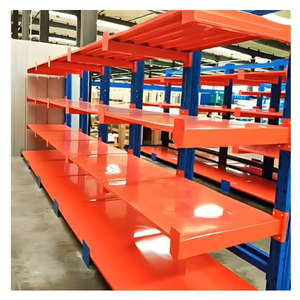
DJ Heavy-Duty Cantilever Racking (Single / Double Sided)
- Profile:Tubing, Timber, Rebar, Profiles
- Arm Capacity:500–1,800 kg per Arm
- Column Types:Structural H-Beam Steel
Navigating Global Pallet Rack & Shelving Procurement
An authoritative engineering analysis for supply chain directors, industrial real estate developers, and warehouse operational architects.
Modern supply chain resilience is anchored within the physical structural skeleton of distribution infrastructure. In an era marked by rapid inventory velocity, industrial rent escalation, and expanding pallet SKU diversities, pallet rack shelving factories and suppliers are no longer merely vendors of fabricated steel; they are essential structural engineering partners. Specifying warehouse storage systems requires reconciling structural safety margins, seismic damping compliance, metallurgy grade consistency, and dynamic spatial footprint management.
Procuring industrial racking demands acute technical scrutiny. Inexperienced buyers frequently evaluate racking systems solely based on raw structural weight or nominal tonnage pricing. However, premier original equipment manufacturers (OEMs) and engineering-backed factories differentiate themselves through rigorous cold-roll forming profiling, advanced finite element analysis (FEA), high-yield alloy formulation (such as premium Q235B and Q355B structural cold-rolled steel), and strict adherence to international seismic engineering protocols. Ensuring structural longevity prevents catastrophic frame collapses, maintains insurance underwriting compliance, and guarantees uncompromised personnel safety.
Core Procurement Insight: The true Total Cost of Ownership (TCO) in industrial pallet storage is determined not by initial FOB container pricing, but by long-term structural deflection tolerances (adhering to allowable 1/200th beam deflection limits under full nominal load), certified rust-preventative phosphating coatings, and seamless interoperability with emerging automated material handling equipment.
Global Factory Evaluation Framework: Separating Fabricators from Engineered Solution Providers
When conducting supplier due diligence across international manufacturing bases, industrial buyers encounter three distinct tiers of suppliers:
- Tier 1: Integrated Design-Engineering Manufacturers: Entities possessing extensive automated continuous cold roll-forming lines, automated punching centers, robotic welding cells, and fully automated continuous electrostatic powder coating lines. These factories maintain documented quality management (ISO 9001:2015), carry verified structural certifications (such as CE conformity marking under the Construction Products Regulation 2435-CPR-8605159, RMI ANSI MH16.1, and EN 15512), and provide bespoke 3D CAD stress models and site-specific seismic engineering reports.
- Tier 2: Commercial Contract Fabricators: Standard steel processors executing build-to-print batch runs. While component manufacturing is adequate, they frequently lack dedicated structural engineering teams, offering minimal assistance in solving floor slab anchoring dynamics, thermal expansion in sub-zero cold stores, or seismic load path distributions.
- Tier 3: Intermediary Trading Aggregators: Non-manufacturing exporters who source fragmented components across unvetted sub-tier mills, leading to inconsistent steel tensile strengths, variable upright hole pitch tolerances, and unreliable container nesting plans.
Why Industry Leaders Partner with HEDA Shelves
Over two decades of precision cold-rolled steel manufacturing, certified engineering safety, and end-to-end international export logistics.
In-House Cold Roll-Forming Lines
With 30,000 m² of specialized workshops, our automated roll-forming and CNC continuous punching machinery yield Omega uprights and step beams with micron-level hole pitch tolerances, ensuring instant on-site assembly and structural rigidity.
Certified CE & ISO Quality Control
Operating strictly under CE Certificate No. 2435-CPR-8605159 and ISO 9001:2015 management systems. Every heat lot of Q235B/Q355B raw steel is tested for chemical composition, tensile yield, and weld integrity prior to fabrication.
Bespoke 3D CAD & Seismic Engineering
Receive comprehensive engineering consultations, 3D spatial renderings, and site-specific seismic load verifications calibrated for international structural codes (including Eurocode EN 15512, RMI MH16.1, and Latin American codes like NCh 2369, NSR-10, and E.030).
10-Stage Precision Surface Treatment
Steel profiles undergo an automated pre-treatment line featuring acid pickling, degreasing, zinc phosphating, and uniform electrostatic powder baking (60–90µm), providing exceptional impact endurance, UV stability, and rust prevention.
Optimized Container Cube Packaging
Freight efficiency is engineered directly into packaging. Structural beams and upright frames are nested using custom dunnage and high-tensile steel banding, reaching up to 98% cubic space container utilization and zero maritime transit scuffing.
End-to-End International Installation Support
From complete bilingual blueprint packs, torque-setting documentation, and bolt numbering keys to video commissioning and certified on-site site supervisors, our global projects achieve seamless, on-schedule commissioning worldwide.
Comparative Technical Architecture Across Racking Classes
Select the optimal structural storage configuration balancing SKU selectivity, aisle space footprint, and inventory rotation mechanics.
| Storage System Type | Access Selectivity | Floor Space Utilization | Rotation Principle | Forklift Compatibility | Typical Payload / Level |
|---|---|---|---|---|---|
| Selective Pallet Racking | 100% Immediate | 40% – 50% | FIFO (First-In, First-Out) | Standard Counterbalance, Reach Truck | 1,000 kg – 4,500 kg |
| Double Deep Racking | 50% Direct | 60% – 65% | FILO (First-In, Last-Out) | Deep-Reach Pantograph Forklift | 1,000 kg – 3,000 kg |
| Drive-In / Drive-Through | Low (Batched SKUs) | 70% – 85% | LIFO / FIFO Available | Counterbalance, Narrow Profile | 1,000 kg – 2,000 kg |
| Radio Shuttle Automation | Medium to High | 80% – 90% | Flexible FIFO & LIFO | Automated Carrier + Standard Lift | 500 kg – 2,500 kg |
| Carton / Pallet Flow (Gravity) | High SKU Access | 70% – 80% | Strict FIFO Rotation | Standard Turret / Counterbalance | 500 kg – 1,800 kg |
| Heavy Duty Cantilever | 100% Overhead Access | 60% – 70% | Unrestricted Long Stock | Side-Loader, Standard Forklift | 500 kg – 2,000 kg / arm |
| Multi-Tier Mezzanine | 100% Floor Access | 100% – 200% Floor Expansion | Bespoke Hand Picking / Pallet Buffer | Pallet Jacks, Vertical Goods Lifts | 300 kg – 1,000 kg / sqm |
Determining the right warehouse racking class involves matching cycle velocity with inventory profile. For operations dominated by fast-moving items, such as retail and pharmaceutical e-fulfillment, Selective Pallet Racking and Carton Flow Roller Systems deliver unencumbered SKU retrieval. Conversely, in cold storage facilities where utility costs are high, Drive-In Racking and semi-automated Radio Shuttle Systems maximize cubic volume utilization, cutting refrigeration overhead by up to 45% compared to wide-aisle configurations.
Future Procurement Trends Transforming the Racking Industry
Strategic dynamics reshaping supply chain infrastructure contracts, structural engineering, and facility design heading into 2026–2030.
Hybrid Automated Racking Interfaces
Traditional static racking is evolving into hybrid structures engineered to interface seamlessly with Autonomous Mobile Robots (AMRs) and AGVs. Warehouses demand precision tolerances in guide rail integration, magnetic guidance floor channels, and reinforced base floor plates to absorb automated rapid docking vibrations.
High-Yield Low-Alloy (HSLA) Steels
Procurement teams are shifting away from heavy, low-efficiency hot-rolled profiles toward optimized high-yield cold-rolled micro-alloyed structural steels. These advanced profiles deliver higher load-to-weight ratios, reducing overall dead load on warehouse floor slabs while cutting shipping freight carbon emissions.
Smart Structural Health Monitoring
Future high-bay racking systems increasingly integrate embedded IoT strain gauges, tilt sensors, and laser deflection detectors. This provides real-time alerts if dynamic forklift impacts occur or if asymmetrical structural overloading exceeds safe operating thresholds, preventing progressive warehouse collapses.
Advanced Pre-Galvanized & Hybrid Finishes
As cold chain, maritime port distribution, and chemical warehousing expand, demand is rising for hot-dip galvanized (HDG) and zinc-flake hybrid finishes that surpass traditional salt spray testing (exceeding 1,000+ hours in ISO 9227 trials), safeguarding against micro-fissure corrosion caused by thermal condensation.
Ductile Base Isolation & Dissipative Bracing
Global insurers and regional authorities enforce stricter compliance with dynamic seismic standards (such as Eurocode EN 15512:2020 and RMI ANSI MH16.1). Suppliers must furnish calibrated FEA models demonstrating non-linear structural behavior, energy dissipation under cyclic ground acceleration, and customized ductile anchorage systems.
Reconfigurable Rack-Supported Mezzanines
Faced with escalating commercial lease rates, enterprises are prioritizing reconfigurable multi-tier systems. Rack-supported mezzanine floors enable rapid expansion from single-level bulk pallet storage into two-tier or three-tier pick modules without triggering major capital permitting for structural civil alterations.
Frequently Asked Procurement & Engineering Questions
Detailed technical answers to common queries raised by international buyers, facility engineers, and supply chain project managers.
To deliver an accurate 3D CAD proposal and structural calculation, our engineering team requires: (1) Architectural floor drawings showing clear height under sprinklers/beams, column grid spacing, dock positions, and floor slab specifications (thickness, compressive strength, rebar mesh); (2) Pallet specifications including overall dimensions (W x D x H), bottom runner configurations, overhang allowances, and gross weight per pallet; (3) Forklift parameters including model, aisle turning radius, maximum mast reach height, and mast collapsed height; (4) Local seismic zone parameters and target SKU count.
We source certified primary hot-rolled and cold-rolled coils from top-tier integrated mills with certified Mill Test Certificates (MTC) verify chemical analysis (carbon, manganese, silicon, sulfur, phosphorus) and mechanical properties (yield point ≥ 235 MPa for Q235B and ≥ 355 MPa for Q355B, tensile strength, and percentage elongation). In addition to mill tests, our internal QA/QC laboratory performs random batch tensile coupons and weld destructive shear tests on beam-to-column connector assemblies in accordance with CE and ISO 9001 protocols.
With our 30,000 m² automated facility and monthly fabrication capacity of 30,000 tons, typical production lead time for standard selective pallet racking orders (1 to 5 x 40'HQ containers) spans 15 to 25 business days from final 3D drawing sign-off. Highly customized systems—such as multi-tier rack-supported mezzanines, automated radio shuttle lanes, or structural cantilever platforms—generally require 25 to 35 days, accommodating prototype fitting trials and specialized pre-assembly inspections.
Yes. We specialize in engineering seismic-resilient structures globally. By taking site-specific ground acceleration values (such as PGA values and soil profiles across seismic regions in the Americas and Asia-Pacific), our structural software sizes enlarged ductile base plates, heavy-duty wedge/chemical anchors, thicker cold-rolled upright walls, cross-aisle horizontal bracing grids, and spine bracing towers. The resulting structural package satisfies local requirements (including Eurocode EN 15512, RMI MH16.1, NCh 2369, NSR-10, and E.030) for localized structural engineer sign-off.
All export shipments utilize protective packaging methods developed over 25+ years. Components pass through automated phosphating and electrostatic powder curing lines, producing a durable 60–90 µm epoxy-polyester shell. Before sea shipping, components are bundled with shock-absorbing foam spacers, waterproof multi-layer stretch wrap, corner edge protectors, and desiccant packs within each ocean container to prevent condensation rust during multi-week ocean transit across equatorial routes.
Every shipment arrives with numbered components matching CAD erection plans, comprehensive step-by-step installation manuals, and anchor torque specifications. We provide real-time remote engineering video support to assist local mechanical crews. For large-scale distribution centers or multi-tier mezzanine installations exceeding 5,000 square meters, HEDA Shelves can dispatch bilingual senior installation supervisors on-site to oversee positioning, leveling tolerances, torque verification, and safety load sign-offs.