Specialized Storage & Load-Bearing Rack Solutions
Direct from manufacturing lines: heavy-duty structural systems certified to international FEM, RMI, CE, and ISO 9001:2015 safety thresholds.
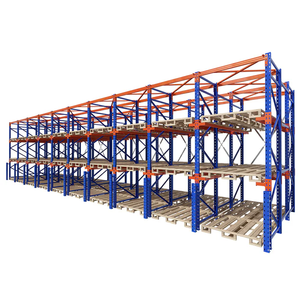
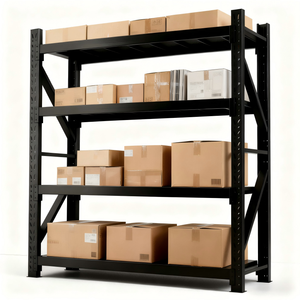
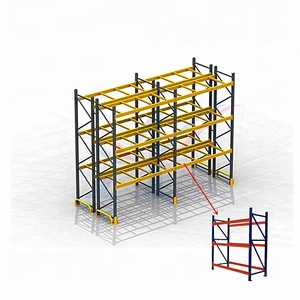
Engineering Whitepaper: Pallet Racking Cross Beam Integrity & Structural Mechanics
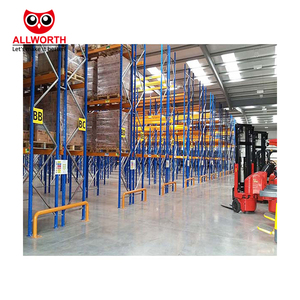
In modern industrial high-density storage environments, the pallet rack cross beam serves as the critical horizontal element transferring dynamic, static, and seismic forces into the vertical upright frames. As warehouse footprints grow vertically to combat rising land acquisition costs, cross beam structural specifications dictate not merely maximum payload metrics, but catastrophic failure prevention margins. Beam design requires precise load deflection evaluation conforming strictly to RMI (Rack Manufacturers Institute) guidelines and EN 15512 European standards, requiring that under design load conditions, the maximum allowable vertical deflection shall never exceed L/180 (where L is the clear span distance between upright columns).
Modern pallet rack cross beams primarily fall into two structural geometry classifications: Interlocking Step Beams and Closed Box Beams. Step beams feature an inward-facing 7/8-inch shelf step intended for flush integration of drop-in wire mesh decking, steel support panels, and cross-tie bars, rendering them dominant in retail-integrated picking and general 3PL operations. Conversely, seam-welded and roll-formed closed box beams deliver exceptional torsional rigidity and higher plastic resistance against lateral flexural buckling, making them the standard engineering choice for multi-ton heavy unitized pallet storage, deep-lane drive-in configurations, and automated storage and retrieval systems (ASRS).
| Structural Parameter | Continuous Closed Box Beams | Interlocking Step Beams | Cold-Formed Open C-Sections |
|---|---|---|---|
| Steel Grade Compatibility | Q235B / Q355B (High Tensile) | Q235B Cold Rolled | Standard Mild Carbon Steel |
| Torsional Resistance | Superior (Resists Bi-axial Moments) | Moderate (Protected via decking tie-ins) | Low (Susceptible to lateral warping) |
| Standard Span Clearances | 2300mm to 3900mm Continuous | 1800mm to 2700mm | Up to 2300mm max |
| Connector Pin Configuration | 3-Lug or 4-Lug Robotic Welded End Connectors | 3-Lug Mechanically Pressed/Welded | 2-Lug or 3-Lug Direct Fasteners |
| Primary Intralogistics Profile | ASRS, Cold Chain, Industrial Pallet Storage | Carton Flow, Selective Picking, 3PL Mesh Units | Light-to-Medium Duty Manual Picking |
Manufacturing excellence hinges on end-connector connector mechanics. At our Guangzhou production hub, beam end connectors utilize high-precision 3-lug or 4-lug tooth-engagement systems cut with CNC laser tolerances. Each connector features a spring-loaded or bolt-through heavy-gauge safety locking pin capable of withstanding excessive upward shear forces (>1,000 kgf) caused by errant forklift tines, preventing accidental beam dislodgement during rapid pallet retrieval operations.
Emerging Trends Transforming Cross Beam Specification
Strategic supply chain investments require looking beyond immediate price-per-ton metrics toward total lifecycle reliability.
High-Strength Micro-Alloy Steel (Q355B Shift)
Global procurement teams are shifting away from conventional mild Q235 steel toward high-yield micro-alloyed Q355B steel. This transition reduces beam profile weight by 12–18% while simultaneously raising overall dynamic load thresholds, lowering ocean freight deadweight expenses per shipping container while improving structural performance under severe seismic acceleration loads.
ASRS & Shuttle-Ready Deflection Tolerances
With warehouse robotics, AGVs, and high-speed radio shuttles demanding millimetric precision, beam manufacturing requires ultra-tight deflection control. Future-proof cross beams adhere to stringent L/250 or L/300 deflection tolerances rather than standard commercial grades, preventing optical sensor disruption and robotic rail binding.
Corrosion-Resistant Surface Engineering
Harsh cold chain logistics (operating at -30°C) and coastal storage facilities require superior corrosion mitigation. Moving past basic single-coat paint, enterprise facilities demand continuous multi-stage pre-treatment (acid pickling, phosphatizing) paired with thermosetting epoxy-polyester powder coats or continuous pre-galvanized beam extrusions to prevent micro-fissuring and rust creep.
Manufacturer Authority: Guangzhou Heda Shelves Co., Ltd.
Founded in 2001, Guangzhou Heda Shelves Co., Ltd. operates an advanced 30,000 m² state-of-the-art intelligent manufacturing facility staffed by 300+ structural engineers, fabrication technicians, and QA specialists. Supplying premier global distributors and EPC contractors across North America, South America, Europe, Southeast Asia, and the Middle East, we operate as a single-source engineering and fabrication powerhouse.
Our competitive advantages directly mitigate client execution risk:
- Free Structural 3D CAD & Load Verification: Comprehensive finite element analysis (FEA) modeling provided prior to contract finalization, ensuring regulatory alignment with national building codes (including IBC, Eurocodes, and South American seismic parameters).
- Massive In-House Scalability: Our 30,000-ton monthly output capacity ensures predictable factory dispatch lead times (typically 2–4 weeks), shielding buyers from severe supply chain bottlenecks.
- End-to-End Certified Production: Complete in-house roll forming, automated robotic welding stations, automatic 10-step powder-coating lines, and strict batch metallographic inspection certified under CE (Certificate No. 2435-CPR-8605159) and ISO 9001:2015.
- Turnkey Export Protection: Optimized container utilization algorithms minimize sea freight landed costs, complemented by numbered component bundles and comprehensive assembly diagrams for streamlined on-site commissioning.
Frequently Asked Questions by Industrial Sourcing Teams
Clear, engineering-backed answers addressing structural calculations, regulatory compliance, and export logistics.
Q: How is safe working load (SWL) calculated for cross beams?
Safe Working Load is calculated assuming uniformly distributed loads (UDL) acting downward on two paired beams per shelf level. Calculations factor in cross-sectional modulus, yield strength of steel (e.g., minimum 235 MPa for Q235B), span length, and strict deflection ceilings of L/180 or L/200, integrated with a structural safety coefficient of 1.5 to 1.65 under European FEM 10.2.02 and US RMI specifications.
Q: What is the critical distinction between Step Beams and Box Beams?
Step beams possess an integrated internal shelf ledge specifically engineered to cradle wire decking, drop-in wood shelving, or steel shelf supports flush with the top beam surface. Closed box beams are formed by roll-folding twin C-profiles or robotic longitudinal seam welding, creating a closed hollow section with superior torsional rigidity, preferred for direct pallet resting and extreme heavy loads.
Q: Can cross beams and upright frames be engineered for active seismic zones?
Yes. In seismic regions (such as the Pacific Rim, Chile, Peru, or the Western US), cross beams are modeled taking ground acceleration spectral response into account. We engineer upgraded multi-tooth structural end connectors, increased column gauge thicknesses, enhanced moment-resisting baseplates, and high-strength locking bolts to safely absorb dynamic lateral drift.
Q: What surface pre-treatment is used to prevent rust in cold storage?
All raw profiles undergo an automated 10-step immersion/spray treatment comprising alkaline degreasing, acid pickling, surface conditioning, and zinc phosphating prior to electrostatic polyester powder coating. For aggressive sub-zero cold stores or coastal ambient humidity, hot-dip galvanizing (HDG) conforming to ISO 1461 standards is available.
Q: How do beam end connector pins prevent workplace disasters?
During high-pace forklift operations, upward mast travel can catch beam under-edges. Our heavy-duty spring or drop-pin safety locks directly pass through the upright slot and connector face, providing a minimum vertical shear disengagement resistance in excess of 1,000 kg, preventing structural dislodgement.
Q: What documentation is provided for customs clearance and regional building permits?
Every industrial export shipment is supported by Mill Test Certificates (MTC 3.1) validating steel chemical and physical composition, CE Declaration of Conformity, ISO 9001 quality audit reports, container packing manifests, and localized structural calculation reports ready for sign-off by regional registered professional engineers.