Industrial Heavy-Duty & Rolling Storage Systems
Direct from Guangzhou Heda Shelves Co., Ltd.: certified structural steel pallet racking systems engineered for high throughput, heavy static point loads, and dynamic rolling flexibility.
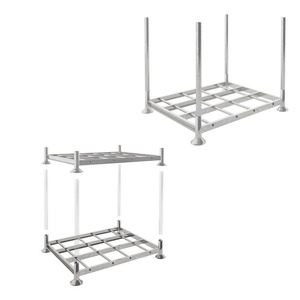
Detachable Stillage Pallet Storage Rack
Vertical demountable post design for dynamic staging, cold chain buffer lines, and flexible roll-in cargo consolidation.
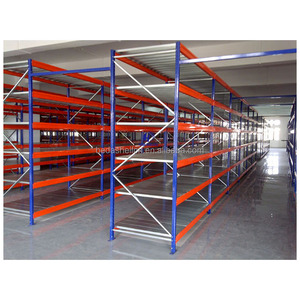
Boltless Metal Warehouse Shelving System
Keyhole/butterfly clip assembly with cold-rolled steel decking, engineered for 300–800 kg per tier picking applications.
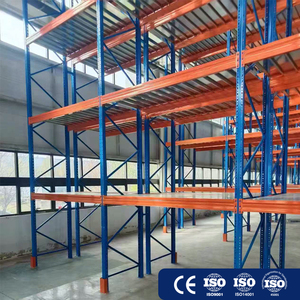
Q235B Heavy-Duty Selective Pallet Racking
Certified structural Q235B upright frames with 75mm beam adjustability, custom seismic baseplates, and up to 4,500 kg level load.
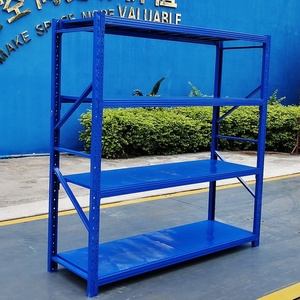
Thickened Floor-Standing Storage Racks
Multi-tier light/medium storage matrix featuring reinforced upright pillars and electrostatic powder-coated crossbeams.
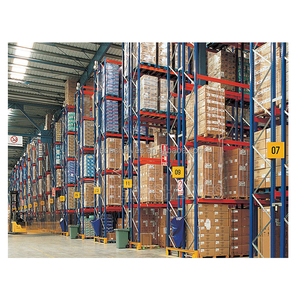
Industrial Pallet Shelf Customized Storage
Heavy profile box-beams with CNC-punched omega upright columns for fast-paced logistics distribution hubs and wholesale 3PLs.
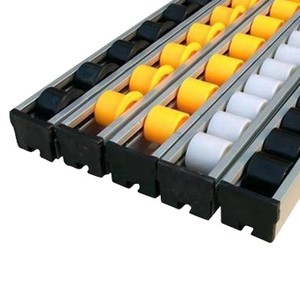
PE Fluency Bar Sliding Flow Rail Systems
High-grade engineering polymer fluency strips and roller rails designed for gravity-fed FIFO pallet flow and carton live storage.
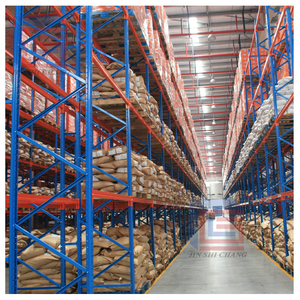
Manufacturer Steel Selective Pallet Racking
Factory-direct structural steel selective pallet bays with safety drop pins, column protectors, and wire mesh decking options.
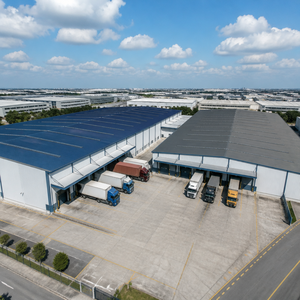
High Bay Pallet Racking Steel Frame Structure
Turnkey cladding-rack structural buildings and high-bay clad systems up to 30 meters clear height for AS/RS and dense rolling carriages.
The Engineering Behind Heavy-Duty Rolling Pallet Racks
Unlike conventional static selective racks that sacrifice up to 60% of warehouse floor footprint to idle forklift access aisles, rolling pallet rack systems (mobile pallet racking and dynamic flow channels) compact multiple rows onto motorized structural bogies or gravity rails.
High-Torque Synchronized Mobility
Rolling pallet carriages operate via electronically synchronized gearmotors coupled directly to double-flanged forged steel drive wheels running on recessed ground rails. Mechanical torque distribution guarantees jerk-free acceleration and deceleration profiles even under full load capacities exceeding 800 metric tons per block.
- Variable Frequency Drive (VFD) soft-start controls
- Floor-embedded guide rails with leveling shims ($\pm 1\text{ mm}$ over 10m)
- Mechanical clutch for emergency manual maneuvering during power interruptions
Multi-Zone Safety Integrated Protocols
Personnel and cargo safety is governed by Category 4 optical safety light curtains, infrared distance sensors, and full-length foot-level trip bars. The moment any foreign object, forklift mast, or operator enters the transit corridor while the motorized racks are traversing, the safety circuit triggers a zero-delay emergency mechanical braking cycle.
- SIL 3 / Ple rated optoelectronic presence scanners
- Acoustic horns and flashing strobes preceding carriage movement
- Physical mechanical end-stop shock absorbers rated for dynamic impacts
Structural Steel Q235B & Q355B Integrity
All upright columns, horizontal crossbeams, and diagonal bracings are cold-roll-formed from certified high-tensile structural steel. Roll-formed omega upright sections exhibit superior resistance to torsional buckling and flexural stress under cyclic live loads, verified against finite element analysis (FEA) models.
- Yield strength guaranteed $f_y \ge 235\text{ MPa}$ to $355\text{ MPa}$
- Beam safety pins with minimum 1,000 kg upward shear rating
- 10-stage automated pre-treatment and epoxy-polyester powder coating
Comparative Storage Density & Performance Matrix
How heavy-duty rolling pallet racks stack up against alternative industrial warehouse configurations.
| Storage System Type | Space Density Utilization | SKU Selectivity Ratio | Cold Chain Energy Savings | Forklift Fleet Requirement | Typical Payback (ROI) |
|---|---|---|---|---|---|
| Static Selective Pallet Racking | 40% – 45% (Baseline) | 100% Direct Access | 0% (Baseline Consumption) | High (Many Aisles) | N/A (Standard Storage) |
| Drive-In / Drive-Through Racks | 65% – 70% | Low (LIFO / strict batches) | 20% – 25% Reduction | Moderate (Slow Maneuvering) | 24 – 36 Months |
| Radio Shuttle Pallet Racking | 75% – 80% | Moderate (Lane-by-Lane) | 35% – 40% Reduction | Low-to-Moderate | 18 – 28 Months |
| Motorized Rolling Pallet Racks | 80% – 85% Maximum | 100% Direct on Opened Aisle | 45% – 55% Thermal Footprint Drop | Lowest (Single Moving Aisle) | 14 – 22 Months |
| Dynamic Pallet Gravity Flow (Fluency) | 70% – 75% | FIFO Strict Batch Flow | 25% – 30% Reduction | Separated Loading/Retrieval | 16 – 24 Months |
Rolling Pallet Rack Market & Sourcing Trends (2025–2030)
Global supply chain pressures, skyrocketing urban land valuations, and cold storage electrical tariffs are fundamentally altering industrial procurement criteria for intralogistics infrastructure.
1. WMS/MES Interoperability & API Integration
Modern rolling pallet rack procurement has transitioned from standalone mechanical carriages to networked smart storage units. Today's procurement specifications mandate direct OPC-UA and REST-API connectivity with Warehouse Management Systems (WMS). Upon receiving a picking order, the WMS automatically commands the rolling base to open the target corridor before the reach truck even arrives, eliminating operator wait time.
2. Cold Storage & Sub-Zero Thermal Efficiency
Refrigerated warehouse space costs up to 4x more per cubic meter to build and chill than ambient warehouses. Rolling pallet racks are becoming the mandatory global procurement standard for meat, seafood, dairy, and pharmaceutical cold chains operating at -25°C to -30°C. By condensing 8–12 aisles down to a single dynamic working aisle, facilities slash chilled volume loss by 50%, generating continuous power savings.
3. Seismic Resilience & Dynamic Base Isolation
Facilities across seismic hotspots (such as the Pacific Rim, Chile, Peru, Turkey, Japan, and the US West Coast) require dynamic engineering verification. Rolling pallet racks now integrate seismic inertia switches that detect P-waves before destructive S-waves arrive, automatically braking carriages, locking wheel flanges into rail anchors, and preventing resonance collapse.
4. Convergence with Autonomous Mobile Robots (AMRs)
Rolling racks are increasingly paired with narrow-aisle AGVs and autonomous reach trucks. Smart safety interlocks communicate directly with autonomous navigation fleets: rolling aisles communicate their operational status over industrial Wi-Fi or 5G private networks, verifying lane clear confirmation before an autonomous forklift enters the bay.
5. Circular Steel Procurement & Low-Carbon Finishes
Tier-1 multinational enterprises (3PLs, pharmaceutical leaders, automotive Tier-1s) require verified Environmental Product Declarations (EPDs). Procurement contracts now mandate zero-VOC electrostatic powder coatings, heavy metals ban compliance (RoHS certified), and sustainable electric arc furnace (EAF) scrap steel percentages in raw upright coils.
6. Modularity, Retrofitting & Boltless Expansion
Supply chain agility dictates that storage systems must adapt to SKU volume swings. Leading procurement teams choose rolling rack designs that can be extended lengthwise along rails without tearing up existing slabs, or retrofitted from static frames onto newly laid motorized bases to protect previous structural steel investments.
From Facility CAD to Commissioned Rolling Carriage
A transparent, ISO 9001:2015 controlled four-stage project lifecycle ensuring dimensional accuracy, seismic compliance, and smooth overseas installation.
Engineering Survey & 3D Layout
Floor flatness analysis (DIN 18202 / ASTM E1155), pallet weight matrices, and forklift turning radii are calculated. Our structural engineers produce a complimentary 3D CAD layout within 24 hours.
Structural FEA & Load Verification
Uprights, box-beams, and rail-bearing wheels undergo Finite Element Analysis against local building codes (FEM, RMI, Eurocodes, or South American NSR-10 / NCh 433 seismic standards).
In-House Automated Fabrication
Continuous CNC roll-forming, automated multi-head robotic welding, pickling, phosphating, and electrostatic epoxy-polyester powder baking under strict batch QC inspection.
Export Pack & Site Commissioning
Export packaging with corrosion inhibitors, numbered components for intuitive field assembly, detailed CAD installation manuals, and remote video or on-site supervisory engineering.
Why Global Supply Chains Trust Guangzhou Heda Shelves
Over two decades of precision manufacturing excellence, serving top logistics providers, food distribution centers, and industrial manufacturers worldwide.
Heavy-Duty Engineering Rigor Backed by 30,000 m² Production Power
Founded in 2001 in Guangzhou, China, Guangzhou Heda Shelves Co., Ltd. has established itself as an authoritative manufacturer and turnkey supplier of industrial pallet racking, automated mobile systems, steel mezzanines, and dynamic flow racking.
Our 30,000 square meter modern manufacturing facility commands an in-house monthly output capacity exceeding 30,000 metric tons of finished steel components. With more than 300 experienced engineers, structural designers, and fabrication specialists, we eliminate middlemen markups and quality deviations through 100% in-house production control.
Direct Factory Advantage
Every rolling pallet rack system, static selective frame, and fluency rail is custom engineered for your building column grid, slab specifications, and pallet profile.
Frequently Asked Questions: Rolling Pallet Racks
Straightforward, engineering-backed answers addressing structural tolerances, installation logistics, floor slab requirements, and total cost of ownership.
Rolling pallet racks require concrete slab flatness conforming to DIN 18202 (Part 5, Table 3, Line 3) or ASTM E1155 (minimum FF 50 / FL 45). The slab must support the concentrated point loads of the double-flanged steel wheels transferred through the embedded guide and drive rails. Typically, a reinforced concrete slab thickness of 200mm–250mm with a compressive strength of C25/30 or C30/37 is required, depending on rack height and tier loads.
Yes. Two installation methodologies are available: 1) Embedded rail installation, where shallow trenches (typically 120mm–160mm wide by 50mm–80mm deep) are saw-cut into the existing slab, leveled with leveling bolts, and grouted with high-strength non-shrink epoxy grout; or 2) Surface-mounted rails with low-profile tapered ramps. Embedded rails are heavily preferred for seamless forklift wheel transit without bumping.
Rolling pallet racks are ideally suited for cold rooms down to -30°C. For these installations, HEDA Shelves specifies specialized low-temperature lubricants for all planetary gearboxes and wheel bearings, low-temp rated polyurethane control cabling, heated optical safety sensors to prevent condensation fogging, and IP65/NEMA 4 sealed electrical enclosures with internal anti-condensation strip heaters.
Every motorized mobile carriage engineered by HEDA Shelves includes a manual drive declutch mechanism. In the event of a total facility blackout, operators can insert an emergency mechanical ratchet or manual hand crank directly into the central drive shaft to open any critical aisle. Furthermore, emergency battery backup packs (UPS) can be integrated to power the PLC logic and allow low-speed emergency carriage transit.
Standard industrial rolling carriages operate at traversing speeds between 4.0 to 5.5 meters per minute (approx. 0.07 to 0.09 m/s). Traversing is governed by variable frequency drives (VFD) featuring adjustable S-curve acceleration and deceleration profiles to protect tall, top-heavy, or unstrapped pallet loads from shifting during carriage startup and braking.
Our rolling pallet rack systems utilize a triple-redundant safety architecture conforming to international CE machinery directives and EN 15095 standards. This includes: optical light curtains guarding the outer perimeter, ultrasonic and infrared floor-level longitudinal safety beams scanning every moving aisle, physical emergency stop kick-plates, acoustic transit warnings, and flashing LED perimeter light indicators.
Backed by our 30,000 ton monthly manufacturing capacity, standard manufacturing for complete mobile rack structural steel and rolling bases is completed in 2 to 4 weeks after drawing approval. Ocean freight shipping transit from South China ports takes 12–18 days to Southeast Asia, 20–28 days to the Middle East and Europe, and 30–45 days to North America and South America.
To receive an accurate engineering calculation and 3D layout, supply: 1) Warehouse CAD floor plan with clear ceiling height and column locations; 2) Pallet dimensions (Width x Depth x Height including cargo overhang); 3) Maximum gross weight per pallet; 4) Forklift model, mast collapsed height, and maximum lift reach; and 5) Ambient temperature range and local seismic zone coefficients.
Maximize Your Warehouse Cubic Capacity Today
Don't let valuable vertical clearance and floor square-footage go to waste. Contact Guangzhou Heda Shelves Co., Ltd. today to discuss your storage density requirements with our senior structural engineers.
Connect with an Application Engineer
Upload your architectural DWG/PDF drawings or pallet load specifications for an immediate engineering feasibility review.
Get a Quote