Engineered Heavy Structural Racking & Industrial Storage Units
Engineered specifically for heavy logistics hubs, cold chain terminals, high-turnover picking platforms, and harsh warehousing environments where roll-formed steel reaches its mechanical thresholds.
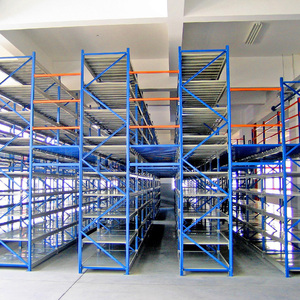
Industrial Customized Steel Mezzanine Attic Platform Warehouse Picking Rack
- Load: 300–1,200 kg/m² UDL
- High-grade Q235B/Q355B Hot-Rolled
- Multi-tier picking optimization
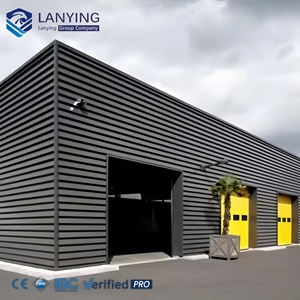
Prefabricated Steel Structure Industrial Logistics Warehouse Workshop Building
- Portal frame & truss modular design
- Wind load > 140 km/h, Seismic grade 8+
- Fast bolt-together erection
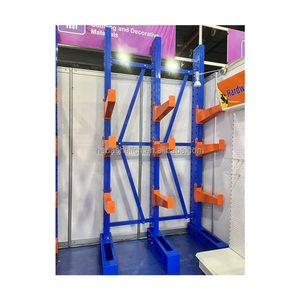
Wholesale Industrial Heavy Duty Double Sided Cantilever Racking System
- Heavy structural I-beam columns
- Arm capacity up to 1,500 kg/arm
- Ideal for lumber, tubing & bar steel
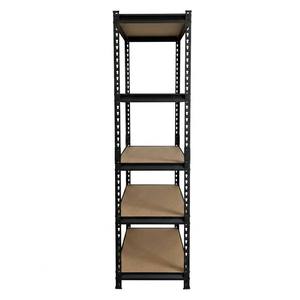
5-Tier Boltless Open-Post Z-Beam Adjustable Heavy Duty Shelving Rack
- Capacity: 150–350 kg/tier uniform
- Boltless snap-lock assembly
- Epoxy electrostatic powder finish
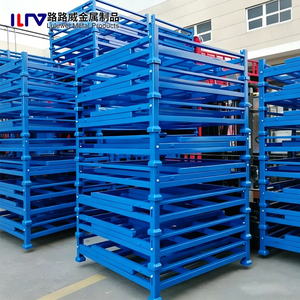
Warehouse Stackable Pallet Frame Q235 Steel Collapsible Stacking Rack
- Dynamic nesting & space conservation
- 1,000–2,000 kg stack capacity
- Hot-dip galvanized or powder coated
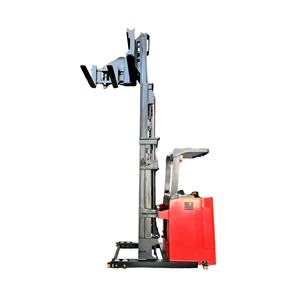
MiMA 3-way Tri-Lateral Stacker High Rack Material Handling Integration
- Lift range: 3.0 m up to 18.0 m
- Rail & inductive wire steering compatible
- Turnkey high-density VNA match
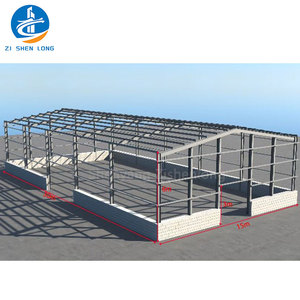
Metal Frame Structure Prefabricated Warehouse Workshop Hangar Building
- Engineered clear spans up to 45m
- Crane runway beam integration ready
- Full structural architectural package
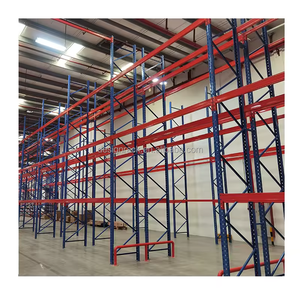
Heavy Duty Industrial Warehouse Material Racking Unit Pallet Rack Solution
- Capacity: Up to 5,000 kg per beam level
- Seismic grade heavy-gauge channel steel
- Impact-resistant reinforced upright base
Structural Channel Steel vs. Roll-Formed Steel Racking
Selecting warehouse storage infrastructure requires rigorous structural evaluation. While roll-formed sheet steel satisfies medium-duty applications, heavy industrial operations, outdoor installations, and high-impact logistics facilities demand hot-rolled structural steel.
| Evaluation Parameter | Hot-Rolled Structural Racking (C-Channel / I-Beam) | Roll-Formed Sheet Metal Racking | Engineering Value Delivered |
|---|---|---|---|
| Raw Material Metallurgy | ASTM A36, Q235B / Q355B Hot-Rolled Structural Channel | Cold-rolled commercial strip steel (12 to 16 gauge) | Yield strength ≥ 355 MPa; eliminates risk of micro-fractures along cold-bent radii. |
| Impact & Torsional Resistance | Resists up to 300% higher lateral forklift impact energy without buckle | Susceptible to torsional deformation and corner denting | Substantially cuts catastrophic rack collapse risk in fast-paced distribution hubs. |
| Connection Architecture | Grade 8.8 High-Tensile Structural Heavy Hex Bolts with lock nuts | Tear-drop or keyhole tabs held by small retention clips | Eliminates beam dislodgement risks during seismic shifts or aggressive forklift loading. |
| Sub-Zero & Cold Storage Performance | Superior ductile-to-brittle transition temperature resistance | Thin-walled sections experience embrittlement under continuous freezing | Essential for -25°C to -35°C blast freezers, seafood packing, and meat cold chains. |
| Service Life & Total Cost of Ownership | 20–30+ years in intensive high-turnover logistics environments | 5–10 years before upright replacement and reinforcement are required | Drastically lowers operational downtime, maintenance expense, and insurance premiums. |
Over Two Decades of Structural Steel Engineering Excellence
Established in 2001, Guangzhou Heda Shelves Co., Ltd. operates state-of-the-art manufacturing plants supplying over 120 nations with certified structural pallet racking, heavy mezzanines, and turnkey logistics steel infrastructure.
Stringent Global Certifications
Every structural system complies with CE standard EN 1090-1 / EN 15512 (Certificate 2435-CPR-8605159) and ISO 9001:2015 quality management (No. 18624Q00169R0M). We adhere to RMI MH16.1 specifications and provide full material mill certs.
Advanced Finite Element Analysis
Our dedicated engineering department conducts 3D FEA stress simulations, anchor bolt pull-out calculations, and seismic dynamic response modeling tailored to specific local seismic building codes (Chile NCh 2369, Peru E.030, Colombia NSR-10, US ASCE 7).
Automated In-House Fabrication
From CNC structural plasma cutting lines, multi-axis automatic drilling jigs, and heavy submerged-arc robotic welders to our 10-stage pickling, phosphating, and electrostatic polymer coating process, 100% of manufacturing is controlled internally.
Full Intermodal Export Engineering
Specialized bundled steel nesting plans maximize standard 40ft High Cube container payload efficiency while minimizing maritime freight costs. We guarantee corrosion-free delivery via vapor-phase corrosion inhibiting (VCI) protective packaging.
Future Procurement Trends in Structural Racking (2025–2030)
As warehouse automation matures, clear ceiling heights exceed 20 meters, and climate extremes intensify, procurement teams must align capital expenditures with evolving logistical realities.
AS/RS Integration with Structural High-Bay Racks
Automated Storage and Retrieval Systems (AS/RS) operating cranes over 18 meters tall require structural tolerances under 1.5 mm deflection. Modern facilities are migrating to hot-rolled structural steel to eliminate rack sway, provide rigid crane guide-rail mounting, and handle dynamic operating acceleration loads without vibration fatigue.
Rack-Supported Building Architectures
Rather than building a standard warehouse shell and installing racks inside, multinational developers are commissioning rack-supported buildings. Structural C-channel uprights support both the stored pallet inventory and the building’s external roof trusses and insulated wall panels, reducing civil construction timelines by 35%.
Thermal Shock Resilience & Hot-Dip Galvanization
The global expansion of pharmaceutical distribution and perishable food corridors has intensified demand for hot-dip galvanized (HDG) structural racking. Unlike powder-coated steel that micro-fissures in sub-zero humidity, ISO 1461 HDG structural steel provides 40+ years of maintenance-free service inside -30°C environments.
Performance-Based Seismic Design & Ductile Connections
Building inspectors and underwriters across earthquake belts (Pacific Rim, Andes Mountain corridor, Mediterranean) now require verified ductile moment connections. Structural racking engineered with semi-rigid bolted moment plates absorbs seismic energy without sudden shear failure, safeguarding both workers and inventory.
Circular Economy & Scrap Value Preservation
Global supply chains now prioritize carbon footprint metrics. Structural hot-rolled steel offers 100% recyclability, superior end-of-life residual value compared to thin sheet metal, and higher structural durability that eliminates frequent material disposal and replacement cycles.
IoT-Enabled Structural Health Monitoring
The integration of micro-strain sensors, wireless impact monitors, and 3D digital twin BIM software into structural racking systems enables real-time reporting of forklift impacts, joint stress, and overload conditions, moving procurement from reactive repairs to predictive maintenance.
Frequently Asked Structural Racking Questions
Comprehensive engineering answers addressing material specifications, seismic verification, international standards, and maritime container delivery.
What steel grades and metallurgical standards do you utilize for structural racking?
We manufacture our structural racking using hot-rolled channel steel and I-beam sections adhering to ASTM A36, EN 10025 S235JR / S355JR, and GB/T 700 Q235B / GB/T 1591 Q355B standards. These structural steels offer a minimum yield strength ranging from 235 MPa to 355 MPa and a tensile strength of up to 510 MPa.
Every shipment is accompanied by complete 3.1 Mill Test Certificates (MTC), documenting mechanical yield properties, elongation percentages, and chemical spectrometer composition (carbon, manganese, phosphorus, and sulfur content) to ensure compliance with global architectural regulations.
How does structural channel racking protect against seismic hazards in active earthquake regions?
In high seismic zones (such as Chile, Peru, California, Turkey, and Japan), roll-formed sheet steel can buckle under rotational ground shear. Structural racking counteracts this via heavy hot-rolled C-channel uprights, thickened ductile base plates (typically 16 mm to 25 mm thick), oversized chemical epoxy anchors (Hilti / Fischer systems), and heavy structural channel horizontal and diagonal cross-bracing.
Our engineers perform response spectrum dynamic analyses following ASCE 7-22, RMI ANSI MH16.1, EN 15512, and national seismic codes (e.g., Chilean NCh 2369 / NCh 433, Peruvian E.030, Colombian NSR-10) to verify safe stress ratios and prevent structural drift or progressive collapse.
What are the key differences between powder coating and hot-dip galvanizing for harsh environments?
For standard temperature-controlled warehouses, our 10-stage automated electrostatic powder coating (with a thickness of 70 to 110 microns) provides abrasion resistance, high visibility, and exceptional aesthetic longevity, passing 500-hour ASTM B117 salt spray tests.
However, for outdoor yard racking, marine-coastal ports, chemical storage facilities, and industrial sub-zero cold rooms (-20°C to -40°C), we recommend Hot-Dip Galvanizing (HDG) per ISO 1461 / ASTM A123. HDG immerses fabricated components into molten zinc at 450°C, creating a multi-layer metallurgical zinc-iron alloy coating (minimum 85 microns / 600 g/m²) that is scratch-resistant and provides self-healing cathodic corrosion protection for over 40 years.
What deflection limits and safety design factors are calculated for high-load beam levels?
Under maximum rated static uniform distributed loads (UDL), our standard structural load beams are engineered to maintain a strict vertical deflection limit of L/200, with premium high-bay and automated installations engineered to L/250 or L/300 (where L equals the clear beam span). This ensures material handling equipment can enter pallet openings without snagging beam profiles.
Furthermore, our structural calculations employ a minimum ultimate safety factor of 1.65 to 1.95 against structural yield stress, incorporating dynamic impact allowances for forklift pallet placement as governed by ANSI MH16.1 and FEM 10.2.02 codes.
What information is required to receive a comprehensive 3D layout, static calculation, and formal quotation?
To deliver an engineered 3D CAD layout, bill of materials (BOM), and price calculation within 24 to 48 hours, our technical team requires:
- Warehouse Architecture: Architectural CAD floor plan, clear height under roof truss, column grid spacing, floor slab thickness, and expansion joint locations.
- Pallet & SKU Profile: Pallet dimensions (Width × Depth × Height, including goods overhang), maximum gross pallet weight, and inventory rotation method (FIFO / LIFO).
- Forklift Specifications: Forklift mast type, minimum aisle turning radius (AST), and maximum extended lifting height.
- Environmental Data: Project geography (city/country) to extract seismic acceleration factors (Ss, S1), operating temperature range, and wind exposure if outdoor-sited.