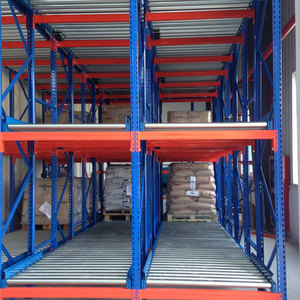
Engineered Warehouse Storage Lineup
High-Throughput Gravity Flow Systems Configured for Osaka Operations
Customized specifically for standard Japanese T-11 (1,100 × 1,100 mm) pallets, multi-temperature cold distribution centers, and strict first-in, first-out stock control.
Regional Context & Seismic Engineering
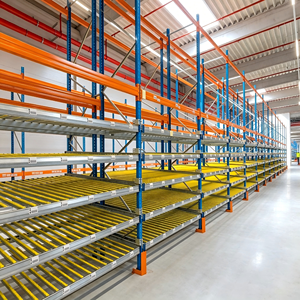
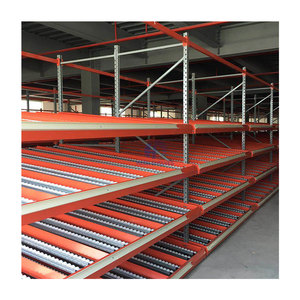
Engineering Gravity Flow Pallet Racking for Osaka’s Unique Industrial Geography
Osaka stands as the commercial heart of western Japan. Balancing the densest cold chains in Kansai with tight footprint footprints, premium warehouse rent in Nanko and Sakishima, and stringent building standards requires specialized structural execution.
Optimization for JIS T-11 Standard Pallets
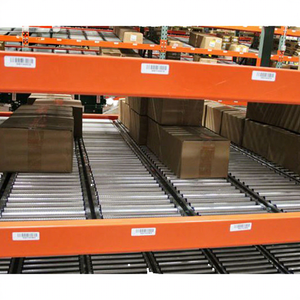
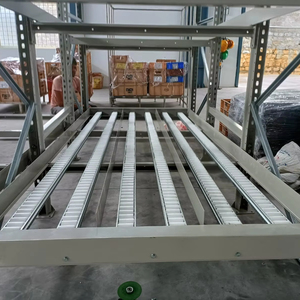
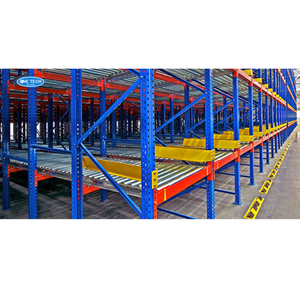
Japanese distribution heavily relies on the standardized JIS T-11 pallet format (1,100 × 1,100 mm). Unlike European Euro-pallets (800 × 1,200 mm) or American standard bases, our dynamic gravity roller tracks are calculated with dedicated 3-lane roller pitches, triple full-width centrifugal brake cylinders, and side guide flanges that prevent pallet skew, jamming, or runaway motion during critical staging.
Mitigating Coastal Salt-Air Humidity
Modern distribution centers located along Osaka Bay, Nanko, Maishima, and Izumiotsu operate in maritime microclimates with accelerated electrolytic oxidation. Our manufacturing process incorporates hot pickling, phosphating, and an electrostatic powder coating thickness exceeding 75–90μm, or complete hot-dip galvanization for cold refrigeration and coastal facilities.
Seismic Damping & Level-2 Quake Resilience
Given the tectonic realities of the Nankai Trough fault zone, gravity racks supplied to the Kansai market must exceed baseline safety parameters. We configure our upright columns with Q355 high-tensile structural steel, oversized ductile base plates, deep-penetration floor anchoring studs, and specialized gravity-lane catch locks that prevent pallets from jumping roller tracks during primary and secondary seismic waves.
Industry Whitepaper Insights
Strategic Deployment Scenarios & Regional Logistics Evolution in Kansai
How the 2024 Japanese logistics labor regulations, industrial land cost pressures, and cold chain expansion are accelerating investment into dynamic gravity storage throughout Osaka Prefecture.
Overcoming the "2024 Truck Driver Crisis"
Under Japan's revised work-hour restriction laws, commercial long-haul and regional drivers can no longer absorb dock detention times. Osaka 3PL hubs along the Hanshin Expressway corridor are replacing static drive-in racks with deep-lane gravity pallet flow lines. Trucks drop freight onto induction roller lanes in minutes; warehouse teams pull from discharge faces autonomously without aisle competition.
Cold Chain Consolidation in Osaka Food Hubs
From the central wholesale markets to seafood handling complexes around Sakai-Senboku Port, cold room refrigeration electricity costs have surged. Gravity flow systems deliver up to 60% higher volumetric density than conventional selective racks by eliminating intermediate operational forklift aisles, dramatically shrinking refrigerated air volume per stored pallet.
Pharmaceutical & Cosmetics GMP Compliance
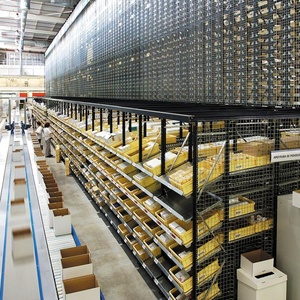
Osaka and neighboring Toyama form Japan’s traditional biomedical hub. Our carton flow and pallet gravity channels operate on absolute mechanical First-In, First-Out (FIFO) principles. Medical distributors guarantee batch control and strict expiration date sequencing without reliance on continuous electrical sensors or complex automated software.
Engineering Blueprint Comparison: Dynamic Flow vs. Static Storage
Comparative performance data based on standard 1,000 m² warehouse bay footprints in Osaka logistics zones:
| System Attribute | HEDA Gravity Pallet Flow Rack | Conventional Selective Rack | Drive-In Pallet Racking |
|---|---|---|---|
| Storage Volumetric Efficiency | 75% - 85% of total floor space | 35% - 45% (Aisle intensive) | 65% - 70% (LIFO restricted) |
| Inventory Rotation Principle | Strict FIFO (First-In, First-Out) | Manual FIFO (Operator dependent) | Strict LIFO (Last-In, First-Out) |
| Seismic Acceleration Tolerances | Level-2 JMA Shindo standard configured | Standard column loading | Subject to sway on deep bays |
| Forklift Travel Distances | Minimized (Separate feed/discharge) | Maximum travel inside all aisles | Forklift drives inside steel channels |
| Power Consumption | Zero Electricity (Pure Gravity Mechanics) | Zero Electricity | Zero Electricity |
25-Year Production Infrastructure
Factory-Direct Manufacturing Integrity, Material Traceability & QC
With 30,000 metric tons of monthly structural output, Guangzhou Heda Shelves Co., Ltd. oversees every stage of fabrication to guarantee dimensional fidelity and heavy-load structural stability.
01
Certified Mill Steel Sourcing
Prime structural coil stock (Q235B and high-yield Q355B) inspected with full chemical composition and tensile elongation mill certificates prior to slitting.
02
CNC Roll-Forming & Punching
Automated multi-station roll-forming lines maintain precision pitch perforations within ±0.2mm, guaranteeing rigid teardrop or butterfly beam-lock engagement.
03
Robotic MIG Seam Welding
Full-penetration automated beam connector welding eliminates stress concentrations and human fatigue errors, meeting CE 2435-CPR structural compliance.
04
Multi-Stage Surface Coating
Automatic pickling, acid phosphating, and nano-ceramic pre-treatment precede electrostatic thermo-set epoxy-polyester powder baking for long-term corrosion prevention.
Tailored Engineering for Japanese Importers & Integrators
We support domestic Japanese engineering contractors, system integrators, and direct facility managers with free CAD system layouts, 3D structural simulations, and seismic static load calculations. Packaging is pre-sorted and labeled by bay sequence to accommodate narrow loading bays typical of Kansai industrial parks.
Direct Sea Freight to the Port of Osaka
Direct liner services from South China ports (Nansha / Shekou) reach Osaka Port in just 4 to 6 ocean transit days. Our dedicated loading team plans container cubic stuffing down to the last millimeter, bundling uprights and rollers with custom steel strapping and edge protectors to prevent transit vibration damage.
Procurement Insights
Frequently Asked Questions for Osaka Warehouse Procurement Teams
Direct technical answers regarding customs clearance, seismic compliance, roller maintenance, and pallet specifications.
How do your gravity flow racking systems accommodate standard Japanese T-11 plastic pallets?
Japanese 1,100 × 1,100 mm (T-11) plastic pallets frequently feature diverse bottom-deck grid patterns (such as perimeter bases, 9-leg blocks, or cross-runners). We calibrate the roller track spacing and wheel pitch specifically to match the structural bottom ribbing of your plastic or wooden pallet fleet. This prevents the underside from sagging between rollers and guarantees uniform rolling friction at slopes between 2.5% and 3.5%.
Can your structural engineering satisfy Japanese building standards and seismic requirements?
Yes. Racking systems installed in Osaka must account for seismic ground motion risks associated with coastal reclamation zones and regional fault movements. Our engineering team prepares complete static structural calculation sheets and 3D FEA stress models. We engineer upgraded upright cross-sections, high-shear floor anchor bolts, and top-tie bracing frameworks ready for submission and review alongside your local Japanese architectural consultants.
What ocean freight options and customs procedures apply when shipping directly to Osaka Port?
We regularly dispatch 20GP, 40GP, and 40HQ containerized shipments to Osaka Port (Nanko / Sakishima terminals). Ocean transit typically takes 4 to 6 days after vessel departure. We provide full export documentation including Clean On-Board Bills of Lading, detailed Packing Lists with bay-numbered structural tags, Commercial Invoices, and RCEP Certificates of Origin that qualify buyers for preferential customs tariff reductions under Japanese import trade schedules.
How is pallet descent speed controlled on deep-lane gravity racking systems?
In deep-lane configurations (from 4 to over 15 pallets deep), each lane is equipped with precision internal centrifugal speed controllers (brake rollers). As a pallet accelerates down the incline under gravity, internal counter-weights inside the brake cylinders engage proportionally, capping velocity at a safe, steady speed (typically 0.2 to 0.3 meters per second). At the pick face, heavy-duty separator mechanisms hold back backlogged pressure until the leading pallet is removed safely by the forklift.
Can the system be used inside low-temperature refrigerated storage facilities in the Kansai area?
Yes, our systems are widely implemented down to -30°C in food and frozen logistics facilities. For sub-zero operations, we utilize cold-resistant steel grades, low-viscosity synthetic synthetic bearing grease within all roller cylinders, and specialized powder coatings or full-dip galvanizing to resist structural condensation and freeze-thaw corrosion.
How is on-site installation supported in Osaka and surrounding Kansai prefectures?
Every shipment is packed with detailed 2D/3D CAD installation drawings, assembly step manuals, and itemized component tags. While most clients coordinate with domestic Japanese installation contractors, our engineering headquarters provides bilingual technical documentation and direct video-call assembly verification throughout the build phase.
Transform Your Osaka Warehouse Density & Throughput Today
Connect directly with our engineering team for a customized layout, CAD drawing, and competitive factory-direct pricing tailored for the Osaka logistics market. Zero middleman markup, guaranteed structural compliance, and prompt technical support.
Typical CAD layout turnaround: 24 hours on business days • CE & ISO 9001:2015 Certified Manufacturing Facility