Featured Industrial Storage Systems for New Zealand Operations
Explore our factory-engineered portfolio built from certified high-tensile structural steel. Backed by in-house CAD layout design, full container consolidation, and verified seismic stability.
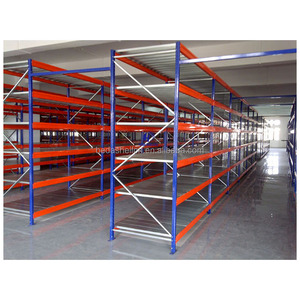
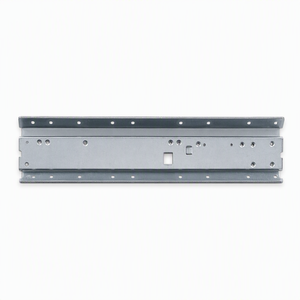
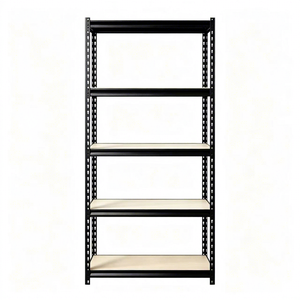
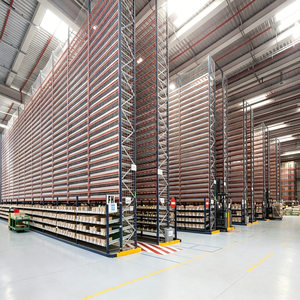
Physics, Kinematics & Mechanical Integrity of Gravity Feed (Pallet Flow) Systems
Gravity feed pallet racking, colloquially designated across New Zealand as pallet flow racking or dynamic live storage, represents the pinnacle of autonomous mechanical inventory rotation. Operating purely on controlled gravitational forces without electrical overheads, these systems facilitate uncompromising First-In, First-Out (FIFO) stock rotation. In modern supply chain landscapes where industrial land valuation in industrial corridors such as Auckland's Highbrook, Wiri, and Christchurch's Hornby has escalated exponentially, maximizing volumetric cubic density while preserving throughput speed is no longer optional—it is an existential commercial imperative.
1. Kinematic Mechanics & Speed Retarder Physics
A standard static pallet rack relies completely on forklift transit cycles across expansive operating aisles. Conversely, gravity flow lanes consolidate internal transit aisles into dense storage blocks up to 20 to 25 pallets deep. The core mechanical challenge in dynamic gravity feed designs lies in arresting uncontrollable acceleration due to kinetic energy accumulation ($E_k = \frac{1}{2}mv^2$) as heavy pallets descend down prolonged roller tracks.
To establish safe, continuous descent velocities between 0.15 m/s and 0.30 m/s regardless of pallet load weight (ranging from 300 kg partial loads to 1,500 kg dense liquid packaging), HEDA Shelves integrates self-energized centrifugal and magnetic eddy-current brake rollers into the track profile. As a pallet rolls over the brake roller, an internal planetary gear turns high-density friction shoes against an internal housing or generates an electromagnetic counter-torque directly proportional to the rotation speed. Heavier pallets receive greater resistive braking force automatically, preventing runaway collisions against the front pick stops.
Eddy-Current Speed Controllers
Non-contact magnetic braking eliminates wear components, delivering maintenance-free kinetic deceleration in temperature-controlled environments from -30°C blast freezers to ambient distribution centres.
Load Separation Separators
Heavy-duty mechanical trip levers isolate the lead pallet from backline line pressure. When a forklift extracts the front pallet, the separator releases the subsequent pallet, preventing forklift mast binding.
Full-Width Galvanized Rollers
Cold-drawn tubular steel rollers with zinc electro-plating or hot-dip galvanization ensure smooth rolling friction coefficients ($\mu \approx 0.02$) even with distressed, damp, or softwood timber pallets.
2. Pallet Interface: New Zealand Standard CHEP & Loscam Footprints
One of the primary failure modes in imported pallet flow racking systems stems from dimensional incompatibilities with the domestic pallet pool. In New Zealand, the standardized timber pallet profile is dominated by the 1200 mm (wide) × 1000 mm (deep) timber footprint (commonly supplied by CHEP New Zealand and Loscam NZ), featuring two-way or four-way entry base boards.
Unlike European EUR-pallets (800 × 1200 mm) which traverse rollers along their bottom skids, New Zealand pallets placed with their bottom bottom-boards perpendicular to the rollers can produce cyclical shock loads or deflection between roller centres. HEDA Shelves engineers custom roller track spacing, tri-lane roller configurations, and customized entry funnels with heavy-gauge side guides (3 mm cold-formed structural steel) to ensure that base boards never snag on intermediate frame uprights or drop into structural gaps.
Comparative Storage Density & Throughput Efficiency
How custom gravity feed systems outperform conventional pallet storage options in New Zealand supply chain footprints.
| Storage System Type | Space Utilization Ratio | FIFO / LIFO Discipline | Aisle Requirements | Picking Throughput Speed | Cold Store Energy Savings |
|---|---|---|---|---|---|
| Gravity Feed (Pallet Flow) | Up to 85% Volumetric Density | 100% Strict FIFO | 2 (Dedicated Load / Pick) | Extremely Fast (Continuous Feed) | Very High (Up to 55% Cost Red.) |
| Selective Pallet Racking | 35% – 45% Volumetric Density | Flexible FIFO / LIFO | Multiple Wide / Narrow Aisles | Moderate (Travel Intensive) | Baseline (High Waste Volume) |
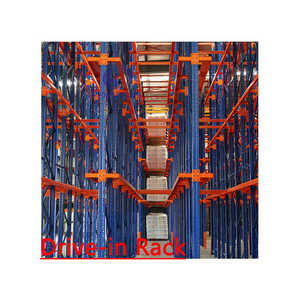
| Drive-In Racking System | 65% – 75% Volumetric Density | Strict LIFO Only | Single Access Face | Slow (Mast Maneuvering Required) | Moderate (Risk of Rack Impact) |
| Push Back Pallet Rack | 60% – 70% Volumetric Density | Strict LIFO Only | Single Front Access Aisle | Medium (Forklift Push Effort) | Good (Nested Cart System) |
| Very Narrow Aisle (VNA) | 50% – 60% Volumetric Density | 100% FIFO Accessible | Reduced Aisles (Guide Rail/Wire) | Fast (Specialized Turret Trucks) | Moderate (High Vertical Cube) |
Full Compliance with AS/NZS 4084:2023 & NZ Building Code B1/VM1
Aotearoa New Zealand sits squarely along the Pacific-Australian tectonic boundary, resulting in one of the most rigorous regulatory regimes globally for structural safety, concrete slab interaction, and steel dynamic behavior under earthquake conditions. Specifying and importing industrial pallet racking systems into New Zealand requires adherence to the updated AS/NZS 4084:2023 (Steel storage racking - Design and installation) and the fundamental structural loadings prescribed by NZS 1170.5:2004 (Structural design actions - Earthquake actions - New Zealand).
Every gravity feed rack engineered by HEDA Shelves for New Zealand projects undergoes exhaustive finite element modelling (FEM) and seismic ductility verification. In high-density pallet flow systems, the dynamic behaviour during a seismic tremor is fundamentally more complex than in static shelving: rolling pallets can surge forward, exerting dynamic horizontal impact loads upon the end stops and upright frames simultaneous with inter-storey drift.
Critical Engineering Enhancements for New Zealand Seismic Sites:
Ductile Baseplates & Anchoring
Oversized CNC-punched steel footplates fabricated from 10 mm to 16 mm Grade Q355B/S355 structural steel ensure seismic shear transfer into 30 MPa post-tensioned or steel fibre reinforced warehouse concrete slabs using certified M12–M16 seismic mechanical wedge or epoxy anchors.
Heavy-Gauge Upright Omega Profiles
Roll-formed upright posts with multi-bend stiffening ribs prevent torsional buckling under combined axial gravity loads and cross-aisle seismic wave acceleration. Continuous 55 mm pitch adjustability maintains structural connector engagement integrity.
Horizontal & Spine X-Bracing
Engineered K-bracing and portal cross-frames stiffen long multi-tier roller runs. Racking structures are designed with appropriate ductility factors ($k_\mu$) to prevent progressive collapse under maximum considered earthquake (MCE) events.
Producer Statement (PS1 / PS3 / PS4) Facilitation for Territorial Authorities
Warehouse owners and tenants across Auckland Council, Christchurch City Council, Tauranga City Council, and Wellington City Council must present Producer Statements (PS1 for Design, PS3 for Construction, and PS4 for Construction Review) to obtain Building Consents and Code Compliance Certificates (CCC). HEDA Shelves supports local consulting structural engineers (CPEng) by providing comprehensive design dossiers: cold-formed steel section properties, verified coupon tensile test certificates, beam connector moment-rotation stiffness tests ($k_{ni}$ curves), and detailed 3D AutoCAD structural schedules.
New Zealand Case Scenarios: Where Gravity Feed Drives ROI
Engineered to excel across the distinctive supply chain bottlenecks of New Zealand’s primary production and retail logistics networks.
Waikato & Canterbury Dairy Cold Stores
From milk powder and butter blocks to specialty cheeses destined for the Port of Tauranga or Lyttelton Port, primary dairy processors operate under severe sanitary standards and high cold-room energy overheads.
- Continuous -25°C sub-zero operation with low-temperature synthetic lubricants
- Consolidates refrigerated cube space, slashing kilowatt-hour consumption per pallet
- Full batch FIFO discipline prevents shelf-life expiration on export orders
South Auckland FMCG & Supermarket Distribution
Major distribution centers around Wiri, Drury, and Highbrook supply multi-store grocery networks across the North Island requiring rapid, high-density case picking and zero dispatch delays.
- Multi-level carton and pallet flow picking tunnels with conveyor integration
- Eliminates forklift traffic jams in fast-moving consolidation staging lanes
- Seamless handling of heavy CHEP pallets containing beverages and canned goods
Marlborough & Hawke’s Bay Viticulture Logistics
New Zealand’s world-renowned wine industry demands dense, humidity-resilient case and barrel storage during post-bottling maturation and peak seasonal export packing cycles.
- Heavy electro-galvanized roller surfaces combat condensation and cellar moisture
- Soft-braking speed controllers eliminate vibration that could dislodge stacked wine cases
- Flexible lane reconfiguration to cater for single-vineyard SKU batching
Rolleston & Hornby Industrial Logistics Parks (Christchurch)
Serving as the South Island's freight distribution epicentre, modern inland logistics parks require high-bay seismic resilience paired with maximum cubic volumetric floor utilization.
- Seismic bracing packages configured for high Canterbury liquefaction soil spectra
- Deep-lane gravity storage arrays (15+ pallets deep) feeding cross-dock staging docks
- High-yield Q355B steel uprights built to withstand 24/7 heavy reach truck duty
New Zealand Logistics Trends Driving Dynamic Storage Adoption
The New Zealand supply chain sector is navigating historic transformations. Industrial rent inflation across primary urban centers, coupled with stringent environmental decarbonization targets, has caused supply chain directors to reassess traditional floor-bound warehousing models. Over the 2025–2030 horizon, four macro forces position custom gravity feed racking as an essential infrastructure asset:
1. Industrial Land Premiums & Vertical Building Expansions: In the Auckland metropolitan region, industrial land supply remains tightly constrained. With commercial lease rates rising, developing sprawling single-tier warehouses is no longer economically viable. Facilities are pushing vertical clearances to 12.5 m – 16.5 m. Gravity feed systems leverage this clear height by stacking 4 to 6 tiers of dynamic flow lanes vertically, tripling pallet storage positions per square meter of building footprint.
2. Decarbonization and Cold Chain Efficiency: Warehouses account for a significant portion of industrial grid demand, primarily driven by refrigeration compressors. An estimated 60% of cold air in traditional selective racking warehouses is spent cooling empty forklift access aisles. By converting cold storage facilities to dense gravity feed racking, refrigerated cubic volume is minimized, directly cutting facility power consumption by up to 35% – 45%.
3. Forklift Fleet Optimization & Operator Safety: New Zealand’s Health and Safety at Work Act (HSWA) places strict responsibilities on operators to isolate pedestrian workers from heavy material handling equipment. In a gravity flow configuration, replenishment forklifts operate exclusively in the rear loading aisle, while picking forklifts or reach trucks remain isolated in the front unloading aisle. This physical separation virtually eliminates cross-aisle pedestrian collisions and vehicle blind-spot incidents.
4. Rapid Growth in Secondary Regional Hubs: Congestion around metropolitan ports has driven heavy investment into inland freight hubs such as Ruakura Superhub (Hamilton) and Rolleston (Canterbury). These facilities function as intermodal transfer stations where fast-cycling live storage systems are essential for staging high-velocity import containers straight off rail corridors.
Direct-from-Factory Scale, Precision & Quality Control
With over two decades of dedicated racking engineering, Guangzhou Heda Shelves Co., Ltd. delivers direct factory pricing, certified metallurgy, and custom OEM manufacturing for New Zealand projects.
Certified Coil Slitting
High-yield hot-rolled carbon steel coils (Q235B/Q355B) slit with strict thickness tolerances.
Automated CNC Punching
Continuous-feed mechanical presses punch precision 55 mm pitch teardrop and omega slots.
Roll-Forming Lines
Precision multi-station cold-roll forming mills engineer continuous, cold-worked stiffened profiles.
Pre-Treatment & Coating
Multi-stage acid pickling, phosphating, and automated electrostatic powder coating at 200°C.
Consolidation & Crating
Export-ready steel framing, shock-absorbing wrapping, and containerized load-plan maximization.
Why Direct Factory OEM Sourcing Delivers Competitive Superiority in New Zealand
Procuring warehouse racking through multiple local intermediary brokers inevitably introduces substantial price markups, extended engineering revision lead-times, and ambiguous manufacturing provenance. Partnering directly with HEDA Shelves gives Kiwi enterprise operators, logistics contractors, and racking distributors a transparent link to the production floor.
Our engineering headquarters generates fully documented AutoCAD layouts, component schedules, beam deflector evaluations ($\delta \le L/200$), and 3D structural renderings within 24 to 48 hours. By controlling the complete roll-forming, punching, welding, and surface finishing lifecycle, we can tailor custom upright dimensions, structural beam hook brackets, and bespoke roller bed profiles that integrate seamlessly into existing New Zealand warehouse footprints without requiring architectural modifications.
Frequently Asked Questions by New Zealand Warehouse Buyers
Clear, expert answers addressing compliance, seismic design, shipping logistics, and ongoing maintenance.
Can HEDA Shelves gravity feed racking obtain Building Consent approval from New Zealand Territorial Authorities?
How do your roller tracks accommodate standard New Zealand CHEP and Loscam wooden pallets?
What is the typical ocean shipping transit time and port routing to New Zealand?
How are gravity feed systems engineered for cold chain and sub-zero freezer warehouses?
What slope gradient is used, and how is pallet descent speed controlled?
What is a load separation separator and why is it essential for forklift operations?
Can the racking be customized to accommodate non-standard load widths or carton picking levels?
What concrete slab specifications are required to support high-density gravity feed racking?
How does HEDA Shelves package components to protect powder-coated finishes during trans-oceanic shipping?
What ongoing maintenance is required for gravity feed pallet flow racking under WorkSafe NZ rules?
Accelerate Your New Zealand Warehouse Storage Efficiency
Connect directly with our senior racking engineering team today. Send us your building floor plan, clear height, and pallet specifications to receive a free, seismic-aware 3D CAD design layout and direct factory price schedule within 24 hours.