Industrial Storage Systems Engineered for Polish & EU Logistics
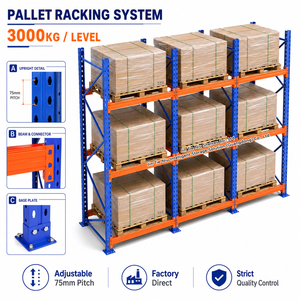
Precision-formed structural cold-rolled steel, designed for standard EPAL Euro-pallets and customized industrial pallet formats with capacities up to 4,500 kg per beam level.
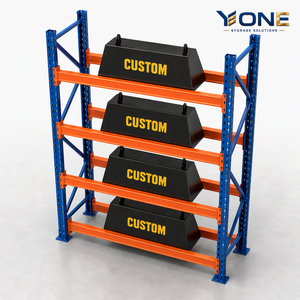
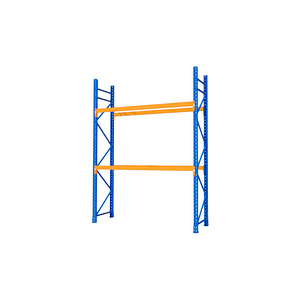
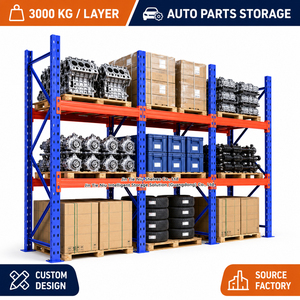
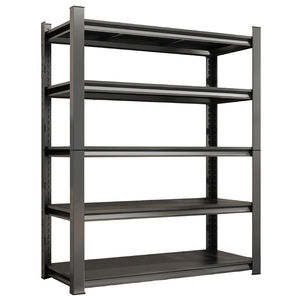
White Paper: Heavy Duty Warehouse Racking Engineering for Poland Logistics Facilities
As the primary logistics crossroads connecting Western Europe to Eastern Europe and the Baltic Sea, Poland has transformed into one of the continent's most critical distribution hubs. Warehousing developments across Central Poland (Łódź, Stryków), Upper Silesia (Gliwice, Katowice), Warsaw Suburban Zones (Pruszków, Ożarów Mazowiecki, Grodzisk Mazowiecki), Lower Silesia (Wrocław), and Greater Poland (Poznań) demand industrial storage systems engineered to stringent European Norms (EN). Heavy duty warehouse racks—encompassing selective pallet racking, very narrow aisle (VNA) systems, radio shuttle platforms, drive-in systems, and heavy-duty cantilever racks—form the physical backbone of this supply chain ecosystem.
Industrial racking systems installed within Polish distribution facilities are subject to comprehensive structural verification standards under EN 15512:2020 (Steel static storage systems – Adjustable pallet racking systems – Principles for structural design), EN 15620 (Tolerances, deformations and clearances), EN 15629 (The specification of storage equipment), and the operational safety criteria defined by EN 15635. Compliance with these specifications ensures that load-bearing upright profiles, horizontal connector beams, footplates, and floor anchoring bolts withstand not only calculated static dead loads and live pallet loads, but also dynamic horizontal forces generated by reach trucks, counterbalanced forklifts, and automated guided vehicles (AGVs).
Engineering Imperative: Structural Integrity & Steel Grade Selection
Our heavy-duty racking columns are roll-formed from certified high-tensile structural coil steel (equivalent to EN 10025 S355JR and micro-alloyed cold-rolled steel grades). Upright frames feature an engineered omega-profile geometry with continuous 50mm or 75mm perforation pitches, providing optimized cross-sectional moments of inertia that resist torsion, local buckling, and lateral sway under maximum permissible bay loading (up to 24,000 kg per frame).
Key Structural Engineering Principles (EN 15512 vs. Operational Polish Standards)
When engineering pallet racking for Polish tier-1 logistics developers (such as Panattoni, Prologis, 7R, and SEGRO parks), our engineering team conducts rigorous limit-state analysis focusing on two primary structural performance thresholds:
- Ultimate Limit State (ULS): Verifies that frames, box beams, and hook connectors do not suffer structural collapse, shear failure, or rupture under extreme design loads multiplied by safety factors (γF = 1.4 for dead load, 1.4 to 1.5 for variable operational loads).
- Serviceability Limit State (SLS): Governs operational deflection under nominal full load. In accordance with EN 15620, the maximum allowable vertical deflection of horizontal pallet beams is capped at L / 200 (where L represents clear beam span), preventing excessive pallet tilting and ensuring smooth forklift handling and sprinkler clearance.
Upright Profiles & Bracing
Omega and diamond multi-rib cold-roll profiles ranging from 80mm to 120mm face widths. High-efficiency bolting with Grade 8.8 structural fasteners and horizontal/diagonal C-profile channel cross-bracing to resist high torsional stresses.
Interlocking Box Beams
Continuous robotic twin-C section seam welding creates exceptionally stiff, hollow rectangular box beams. Equipped with 3 to 5-claw high-strength drop-forged end connectors secured by zinc-plated safety locking pins.
Floor Anchoring & Footings
Heavy duty oversized base plates (thickness 6.0mm–10.0mm) distribute concentrated point loads safely across industrial concrete slab floors (C20/25 to C30/37). Secured with dual M12–M16 seismic-rated expansion or chemical resin anchors.
Localized Industrial Application Scenarios Across Poland
Poland's strategic geographical position makes it a natural hub for omnichannel e-commerce fulfillment, automotive Tier-1 supplier logistics, fast-moving consumer goods (FMCG) distribution, pharmaceutical storage, and cold chain operations. Each geographical corridor presents distinct storage density, throughput speed, and architectural ceiling requirements.
High-Throughput E-Commerce & Retail Fulfillment
Located at the intersection of the A1 and A2 motorways, Central Poland houses massive logistics campuses. Operations require multi-tier selective pallet racking integrated with carton-flow pick modules and rack-supported mezzanines to manage millions of high-velocity SKUs with rapid hand-picking access.
Automotive & Heavy Machinery Manufacturing
The industrial heartland along the A4 corridor demands heavy-duty racking capable of bearing dense steel coils, metal automotive pressings, die casts, and heavy machinery spares. Beam configurations support customized pallet loads exceeding 3,000 kg, reinforced with welded steel deck mesh and pallet support bars.
Urban Last-Mile & Multi-Tenant Warehousing
High warehouse rental rates in Warsaw suburban nodes mandate maximum volumetric utilization. Facilities utilize Very Narrow Aisle (VNA) racking systems reaching 14 to 17 meters in height, serviced by wire-guided man-up turret trucks, effectively boosting floor utilization by up to 45% over standard counterbalanced layouts.
Cross-Border Distribution to Germany
Serving cross-border trade to the Berlin and Western European markets, Poznań logistics nodes favor automated Radio Shuttle and Push-Back racking systems. These systems provide deep-lane pallet consolidation for full truckload (FTL) staging while reducing forklift travel paths and cycle times.
Maritime Container Transit & 3PL Buffering
The Baltic Deepwater Container Terminal (DCT Gdańsk) feeds extensive logistics zones requiring heavy-duty selective and double-deep racking. Systems are finished with heavy electrostatic powder coating to withstand maritime ambient air humidity and variable salt air exposure.
Temperature-Controlled Cold Storage & Food Logistics
Poland's dominant agricultural and dairy export sectors demand Drive-In and semi-automated Shuttle racking operating between -25°C and +4°C. Structural components undergo specialized low-temperature metallurgical treatment, electro-galvanization, and thermal-break base plate engineering.
Optimization for the Standard Polish Pallet Matrix (EPAL EUR 1 vs. Industrial)
Industrial warehousing in Poland is primarily structured around the standardized European pallet pool: EUR 1 (800 mm × 1200 mm) and EUR 2 / Industrial pallets (1000 mm × 1200 mm). To maximize pallet position efficiency without violating safety clearances dictated by EN 15620, rack beam bays must be accurately engineered:
- Standard 3-Pallet Beam Bay (EUR 1 stored short side front): Requires a clear beam length of 2,700 mm (3 × 800 mm pallets + 4 × 75 mm side clearance intervals), allowing precise loading clearances for reach trucks.
- Standard 2-Pallet Heavy Duty Bay (1000 mm × 1200 mm industrial pallets): Utilizes a 2,225 mm to 2,300 mm beam length, accommodating up to 3,500 kg total payload with central pallet stop spacers.
- Standard Frame Depth: Optimized at 1,100 mm for EUR 1 pallets, providing a 50 mm front and rear overhang that ensures secure pallet seating directly onto the load-bearing beams while guarding against accidental dislodgment.
Macro Trends Shaping Warehouse Racking Infrastructure in Poland
The logistics real estate landscape in Poland is undergoing significant modernization driven by nearshoring, automation, and stringent European sustainability directives (ESG). Storage system purchasers, asset managers, and general contractors must factor these long-term trends into their procurement decisions:
1. Nearshoring Industrial Boom
European manufacturers are shifting critical assembly operations from East Asia to Central Europe. Poland is a primary beneficiary, necessitating heavy-duty industrial storage racks capable of integrating directly with manufacturing floors, handling custom metal containers, heavy stamping dies, and raw material inventories.
2. Proliferation of High-Bay Class-A Assets
Modern logistics facilities developed across Poland feature clear internal ceiling heights increasing from traditional 10.0m to 12.0m, and increasingly up to 14.5m or 16.0m. This vertical expansion increases the reliance on high-bay selective, VNA, and shuttle-based racking with reinforced base plates and strict sway tolerance engineering.
3. Semi-Automation & AGV Integration
Rising labor costs in Poland's major industrial metropolitan areas have accelerated the adoption of automated guided vehicles (AGVs) and autonomous mobile robots (AMRs). Racking structures must feature high-precision laser-aligned pick-and-drop (P&D) stations, specialized bottom clearance beams, and heavy-duty corner impact protection barriers.
4. Fire Protection Standards (PN-EN 12845)
Insurance underwriters (including FM Global, PZU, and Allianz) strictly enforce in-rack sprinkler integration inside Polish high-bay facilities. Racking designs incorporate open-wire mesh decking (minimum 70% water permeability) and dedicated transverse sprinkler pipe mounting brackets along the longitudinal flue space.
5. Decarbonization & Circular Steel Procurement
Under the EU Corporate Sustainability Due Diligence Directive, tier-1 tenants demand documented Environmental Product Declarations (EPDs) for steel construction elements. Our zero-VOC electrostatic powder coatings and high-efficiency roll-forming fabrication reduce embodied carbon per stored pallet position.
6. Flexible Omnichannel Reconfigurability
As contract logistics operators (3PLs) handle varied clients with shifting contract lengths, boltless adjustable beam racks featuring standardized hook-in connectors are prioritized over rigid welded systems, enabling beam height reconfiguration within minutes without specialized tools.
Why Polish Logistics Developers & Exporters Partner With HEDA Shelves
Founded in 2001, Guangzhou Heda Shelves Co., Ltd. has established itself as an international manufacturing powerhouse specializing in industrial warehouse racking, high-density storage platforms, and structural mezzanines. With over two decades of dedicated production excellence, our comprehensive 30,000 square meter factory base is equipped with modern cold-roll forming lines, automated column punching machines, robotic seam welders, and an advanced automated pickling, phosphating, and electrostatic powder coating facility.
Certified European Compliance
Rigorous production adheres to CE Certificate No. 2435-CPR-8605159, ISO 9001:2015 quality management, and RoHS non-toxic coating standards.
Complimentary 3D CAD & BIM Design
Our senior structural engineering team prepares comprehensive AutoCAD floor layouts, 3D structural models, and static load calculation sheets tailored to your warehouse drawing.
30,000 Ton Monthly Output
High-volume continuous roll-forming lines guarantee predictable lead times (2 to 4 weeks production), matching aggressive industrial construction schedules.
End-to-End Container Load Engineering
Component nesting and high-density pallet bundling maximize container cube utilization, minimizing oceanic freight charges to Gdynia or Gdańsk.
For Polish logistics operators, 3PL distributors, and industrial general contractors, purchasing factory-direct provides distinct commercial and technical advantages. Rather than dealing with intermediate resellers, our clients collaborate directly with the engineers fabricating the steel profiles. Every beam connection, column footplate, row spacer, and upright protector is verified against site-specific parameters—including concrete slab compression strength, forklift mast clearances, seismic acceleration coefficients, and aisle turning radii.
Frequently Asked Questions: Technical & Procurement Insights for Poland
Practical guidance addressing engineering verification, European certification, logistics clearance, and operational maintenance for warehouse managers in Poland.
What European standards govern the design and safe operation of heavy-duty pallet racks in Poland? +
In Poland, steel static storage equipment must comply with the harmonized European rack design standards. The primary standard is PN-EN 15512:2020, which dictates limit-state structural design, testing of beam-end connectors, and upright buckling calculations. Clearance tolerances and operational clearances are governed by PN-EN 15620. The specification of storage systems is defined under PN-EN 15629, while operational safety, damage inspection criteria, and maintenance protocols fall strictly under PN-EN 15635. Our systems are engineered and documented to satisfy these European requirements, facilitating smooth handover during technical audits and safety inspections by Polish labor authorities (Państwowa Inspekcja Pracy - PIP) and technical oversight bodies (Urząd Dozoru Technicznego - UDT).
How are static and dynamic load capacities calculated for custom multi-tier racking bays? +
Load capacities are established through finite element analysis (FEA) combined with empirical stub-column and connector shear testing according to EN 15512 annexes. Upright frames are evaluated for global buckling and torsional-flexural buckling based on the unsupported height between horizontal beam levels. Beam calculations assume uniformly distributed loads (UDL) with a maximum permissible vertical deflection of L/200 under nominal payload. Each delivered racking installation is accompanied by statutory load safety signage (PN-EN 15635 compliant load plaques) clearly stating maximum compartment load, maximum total bay load, beam height intervals, and installation safety parameters.
What is the standard shipping lead time and customs clearance process to Polish maritime ports? +
Ocean freight shipments departing from South China ports typically reach the Port of Gdańsk (Baltic Hub) or Port of Gdynia within 32 to 42 days transit time. Alternatively, urgent project deliveries can leverage the China-Europe Railway Express (transiting via Małaszewicze dry port), reducing transit time to approximately 14 to 18 days. We supply complete customs documentation—including commercial invoices, detailed packing lists specifying HS Code 730890 (other structures and parts of structures of iron or steel), mill test certificates (MTC EN 10204 3.1), and CE Certificates of Conformity—ensuring frictionless customs clearance through Polish revenue and border agencies.
How are rack components protected against rust and mechanical abrasion in cold or humid environments? +
Our steel finishing line incorporates an automated multi-stage pre-treatment process consisting of alkaline degreasing, hot acid pickling, rinsing, and high-performance zinc-phosphate conversion coating. Following pre-treatment, components receive a thermosetting electrostatic polyester epoxy powder coat cured at 180°C to 200°C, achieving a total dry film thickness (DFT) of 60 to 80 microns. This finish delivers exceptional scratch resistance, adhesion, and salt spray protection. For cold storage (-25°C) and outdoor canopy storage common in Polish distribution sites, continuous pre-galvanized or hot-dip galvanized uprights (EN ISO 1461) are available upon specification.
What concrete floor slab specifications are required to support heavy duty industrial pallet racking? +
High-bay heavy-duty installations typically require a steel-fiber-reinforced or traditionally bar-reinforced industrial concrete floor slab with a minimum compressive strength class of C20/25 or C25/30, and a minimum continuous thickness of 180mm to 250mm, free of joint cracks within anchoring zones. Floor flatness should meet the requirements of DIN 18202 (Table 3, Line 3 or Line 4) or EN 15620 classifications to avoid vertical mast lean, especially in Very Narrow Aisle (VNA) operations exceeding 10 meters in height. Our engineering packages specify exact base plate footprints and anchor expansion depths to maintain point load pressures within safe slab bearing limits.
How do you support on-site installation and mechanical assembly across Poland? +
Every shipment is packed with systematic color-coded bundling and barcoded component identification tags corresponding precisely to supplied assembly drawings. We provide comprehensive AutoCAD 2D assembly schematics, 3D exploded assembly diagrams, frame erection sequences, and torque specification manuals for anchor bolts and beam locking clips. For larger turnkey logistics facilities, our engineering department provides remote video technical supervision or deploys multilingual installation managers to assist your chosen Polish racking installation crew.
Ready to Engineer Your Polish Warehouse Storage Infrastructure?
Submit your facility floor plan, clear height dimensions, and pallet weight specifications. Our structural engineers will provide a complimentary 3D layout, CAD installation schematic, and detailed static calculation within 24 business hours.