White Paper: Engineering Heavy-Duty Racking for the Belgian Industrial Matrix
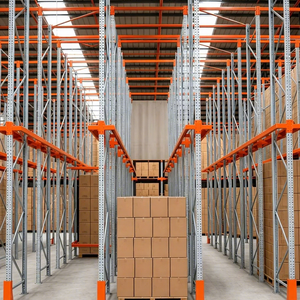
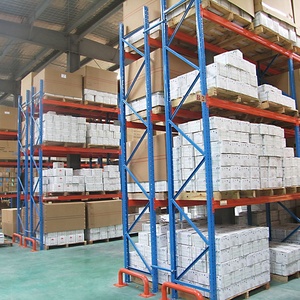
As the definitive multimodal crossroads of Western Europe, Belgium occupies an exceptional position in continental supply chains. Anchored by the Port of Antwerp-Bruges—the second largest seaport in Europe—as well as the inland freight corridors along the Albert Canal and the logistics hubs connecting Brussels, Liège, and Ghent, Belgian warehouse space demands maximum cubic storage density. The local commercial real estate landscape is characterized by steep land prices, strict environmental sustainability goals, and rigorous municipal zoning guidelines. Consequently, for operations managers, plant directors, and supply chain executives across Flanders and Wallonia, industrial racking is not a simple commodity purchase; it is a critical capital infrastructure asset that governs overall throughput speed, worker safety, and profitability.
1. Navigating Belgian Industrial Norms: EN 15512 and Structural Rigidity
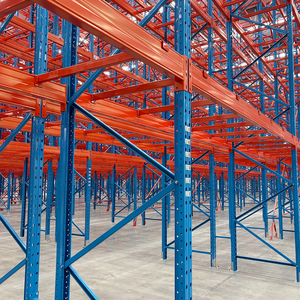
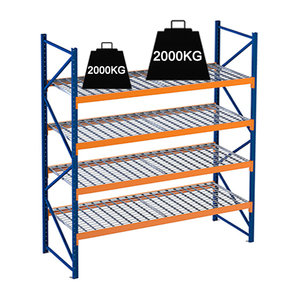
Industrial warehousing across Belgium enforces the stringent structural framework established by the European Committee for Standardization (CEN). Specifically, steel static storage systems must conform to EN 15512 (Structural Design of Adjustable Pallet Racking), EN 15620 (Tolerances, Deformations and Clearances), and EN 15635 (Application and Maintenance of Storage Equipment). Belgian warehouse operators, under scrutiny from insurance underwriters (such as Vinçotte or Apragaz inspections), require certified yield-strength profiles capable of handling dynamic beam deflection limits often restricted to 1/200th of the span distance.
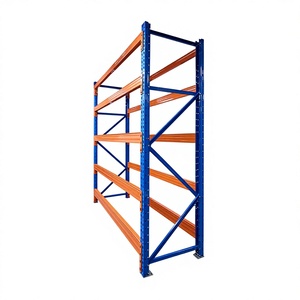
Our upright frames and load-bearing beams are manufactured from certified European standard high-yield steel coils (such as S355JR and S235JR), cold roll-formed using computer-controlled 32-stage profiling lines. This guarantees exact geometric consistency, minimum internal stress, and superior resistance to torsional bucking under eccentric loading situations typical in heavy pharmaceutical and chemical warehousing.
2. Key Application Scenarios Across Belgium’s Prime Industrial Sectors
The operational demands placed on warehouse racking differ considerably between regional trade specializations in Belgium:
Chemical & Antwerp Port Clusters
Chemical giants in the Port of Antwerp petrochemical cluster demand customized uprights fitted with hot-dip galvanized decking, drum sumps, and integrated sprinkler drop-brackets compliant with Seveso III site safety directives.
Liège & Brussels E-Commerce Corridors
Positioned near Liège Airport (Cargo Center) and along the E19/E40 corridors, high-velocity distribution centers utilize our dynamic Carton Flow and Multi-tier Picking Mezzanines to streamline batch-picking routines and omni-channel reverse logistics.
Flemish Agri-Food & Cold Chains
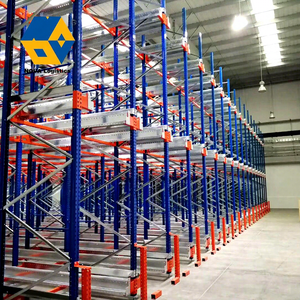
Belgium’s deep-freeze food processing centers (vegetables, dairy, and chocolate distribution around Roeselare and Sint-Niklaas) deploy our Automated Radio Shuttle Systems, reducing refrigerated volume losses while eliminating forklift cold-store entry.
3. Strategic Macro Trends Shaping Belgian Warehousing Through 2030
Several transformative currents are actively driving racking design investments throughout Flanders, Brussels-Capital, and Wallonia:
Decarbonization and Brownfield Space Optimization: With open land zoned for industrial development becoming increasingly limited in Flanders under regional spatial planning frameworks (the "Bouwshift"), companies are avoiding new greenfield builds. Instead, warehouse operators are re-engineering existing brownfield assets vertically. We are manufacturing specialized narrow-aisle (VNA) systems reaching heights of up to 15 meters to double pallet capacity inside existing footprints without demanding additional building square footage.
Transition from Manual Stacking to Semi-Automation: Rising industrial labor costs in Belgium make heavy material handling via conventional counterbalanced forklifts uneconomical. Warehouses are transitioning toward semi-automated storage configurations, such as deep-lane 2-way and 4-way radio shuttle systems. These installations offer significant throughput upgrades while dramatically cutting down transit damages and operating noise, fully aligning with Belgian workplace wellness and occupational safety (Codex over het welzijn op het werk) standards.
4. Corporate Manufacturing Superiority: Why Belgian Specifiers Partner With HEDA Shelves
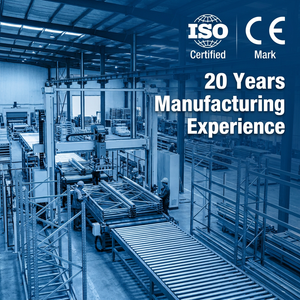
With an operational legacy dating back to 2001, Guangzhou Heda Shelves Co., Ltd. stands as a premier manufacturing powerhouse boasting a 30,000 m² heavy-machinery production complex. Operating 30,000 metric tons of monthly processing capacity, we eliminate intermediate brokerage markups and supply European distributors, general contractors, and end-user industrial factories with factory-direct, highly engineered structural systems.
Every racking component undergoes a systematic ten-stage manufacturing lifecycle: automated decoiling, precision multi-ton roll punching, cold roll profiling, robotic welding, high-temperature multi-stage pickling and phosphating, and state-of-the-art electrostatic powder coating. Our surface finishes achieve salt-spray test metrics that easily overcome Western European industrial atmospheric wear. When paired with comprehensive structural computations prepared by our specialized in-house civil and mechanical engineers, our clients in Belgium receive full CAD layouts and 3D visual designs calibrated exactly to local slab loading capacities and material handling equipment envelopes.