Engineered Heavy-Duty Racks & Systems for Nagoya Facilities
Designed specifically to match JIS standard pallet configurations (T-11 type 1100×1100mm) and high-density material handling workflows across Aichi Prefecture's industrial clusters.
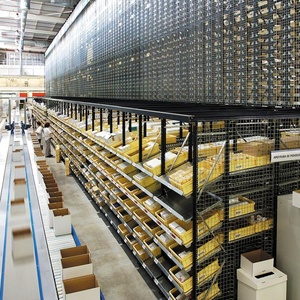
High Efficiency Durable Heavy Duty Adjustable 5-Layer Carton Gravity Flow Rack
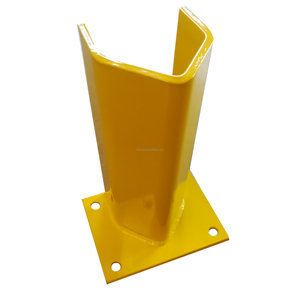
Warehouse Pallet Racking Guard Storage Upright Guard Protector Metal Post
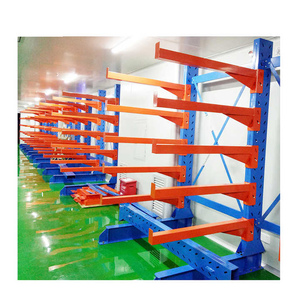
High Quality Heavy Duty Boltless Cantilever Rack Shelf 5 Layer Adjustable
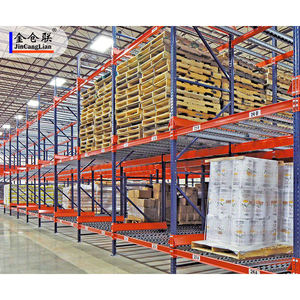
Industrial Heavy Duty Gravity Flow FIFO Steel Pallet Storage Rack System
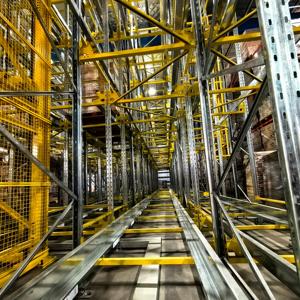
High-Load CE Four-Way Radio Shuttle Rack System for Cold Storage Warehouse
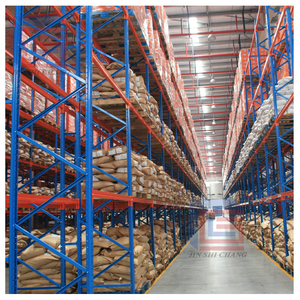
Manufacturer Heavy-Duty Steel Selective Pallet Rack For Warehouse Storage
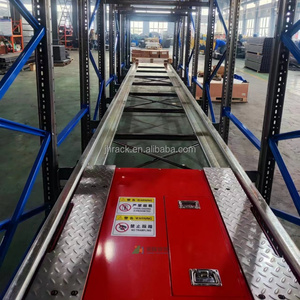
Automated Warehouse ASRS Pallet Shuttle Racking System & Stackable Racks
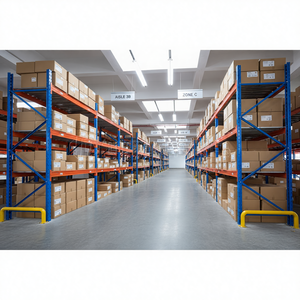
Heavy Duty Metal Push Back Pallet Racking System With Nested Gravity Carts
Engineering Storage Infrastructure for Greater Nagoya’s Industrial Belt
Navigating Japanese Building Standards (Kenchiku Kijun-hō), seismic micro-zonation, and high-velocity JIT logistics across Aichi Prefecture, Mie, and Gifu.
Navigating the Industrial Logistics Demands of Greater Nagoya
As Japan’s undisputed industrial capital, the Chubu Economic Region centered around Nagoya Port and Toyota City generates roughly one percent of the world’s manufacturing output. Unlike conventional e-commerce hubs, Nagoya's industrial warehousing requires handling heavy automotive stampings, powertrain components, aerospace carbon pre-pregs, and precision machine tools. This operational profile creates extraordinary demands on storage density, static and dynamic load safety factors, and material handling velocity.
Sourcing OEM/ODM industrial racking from an international manufacturing powerhouse requires precise alignment with Japanese Industrial Standards (JIS) and local construction regulations. Under the Japanese Building Standard Law (建築基準法, Kenchiku Kijun-hō), automated high-bay racking systems exceeding specific height thresholds or possessing integrated roof-supporting frameworks are classified as building structures, requiring rigorous structural review by licensed Japanese Kenchikushi engineers.
- JIS G 3101 / JIS G 3131 Equivalence: Cold-rolled and hot-rolled structural steel with certified yield points exceeding 235–355 N/mm².
- Tokai/Nankai Trough Earthquake Preparedness: Baseplate sizing, upright section moduli, and anchoring engineered for lateral seismic coefficients ($K_h$) up to 0.30g.
- JIT Kanban / TPS Alignment: Gravity-assisted carton and pallet flow systems calibrated to zero-backlog flow racks in Tier-1 automotive assembly supply chains.
| Structural Parameter | Standard Racking | Nagoya Seismic Spec (HEDA) |
|---|---|---|
| Steel Grade | Commercial Q235B | Q355B / SS400 Equiv. Mill-Certified |
| Baseplate Dimensions | 100 × 120 × 4.0 mm | 160 × 200 × 10.0+ mm Rib-Reinforced |
| Anchoring Method | Single M10 Anchor | Twin M12–M16 Chemical/Torque-Shear |
| Beam Deflection Limit | $L / 200$ under full load | $L / 300$ or $L / 400$ for automated shuttles |
| Surface Finish | Single-layer coating | Multi-stage phosphating + 75μm epoxy |
| Seismic Factor ($K_h$) | $\le 0.10g$ (Non-seismic) | $0.20g - 0.35g$ Finite Element Modeled |
Spatial Footprint Optimization: T-11 vs Euro/US Pallet
The cornerstone of Japanese material handling is the JIS Z 0601 T-11 Pallet (1100 mm × 1100 mm). Generic racking systems imported without OEM modification often utilize standard 2700mm beam widths tailored to two 1200×1000mm pallets. When loaded with T-11 units, this creates unacceptable gaps, eccentric beam loading, or lost storage capacity.
HEDA Shelves customizes beam spans to 2400mm or 3500mm, achieving precise 75mm safety clearances around T-11 pallets, lifting volumetric space utilization by up to 14.8% per cubic bay.
Custom OEM/ODM Engineering for High-Throughput Hubs
Along the Route 23 corridor and coastal reclamation logistics zones—including Tobishima, Yatomi, and Nabeta Container Terminals—industrial floor space commands premium leasing rates. Facilities cannot afford inefficient, generic warehouse structures.
Through our dedicated ODM engineering division, warehouse operators and industrial distributors in Nagoya receive turnkey 3D CAD modeling, dynamic FEA (Finite Element Analysis) stress simulation, and customized upright punch profiles. Every beam connection features our patented high-integrity 4-lug or 5-lug hooked connectors secured by high-visibility safety lock pins, preventing vertical beam dislodgement under high-amplitude ground motion.
Whether handling standard unpalletized carton components via inclined gravity roller beds or dense die blocks via heavy-duty structural steel cantilever systems, our engineering guarantees minimal deflections and uncompromised structural stability.
Tailored Racking Solutions for Chubu's Key Industrial Sectors
Precision storage systems engineered around the core manufacturing disciplines that power Aichi, Mie, and Shizuoka prefectures.
Automotive Component & Die Stamping
Serving Tier-1 and Tier-2 suppliers in Toyota City, Kariya, and Okazaki. Our heavy-duty selective and mold-storage racks feature cold-formed Q355B structural boxed beams capable of supporting heavy die presses, engine cylinder blocks, and transmission castings up to 5,000 kg per bay.
Toyota City & Mikawa ClusterAerospace Carbon & Structural Assemblies
For Chubu aerospace manufacturers producing commercial airframe structures. Custom cantilever arms with non-marking polymer liners accommodate long wing components, aluminum alloy extrusions, and titanium tubes without surface scuffing or bending deflection.
Chubu Aerospace ValleyPort of Nagoya Marine Cold Chain
Refrigerated seafood and agricultural terminals across Ise Bay operate down to -30°C. Our automated 4-way radio shuttles and galvanized drive-in systems operate seamlessly in deep-freeze environments, resisting thermal contraction stresses and condensation-induced corrosion.
Tobishima & Minato LogisticsPrecision Machine Tool Assembly Parts
Supporting machine builders in Komaki, Inuyama, and Ichinomiya. Multi-tier rack-supported mezzanine floors and carton flow shelves allow sub-assembly pick stations to maintain high-density parts storage immediately adjacent to automated production lines.
Owari Machinery BasinNagoya Inland 3PL Mega-Distribution
Along the Meishin and Isewangan expressways, large-scale third-party logistics hubs require high-bay selective and push-back systems that accommodate rapid SKU rotation, narrow forklift aisles (VNA), and wire-guided reach trucks operating at cycle rates exceeding 45 pallets/hour.
Komaki & Kasugai 3PL HubsChemical Drum & Dangerous Goods Depots
Facilities subject to Japan Fire Service Act (消防法, Shōbō-hō) storage regulations for Class 4 flammable liquids. Heavy-duty pallet racks equipped with integrated galvanized wire-mesh decking, drum cradles, and seismic spill-containment bund trays.
Yokkaichi & Chita Coastal Plants10-Stage Precision Manufacturing & Quality Control
Total in-house fabrication across our 30,000 m² smart factory guarantees structural metallurgy, dimensional tolerances, and surface integrity prior to container dispatch.
Raw Metallurgy
Certified prime coil slitting; chemical spectrographic analysis verifying C, Mn, Si alloy fractions.
CNC Punching
Automated continuous 50-ton hydraulic die punching ensuring ±0.1mm pitch accuracy across 12-meter columns.
Continuous Roll Forming
24-station progressive cold roll-forming lines creating rigid omega and box beam profiles without stress fractures.
Robotic Welding
Panasonic 6-axis robotic MIG welding stations ensuring consistent bead penetration on beam end-connectors.
Acid Pickling
Immersion acid descaling removing surface oxides, followed by neutral rinse and hot iron phosphating.
Electrostatic Coating
Automated Gema powder spray booths depositing 70-90μm architectural-grade thermosetting polyester resin.
Baking & Curing
200°C continuous convection tunnel curing achieving 2H pencil hardness and zero pinhole blistering.
Static Load Testing
Hydraulic press bed testing verifying beam deflection curves match $L/300$ calculations under 1.5x test loads.
Protective Bundling
Automated corrugated wrapping, corner protectors, and steel-banded marine dunnage prevent transit abrading.
Direct Port Stowing
Optimized 40ft High Cube container packing plans maximizing weight/volume ratios for direct Port of Nagoya ocean transit.
Factory-Direct Value
Eliminating domestic Japanese trading company intermediaries (shōsha markups) reduces landed capital expenditure on major racking projects by 20% to 35%.
Rapid Prototyping & ODM
Our in-house tooling division creates custom cold-roll dies and specialized bracket adapters within 14 days to integrate seamlessly with existing Japanese racking installations.
Seamless Port of Nagoya Logistics
Direct sea freight corridors from our South China production base to Port of Nagoya take just 5 to 7 days sailing time, ensuring dependable construction milestones.
Frequently Asked Questions for Nagoya Racking Buyers
Essential insights on structural compliance, seismic regulations, shipping schedules, and customs clearance for Japanese warehouse executives.
Equip Your Nagoya Facility with Factory-Direct Storage Engineering
Connect directly with our senior structural design team. Share your warehouse floor dimensions, pallet specifications, and target seismic criteria for a complimentary 3D CAD design layout, static load calculations, and an FOB/CIF Nagoya cost proposal within 24 hours.