Engineered Equipment Range
High-Density Logistics Systems & Racking Configurations
Explore our certified heavy-duty storage matrices engineered for UK 1200x1000mm standard pallets, Euro pallets, and automated order fulfillment operations.
White Paper Insight
Engineering Architectural Precision: The Mechanics of VNA Racking
A rigorous evaluation of structural load performance, aisle tolerances, floor flatness metrics, and vertical optimization for British logistics infrastructure.
Volumetric Cubic Density vs Footprint
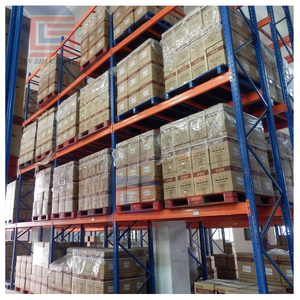
Standard wide-aisle adjustable pallet racking (APR) typically mandates aisle widths ranging between 3.2m and 3.8m to accommodate counterbalance or reach forklifts. Very Narrow Aisle (VNA) systems compress working aisles down to 1.6m to 1.8m, reallocating up to 45% of previously wasted horizontal circulation space directly into active pallet locations. When combined with clear mast heights up to 17 meters, volumetric space utilization exceeds 85%.
Truck Guidance: Wire Guidance vs Guide Rails
Operating high-lift turret trucks or man-up order pickers within sub-1.8m margins necessitates positive guidance. We engineer for both primary disciplines: Low-Profile/High-Profile Mechanical Steel Guide Rails (100×65×6mm rolled steel angles bolted directly to the slab with recessed flush anchors) and Low-Frequency Inductive Wire Guidance systems (cut into the concrete at 4.5 kHz to 9 kHz frequencies) providing frictionless, zero-wear tracking along ultra-long runs.
Floor Flatness Specifications (TR34 DM2 / FM2)
Because mast tilt is exponentially magnified at elevations surpassing 12 to 15 meters, the concrete slab must conform to stringent flatness parameters. In accordance with The Concrete Society’s Technical Report 34 (TR34 4th Edition), VNA operations mandate Defined Movement (DM) classifications—principally Category DM2 or DM1. Our structural design balances column base plate dimensions and high-grade anchoring to distribute static loads up to 18,000 kg per upright.
| Storage System Type | Typical Aisle Width (mm) | Vertical Clear Reach (m) | Floor Space Utilization (%) | Selectivity | Slab Flatness Spec (TR34) | MHE Fleet Requirement |
|---|---|---|---|---|---|---|
| VNA (Very Narrow Aisle) | 1,550 – 1,850 | Up to 17.5m | 80% – 88% | 100% Direct | DM1 / DM2 (Defined Movement) | Man-Up / Man-Down Turret Truck, Articulated MHE |
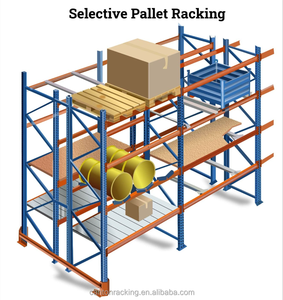
| Standard Wide Aisle (APR) | 3,200 – 3,800 | Up to 10.5m | 40% – 50% | 100% Direct | FM2 / FM3 (Free Movement) | Standard Counterbalance, Reach Truck |
| Double Deep Racking | 3,100 – 3,500 | Up to 11.0m | 60% – 65% | 50% Immediate | FM2 (Free Movement) | Pantograph Reach Truck |
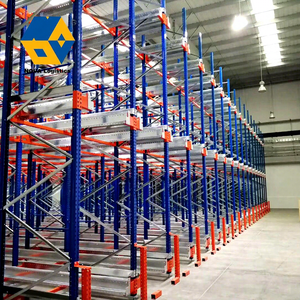
| Automated Radio Shuttle | Lane Dependent | Up to 24.0m | 85% – 92% | Batch / FIFO / LIFO | Specialized High Tolerance | Radio Shuttle Cart + Master Forklift / AS/RS Crane |
UK Industrial Scenarios
Optimizing British Supply Chain Real Estate
From prime logistics corridors to specialized cold chains, how VNA racking addresses high land acquisition costs and spatial constraints throughout the United Kingdom.
Midlands Golden Triangle Hubs
With prime warehouse leasing exceeding £12 to £18+ per sq ft in core zones (Daventry DIRFT, Magna Park Lutterworth, Northampton, and Rugby), 3PL logistics operators require extreme vertical stacking. Our VNA configurations unlock up to 35% more pallet positions per square metre of high-bay floor space.
Refrigerated & Frozen Logistics
Given commercial electricity rates across the UK, chilled (-2°C) and sub-zero (-25°C) facilities in Hull, Grimsby, and Wisbech incur severe thermal envelope operating costs. VNA compresses air cubic volume per pallet position, drastically slashing operational cooling expenditure per stored unit.
MHRA-Compliant Pharma Buffer Stores
Serving pharmaceutical clusters across Cambridge, Cheshire, and West London, our VNA racking supports strict lot separation, high-resolution barcode scanning accuracy, and 100% individual pallet selectivity crucial for MHRA Good Distribution Practice (GDP) adherence.
Omnichannel Retail & E-Commerce
E-commerce fulfilment centers along the M62 corridor and London periphery use combined VNA setups: bottom tiers fitted with wire mesh decks for pick-face item picking, while the high tiers provide direct bulk pallet replenishment within the identical aisle column.
Market Intelligence
Structural Trends Shaping UK Warehousing & Intralogistics
Key regulatory, economic, and technological drivers defining the deployment of high-bay racking systems across England, Scotland, and Wales.
Electrification & Semi-Automated AGV Integration
UK operators are systematically upgrading from manual turret trucks to semi-automated, laser-guided or wire-guided Automated Guided Vehicles (AGVs). Our VNA upright profiles and run-spacers are fabricated with laser-cut positioning markers and precise millimeter straightness tolerances to support autonomous truck positioning.
Net Zero Carbon Directives & Steel Traceability
Under UK corporate ESG reporting, carbon accounting on structural investments is scrutinized. We utilize low-carbon footprint electric arc furnace (EAF) and basic oxygen furnace structural steel grades (Q235B and Q355B equivalent to S235JR and S355JR), providing verifiable mill test certificates and environmental impact transparency.
Strict Adherence to SEMA & BS EN 15512 Codes
Unlike less regulated markets, UK warehouse installations demand rigorous structural validation under SEMA (Storage Equipment Manufacturers' Association) codes of practice and BS EN 15512:2020. Our beam configurations, connector hooks, and safety locks are engineered with a minimum safety factor of 1.5 against plastic failure.
Manufacturing Pedigree
Direct-from-Factory Engineering & High-Volume Production
Combining 25+ years of heavy structural manufacturing with precision robotic fabrication, automated roll-forming, and globally certified quality assurance.
25+
Years Industry Experience
30,000t
Monthly Production Tonnage
30,000m²
Factory Facility Footprint
10,000+
Projects Completed Globally
10-Stage Surface Treatment
Every structural profile undergoes high-pressure shot-blasting, acid pickling, phosphating, and deionized neutralization, followed by electrostatic epoxy-polyester powder coating (60–90 μm) cured at 200°C for superior scratch and chemical resilience.
Certified ISO & CE Quality
Certified under CE Certificate No. 2435-CPR-8605159 and ISO 9001:2015 No. 18624Q00169R0M. Batch mechanical tensile testing and ultrasonic weld inspections ensure zero structural micro-fissures across heavy load-bearing frames.
Bespoke 3D Layout & Static FEA
Our structural team provides complimentary 3D BIM/CAD architectural warehouse models and Finite Element Analysis (FEA) static calculations, factoring in localized dead, live, seismic, and accidental impact loads prior to factory roll-out.
Direct UK Port Distribution
Seamless 40ft High-Cube containerized shipping directly into major UK ports including Felixstowe, Southampton, London Gateway, and Liverpool. Components are sequenced and bundled for rapid forklift unloading and installation scheduling.
Procurement Guidance
Frequently Asked Questions: UK VNA Racking Projects
Clear, technical, and commercial answers for UK logistics engineers, facilities managers, and commercial procurement teams.
Does your VNA racking design fully comply with UK SEMA guidelines and BS EN 15512? +
Yes. All racking frameworks engineered for the United Kingdom are designed in strict accordance with BS EN 15512 (Steel static storage systems – Adjustable pallet racking systems – Principles for structural design) and cross-referenced with the SEMA (Storage Equipment Manufacturers' Association) Code of Practice for the Design of Static Racking. We provide complete structural calculation packs, including permissible beam deflection limits (not exceeding L/200), upright safety factors, and load notice plaque templates for local statutory inspection compliance.
What slab flatness specification (TR34) is required for high-bay VNA installations?
+
Under the Concrete Society’s Technical Report 34 (TR34 4th Edition), VNA racking requires a Defined Movement (DM) specification because material handling equipment travels along identical, fixed wheel paths. For top beam levels between 8m and 13m, Category DM2 is standard. For installations exceeding 13m up to 17m+, Category DM1 is mandatory to prevent mast sway, truck collision, or dynamic rack impact. If your current warehouse floor is standard Free Movement (FM2), laser-grinding of wheel paths will be specified in the pre-installation phase.
How do you accommodate both standard UK pallets (1200x1000mm) and Euro pallets (1200x800mm)? +
The prevailing UK industrial standard is the Class 1 perimeter-base pallet measuring 1,200mm (depth) × 1,000mm (width). Our standard VNA frame depth is engineered at 900mm or 1,000mm to allow a safe 50mm front and rear pallet overhang, ensuring stable seating on box beams. For facilities storing mixed inventories of UK standard and Euro pallets (1,200mm × 800mm), we incorporate stepped beams, heavy-gauge drop-over pallet support bars, or flush-fitting galvanized wire mesh decks to ensure full structural support across all pallet variants.
What are the lead times and delivery logistics to UK ports? +
With our 30,000-tonne monthly production throughput, standard custom manufacturing lead time is 2 to 4 weeks following final CAD drawing and color sign-off. Ocean transit from South China to primary UK container gateways (Felixstowe, Southampton, London Gateway) averages 28 to 35 days. Shipments are packed with reinforced strapping, structural edge guards, and dedicated dunnage to prevent transport friction, configured for direct devanning or curtain-sider transfer on site.
Wire guidance vs mechanical steel guide rails: which should we select for our UK site? +
Mechanical guide rails (typically 100×65×6mm steel angles) are low maintenance, highly robust against truck impacts, and provide immediate physical protection at the rack base. However, they reduce ground-level bottom pallet clearance and can hinder aisle cleaning. Wire guidance requires a narrow induction cable channel cut into the concrete slab, keeping the floor surface completely flush. This provides seamless pedestrian or pallet jack movement and cleaner operations, making wire guidance the preferred solution for FMCG, pharmaceutical, and high-throughput UK distribution centers.
How do you handle fire safety, flue space regulations, and in-rack sprinkler integration? +
Under UK Building Regulations (Approved Document B) and insurer standards (such as NFPA 13 and FM Global), high-bay VNA racks require dedicated vertical transverse flues (minimum 75mm to 100mm) and continuous longitudinal flues to allow rapid thermal updraft to ceiling sprinklers. Solid timber decking is heavily restricted by UK fire underwriters due to fuel load; consequently, we supply heavy-gauge drop-in galvanized wire mesh decking with greater than 70% open area to ensure unrestricted water penetration from in-rack sprinkler heads.
Request Engineering Consultation
Ready to Maximize Your UK Facility’s Storage Capacity?
Send our structural team your warehouse building footprint, clear roof apex height, and pallet specifications. We provide complete 3D CAD layouts, structural FEA load calculations, and landed price estimates within 24 working hours.
Get Catalog