Engineering Structural Integrity for Next-Generation Autonomous Warehouses
A rigorous guide to deflection limits, dynamic cycle fatigue, seismic parameters, and automated intralogistics optimization.
In modern supply chain infrastructures, the structural rack is no longer passive steel shelving—it functions as the high-precision mechanical exoskeleton of the entire automation ecosystem. As autonomous cranes, multi-directional 4-way shuttles, and autonomous mobile robots (AMRs) operate at velocities exceeding 4 m/s with accelerations of up to 2 m/s², static tolerance deviations as small as ±1.5 mm per 10 vertical meters can trigger optical sensor failures, automated guide track jams, or catastrophic system lockouts. As a verified CE Certified Automation Racking System Manufacturer & Supplier, Guangzhou Heda Shelves Co., Ltd. architects heavy-duty storage infrastructures strictly conforming to EN 15512, EN 15620 (Class 100–400), and execution class EXC2/EXC3 under EN 1090-2.
High-Performance Automated & Heavy-Duty Racking Series
Precision-manufactured structural systems engineered for seamless integration with ASRS cranes, shuttles, and industrial material handling workflows.
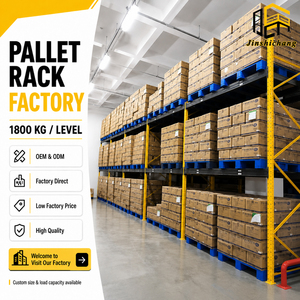
3000KG Heavy Duty Pallet Rack Warehouse Storage Shelves Units Powder Coating Steel Racking System
- Capacity: Up to 3,000 kg / level
- Steel: High-tensile Q235B / Q355B
- Finish: Electrostatic Powder Coating
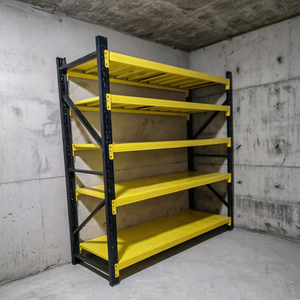
Steel Mezzanine Rack Warehouse Mezzanine Shelving System Pallet Rack Storage Platform Industrial Multi-Level Racking
- Load: 300 - 1,200 kg / m²
- Levels: 2 to 4 Structural Tiers
- Integration: Vertical Reciprocating Conveyors
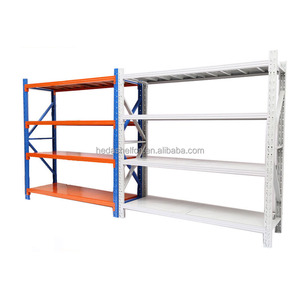
Wholesale Price Industrial Boltless Storage Rack 4 Tier Metal Shelving Units Warehouse Steel Heavy Duty Stacking Racks Shelves
- Capacity: 300 - 800 kg / shelf
- Pitch: 50mm Adjustable Increments
- Assembly: 100% Interlocking Boltless
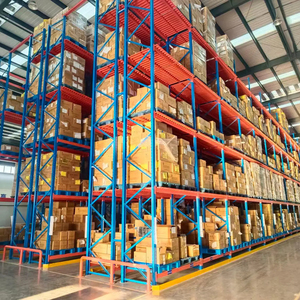
3000kg Capacity Pallet Racking System for Manufacturing Workshop Bolted Connection Load Accept OEM & ODM
- Safety Factor: 1.5 - 1.8 Static Margin
- Columns: Multi-Bend Omega Profiles
- Beam Joint: 5-Hook Precision Connectors
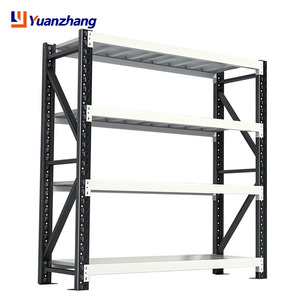
Light Duty Adjustable Metal Shelves, Bolted Structure for Parts & Carton Storage, Small Racks for Workshop & Warehouse
- Unit Capacity: 100 - 250 kg / tier
- Application: Spare parts & mini-load
- Accessories: Dividers, bin runners
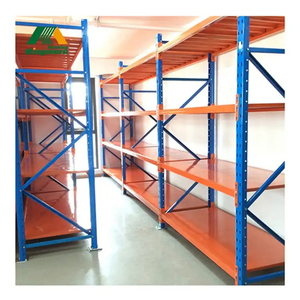
CE Certification Safe and Stable Storage Heavy Duty Selective Bolted Assemble Industrial Steel Warehouse Pallet Rack Shelving
- Standard: EN 15620 / FEM 10.2.02
- Deflection limit: Beam L/200 max
- Seismic: Dynamic modal calculated
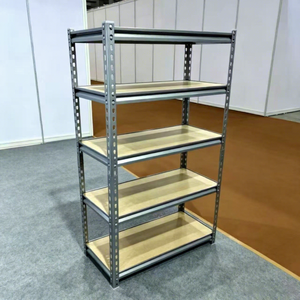
5 Tier Boltless Shelving Unit 150kg Per Layer Black Metal Storage Rack with MDF Board for Garage Warehouse
- Decking: High-density E1 MDF / Steel
- Frame: Corrosion-resistant matte black
- Modular: Reconfigurable 2-in-1 layout
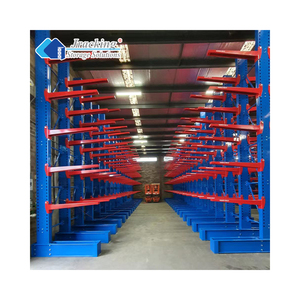
Jracking Industrial Shelving Warehouse Racks Heavy Duty Steel Cantilever Storage Rack System For Steel Pipe Storage
- Column: Welded I-Beam structural steel
- Arm Load: 500 - 3,500 kg per arm
- Automation: Automated side-loader ready
Automated Intralogistics Racking vs. Conventional Systems
A rigorous comparative analysis of throughput efficiency, volumetric spatial density, structural deflection standards, and total operational ROI.
| Performance Metric | Selective Static Racking | High-Bay Radio Shuttle Racking | Unit-Load ASRS Crane Racking | 4-Way Multi-Shuttle System |
|---|---|---|---|---|
| Spatial Floor Utilization | 35% - 40% (Aisle-constrained) | 70% - 80% (Channel-dense) | 85% - 90% (Vertical to 40m) | 90% - 95% (Dense 3D Grid) |
| Pallet Cycle Throughput | 20 - 30 pallets / hr / truck | 45 - 60 pallets / hr / aisle | 80 - 140 pallets / hr / crane | 150 - 300+ cycles / hr / matrix |
| EN 15620 Tolerance Class | Class 400 (Standard industrial) | Class 300 (Guided channel) | Class 100 / 200 (Optical precision) | Class 100 (Autonomous laser tracked) |
| Deflection Limits (Beam / Upright) | L/200 (Static deflection) | L/350 (Dynamic running limit) | L/500 or tighter (Crane interface) | L/500 (Omnidirectional runner track) |
| Direct Labor Reduction | Baseline benchmark (0%) | 50% - 60% reduction | 75% - 85% reduction | 85% - 90% reduction |
| Cold Storage Operating Range | Ambient to -15°C | Down to -25°C (Low-temp oil) | Down to -35°C (Cold-chain steel) | Down to -40°C (Super-cold lithium) |
| Average Payback Period (ROI) | Immediate CAPEX / Low OPEX ROI | 2.0 - 3.2 Years | 3.0 - 4.5 Years | 2.5 - 3.8 Years |
Why Tier-1 Integrators Choose Guangzhou Heda Shelves
Combining heavy-industry steel cold-roll forming with advanced seismic structural engineering and global certified manufacturing compliance.
30,000 m² Mega Manufacturing Base
Established in 2001, Guangzhou Heda Shelves Co., Ltd. operates a state-of-the-art 30,000 square meter production facility powered by over 300 seasoned mechanical engineers, robotic technicians, and structural fabricators. With a monthly cold-roll forming capacity of 30,000 metric tons across 10 automated continuous profile lines, we handle high-volume high-bay racking and mezzanine platform roll-outs within rapid 2- to 4-week manufacturing cycles.
Full CE Certification & ISO 9001:2015
Structural compliance is verifiable and audit-ready. Our manufacturing plant holds official CE Certificate No. 2435-CPR-8605159 under the European Construction Products Regulation (CPR) and ISO 9001:2015 Certification No. 18624Q00169R0M. All structural steel components comply with European Execution Class EXC2/EXC3, EN 1090-1, EN 1090-2, and RoHS non-toxic electrostatic surface standards for food-grade, cleanroom, and pharmaceutical storage facilities.
Seismic Structural Engineering (FEM 10.2.02)
We supply engineered installations across earthquake-prone logistics corridors globally—including the Pacific Rim (Chile, Peru, California, Japan) and the Mediterranean basin. Our engineering team utilizes finite element analysis (FEA) and dynamic modal response spectrum simulations to calculate localized moment connections, floor anchor shear loads, baseplate thickness, and cross-bay vertical bracing according to Eurocode 8, NCh 2369, and ASCE 7-22 codes.
Future Procurement Trends in Industrial Automation Racking
Key strategic and architectural shifts procurement executives must account for when engineering multi-decade intralogistics assets.
Transition to 4-Way Multi-Shuttle Swarms
Procurement teams are rapidly shifting away from single-aisle stacker cranes toward 4-way autonomous pallet shuttle fleets. This modular setup prevents single-point-of-failure downtimes. Racking specifications must now feature tighter omnidirectional track clearances, bi-directional load-bearing junction plates, and laser-guided leveling tolerance limits of ±1.0 mm across all structural running tiers.
Rack-Supported Clad Buildings (High-Bay)
To combat escalating industrial land costs and civil engineering overhead, companies increasingly deploy rack-supported warehouses up to 45 meters tall. The automated racking structure acts as the structural frame holding the roof and wall cladding. Procurement specifications now integrate dynamic wind sheer, snow live loads, and foundation slab micro-settlement directly into the racking structural calculations.
Cryogenic Automation & Anti-Corrosion
With the rapid global surge in frozen food e-commerce, automated cold-storage racking must endure extreme thermal cycling down to -40°C. Standard cold-rolled carbon steel becomes brittle under sub-zero conditions. Procurement demands impact-tested fine-grain structural steels (such as S355NL or Q355D/E) combined with pre-treatment zinc-rich epoxy primers or hot-dip galvanization to permanently resist condensation-driven oxidation.
Technological Innovations Shaping Automated Racking
From embedded structural IoT to AI-driven dynamic stress redistribution, racking engineering is entering the Industry 4.0 era.
The future of warehouse automation relies heavily on real-time intelligence at the physical layer. Next-generation automated racking installations integrate embedded fiber-optic strain sensors and wireless micro-inclinometers within vertical upright profiles. These sensors broadcast continuous structural telemetry to the warehouse management system (WMS), actively detecting accidental mast impacts, micro-settlement in the foundation slab, or beam overloads before structural deformation occurs.
Concurrently, green steel metallurgy and closed-loop cold-roll forming enable higher yield strengths (up to 460–550 MPa) with 15% less total steel weight. This weight reduction directly translates into lower embodied carbon footprints for ESG-compliant industrial builds, reduced shipping container weights, and lower landed costs for overseas supply chain hubs.
Frequently Asked Technical Questions
Direct engineering answers addressing compliance, dimensional tolerances, seismic parameters, and overseas shipping logistics.
Accelerate Your Warehouse Intralogistics Efficiency
Consult directly with Guangzhou Heda Shelves' senior structural engineers. Get an audit-grade, seismically compliant 3D layout, CAD structural schematics, and an end-to-end factory manufacturing proposal within 24 hours.