Precision Warehouse Racking & High-Density Storage Solutions
Direct factory manufacturing featuring robotically welded steel profiles, electrostatic powder coating, and structural load compliance for global supply chain infrastructures.
The Mechanics of High-Density Shuttle Pallet Racking
A deep technical analysis into why European Conformity (CE) certification, EN 15512 limit-state structural design, and precision dynamic rail profiling dictate long-term warehouse safety, operating efficiency, and return on investment.
Limit-State Structural Calculations
Under EN 15512 and FEM 10.2.02, upright frames are subjected to second-order P-Delta analysis to verify global and local bucking stability. Cold-rolled Q235B and high-yield Q355B steel sections undergo rigorous finite element modeling (FEM) to absorb both static vertical loads and dynamic acceleration horizontal braking forces imparted by radio shuttles carrying unit loads up to 2,000 kg.
Dynamic Rail Tolerances & Guiding
Unlike standard drive-in racking, shuttle systems rely on custom cold-formed zinc-galvanized guide rails that perform a dual role: sustaining concentrated pallet loads and ensuring lateral positioning for shuttle wheels. Manufacturing tolerances conform to EN 15620 Class 400, holding camber and sweep within ±1.0 mm per 1,000 mm span to eliminate shuttle wheel binding, drift, or sensor misalignment.
Cold Chain & LiFePO4 Thermal Resilience
Operating inside sub-zero environments down to -30°C demands structural steel with guaranteed Charpy V-notch impact toughness (≥27J at -20°C) to prevent brittle fracture. Shuttles are engineered with IP65-sealed brushless motor assemblies and smart lithium-iron-phosphate (LiFePO4) battery packs equipped with built-in internal thermal management heating coils, preventing discharge depletion during deep-freeze storage.
System Architecture: Shuttle Racking vs. Traditional High-Density
An unbiased comparative engineering audit assessing volume density, throughput velocity, operational safety risks, and capital recovery intervals across standard warehouse layouts.
| Evaluation Parameter | Radio Shuttle Racking (Semi-Automated) | Drive-In Racking System | Selective Pallet Racking | Push-Back Cart Racking |
|---|---|---|---|---|
| Cubic Storage Utilization | 80% – 85% (Optimal lane depth up to 40+ pallets) | 65% – 75% (Limited by forklift reach height/depth) | 35% – 45% (Requires broad 3.0m–3.5m aisles) | 55% – 65% (Typically limited to 2–5 pallets deep) |
| Pallet Cycle Throughput | High: Shuttles run at 0.8–1.2 m/s while forklift stages | Low: Forklifts must navigate deep inside storage channels | Very High: Instant single-pallet accessibility | Moderate: Gravity driven cart indexing |
| Structural Collision Risk | Near Zero: Forklifts remain strictly outside loading channels | Extremely High: Constant structural upright impact risk | Low: Wide operating clearance | Low: Handling executed on perimeter aisle |
| Inventory Rotation Logic | Flexible FIFO (First-In, First-Out) or LIFO configuration | Strict LIFO (Last-In, First-Out) | 100% Direct Selective Access | Strict LIFO per operational channel |
| Seismic & Dynamic Resilience | Engineered top ties, vertical & horizontal portal bracing | Lower lateral rigidity due to absence of intermediate ties | Standard diagonal bracing configurations | Intermediate stiffness via linked frame channels |
| 10-Year Total Cost of Ownership | Lowest: Substantial labor, equipment, and building saving | High: Ongoing frame repair and forklift maintenance | Moderate: High square-footage floor lease overhead | Moderate: Higher mechanical cart assembly costs |
Guangzhou HEDA Shelves Co., Ltd. — Turnkey Engineering Standards
Founded in 2001, Guangzhou HEDA Shelves Co., Ltd. commands a modern 30,000 square meter intelligent manufacturing infrastructure with more than 300 experienced technical staff and senior structural engineers. Processing over 30,000 metric tons of certified structural steel monthly, we deliver custom, high-durability storage systems worldwide.
Our shuttle racking structures and automated storage modules undergo complete in-house fabrication: high-precision automated continuous cold roll-forming lines, automated multi-spindle punching, robotic seam welding, and an automated continuous 10-stage pre-treatment line (degreasing, phosphating, acid pickling) followed by thermo-cured electrostatic epoxy-polyester powder coating (60–90 μm dry film thickness).
The Next Decade of High-Density Automation (2026–2035)
How intelligent automated material handling systems are shifting industrial procurement strategies from static racking assets toward integrated kinetic storage platforms.
Migration to 4D Multi-Directional Shuttles
Traditional two-way shuttles operating within fixed lanes are rapidly giving way to 4D multidirectional pallet carriers. Equipped with integrated dual-wheel interchange mechanisms, 4D shuttles navigate longitudinal channels and transverse cross-aisles, transitioning across rack levels via automated vertical reciprocating lifts (VRCs) to maximize throughput without requiring fleet oversizing.
IoT Telemetry & Structural Stress Monitoring
Future-proof racking procurement prioritizes intelligent infrastructure embedded with strain-gauge sensors and real-time rail deflection monitoring. Integrated edge-computing gateways communicate directly with the Warehouse Execution System (WES), alerting facility directors to foundation settling, micro-deflections from seismic events, or localized rack overload.
Supercapacitor Fast-Charging Integration
Next-generation shuttle carriers incorporate hybrid supercapacitor and lithium power cells. In high-velocity fulfillment centers operating 24/7, shuttles dock in transit onto inductive busbars or station chargers during pallet transfers, receiving a full operating charge burst in 15–20 seconds and entirely removing manual battery-swapping downtime from warehouse labor protocols.
Seismic Calculation & Tropical Environmental Adaptations
Engineering high-density storage to withstand dynamic ground acceleration, extreme seismic activity, and aggressive coastal humidity across South American and global maritime logistics corridors.
Seismic Code Modeling (Chile, Peru, Colombia)
In high seismic zones (such as Chile's NCh 2369 / NCh 433, Peru's E.030, and Colombia's NSR-10), standard static racking collapses under horizontal shear loads. Our structural engineers incorporate modal spectral analysis, enlarged ductile base plates, deep-set chemical anchors, and heavy-gauge horizontal portal trusses to dissipate seismic energy without catastrophic failure.
Galvanized Anti-Corrosion Protection
For coastal warehouses located near Santos, Guayaquil, Valparaíso, and Cartagena, marine atmospheric salts accelerate rust. We provide hot-dip galvanized uprights and guide rails conforming to ISO 1461, achieving zinc thicknesses exceeding 65–85 μm. This guarantees decades of maintenance-free performance in humid tropical environments without paint peeling or structural pitting.
Certified Factory Pre-Assembly & Load Testing
Before ocean container dispatch, structural components, shuttle tracking tolerances, and safety stops undergo factory floor mock-up assembly. Test pallets representing 120% of rated capacity verify beam deflection limits (strictly within L/200 criteria) and validate optical photoelectric stop sensors, emergency brake cutoffs, and guide clearance.
Frequently Asked Questions for Industrial Procurement Engineers
Clear, authoritative technical answers addressing engineering standards, import logistics, floor slab loading, and equipment interoperability.
Q1: What technical criteria are verified by your CE Certification?
Our CE certification (Certificate No. 2435-CPR-8605159) validates total compliance with European Construction Products Regulation (CPR) and EN 1090-1 / EN 15512 execution standards for steel structures. It verifies raw material chemical composition, robotic welding procedure specifications (WPS), load-bearing mechanical calculations, and factory production control (FPC) quality traceability.
Q2: What floor slab specification is required for shuttle racking?
Due to high storage density and concentrated upright point loads, shuttle racking typically requires a reinforced concrete slab conforming to DIN 18202 Table 3 Line 3 or 4 flatness criteria. Slab load capacity should generally support point loads between 40 kN to over 100 kN per upright footplate, with concrete compressive strength rated at C25/30 or C30/37.
Q3: Can the radio shuttle system operate with defective or mixed pallets?
Radio shuttles are precision automated carriers equipped with optical and ultrasonic sensors. While they accommodate standard wood, plastic, or metal pallets (Euro 1200x800, Industrial 1200x1000, and Americas 48x40"), bottom bottom-runner deflection must not exceed 20 mm. Broken base boards or excessive bottom overhang can trip optical interlocks and pause carrier movement.
Q4: How do you manage ocean logistics and container space optimization?
Heavy steel profiles are nested using customized timber dunage and anti-abrasion polymer wrapping to prevent surface transit damage during 30–45 day sea transits. Our logistics engineers calculate computerized 3D container load plans, maximizing 40ft High Cube container payloads to 26–28 metric tons while keeping components logically bundled for progressive onsite unloading.
Q5: What is the expected cycle lifetime of the shuttle power system?
Our industrial radio shuttles utilize automotive-grade Lithium Iron Phosphate (LiFePO4) battery packs engineered for over 2,500 to 3,000 full charge-discharge cycles while retaining over 80% original capacity. Under standard 8-hour shift operations, a single charge supports 8 to 10 hours of continuous transit duty with quick-swapping completed in under 60 seconds.
Q6: How is onsite mechanical and electrical installation supervised?
Every project shipment is accompanied by comprehensive 3D CAD anchor schematics, numbered structural bill-of-materials, and torque specification manuals. For international projects, HEDA Shelves provides experienced on-site installation directors or real-time remote engineering supervision to ensure upright plumb tolerances remain within 1/1000 height.
Q7: What safety sensors prevent shuttle lane falls and forklift collisions?
Our shuttle units feature redundant active and passive fail-safe safety mechanisms: forward and rear laser time-of-flight obstacle detection sensors, mechanical end-of-rail physical travel stops, anti-tilt rail clamp locks, pallet-detection photoelectric eyes, and audible visual LED status indicators compliant with CE Machinery Directive 2006/42/EC.
Q8: Can the racking design be adapted if warehouse needs change?
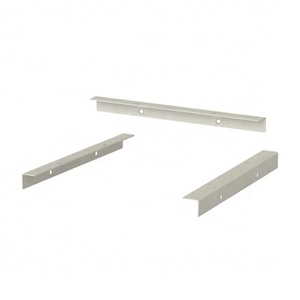
Yes. Our modular beam connectors feature a 50 mm / 75 mm pitch adjustment pattern. The cold-formed guide rails are bolted directly into structural bracket arms rather than permanently welded, enabling logistics operators to reconfigure lane depths, tier heights, or pallet dimensions as SKU portfolios evolve.