Engineered Warehouse Racking Solutions
Explore our export-certified heavy-duty pallet racking systems engineered for high volumetric density, variable beam elevation pitch, and heavy unit-load dynamics.
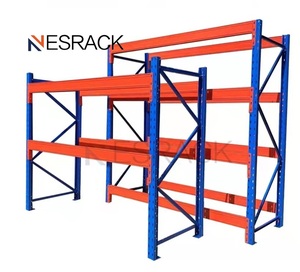
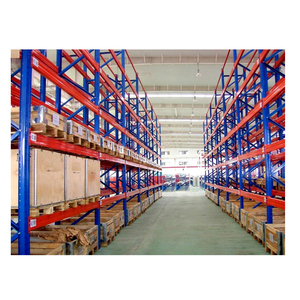
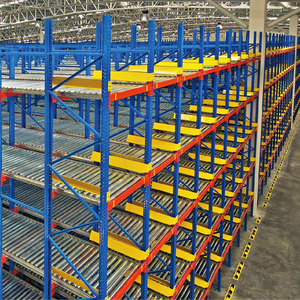
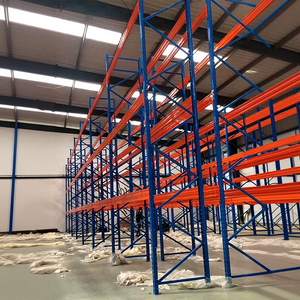
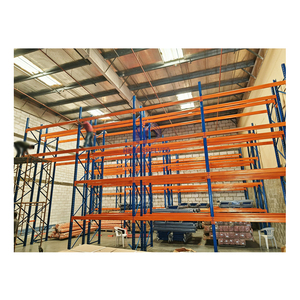
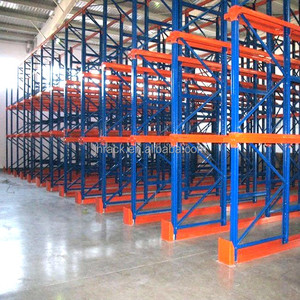
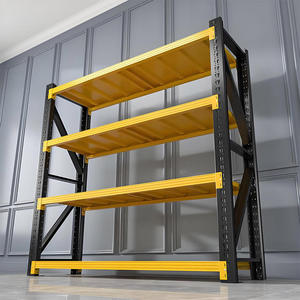
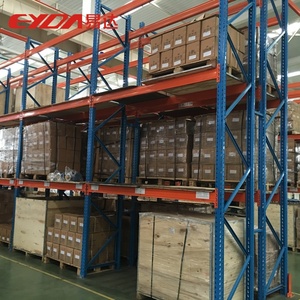
Engineering Double Deep Pallet Racking: Kinematics, Physics & Volumetric Efficiency
In modern industrial logistics, warehouse floor footprint represents one of the steepest ongoing operational costs. Standard Single Selective (Adjustable Pallet Racking - APR) allocates nearly 60% to 65% of warehouse cubic space entirely to forklift access aisles. Double Deep Pallet Racking (DDPR) engineered by Guangzhou Heda Shelves Co., Ltd. reconfigures this spatial equation by positioning two pallet depths within a single-entry row, or four pallet depths back-to-back between operating aisles. This design immediately compresses aisle requirements by up to 50%, resulting in a net storage density surge of 30% to 40% over conventional single selective installations without crossing into the high CAPEX domain of fully automated cranes.
Structural Principle: By pairing two bays deep, Double Deep Pallet Racking creates a 50% reduction in dedicated operational aisles. However, this layout introduces cantilevered moment loads and extended pantograph deflection dynamics during second-tier entry, requiring specialized cold-formed steel section moduli and torsional beam stability governed by EN 15512 and RMI MH16.1 specifications.
Kinematic Analysis & Pantograph Mast Interaction
Operating a Double Deep system requires specialized materials handling equipment—primarily deep-reach pantograph reach trucks or articulating double-reach forklifts equipped with hydraulic pantograph mechanisms or telescopic forks. When extending a 1,000 kg to 1,500 kg unit load into the second storage depth (Back Pallet Position), the center of gravity shifts significantly past the truck's front wheel wheelbase. This mechanical leverage imposes a substantial capacity derating curve on the forklift mast. To counteract sway and potential rack contact, our engineering team optimizes beam vertical pitch profiles and integrates lower-level heavy-gauge structural guide rails, alongside dual-tine pallet entry guide angles to assist operators working at elevations exceeding 8 to 11 meters.
Comparative Performance Analysis: Storage Typologies
Procurement directors and facility design engineers must weigh capital expenditure against volumetric storage efficiency and throughput selectivity. Below is an engineering comparison matrix analyzing Double Deep configurations alongside legacy storage architectures:
| Racking Topology | Volumetric Storage Density | SKU Selectivity Factor | Aisle Width Requirement | Forklift Equipment Type | Capital Investment (CAPEX) |
|---|---|---|---|---|---|
| HEDA Double Deep | 60% – 68% (High) | 50% Direct (FILO/Batch) | 2.8m – 3.2m (Reach Aisle) | Pantograph Double Reach | Low-Medium / Optimal ROI |
| Standard Selective | 35% – 42% (Low) | 100% Direct (Pure FIFO) | 3.2m – 3.8m (Counterbalance) | Standard Counterbalance | Baseline Standard |
| Drive-In / Drive-Through | 70% – 80% (Very High) | 10% – 20% (Strict FILO) | Eliminated Inside Blocks | Standard Reach / Counter | Medium / Slow Cycle |
| Radio Shuttle System | 75% – 85% (Maximum) | Indexed Lane Dynamic | 3.0m Transfer Aisles | Semi-Automated Cart + Truck | High (Robotic Carts) |
| Very Narrow Aisle (VNA) | 55% – 62% (Moderate-High) | 100% Direct (Pure FIFO) | 1.6m – 1.9m (Turret Track) | Articulated / Turret VNA | High (Floor Flatness/Trucks) |
Upright Column Micro-Geometry and Cold-Formed Steel Grades
The structural resilience of HEDA Double Deep racking stems from our proprietary cold-roll-formed upright column profiles. Fabricated from certified high-tensile Q355B (equivalent to European S350GD/S355JR and ASTM A572 Grade 50) structural steel, our uprights feature an engineered continuous closed-fold profile with 11 to 13 structural bends per section. This advanced geometry enhances the cross-sectional moment of inertia ($I_x$ and $I_y$), drastically elevating structural resistance against torsional-flexural buckling under axial compression loads.
Uprights are continuously punched on precision automated CNC perforation lines at standard 50mm or 75mm elevation intervals, allowing versatile beam adjustments while preserving cross-sectional steel mass. Beam-to-column locking connectors feature a rigid 4-hook or 5-hook cold-stamped bracket, reinforced by spring-loaded high-tensile safety locking pins rated to resist upward accidental impacts of over 5.0 kN per European CE safety mandates.
Strategic Engineering Benefits for Modern Distribution Centers
Custom-engineered to eliminate common bottlenecks in high-throughput distribution hubs, manufacturing warehouses, and cold-chain facilities.
30%–40% Footprint Compression
Reduces dedicated floor travel lanes by pairing pallet bays. Maximizes the volumetric storage cube within existing building envelopes, eliminating costly industrial real estate expansion.
Optimized Capital Expenditure (CAPEX)
Delivers density comparable to automated systems at a fraction of the cost. Utilizes standard reach truck infrastructure rather than complex mechanical conveyors or multi-million dollar AS/RS cranes.
Seismic Structural Resilience
Engineered for high-seismic zones across South America and the Pacific Rim (Chile NCh 2369, Peru E.030, Colombia NSR-10). Upgraded ductile footplates and heavy anchor embedment prevent collapse under seismic acceleration.
Customized Beam Deflection Limits
Designed strictly to structural deflection tolerances of L/200 and L/250 under full nominal unit load. Eliminates permanent set, preventing binding or improper second-depth pallet seating.
Dual-Depth Pallet Flow Guides
Features heavy-duty zinc-plated structural pallet guide rails and chamfered entry angles. Ensures precise fork insertion and prevents rear pallet displacement into opposite flue spaces.
Certified Traceability & Standards
Fabricated under strict ISO 9001:2015 quality oversight. Full compliance with European CE EN 15512:2020 limit state calculations and independent batch structural test certification.
Future Procurement Trends: Where Double Deep Storage is Heading
Global warehouse operations are evolving beyond static manual facilities. As supply chains navigate labor shortages, volatile steel pricing, and carbon reduction mandates, the procurement of Double Deep racking is experiencing a technological and architectural transition.
1. Convergence with Autonomous Mobile Robots (AMRs) and Deep-Reach AGVs
Historically, Double Deep configurations relied on human operators maneuvering pantograph reach trucks. However, the 2025–2030 procurement cycle is characterized by rapid integration with Autonomous Guided Forklifts (AGFs) and deep-reach AMRs equipped with 3D LiDAR, SLAM navigation, and optical pallet-pocket recognition. When procuring modern racking, engineering teams now specify narrower operational tolerances (+/- 1.5mm) on beam alignment and incorporate integrated barcode/RFID target reflectors into column frames to facilitate robotic end-effector tracking.
2. Transition to Low-Carbon High-Yield Steel Alloys (Q355B vs. Q235B)
Supply chain ESG mandates and carbon border adjustments (such as the EU CBAM) are transforming material selection. Forward-thinking procurement teams are moving away from traditional thick-gauge mild steel (Q235B) in favor of micro-alloyed, high-tensile hot-rolled coils (Q355B and Q420B). By leveraging steel with a minimum yield strength of 355 MPa, structural engineers can decrease linear profile thickness while retaining identical or superior load capacity. This yields an average 12% to 18% reduction in structural deadweight, cutting ocean freight emissions, optimizing container stuffing density, and lowering the embedded carbon footprint per stored pallet position.
3. IoT Strain Telemetry and Digital Twin Structural Health Monitoring
High-bay Double Deep racks undergo repetitive cyclic loading and dynamic forklift impacts, creating fatigue in beam connection slots and anchor bolts. The integration of passive RFID strain transponders and digital twin structural telemetry enables warehouse operators to monitor localized column displacement, accidental mast collisions, and beam deflection anomalies in real time via warehouse management system (WMS) dashboards. Detecting structural damage early prevents progressive collapse events and streamlines mandatory annual rack safety audits.
Precision Manufacturing: How HEDA Racks Are Built
Operating a 30,000 square meter facility with automated production lines, every component undergoes 10 controlled manufacturing steps to ensure structural consistency and surface durability.
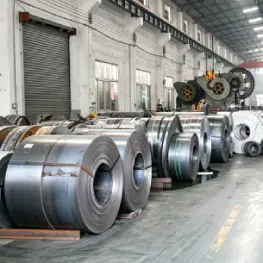
Certified Coils
Direct mill sourcing of prime Q355B hot-rolled coil with full metallurgical test certifications.
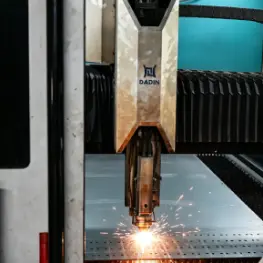
CNC Slitting
Precision multi-blade rotary coil slitting maintaining strict strip width tolerances within ±0.1mm.
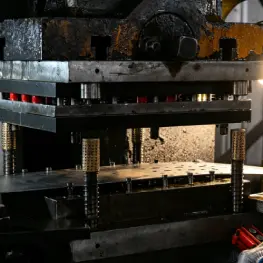
Automated Punching
High-speed mechanical press punching of 50mm/75mm pitch teardrop or diamond holes.
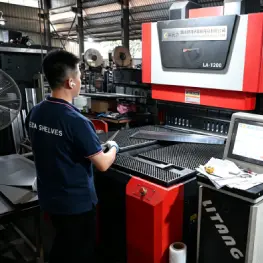
Continuous Roll Forming
Multi-stand profiling stations gradually form the 11-bend column profile without residual stress.
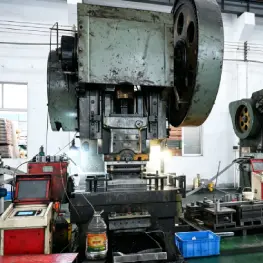
Box Beam Interlocking
Twin C-profile continuous seams welded to form high-torsion closed box beams.
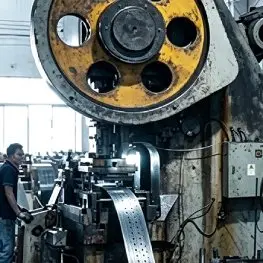
Laser Cut & Deburr
Automated beam end connector positioning and shot-blast surface deburring.
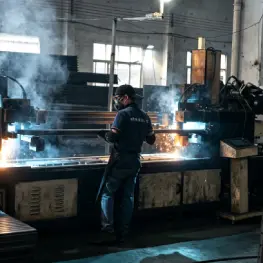
Robotic Welding
Full penetration CO2 gas-shielded robotic welding of beam end connectors and footplates.
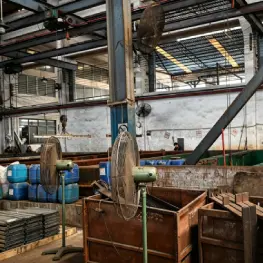
12-Stage Pre-Treatment
Immersion degreasing, acid pickling, rust removal, and micro-crystalline zinc phosphating.
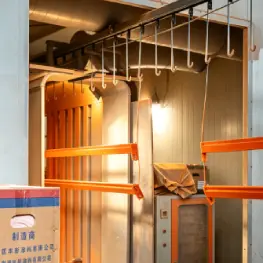
Powder Coating
Electrostatic application of thermosetting polyester powder cured at 180°C–200°C (70–90µm).
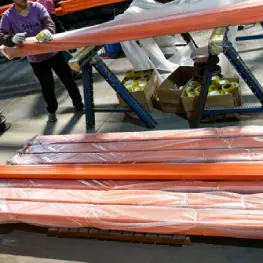
QC & Ocean Stacking
Batch tensile testing, cross-cut adhesion tests, timber-cushioned container load planning.
Why Global Supply Chains Trust Guangzhou Heda Shelves
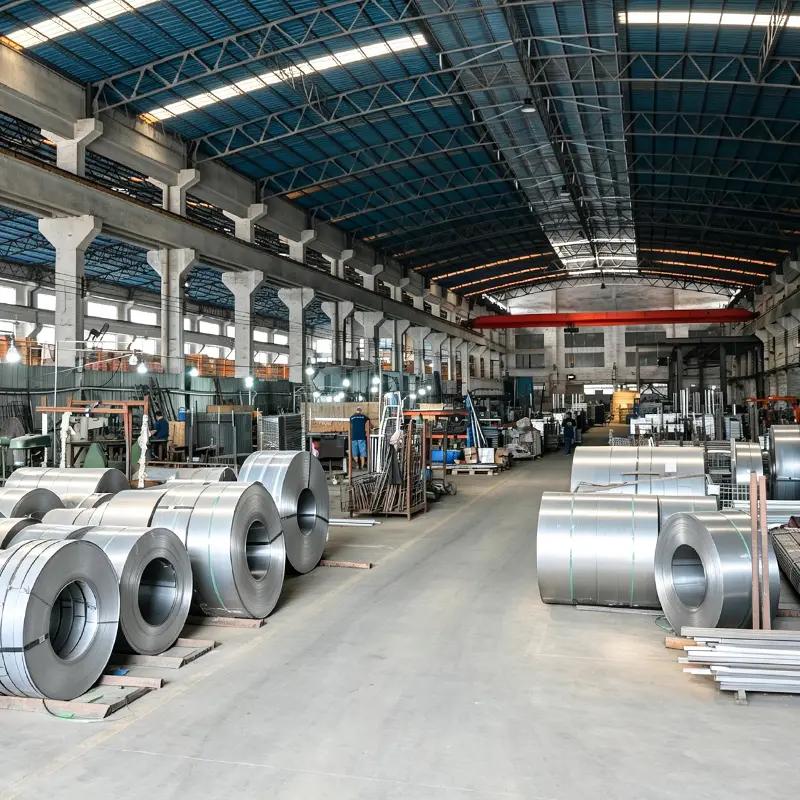
Founded in 2001, Guangzhou Heda Shelves Co., Ltd. has established itself as an engineering benchmark for heavy-duty industrial storage systems, serving logistics hubs, commercial distributors, and multinational retailers in over 120 countries.
- Manufacturing Scale: 30,000 m² advanced fabrication complex operating multiple automated roll-forming and robotic welding lines, achieving a monthly processing capacity of 30,000 tons.
- Engineering Bench Strength: Over 300 experienced technical staff and senior structural engineers providing custom finite element analysis (FEA), static structural calculations, and bespoke 3D CAD/BIM layouts.
- Certified Compliance: Certified European CE accreditation (Certificate No. 2435-CPR-8605159), ISO 9001:2015 quality assurance registration (No. 18624Q00169R0M), and environmental RoHS testing compliance.
- Direct Export Logistics: Prime export packing protocols featuring corner protectors, corrugated sleeving, steel strapping, and custom container nesting to prevent transit damage on long ocean voyages.
Frequently Asked Questions: Double Deep Pallet Racking
Direct technical answers to common questions regarding structural calculations, reach truck compatibility, seismic engineering, and logistics planning.
How does the pantograph reach truck capacity derating affect Double Deep rack design?
Can the bottom beam level be omitted to store the first-level pallets directly on the warehouse floor?
What structural safety deflection limits are used for HEDA Double Deep horizontal beams?
How are seismic lateral acceleration forces factored into project layouts for the Pacific Rim?
What operational stock rotation method is suited for Double Deep configurations?
What anti-corrosion protection is specified for sub-zero cold storage and coastal distribution centers?
What critical warehouse information is required to receive a formal 3D layout and structural proposal?
Ready to Engineer Your High-Density Double Deep Facility?
Connect directly with senior structural racking engineers at Guangzhou Heda Shelves. We deliver comprehensive 3D CAD system designs, finite element structural calculations, and factory-direct project estimates tailored to your operational requirements.