China Best Industrial Cantilever Storage Racks Manufacturer & Exporters
Global Engineering Whitepaper & Strategic Procurement Guide for Heavy-Duty Long Goods, Bar Stock, Structural Profiles, Timber, and Automated High-Density Storage Logistics.
Heavy-Duty Industrial Equipment
Engineered Heavy-Duty Industrial Racking & Material Handling Systems
Direct factory manufacturing featuring Q235B/Q355B certified steel structural integrity, continuous automated punch-line precision, and multi-stage anti-corrosion electrostatic powder coatings.
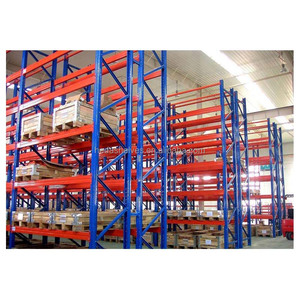
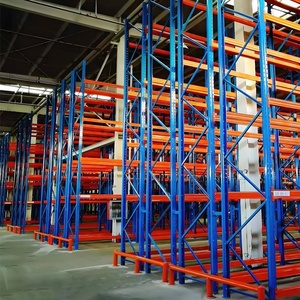
High-strength upright profiles engineered with 75mm/50mm connector pitches, anti-dislodgement safety locks, and high corrosion protection backed by a 10-year warranty.
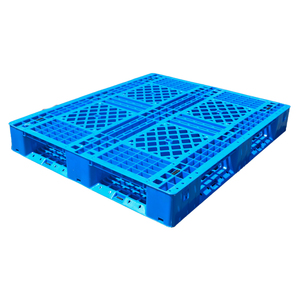
Internal steel-tube reinforced virgin HDPE construction designed to eliminate racking deflection under severe 1,500kg racking loads in automated logistics bays.
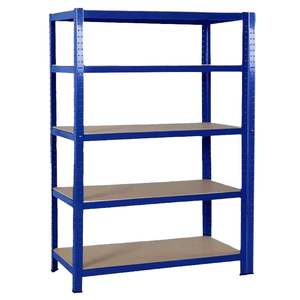
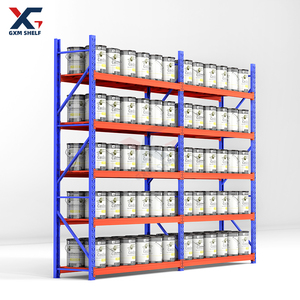
Multi-functional frame architecture compatible with both wire mesh decking and solid steel shelves for mixed-weight palletized and unpalletized materials.
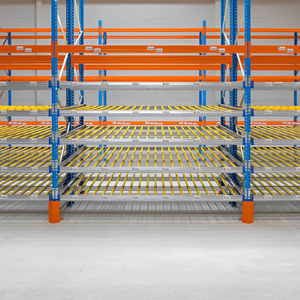
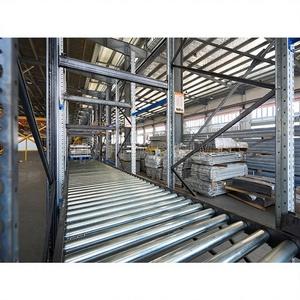
Two-deep pallet storage design minimizing operating aisle requirements and increasing storage density by up to 50% compared to standard selective setups.
Structural Analysis: Free-Flange Cantilever Mechanics & Load Distribution
Unlike conventional selective pallet racking constrained by front column uprights, industrial cantilever racking features an unobstructed, continuous horizontal profile. Understanding cantilever engineering mechanics is paramount for storage safety and regulatory compliance.
Moment of Inertia & Arm Deflection Mechanics
In industrial cantilever columns, every loaded arm induces pure eccentric bending moments (M = P × L/2) directly into the vertical upright. Our engineering team utilizes high-yield cold-rolled C/U profiles or hot-rolled H-beams (HEA/HEB) configured with tapered arm designs. This intentional arm tapering provides maximum cross-sectional resistance at the arm-to-column connector while naturally compensating for downward deflection under standard loads.
Deflection Limits: Engineered to FEM 10.2.02 and ANSI MH16.3 standards, maintaining arm tip vertical deflection well below L/200.
Without front structural columns, the single-sided or double-sided cantilever column must resist ground shear forces and overturning dynamics through base-to-slab anchor bolt groups. We customize heavy-duty anchor embedment depths and oversized footplates calculated against localized seismic codes—including Chile's NCh 2369, Peru's E.030, and Colombia's NSR-10. Longitudinal structural bracing towers provide longitudinal shear stiffness.
Base Connection: Gusset-reinforced solid-welded or heavy-pin bolted bases to prevent rotational slab uplift during cyclic seismic events.
Roll-Formed vs. Hot-Rolled Structural Profiles
For light-to-medium loads (up to 1,000 kg per arm), high-tensile cold roll-formed steel profiles offer exceptional material efficiency and cost optimization. For intense heavy-duty industrial applications—such as raw steel coils, structural I-beams, and outdoor timber stacks exceeding 1,000 kg up to 5,000 kg per arm—our hot-rolled structural steel beams provide higher impact resistance against heavy forklift collisions.
Future Procurement & Technological Trends in Long-Goods Racking
How global supply chain volatility, land cost inflation, and Industry 4.0 automation are reshaping industrial cantilever storage procurement over the next decade.
01
Integration with Guided Narrow Aisle (VNA) & AGVs
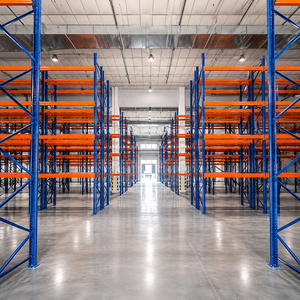
Rising land costs across North America, Europe, and South America demand tighter floor space utilization. Cantilever configurations are transitioning toward Very Narrow Aisle (VNA) layouts with magnetic or optical guidance wire-in-floor channels. Sideloader multi-directional forklifts and automated guided vehicles (AGVs) reduce aisle requirements by up to 45%, converting dead transit space into active storage capacity.
Manual forklift handling for extrusions, sheet goods, and composite lumber is transitioning toward fully automated high-bay cantilever AS/RS towers reaching 24 meters in height. Computer-directed stacker cranes equipped with telescopic forks or cassette extraction shuttles eliminate manual handling damage, prevent worker injury, and integrate directly with central ERP/WMS databases for inventory tracking.
03
Seismic-Resilient Parametric Design & Digital Twins
Procurement directors now prioritize certified parametric CAD and structural calculations over generic supplier spec sheets. By inputting specific regional soil profiles, PGA (Peak Ground Acceleration), and spectral response data, digital twin FEA simulations ensure upright and brace cross-sections survive cyclic loading, reducing regulatory building permitting times by months.
Procurement departments are evaluating the total cost of ownership (TCO) across 20-year operational lifespans. Demands for eco-compliant pickling, low-VOC electro-coating, and heavy-duty hot-dip galvanization for outdoor yards ensure extreme salt-spray and weather resilience without requiring repainting or recurring structural maintenance.
Direct Manufacturer Value
Why Global Importers Partner with Guangzhou Heda Shelves Co., Ltd.
Founded in 2001, we provide integrated engineering from raw material coil sourcing to automated punch-rolling, robotic welding, and precision containerized export logistics.
25+ Years Racking Engineering
Established in 2001, our team of over 300 technical engineers and manufacturing technicians brings two decades of deep industry domain expertise across logistics, retail, aerospace, and heavy manufacturing.
30,000t Monthly Output
Operating across a modern 30,000 m² facility with automated cold-bending, computerized roll-forming, robotic welding bays, and continuous electrostatic powder-coating lines to meet fast-track project schedules.
Certified Quality Verification
Full compliance with CE Certificate No. 2435-CPR-8605159 and ISO 9001:2015 Certification No. 18624Q00169R0M. Complete batch chemical and tensile test documentation supplied for structural auditing.
Precision Container Packaging
Optimized container space planning prevents costly transit deadweight. Every bundle is isolated with protective wrapping and numbered for systematic offloading and simplified field installation.
Plan Your Storage Facility with Our Chief Structural Engineers
Send your warehouse floor plans, load parameters, and seismic zone requirements. Our engineering department prepares a comprehensive 3D layout, CAD drawing, and structural load calculation report within 24 hours.
Frequently Asked Questions for Engineering & Procurement Teams
Detailed answers addressing load calculations, seismic parameters, export logistics, surface coatings, and site installation.
How do you calculate safe cantilever load capacity to prevent arm deflection?
Load capacity is calculated based on Uniformly Distributed Load (UDL) per pair of arms, ensuring the center of gravity (CG) of the stored material sits exactly halfway along arm length (L/2). If materials are point-loaded at the tip, capacity reduces by 50%. Our calculations enforce strict deflection criteria (L/200 maximum) in alignment with ANSI MH16.3 and FEM 10.2.02 standards to prevent dynamic arm creep and connector metal fatigue.
Can your cantilever racking meet localized seismic codes in South America and earthquake zones?
Yes. Our structural engineering department incorporates site-specific seismic parameters, including ground acceleration factors (PGA), soil classification, and ductility reduction factors. We upgrade the base-to-column weld throat thickness, install enlarged structural baseplates with high-tensile wedge anchor bolt arrays, and integrate heavy X-bracing towers compliant with Chilean NCh 433/NCh 2369, Peruvian E.030, and Colombian NSR-10 codes.
What surface treatment protects outdoor timber and steel pipe cantilever yards?
For indoor climate-controlled warehouses, our 10-stage pre-treatment (pickling, phosphating, passivation) followed by electrostatic polyester powder coating (60-80μm) provides exceptional abrasion resistance. For outdoor lumber yards, coastal installations, and high-humidity tropical facilities, we provide complete hot-dip galvanization (HDG) per ASTM A123/ISO 1461, achieving zinc thicknesses exceeding 85μm for decades of rust protection.
How are long cantilever components loaded and secured for international sea freight?
Cantilever columns and base beams often measure 4 to 11.8 meters in length, presenting unique container loading challenges. We utilize 40ft High Cube (40HC) and 45ft specialized containers with customized steel dunnage framing and high-tensile strapping. Upright columns and arms are bundled in dedicated modular packs cushioned by protective cellular foam, preventing metal-to-metal friction during 30 to 45-day ocean transits.
What is the typical production timeline for large-scale export orders?
Supported by our 30,000 m² factory footprint and 30,000-ton monthly capacity, standard container orders (1 to 5 containers) are manufactured within 2 to 4 weeks following approval of final CAD fabrication drawings. Phased production and sequential container dispatch are routinely coordinated for enterprise distribution projects to align with the customer's on-site concrete curing and erection schedule.
What installation support is provided for remote overseas job sites?
Every shipment arrives with component labeling that matches the engineered 3D assembly layout, accompanied by torque specification manuals and video assembly instructions. Our structural engineering department provides real-time remote engineering guidance via video conference. For large distribution centers and complex multi-tier cantilever mezzanines, on-site installation supervisors can be deployed directly to the site.