Engineered Pallet Racking & Industrial Storage Shelves
Precision-rolled Q235B/Q355B structural steel systems engineered for dynamic load compliance, high-density warehousing, and seamless logistics integration.
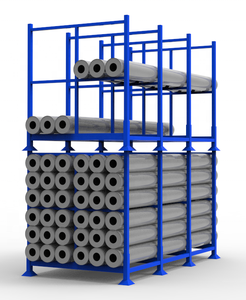
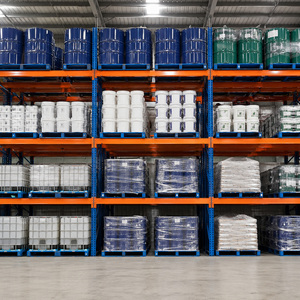
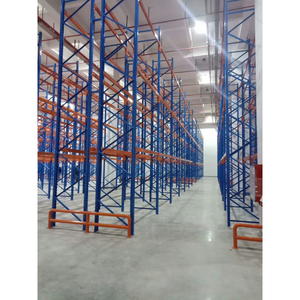
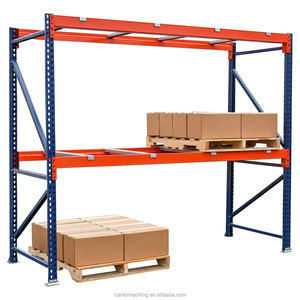
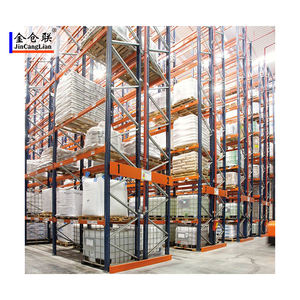
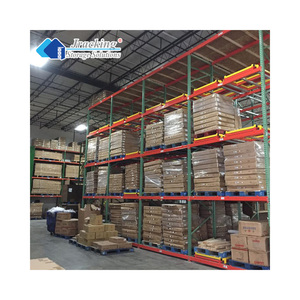
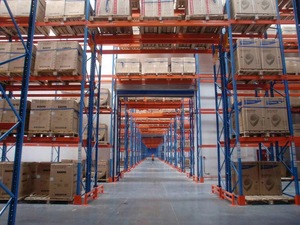
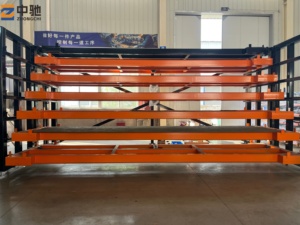
Evaluating Pallet Racking & Industrial Shelving Factories in China
Industrial supply chain directors, fulfillment warehouse engineers, and global procurement officers operating across North America, Europe, Australia, and South America face significant variance when sourcing structural storage systems from Chinese manufacturing hubs. The distinction between an uncertified local fabrication shop and a tier-one automated production plant directly influences warehouse floor safety, compliance with seismic building regulations (such as RMI MH16.1, FEM 10.2.02, and EN 15512), and total landed cost.
When evaluating the China Best Shelves For Pallet Racking Factories & Factory, decision-makers must move beyond nominal per-ton steel quotes and scrutinize cold roll-forming tolerances, certified tensile yields, pre-treatment phosphating chemistry, and automated robotic welding consistency. High-bay industrial storage assemblies are load-bearing, life-safety-critical steel structures subjected to dynamic fork truck impacts, cyclic loading fatigue, and structural seismic drift.
A structurally sound pallet racking infrastructure provides substantial Information Gain and operational uptime by optimizing cubic volume utilization without sacrificing access speed. Modern distribution centers require precise horizontal deflection tolerances (typically restrained to L/200 under full uniform distributed load) to safeguard semi-automated material handling equipment, radio shuttles, and narrow-aisle (VNA) man-up turrets from binding or mechanical failure.
Structural Steel Metallurgy & Performance Comparison
Certified tier-one Chinese manufacturers utilize strictly inspected, continuous-cast coils from national primary mills (such as Baosteel, Shougang, and Ansteel). The structural integrity of upright frames, interlocking connector claws, and roll-formed box beams relies on documented chemical compositions and tensile performance:
| Steel Grade / Standard | Yield Strength (ReH, MPa) | Tensile Strength (Rm, MPa) | Elongation at Break (%) | Typical Racking Application |
|---|---|---|---|---|
| Q235B (GB/T 700) ~ ASTM A36 | ≥ 235 | 370 – 500 | ≥ 26 | Standard pallet beams, step beams, medium shelves, decking |
| Q355B (GB/T 1591) ~ ASTM A572 Gr 50 | ≥ 355 | 470 – 630 | ≥ 22 | Heavy-duty upright frames, AS/RS columns, high-bay mezzanines |
| Cold-Rolled Coil (SPCC/ST12) | ≥ 195 | 270 – 410 | ≥ 36 | High-precision shelf panels, modular drawer cabinets, light bays |
| Hot-Dip Galvanized (HDG / DX51D) | ≥ 240 | 360 – 480 | ≥ 20 | Outdoor cantilever racks, cold-storage deep chill (−28°C), washdown areas |
Failure Mode Protection: Premium manufacturers run finite element analysis (FEA) on perforated upright posts. The punching of teardrop, omega, or diamond adjustment slots reduces the gross cross-sectional area; top engineering departments validate perforations through both physical compression testing and simulated axial-torsional buckling models in compliance with EN 15512 standards.
Product Future Procurement Trends in Industrial Storage
Enterprise procurement of warehouse racking systems is transitioning from reactive square-footage containment to proactive capital asset deployment. Companies face surging real estate prices, industrial land scarcity, labor recruitment deficits, and accelerating SKU velocities driven by omnichannel fulfillment. Five strategic procurement trends are defining modern factory contracts:
1. AS/RS & Shuttle-Ready Engineering
Buyers are mandating automated compatibility upfront. Even if installing manual selective racks today, companies require beam punches, rail interfaces, and upright tolerances that accommodate autonomous mobile robots (AMRs), automated guided vehicles (AGVs), and 4-way radio shuttles tomorrow.
2. Total Landed Cost (TLC) Container Packing
Ocean freight volatility necessitates optimized nesting configurations. Tier-one factories utilize algorithmic 3D container packing software, bundling uprights, box beams, and wire decks with high packing densities that fit 24–28 tons per 40ft High Cube without transit abrasion.
3. ESG, Circularity & Low-Carbon Steel
Global supply chain tenders increasingly scrutinize carbon emissions per ton of fabricated steel. Chinese factories utilizing electric arc furnace (EAF) scrap loops and solvent-free, heavy-metal-free electrostatic powder coatings are winning preferred Tier-1 supplier contracts.
Furthermore, B2B procurement agreements now routinely demand digital twin deliverability. Buyers expect native Building Information Modeling (BIM) files (Revit, IFC) alongside standard 2D DWG layouts, allowing warehouse operators to simulate forklift collision vectors, fire sprinkler clearance drops (NFPA 13 compliance), and emergency egress pathways before physical fabrication begins.
Racking Manufacturing Advances: Precision, Durability & Safety
The pallet racking manufacturing sector in China has evolved from manual shearing and punch-pressing into a highly automated, sensor-guided engineering ecosystem. These advancements directly elevate the mechanical stability and field longevity of commercial warehouse racks:
Continuous Cold Roll-Forming Lines
Modern plants utilize multi-station CNC continuous cold roll-forming lines (18 to 26 roll stands). Gradual profile bending prevents residual micro-stresses along the bend radii, ensuring consistent upright profile straightness with deviations under 1.0mm per 10 meters of column length.
Automated Dual-Pulse Robotic Welding
Beam end connectors (3-claw and 4-claw stamped brackets) are permanently joined to interlocking beam tubes using high-precision six-axis robotic welding cells. Dual-pulse CO2/MAG gas shielding guarantees complete weld throat penetration with zero spatter, eliminating joint shear failure under impact.
10-Stage Automated Surface Treatment
Prior to electrostatic curing, raw components undergo full immersion: alkaline degreasing, twin water rinses, acid pickling, nano-ceramic silane conversion or zinc phosphating, and deionized passivating. This achieves superior coating adhesion passing 500-hour ASTM B117 salt spray testing.
Seismic Dissipation & Dynamic Damping: As facilities expand in high-seismic territories (such as the Pacific Rim, Chile, Japan, California, and Turkey), Chinese engineering teams are incorporating energy-dissipating baseplates, widened flanged anchors, and slotted bracing gussets. These mechanisms absorb kinetic shock waves, preventing catastrophic progressive collapse during peak seismic ground acceleration.
Tier-1 Factory Capabilities & Enterprise Advantages
Representing the highest echelon of China's racking industrial cluster, Guangzhou HEDA Shelves Co., Ltd. (operating since 2001) exemplifies the engineering maturity, production volume, and international accountability required by modern global buyers:
Massive Capacity & Rapid Lead Time
A sprawling 30,000 m² integrated production base staffed by over 300 experienced technicians maintains an active output exceeding 30,000 metric tons per month. Standard container orders ship within 14–21 working days after engineering sign-off.
Accredited Global Certifications
Strict quality assurance validated by independent international bodies: CE Certificate No. 2435-CPR-8605159, ISO 9001:2015 Quality Management System Certification (No. 18624Q00169R0M), and comprehensive RoHS environmental material compliance.
Zero-Cost 3D Layout & FEA Calculations
Dedicated warehouse storage engineers furnish full 3D layout renderings, AutoCAD installation schematics, beam deflection calculations, and forklift aisle turning radiuses within 24 business hours at zero upfront cost to buyers.
Direct Port Access & Logistics Logistics Mastery: Located in the Greater Bay Area export manufacturing nexus, shipments route efficiently via Guangzhou, Shenzhen, or Hong Kong ports directly to primary maritime terminals worldwide (including Santos, San Antonio, Callao, Los Angeles, Rotterdam, and Jebel Ali). All bundles feature heavy-duty corrosion-barrier shrink film, edge corner protectors, and numbered pallet tags corresponding precisely to container packing sheets and assembly manuals.
Frequently Asked Questions (FAQ) for Pallet Racking Buyers
Clear, technically grounded answers addressing the legal, structural, and operational considerations of importing commercial shelving and pallet racking from China:
What documentation is required to verify the certified load capacity of imported racking?
How does standard teardrop racking compare to European European-pitch (50mm/75mm) box beam systems?
What measures prevent paint peeling and rust during ocean transit and humid warehouse operation?
How are high-seismic requirements handled for installations in earthquake zones?
What is the standard production and shipping lead time for a 40ft High Cube container?
Connect Directly With Our Senior Racking Engineers
Send your warehouse floor CAD layout, ceiling clear heights, and pallet load criteria. Receive a complimentary 3D spatial layout, structural calculation package, and transparent factory-direct pricing within 24 business hours.