25+ Years
Racking Industry Manufacturing30,000 t
Monthly Production Capacity10,000+
Global Turnkey Projects DeliveredQ235B/Q355
Certified High-Yield Carbon SteelFeatured Heavy-Duty Warehouse Stacking & Pallet Racks
Precision-fabricated warehouse racking components engineered with cold-rolled steel profiling, multi-point lock beams, and electrostatic anti-corrosion finishes.
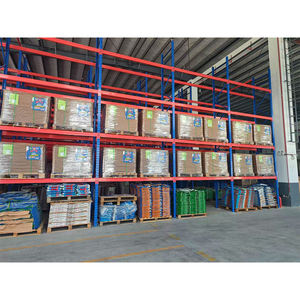
Drive in Rack Warehouse Rack Heavy Duty Metal Drive in Pallet Racking System Heavy Duty Rack Roller Display
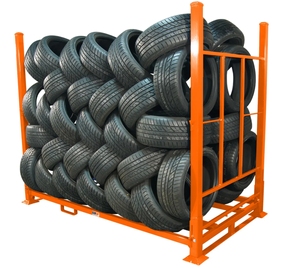
Steel Stacking Rack Heavy Duty Sheleving Racks Warehouse Stackable Racking
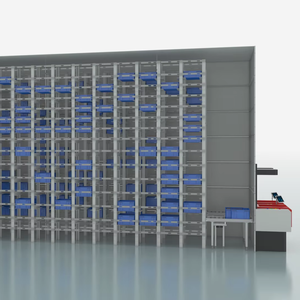
Factory Direct Steel 50kg Load Capacity Zinc Galvanized Smart Warehouse Shelving System for Small Parts
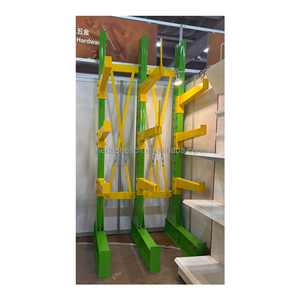
Warehouse Cantilever Racking and Shelf Stacking Rack Heavy Duty Pallet Rack Storage Steel Long Materials
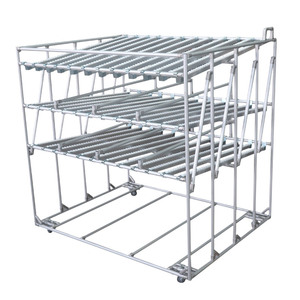
Roller Track Pipe Rack System Flow Roller Rack Assemble Aluminum Flow Rails for Shelf
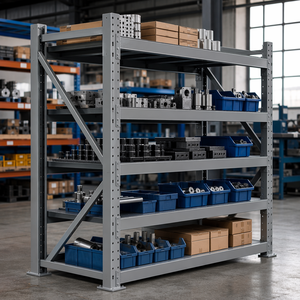
Custom OEM Storage Rack Frame | Heavy Duty Steel Welded Fabrication for Warehouse Pallet Racking
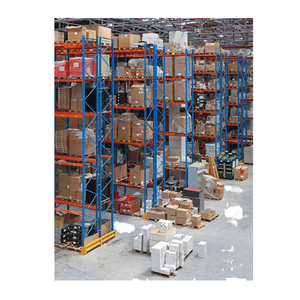
Factory Directly Steel Multi-Layer Narrow Aisle Heavy-Duty VNA Pallet Racking Shelves Storage System
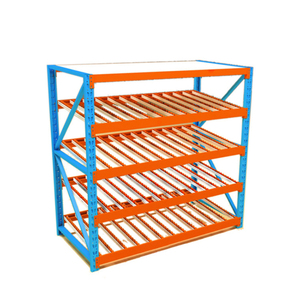
Blue Orange Steel 5 Layer Sliding FIFO Increased Warehouse Density Space-saving Flow-through Racking
High-Density Stacking Racks: Structural Integrity, Load Calculation & Logistics Ergonomics
As supply chain throughput increases and cubic industrial real estate costs escalate across major manufacturing hubs, modern stacking rack frameworks serve as critical assets for maximizing vertical storage footprints without compromising worker safety or mechanical material handling speeds.
When selecting an OEM stacking rack manufacturer in China, procurement executives must balance structural metallurgy, finite element analysis (FEA), dynamic load calculations, and corrosion defense protocols. In contrast to standard static shelving, stackable post racks and heavy-duty modular tier racks experience intense dynamic vibration, concentrated eccentric vertical pressures, and cyclic mechanical shocks from reach trucks and counterbalance forklifts.
A resilient modular stacking system integrates cold-formed Q235B or Q355 structural steel with engineered nesting plugs, flared cups, and reinforced base plates. This prevents rack deflection under full working capacities (ranging from 1,000 kg to over 3,000 kg per tier) while enabling rapid warehouse reconfiguration during seasonal product volume swings.
Seismic Tolerance & Anchor Mechanics
Structural stability demands verified base footings and high-tensile anchor bolts aligned with global building codes (including IBC, Eurocode 3, and Chilean NCh 2369 / Peruvian E.030 standards). Customized footplates absorb seismic lateral sheer and maintain stack plumbness up to 6 tiers high.
Precision Roll-Forming & Cold Bending
Upright posts and load channels undergo computer-controlled CNC progressive roll-forming to ensure uniform wall thickness and pitch precision. The resulting interlock tolerance between female feet and male stanchions stays under ±0.5mm, eliminating stack leaning and accidental operational dislodgement.
Pre-Treatment & Anti-Corrosion Finishing
Steel profiles pass through automated degreasing, acid pickling, zinc phosphating, and electrostatic epoxy-polyester powder thermosetting at 200°C. For sub-zero cold chain and marine coastal facilities, hot-dip galvanization provides decades of rust resistance against cyclic condensation.
| System Architecture | Load Capacity / Tier | Max Stacking Height | Handling Machinery Compatibility | Ideal Storage Profile |
|---|---|---|---|---|
| Post-Type Stacking Racks | 1,000 kg – 2,500 kg | Up to 5 Levels Free-Standing | Counterbalance Forklift, Walkie Stacker | Tires, Fabric Rolls, Coiled Goods, Bagged Chem |
| Drive-In Pallet Racks | 1,500 kg – 3,000 kg | Up to 12 Meters (Rigidly Anchored) | Reach Truck, Deep-Entry Counterbalance | High-Volume Seasonal SKU, Cold Store, Bottling |
| Gravity FIFO Flow Racks | 500 kg – 1,500 kg / Lane | Up to 6 Levels In-Line | Standard Forklift & Gravity Roller Tracks | Perishable Groceries, Dairy, Pharmaceuticals |
| Heavy-Duty Cantilever Racks | 1,000 kg – 3,500 kg / Arm | Up to 9 Meters (Custom Column) | Side Loader, Specialized 4-Directional Lift | Structural Pipes, Timber, Rebar, Aluminum Extrusions |
| Narrow Aisle (VNA) Systems | 1,200 kg – 2,000 kg | Up to 16 Meters High-Bay | Wire-Guided or Rail-Guided VNA Turret Truck | High-Density E-commerce Fulfillment, Multi-SKU Hubs |
Future Sourcing Trends for Industrial Stacking Racks
How global warehousing operations, cold chains, and cross-docking facilities are upgrading infrastructure through 2026–2030.
1. Shift Toward Hybrid AGV & Shuttle-Ready Stacking
Traditional manually placed stacking racks are evolving. Modern facilities increasingly specify pallet alignment guide shoes and high-contrast retro-reflective locator targets on stacking cups, enabling Autonomous Mobile Robots (AMRs) and automated forklifts to position and stack steel bins safely without human intervention.
2. Total Landed Cost (TLC) Container Nesting Optimization
With volatile maritime shipping rates, global rack buyers prioritize collapsible stacking racks featuring demountable tubular corners and nestable bases. A container load ratio enhancement from 120 units to over 380 knocked-down (CKD) units per 40ft High Cube container slashes transoceanic freight costs by up to 45% per unit.
3. Circular Steel Procurement & Low-Carbon Certification
International environmental regulations mandate documented product life-cycle footprints. Forward-thinking manufacturers deploy low-carbon electric arc furnace (EAF) steel sourcing, non-toxic heavy-metal-free powder coatings, and fully recyclable steel structural profiles that qualify facilities for green building initiatives.
Why Enterprise Logistics Operators Partner with Our Guangzhou Factory
Backed by over two decades of engineering excellence, extensive fabrication infrastructure, and comprehensive export logistics compliance.
30,000 m² In-House Production Base
Equipped with state-of-the-art continuous roll-forming lines, automated punching machines, 3D laser tube cutters, robotic welding arrays, and high-capacity automatic powder coating tunnels capable of outputting 30,000 tons of structural steel storage racks every month.
Engineered for Regional Seismic & Climate Codes
Every racking system is custom-configured with specific base plates, internal stiffeners, and bracing designs tailored to the client's local seismic zones (such as Chile's NCh 433, Peru's E.030, or Colombia's NSR-10) and harsh tropical humidity environments.
Free Structural CAD Design & 3D Modeling
Our in-house technical engineering department delivers rapid 24-hour turnaround on floor plan evaluations, static finite element analysis (FEA), aisle clearance optimizations, and lifelike 3D warehouse renderings at zero cost prior to contract finalization.
Strict Batch Quality Control & Testing
Each production run undergoes rigorous steel raw-material tensile strength testing, ultrasonic weld inspection, paint film thickness verification (80–120μm standard), and full-scale deflection proof loading under 1.5x designated working capacities before container bundling.
End-to-End Export & Custom Load Planning
We provide full-container shipping support directly to major global freight terminals (including Santos, San Antonio, Callao, Buenaventura, Hamburg, Long Beach, and beyond) complete with numbered components and step-by-step assembly blueprints.
OEM & ODM Full Support for Regional Distributors
Whether you require custom RAL color branding, specialized wire mesh side panel integration, forklift guide rails, or proprietary post cup designs, our tooling and fabrication shops handle small-batch prototyping through high-volume multi-thousand-bay rollouts.
Frequently Asked Questions on Warehouse Stacking Racks
Clear, technical explanations addressing load calculations, seismic requirements, export shipping logistics, and custom manufacturing.