High-Throughput Racking & Material Handling Systems
Certified industrial warehouse solutions manufactured to ISO 9001:2015 and CE standards. From gravity-fed live pallet storage to automated robotic palletizers, explore structural reliability designed for maximum volumetric utilization.
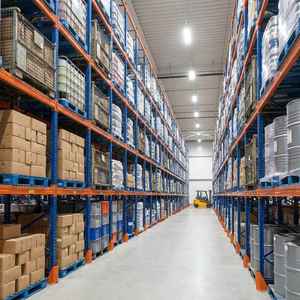
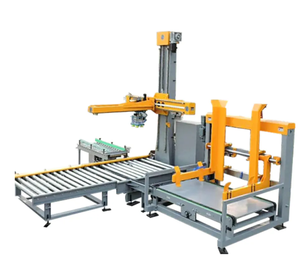
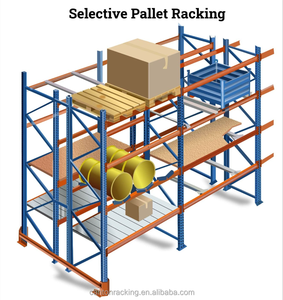
Double Deep Pallet Racking Space Optimization Racks
Commercial Heavy-Duty Wall Shelf With Drainage Groove
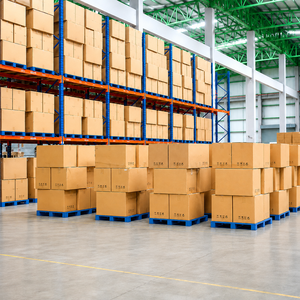
2000kg Heavy Duty Q235B Pallet Storage Rack System
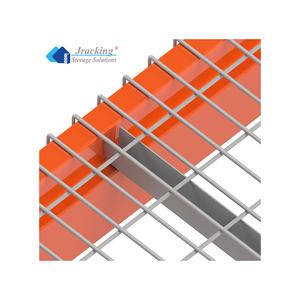
Waterfall Heavy Duty Wire Mesh Decking for Pallet Racks
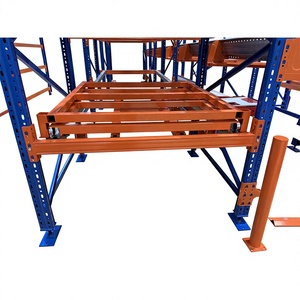
Factory Industrial Nested Cart Push Back Rack System
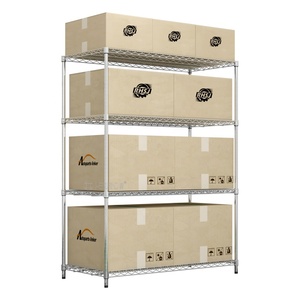
4-Tier NSF Chrome Plated Steel Wire Shelving System
The Physics & Kinematics of Live Pallet Racking (Gravity Flow)
Live Pallet Racking (also classified as Pallet Flow or Gravity Racking) operates as an autonomous, energy-free transport and storage medium. Designed around strict First-In, First-Out (FIFO) logic, dynamic gravity flow achieves space utilization rates approaching 85%.
Incline Gradient & Kinetic Control
Calculated roller deck slopes between 2.8% to 3.5% (approx. 1.6°–2.0°) provide reliable gravitational motion across standard wooden, plastic, or perimeter base pallets without excessive acceleration.
Integrated internal centrifugal brake rollers automatically govern cruising speed below 0.3 m/s, preventing high-mass impact loads on retrieval faces regardless of overall lane depth.
Load Separation & Safety Stops
Mechanical pallet separators automatically disengage line pressure behind the lead unit. By neutralizing rear accumulation forces (hydrostatic-like live thrust), forklift operators pick pallets smoothly without snagging or bind-ups.
End-of-lane heavy-duty steel buffer end-stops with spring deceleration mechanisms absorb residual inertia, shielding both materials and facility personnel.
Structural Metallurgy & Tolerances
All load-bearing upright frames utilize cold-formed Q235B / Q355B high-tensile carbon steel. Automated roll-forming processes ensure continuous dimensional stability, resisting torsion along lane depths exceeding 20 pallets.
Finished with automatic shot-blasting, pickling, phosphating, and electrostatic polymer powder coating to resist ambient cold-chain condensation down to -30°C.
High-Density Industrial Storage Architectural Comparison
Evaluating mechanical throughput, structural complexity, operating footprints, and CAPEX vs. OPEX amortizations across high-density storage configurations.
| System Architecture | Stock Rotation Logic | Floor Footprint Utilization | MHE Forklift Requirement | Capex vs Operating Speed |
|---|---|---|---|---|
| Live Pallet Racking (Gravity Flow) | 100% Strict FIFO | 80% – 85% Density | Standard Counterbalance / Reach | Moderate CAPEX / Highest Turn Speed (No Aisles) |
| Drive-In Racking System | Strict LIFO (Last-In, First-Out) | 65% – 75% Density | Special Narrow Cabins / Skilled Ops | Low Initial CAPEX / Slower Cycle Times |
| Radio Shuttle Automation | Flexible FIFO or LIFO | 85% – 90% Density | Standard Forklifts + Battery Shuttles | High CAPEX / High Pallet Lane Depths (>40m) |
| Push Back Racking (Nested Carts) | LIFO Rotation | 60% – 70% Density | Standard Forklifts / Up to 6 Pallets | Medium CAPEX / Moderate SKU Selectivity |
| Selective Pallet Racking | 100% Immediate Direct Access | 40% – 50% Density | Standard / Reach / Turret (VNA) | Lowest CAPEX / High Aisle Area Overhead |
Future Procurement Trends in Industrial Live Storage (2026–2030)
Supply chain engineering is moving beyond passive structures. Discover the emerging technical shifts, automation intersections, and ESG standards driving live pallet rack investments.
1. Hybridization with Automated Guided Vehicles (AGV/AMR)
While traditional live storage relies on manual loading and unloading via counterbalance trucks, next-generation distribution hubs are standardizing interface pick/drop tolerances to coordinate directly with autonomous counterbalance mobile robots (AMRs). Integrated optical photo-eyes and end-position ultrasonic dampening ensure millimetric interface docking.
2. Cold-Chain Reshoring & Condensation Metallurgy
Global food security and biopharma demand have expanded cold-room live pallet infrastructure. Procurement contracts now mandate hot-dip galvanization (HDG according to ISO 1461) or specialized multi-stage zinc primers to completely suppress sub-surface micro-cracking and corrosion cycles caused by frequent de-icing temperature swings.
3. Sensor-Monitored Roller Lanes & IoT Braking
Real-time inventory visibility is merging with physical flow tracks. Optical sensors embedded along gravity tracks interface with cloud WMS platforms to provide live, lane-by-lane dwell-time metrics, automated out-of-stock triggers, and remote diagnostics for mechanical brake wear.
Guangzhou HEDA Shelves Co., Ltd.: Certified Industrial Manufacturing
Established in 2001, Guangzhou Heda Shelves Co., Ltd. provides comprehensive engineering, structural design, and large-scale manufacturing for heavy-duty storage infrastructure, with full export capabilities across global distribution hubs.
30,000 m² Facility
Our modern manufacturing base supports a continuous monthly output of 30,000 metric tons, equipped with automated roll-forming lines, computerized multi-point punching, and robotic laser welding systems.
CE & ISO Certified
Rigorous quality assurance compliance: CE Certification (No. 2435-CPR-8605159) and ISO 9001:2015 accredited workflows safeguard yield strength, weld integrity, and coating consistency on every production run.
Seismic Engineering
Structural engineering teams adapt frame base plates, anchoring depth, and back-bracing systems to local geotechnical demands, satisfying Chilean NCh 2369, Peruvian E.030, and European EN 15512 seismic performance codes.
End-to-End Export Logistics
Turnkey container optimization guarantees minimal landed-freight costs. Component-level indexing and color-coded structural CAD drawings allow regional installation teams to execute fast, mistake-proof on-site assembly.
Frequently Asked Engineering & Procurement Questions
Detailed guidance directly from our factory structural engineering department regarding pallet flow and live warehouse operations.
What pallet specifications are required for reliable dynamic gravity flow?
Live pallet racking depends on smooth, consistent contact with the roller tracks. High-quality GMA, EURO (1200x800mm), or ISO wooden pallets with sound bottom runner boards work best. For open-bottom, wire mesh, or non-standard plastic pallets, full-width twin or triple roller-track tracks, slave boards, or specialized steel-runner skids can be engineered into the flow bed to eliminate operational jams.
How is pallet runaway prevented in deep gravity flow lanes?
We install calibrated speed-controller brake rollers at set distances down the lane (typically every 1 to 2 pallet positions). Operating via internal planetary or magnetic-drag gearing, these mechanical rollers generate progressive retarding torque proportional to pallet velocity, smoothly holding transit speeds under 0.3 m/s over any run length.
What critical operational parameters are needed for a formal 3D layout and structural proposal?
To produce engineered CAD proposals and static calculations, we evaluate: (1) Facility clear height and floor plan drawing including column footprints; (2) Detailed pallet dimensions and true gross weight variances (maximum vs. average); (3) Pallet bottom runner orientation; (4) Operating environmental temperature ranges; (5) Forklift make, mast collapsed height, and reach limits; and (6) Regional seismic zone acceleration coefficients.
How does Live Pallet Racking improve long-term warehouse ROI compared to conventional systems?
By transforming floor area dedicated to access aisles into pure dynamic storage, live pallet racking increases usable volumetric capacity by 60% to 150% compared to standard selective layouts. Forklift travel distances drop noticeably because stocking and picking take place at dedicated front-and-rear access faces. This minimizes fleet wear, cuts labor costs, saves cold-storage refrigeration energy, and ensures strict FIFO product rotation.
What surface treatment is recommended for high-humidity or sub-zero refrigeration conditions?
Standard indoor ambient facilities use our automated electrostatic polyester powder-coating process (60–90 microns) preceded by chemical degreasing, pickling, and iron phosphating. For deep-freeze cold storage (-20°C to -30°C) or open coastal ports with high salt-air exposure, we provide hot-dip galvanizing per ASTM A123/ISO 1461, delivering permanent barrier protection against moisture cycling and zinc oxidation.
Upgrade Your Facility with Factory-Direct Engineering
Collaborate directly with our Guangzhou manufacturing base. Our engineering division will analyze your throughput requirements, pallet specifications, and floor plan to provide a complete 3D warehouse layout, static load calculations, and a transparent FOB/CIF commercial proposal within 24 hours.