Engineered Heavy-Duty Storage & Dynamic Flow Racking Systems
Fabricated from certified cold-rolled high-tensile structural steel (Q235B/Q355B), engineered for high-density turnover, dynamic braking reliability, and global code compliance.
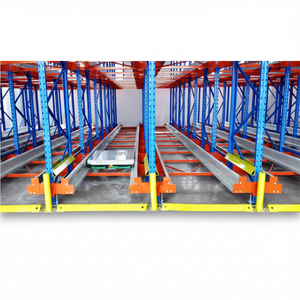
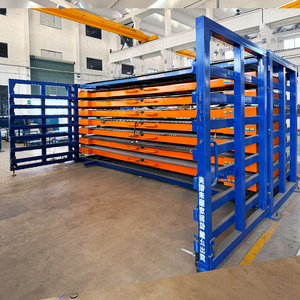
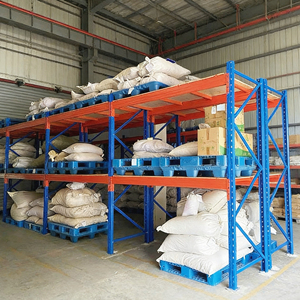
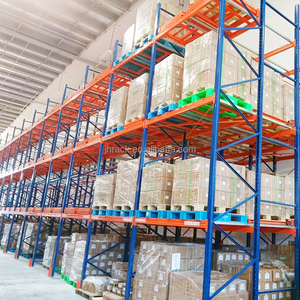
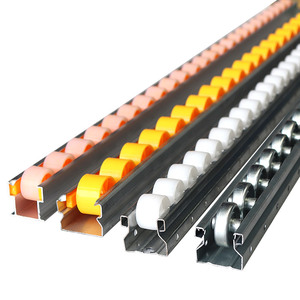
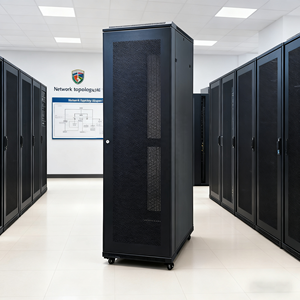
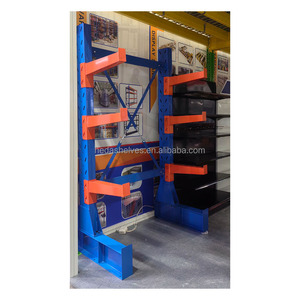
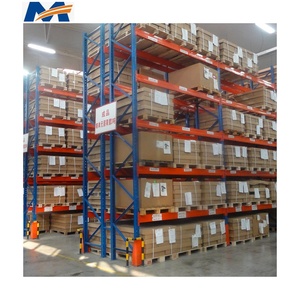
Kinematics & Structural Mechanics of Gravity-Fed Pallet Flow Systems
Pallet flow rack storage systems—commonly classified in dynamic material handling engineering as gravity flow racking—represent the pinnacle of high-density First-In, First-Out (FIFO) intralogistics. By utilizing dedicated loading and retrieval faces separated by an inclined roller conveyor bed, pallet flow eliminates intra-storage forklift transit aisles, condensing pallet storage footprints by up to 60% compared to standard selective racking architectures.
The operational core of an industrial-grade pallet flow rack relies on carefully calculated gravitational physics, mechanical resistance controls, and energy dissipation mechanisms. Pallets move along inclined roller tracks engineered at an exact gradient angle—typically calibrated between 2.5% and 4.0% (1.4° to 2.3°) depending on the static tare weight, runner structural profile, and base deflection of wooden, composite, or high-density polyethylene (HDPE) plastic pallets.
Centrifugal Speed Controllers
Internal geared governor brakes generate counter-resistive friction directly proportional to pallet velocity, preventing unchecked downhill kinetic momentum regardless of load variance ranging from 300 kg to 2,000 kg.
Mechanical Pallet Separators
Automatic separation latches physically isolate the forward discharge pallet from subsequent upstream line-load pressure, eliminating backpressure friction so forklifts can disengage pallets safely without rack binding.
Entry Guide & Exit Trays
Heavy-gauge tapered entry guides center pallets automatically at the charging face, while spring-cushioned hydraulic or mechanical stops at the discharge ramp arrest final motion without jarring payload contents.
High-Density Storage Topology: Pallet Flow vs. Alternative Racking Systems
Logistics directors and procurement engineers face complex capital expenditure (CAPEX) versus operational expenditure (OPEX) trade-offs when optimizing warehouse volumetric utilization. The table below delineates kinematic, geometric, and throughput differences across major storage modalities:
| Storage Topology | Rotation Logic | Aisle Surface Area | Volumetric Density | Handling Speed / Cycle | Pallet Selectivity | Relative CAPEX / Position |
|---|---|---|---|---|---|---|
| Pallet Flow Rack (Gravity FIFO) | Strict FIFO | < 20% (Charge/Pick only) | Extremely High (85%+) | Rapid (Autonomous roll) | Lane-based (1 SKU / Lane) | Medium-High |
| Selective Pallet Racking | FIFO or LIFO | 50% - 60% (Every bay accessible) | Low (35% - 45%) | Direct but requires transit | 100% Direct Immediate | Low |
| Drive-In Racking | Strict LIFO | 15% - 25% | High (70% - 75%) | Slow (Forklift drives in) | Poor (High honeycombing) | Low-Medium |
| Push-Back Cart Racking | Strict LIFO | 25% - 30% (Single aisle) | High (70% - 75%) | Moderate (Forklift push) | Lane-based (2-6 deep) | Medium |
| Radio Shuttle Automation | FIFO or LIFO | 15% - 20% | Extremely High (85%+) | Fast (Battery shuttle) | Batch / Channel-based | High (Electrical + Steel) |
Note: Data based on standard 10,000 m² distribution center models operating standard 1000x1200mm industrial pallets with 1,000 kg net payload weight.
Future Procurement Trends in Industrial Storage Systems
How multinational 3PL operators, cold chain cold-stores, and automated distribution hubs are structuring their factory-direct Chinese racking procurement over the next five years.
Autonomous Forklift & AMR Integration
Global fulfillment centers are transitioning from manned counter-balance trucks to Autonomous Mobile Robots (AMRs) and Automated Guided Vehicles (AGVs). Pallet flow loading and unloading stations require millimetric structural tolerances (±1.5mm tolerance on guide rails and front stop plates) and integrated optical retro-reflective target sensors.
Cold Chain Decarbonization Mandates
With electrical power consuming up to 65% of refrigerated warehouse operating budgets, pallet flow systems are surging in popularity across sub-zero blast freezers (-25°C to -35°C). By eliminating wasted overhead air volume and maintaining strict FIFO expiration integrity for dairy, salmon, and pharmaceutical biologics, energy consumption per pallet drops by 32%.
Low-Carbon Green Steel Sourcing
European and North American procurement compliance increasingly enforces Scope 3 carbon tracking (CBAM framework). Enterprise purchasers are demanding documented Environmental Product Declarations (EPD) from Chinese manufacturers utilizing electric arc furnace (EAF) low-carbon steel alongside non-toxic, VOC-free thermoset powder coating polymers.
Direct Factory Engineering Collaboration
Buyers are bypassing regional middlemen in favor of direct engineering engagement with OEM/ODM Chinese facilities. Utilizing Building Information Modeling (BIM) Revit files, finite element analysis (FEA), and real-time factory video QC tracking, lead times drop from months to weeks while eliminating distributor markups.
Technological R&D Vectors Transforming Pallet Flow Racking
As warehouse throughput velocities accelerate, traditional static gravity flow racks are adopting active and passive mechatronic innovations. Chinese manufacturers at the forefront of intralogistics R&D are integrating the following core advancements into contemporary gravity lane fabrication:
Zero-Pressure Accumulation Braking
Next-generation magnetic eddy-current brake rollers offer contact-free deceleration. Because they eliminate friction pads and internal planetary gear assemblies, operational service life increases fourfold in abrasive or humid cold-store atmospheres without mechanical brake wear.
Smart IoT Flow Lane Monitoring
Micro-sensor rollers powered by kinetic energy harvesting track rolling speeds, pallet dwell intervals, and lane congestion. Wireless signals interface with warehouse management systems (WMS) to prevent lane blockages and verify real-time SKU pick-face replenishment levels.
Multi-Pallet Adaptability Rollers
Proprietary dual-track split-roller architectures engineered from self-lubricating nylon composites allow mixed-pallet fleets (wooden Euro-pallets, perimeter-base CHEP pallets, and plastic export pallets) to traverse the same gravity lane without track modification or derailment risks.
Factory-Direct Engineering Authority from Guangzhou, China
Supplying high-capacity logistics infrastructure across South America, Europe, Africa, and Southeast Asia since 2001.
Guangzhou Heda Shelves Co., Ltd.
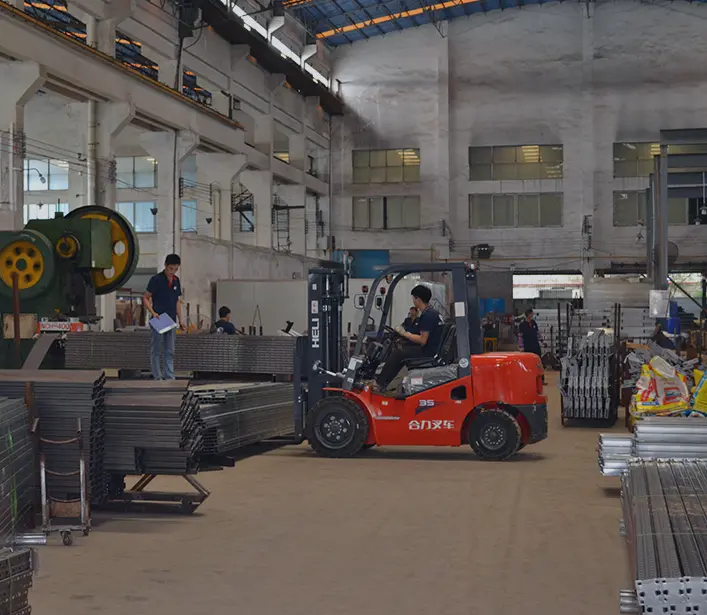
Established in 2001, Guangzhou Heda Shelves Co., Ltd. operates a premier 30,000 square meter integrated manufacturing facility staffed by over 300 technical engineers, production technicians, and structural specialists. We maintain an independent monthly fabrication capacity of 30,000 tons of structural cold-rolled steel racking systems.
Our export operations encompass comprehensive turn-key engineering: from site structural analysis factoring regional seismic acceleration forces (Chile NCh 2369, Peru E.030, Colombia NSR-10) to multi-tier containerized load optimization plans that protect electrostatic powder-coated finishes during 45-day ocean transit cycles.
- CE Certified (No. 2435-CPR-8605159)
- ISO 9001:2015 (No. 18624Q00169R0M)
- Automated Column Punching & Roll Forming
- Pickling & Phosphating Pre-treatment
- Free 3D Layout & CAD Load Analysis
- Full OEM/ODM Global Brand Support
Frequently Asked Questions for Pallet Flow Procurement
Crucial technical, freight, and mechanical inquiries answered directly by our senior structural engineering team.
Q What determines the optimum pitch slope for a pallet flow lane?
Pitch slope is governed by pallet bottom geometry, surface friction coefficient, and payload deflection. Standard European wooden pallets (DIN 13698-1) perform ideally at an inclination gradient between 3.0% and 3.5% (approx. 1.7° to 2.0°). Flexible plastic pallets or heavy wooden skid runners exhibiting high bottom deflection require a slightly steeper 3.8% to 4.0% slope to overcome initial starting inertia without stalling.
Q How does cold storage (-30°C) impact roller mechanisms and steel coatings?
Sub-zero freezer environments compromise standard bearing grease and induce steel embrittlement. For cold-chain flow racking, we specify Q355D structural low-temperature impact steel, low-temperature synthetic silicon bearing lubricants rated down to -40°C, and hot-dip galvanized or specialized zinc-rich epoxy powder coatings to prevent condensation micro-corrosion during seasonal defrosting cycles.
Q How do you prevent dynamic runaway pallets in lanes exceeding 10 pallets deep?
In ultra-deep gravity lanes (up to 20 pallets deep), we deploy calibrated centrifugal speed controller brake rollers spaced at calculated 1-pallet intervals (approx. every 1.2 to 1.4 meters). These brakes engage centrifugally, applying proportional frictional resistance whenever roller rotation exceeds 0.25 m/s, maintaining safe uniform descent velocity across the entire track length.
Q Can your pallet flow racking conform to local seismic building codes?
Yes. Our in-house structural engineers calculate baseplate cross-sections, anchor bolt embedment depths, and horizontal X-bracing shear resistances based on site-specific seismic coefficients (such as USGS peak ground acceleration parameters, Chilean NCh 433/2369, Peruvian E.030, or Colombian NSR-10). Complete structural calculation packages are provided for municipal engineer verification.
Q What is the factory lead time for a 5,000-pallet position flow rack system?
Backed by our 30,000-ton monthly manufacturing capacity, standard fabrication for a 5,000-pallet dynamic flow project is completed in 3 to 4 weeks following final approval of CAD shop drawings. Fabrication batches are coordinated directly with oceanic shipping schedules to facilitate continuous container stuffing and direct pier departure.
Q How are delicate goods protected when pallets impact the discharge stop plate?
Discharge points incorporate engineered kinetic energy absorption mechanisms. We install polyurethane-faced mechanical stop plates, hydraulic cushioning cylinders, or mechanical separation disconnectors. The separator holds back all trailing pallets 400mm behind the lead pallet, completely eliminating line pressure and secondary impact shocks on fragile cargo.
Q What documentation is provided for international customs customs clearance?
As a global exporter, we provide verified Commercial Invoices, Packing Lists with volumetric container distribution data, Bills of Lading, Certificates of Origin (Form E, Form A, or RCEP where applicable), CE declarations of conformity (EN 15512), mill test certificates (MTC) for steel raw materials, and comprehensive numbered component installation diagrams.
Q How does HEDA support on-site installation for overseas projects?
Every shipment is packaged with color-coded and numbered components matching CAD architectural layout blueprints. We supply detailed 3D step-by-step assembly manuals, high-definition installation video tutorials, and live engineer remote video support. For major projects exceeding 10,000 positions, bilingual field installation supervisors can be dispatched on-site.
Accelerate Your Warehouse Volumetric Throughput Today
Submit your warehouse architectural floor plans, ceiling clearance heights, and pallet load profiles. Our structural engineering department will prepare a complimentary 3D layout rendering, kinematic dynamic lane analysis, and comprehensive factory-direct quotation within 24 business hours.