Engineered Heavy Duty Warehouse Shelving & Racking Systems
From single-bay selective configurations to automated four-way shuttle high bays, explore factory-direct storage frameworks custom manufactured to ISO 9001:2015 and CE standards.
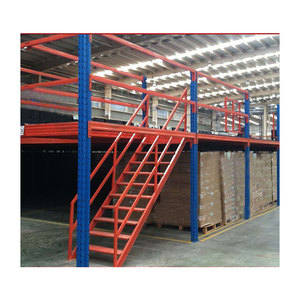
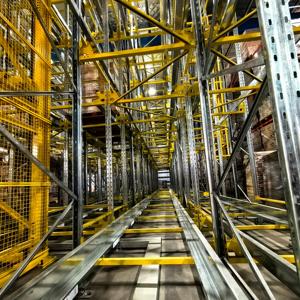
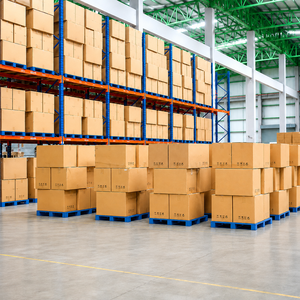
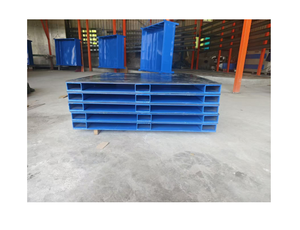
Technical White Paper: Strategic Heavy Duty Racking Sourcing from China
Modern global logistics centers, high-throughput fulfillment hubs, and temperature-controlled cold facilities operate under razor-thin margin constraints and strict safety mandates. Sourcing warehouse racking systems directly from premier Chinese manufacturing facilities is no longer simply an exercise in unit-cost minimization; it has evolved into a strategic engineering collaboration. Decision-makers in corporate supply chains, structural logistics design, and wholesale distribution networks demand uncompromising structural integrity, seismic engineering compliance (such as RMI MH16.1, FEM 10.2.02, and AS4084 standards), and seamless lifecycle adaptability.
1. Metallurgy & Structural Engineering Standards
At the center of industrial racking performance is steel metallurgy. Premium Chinese export manufacturing relies primarily on continuous-cast hot-rolled or cold-rolled strip steels under the national GB/T standards, with Q235B and Q355B serving as foundational structural grades. These steels correlate directly with European S235JR and S355JR as well as ASTM A36 and A572 Grade 50. In heavy-load applications exceeding 3,000 kg per beam level or high-bay installations stretching over 12 meters vertically, material yield point (σs) and ultimate tensile strength (σb) are paramount.
Cold-formed steel structural sections exhibit non-uniform residual stress distributions along punch perimeters and roll radii. Leading engineering methodologies calculate the effective width of thin-walled uprights in accordance with Eurocode 3 (EN 1993-1-3) and Australian AS 4084 specifications, accounting for local buckling, distortional buckling, and flexural-torsional buckling modes under peak dynamic seismic accelerations.
| Structural Parameter | Standard Commercial Grade | Export Heavy Duty Spec (HEDA Standard) | High-Seismic & Cold Chain Spec |
|---|---|---|---|
| Base Steel Metallurgy | Commercial Q195 / Q215 | Certified Q235B (Yield ≥ 235 MPa) | Micro-alloyed Q355B / Q355D (Impact test -20°C) |
| Upright Column Profile | 80×60 × 1.5mm standard | 90×70 / 100×70 / 120×95 × 2.0–2.5mm | 120×95 × 2.75–3.0mm with heavy bracing |
| Beam Deflection Limit | 1/180 of clear span | ≤ 1/200 under 100% nominal load | ≤ 1/250 to prevent automated shuttle jamming |
| Surface Protection | Manual spray paint (30–45μm) | Electrostatic thermoset epoxy-polyester (60–80μm) | Hot-dip galvanizing (≥ 65μm) or duplex coat |
| Safety Factor | 1.35 : 1 | 1.50 : 1 (Compliant with FEM 10.2.02) | 1.65 : 1 (Compliant with AS4084 / RMI MH16.1) |
2. Advanced Surface Treatment & Environmental Resilience
Racking systems deployed across equatorial coastal terminals, humid regional consolidation nodes (such as Santos, Guayaquil, or Manila), or harsh -30°C blast freezers face rapid oxidative stress. Premature coating delamination compromises beam-to-frame connector safety and accelerates micro-cracking across high-stress weld toes. A world-class Chinese supplier mitigates this risk through a closed-loop pre-treatment process:
Degreasing is followed by deep acid pickling to strip mill scale, high-pressure cascade water rinsing, and zinc-manganese phosphating that passivates the cold-formed surface. Powder application is performed inside positive-pressure automated booths utilizing electrostatic corona charging guns, delivering an even 60 to 80-micron coating that cures in a 200°C convection oven. This finish achieves superior cross-hatch adhesion (DIN EN ISO 2409 Class 0) and salt-spray resistance exceeding 500 hours without red rust initiation.
Future Procurement Trends in Warehouse Storage (2026–2030)
Strategic supply chain directors must balance floor space economics, automated guided vehicle (AGV) interfaces, and carbon sustainability metrics.
ASRS Hybrid Modularization
Static warehousing is giving way to hybrid infrastructure. Pallet racks must now be engineered to accommodate autonomous mobile robots (AMRs), automated storage and retrieval systems (ASRS), and top-running cranes with sub-millimeter beam deflection tolerances.
Inquire NowCold Chain & High-Cube Density
Driven by the global boom in fresh agricultural exports, biopharma, and quick-frozen meats, energy consumption per cubic meter in refrigerated facilities has become a primary operational KPI. Four-way radio shuttle systems and compact drive-in configurations maximize refrigeration thermal efficiency.
Inquire NowSeismic Resilience Engineering
Warehouses located along the Pacific Rim seismic belt (Chile, Peru, California, Japan) require localized dynamic seismic simulations. Procurement contracts increasingly require finite element analysis (FEA) and oversized base plates anchored with Hilti or Fischer chemical studs.
Inquire NowGreen Steel & CBAM Compliance
European and North American supply chain audits now evaluate Scope 1, 2, and 3 embodied carbon. Direct-from-mill raw materials derived from electric arc furnaces (EAF) and non-toxic TGIC-free powder formulations are emerging as strict tender prerequisites.
Inquire Now
Product Engineering Trends: Next-Gen Industrial Storage Mechanics
As structural steel processing technology advances, pallet racking and industrial shelving are moving far beyond static stamped metal angles. At Guangzhou HEDA Shelves Co., Ltd., our R&D engineering department monitors and implements three primary structural shifts:
1. Progressive Multi-Bend Upright Geometry
Traditional racking columns relied on simple 8-fold or 10-fold profiles. Modern high-capacity systems leverage continuous cold-roll roll-forming tooling producing 12-to-16-bend closed and semi-closed omega shapes. Each additional localized fold acts as a stiffening rib, dramatically boosting column moment of inertia (Ix, Iy) while maintaining an optimal strength-to-weight ratio. This profile advancement prevents premature twist buckling during seismic events or severe forklift impact incidents.
2. Cladded Rack-Supported Buildings
Rather than erecting an independent warehouse building and subsequently installing freestanding racking inside, modern turnkey developments utilize the racking itself as the load-bearing superstructure. Wall purlins, thermal insulated roof cladding, and wind bracing connect directly to the rack frame matrix. This eliminates internal building columns, cuts construction schedules by up to 35%, and optimizes internal storage density.
3. Smart Sensor-Integrated Impact Monitoring
Forklift impacts account for over 85% of rack collapses globally. Next-generation systems integrate IoT strain-gauge accelerometers and visual collision deflection collars along bottom uprights. If a critical impact exceeds the plastic deformation threshold of the steel column, local warehouse management software triggers an immediate visual warning and isolates that bay, preventing cascading structural failures.
Why Global Importers Partner with Guangzhou HEDA Shelves
Headquartered in Guangzhou since 2001, we deliver single-source structural accountability across heavy fabrication, layout engineering, and international port delivery.
25+ Years Industrial Hegemony
Founded in 2001, HEDA Shelves operates a state-of-the-art 30,000 m² automated production facility equipped with high-speed continuous roll-forming lines, computerized multi-station stamping presses, and robotic welding clusters.
30,000 Tons Monthly Capacity
With massive throughput capabilities, standard production lead times are maintained within 2 to 4 weeks after engineering drawing signoff. Large-scale phased developments ship on tight schedule batches to align with global logistics windows.
Complimentary 3D & CAD Layouts
Supply your warehouse blueprint, clear eaves height, pallet specifications, and forklift turning radius. Our in-house structural engineers return full 3D CAD architectural renderings and static load calculations within 24 business hours at zero cost.
Fully Certified Export Reliability
Rigorous adherence to CE Certificate No. 2435-CPR-8605159, ISO 9001:2015 management systems (No. 18624Q00169R0M), and non-toxic RoHS-compliant coating specifications gives our partners complete peace of mind for tender submissions.
10-Stage Precision Manufacturing Protocol
Quality consistency in high-bay structures is achieved through controlled fabrication automation. Every order passing through HEDA's production floor is managed through our proprietary 10-step quality assurance chain:
Raw Material Ingot & Coil Verification
Spectral metallurgy verification and ultrasonic flaw scanning on all Q235B/Q355B strip steel coils arriving from certified primary domestic mills. Mill test certificates (MTC) archived per batch.
Precision CNC Shearing & Slitting
Automated slitting units process master steel coils to precise strip widths with tight dimensional tolerances (±0.1mm), eliminating downstream roll edge binding.
Continuous Automated Column Punching
Synchronous multi-die hydraulic press punching ensures uniform 50mm, 75mm, or 76.2mm pitch holes with razor-sharp tolerances across upright structural lengths up to 14 meters.
Progressive Cold-Bend Forming
A series of up to 24 progressive roll stands gently shapes the flat punched strip into multi-flanged columns, maintaining uniform grain structure and material yield strength.
Interlocking Box-Beam Profile Forming
Dual C-channels are interlocked under pressure and continuously resistance-welded into composite step or box beams, providing exceptional torsional rigidity under distributed pallet loads.
Edge Polishing & Weld De-burring
Automated mechanical deburring and shot finishing smooth all sharp edges, laser holes, and cut perimeters to eliminate laceration hazards and ensure comprehensive coating adhesion.
Robotic Weld Clustering
Multi-axis robotic arms weld beam-end 3-claw or 4-claw connector brackets using shield-gas metal arc welding (GMAW), creating full-penetration joints certified crack-free.
Chemical Pickling & Zinc Phosphating Pretreatment
Complete immersion across acid pickling baths to strip mill scales, followed by alkaline neutralization, DI rinsing, and an iron-free zinc phosphating stage for chemical bonding.
Automated Electrostatic Powder Coating
Reciprocating electrostatic spray heads deliver durable thermoset epoxy-polyester powder, followed by 200°C infrared bake ovens, producing a smooth, chip-resistant finish.
Deflection QC & Export Stacking Protection
Random destructive batch load tests verify beam deflection limits. Parts are bundled with corrugated wrapping, strapping bands, and corner protectors to ensure zero maritime moisture or abrasion damage.
Frequently Asked Questions for Global Racking Buyers
Get direct, transparent engineering and supply chain answers covering international ports, seismic certifications, and custom designs.
How does HEDA guarantee structural engineering compliance for international building codes? +
Can your racking systems be engineered for high-seismic zones such as Chile, Peru, or California? +
What is the standard production timeline and monthly export shipping capacity? +
What specific details are required to generate an engineered layout and price quotation? +
- Warehouse architectural CAD drawing or dimensions (Length, Width, Clear Height below roof beams/sprinklers).
- Locations of building columns, access roll-up doors, and floor expansion joints.
- Pallet dimensions (Width × Depth × Height including palletized cargo) and gross weight per pallet.
- Forklift model, minimum aisle turning radius (AST), and maximum mast lift elevation.
- Inventory flow preference (Selective 100% access, FIFO, or LIFO) and site environmental details (e.g., ambient vs. cold store).
How do you safeguard powder-coated surfaces and galvanized steel from transit damage? +
What installation support does HEDA Shelves offer for overseas projects? +
Ready to Maximize Your Warehouse Storage Density?
Connect directly with HEDA Shelves senior structural racking engineers today. Receive a complimentary 3D layout, static load calculations, and a transparent, factory-direct CIF/FOB export quotation within 24 hours.