Industrial Deep Pallet Racking Solutions
Explore our heavy-duty, engineered warehouse racking options engineered for maximum volumetric efficiency.
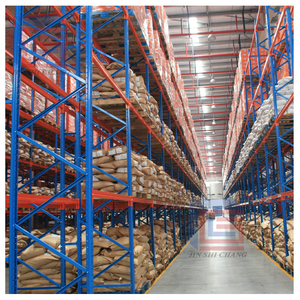
Manufacturer Steel Selective Pallet Rack For Warehouse Storage
View Specifications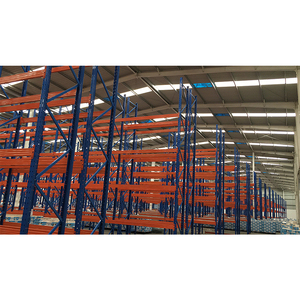
Industrial Warehouse Racking System With Heavy Duty Steel Pallet Rack Beams
View Specifications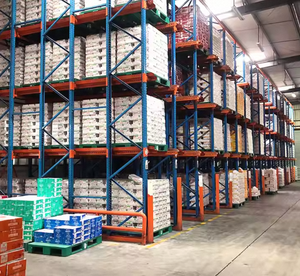
Heavy Duty Double Deep Selective Pallet Racking Drive-In Shelves Hot-Dip Galvanized
View Specifications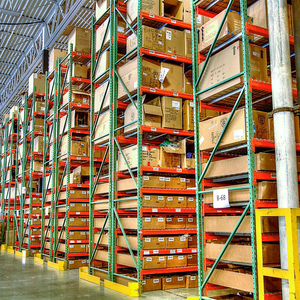
China Factory Direct Adjustable Pallet Stacking Double-Deep Storage Rack
View Specifications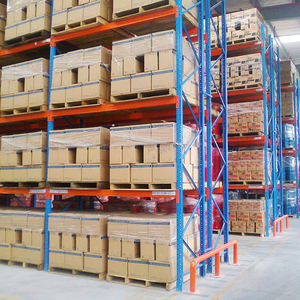
Combined Load-Row Connected Industrial Pallet Racking System 2000kg Steel
View Specifications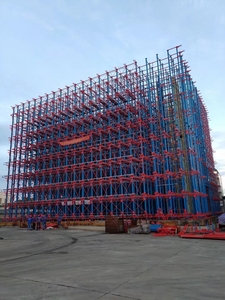
Pallet Shuttle Rack Deep Lane Storage and Retrieval System
View Specifications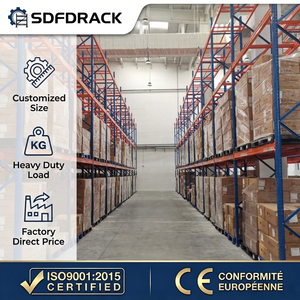
Customized High Load 1000kg-5000kg Industrial Selective Steel Pallet Racking
View Specifications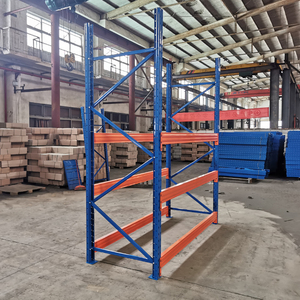
Heavy Duty Industrial Warehouse Selective Metal Steel Deep-Reach Pallet Rack
View Specifications1. Executive Summary: Spatial Economics & Engineering Physics of Deep Storage
In modern supply chain architecture, industrial real estate inflation combined with global urban land scarcity has made floor-space optimization a critical strategic driver. Traditional selective racking systems, while providing 100% immediate pallet accessibility, require approximately 60% of available warehouse square footage solely for forklift aisle circulation. For high-volume distribution centers, cold storage facilities, and manufacturing hubs, this spatial inefficiency directly compromises operational margins.
Deep Pallet Racking Systems—comprising Double-Deep, Radio Shuttle, Push-Back, and Drive-In configurations—solve this spatial dilemma by converting horizontal access aisles into usable structural storage volume. By extending pallet storage depths to 2, 4, or even 30+ pallets per lane, deep storage architectures increase warehouse floor space utilization from a standard 40% up to 85%.
SEO & Engineering Insight: Transitioning from standard single-deep selective racking to a engineered OEM Double-Deep or Radio Shuttle Deep Racking system yields an immediate 30% to 65% increase in total cubic storage density without expanding the physical building footprint.
2. Structural Architectures of Custom OEM Deep Racking Systems
As a premier direct-factory manufacturer, Guangzhou Heda Shelves Co., Ltd. designs and fabricates four distinct engineering variants of custom OEM deep pallet racking systems. Each variant addresses specific throughput dynamics, SKU profiles, and material handling equipment (MHE) constraints.
Double-Deep Pallet Racking
Stores pallets two-deep per aisle using specialized pantograph reach trucks. Achieves a 50% reduction in aisle requirements while preserving 50% direct SKU selectivity.
Radio Shuttle Deep Racking
Semi-automated deep lane system where self-propelled AGV shuttles move pallets internally up to 40+ pallets deep. Offers unmatched throughput speed and zero rack-impact risk.
Push-Back Cart Racking
Utilizes inclined rail systems with nested carts. As a new pallet is loaded, it pushes preceding pallets back up to 6 deep. Operates under a strict Last-In, First-Out (LIFO) model.
Technical Comparison of Deep-Lane Storage Engineering Systems
To guide procurement managers and supply chain directors, the matrix below details the mechanical and operational trade-offs across storage designs:
| Racking System Type | Storage Depth Range | Space Utilization Efficiency | Selectivity Degree | Inventory Management Model | Ideal SKU Profile |
|---|---|---|---|---|---|
| Selective Racking | 1 Pallet Deep | ~40% - 45% | 100% Immediate | FIFO (First-In, First-Out) | High SKU count, Low volume/SKU |
| Double-Deep Racking | 2 Pallets Deep | ~60% - 65% | 50% Immediate | LIFO / Batch FIFO | Medium SKU count, Medium volume |
| Drive-In Racking | 4 - 10 Pallets Deep | ~70% - 75% | Low (Per Lane) | LIFO Strict | Low SKU count, High uniform volume |
| Push-Back Cart System | 2 - 6 Pallets Deep | ~65% - 70% | Medium (Per Face) | LIFO | Medium SKU count, Fast turnover |
| Radio Shuttle System | 10 - 40+ Pallets Deep | ~80% - 88% | High (Automated) | Flexible FIFO & LIFO | Bulk distribution, Cold storage |
3. Guangzhou Heda Shelves Co., Ltd.: Enterprise OEM Manufacturing Advantage
Established in 2001, Guangzhou Heda Shelves Co., Ltd. has grown into a global leader in the design, FEA structural calculation, custom OEM manufacturing, and export of industrial warehouse racking systems. Operating a modern 30,000 square-meter production facility equipped with automated cold-roll forming lines, high-precision robotic welding, and automated powder coating systems, HEDA delivers structural steel racking solutions engineered to international standards (including European FEM 10.2.02, RMI, and ISO 9001:2015).
In-House OEM Engineering & Customization Spectrum
Unlike regional distributors or trading intermediaries, HEDA Shelves maintains complete quality control over the entire metallurgical and manufacturing workflow—from raw steel coil procurement down to final powder-coat curing. Our enterprise OEM advantages include:
- Certified Structural Steel Alloys: We utilize high-tensile Q235B and Q355B structural steel profiles, offering maximum yield strength, fatigue resistance, and deflection control under maximum rated load capacities up to 5,000 kg per beam level.
- Custom Roll-Formed Profiles: Cold-formed upright profiles featuring continuous teardrop, diamond, or omega punching options allow micro-step vertical pitch adjustments (e.g., 50mm, 75mm, 76.2mm) to match exact warehouse clear height specs.
- Seismic Zone Structural Engineering: Custom baseplate dimensions, anchor bolt configurations, and horizontal/diagonal frame bracing are custom-calculated for active seismic regions across South America (e.g., Chile NCh 2369, Peru E.030, Colombia NSR-10) and earthquake-prone global zones.
- Surface Pre-Treatment & Advanced Coating: All steel components undergo a multi-stage chemical surface preparation, including degreasing, acid pickling, and phosphating, followed by electrostatic epoxy-polyester powder coating (60–80 microns thickness) or Hot-Dip Galvanizing (HDG) for extreme moisture and sub-zero cold room environments.
4. Future Procurement Trends in Industrial Storage Racking (2025–2030)
The global warehouse logistics landscape is undergoing structural technology shifts. B2B procurement directors and warehouse operations managers must evaluate deep pallet racking investments not merely for current storage demands, but with a 10-year view toward automation and environmental sustainability.
A. Deep Integration with Autonomous Mobile Robots (AMRs) and AGVs
The future of deep pallet racking belongs to automated material movement. Traditional forklift-dependent double-deep and drive-in racks are increasingly giving way to Radio Shuttle AGV systems and AS/RS (Automated Storage and Retrieval Systems). Racking manufacturers are now required to fabricate channels with sub-millimeter tolerances to ensure autonomous shuttles navigate deep storage bays smoothly without optical sensor errors or mechanical track friction.
B. Cold Chain Energy Efficiency & Volumetric Maximization
With cold storage energy costs scaling exponentially, operating a refrigerated warehouse with low storage density is financially unsustainable. Deep pallet racking systems—specifically Hot-Dip Galvanized Radio Shuttle and Push-Back cart configurations—allow cold storage operators to achieve density rates above 80%, drastically reducing the refrigerated air volume per pallet stored and lowering thermal energy consumption per unit by up to 35%.
C. Sustainable Steel Procurement & Low-VOC Coating Standards
ESG (Environmental, Social, and Governance) compliance is expanding into industrial logistics infrastructure. Future procurement contracts prioritize racking manufacturers utilizing energy-efficient steel mills, fully recyclable Q355B structural steel, and non-toxic, zero-VOC powder coatings cured via heat-recovery ovens.
5. Frequently Asked Questions (FAQ) for Deep Racking Procurement
Double-Deep racking requires specialized Material Handling Equipment (MHE), specifically double-reach pantograph forklifts or tele-handler reach trucks equipped with telescopic forks. These forklifts extend their forks through the front frame to reach the second pallet position. Our HEDA engineering team reviews your forklift model's reach length, mast tilt, and load capacity curves during the initial CAD layout phase.
HEDA engineers utilize Finite Element Analysis (FEA) software to model structural stress under dynamic seismic accelerations. We customize upright frame profiles, increase baseplate surface thickness, integrate heavy-duty floor anchor bolts, and install cross-aisle and vertical plane bracing to comply with regional building seismic codes (e.g., Chilean NCh 2369, US RMI/ANSI MH16.1, or European EN 16681).
For refrigerated warehouses operating near freezing (0°C to +4°C) with low condensation, our high-durability electrostatic powder coating is ideal. However, for sub-zero deep freezer environments (-18°C to -30°C) or high-humidity coastal zones, we strongly recommend Hot-Dip Galvanized (HDG) steel components. HDG creates a thick zinc-iron alloy barrier that completely resists rust, flaking, and impact degradation caused by extreme thermal fluctuations.
With a monthly capacity of 30,000 tons, standard production cycles at HEDA Shelves take approximately 2 to 4 weeks following final 3D CAD layout approval. Direct ocean freight shipments from South China ports to major global ports (e.g., Santos, Valparaíso, Callao, Los Angeles, Rotterdam) range from 15 to 40 ocean transit days. Every shipment includes optimized container packing plans to maximize load space and prevent transit scratching.
Yes. Our team of senior structural logistics engineers provides comprehensive, complimentary 3D layout renderings, CAD floor plans, structural elevation drawings, and structural weight load calculations. Simply share your warehouse floor dimensions, clear ceiling height, pallet footprint/weight specs, and material handling preferences.
Partner with a World-Class OEM Racking Manufacturer
Optimize your warehouse volumetric density, lower landed storage costs, and receive a free 3D engineered layout with full FEA structural calculations within 24 hours.