High-Performance Industrial Steel Shelving & Racking Portfolio
Each racking configuration is precision-profiled to address distinct volumetric footprints, structural dynamic load requirements, and inventory cycle protocols. Discover our field-proven warehouse solutions manufactured under rigid CE and ISO 9001:2015 quality surveillance.
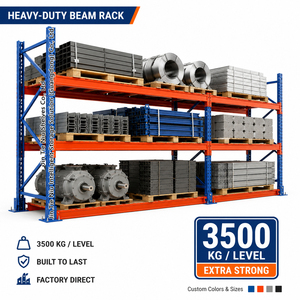
- Load Capacity: Up to 3,500 kg per level
- Profile: Reinforced heavy box beam geometry
- Application: Steel coils, electric motors, dies
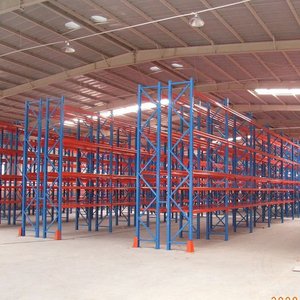
- Structure: 5-Tier adjustable beam pitch (50/75mm)
- Treatment: Pickling, phosphating, electrostatic coat
- Assembly: Interlocking bolt-free connector pins
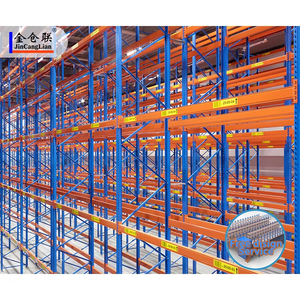
- System: Very Narrow Aisle (VNA) high bay
- Certification: CE No. 2435-CPR-8605159, ISO 9001
- Access: 100% direct selectivity for high SKU counts
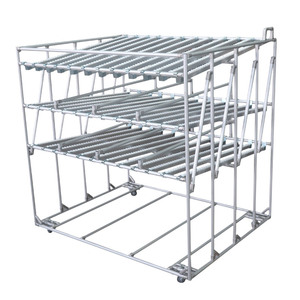
- Mechanism: Extruded aluminum gravity tracks
- Engineering: Ergonomic modular lean assembly
- Efficiency: 40% reduction in manual order picking
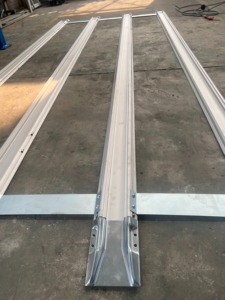
- Rotation: Guaranteed First-In-First-Out sequencing
- Rollers: High-density nylon/steel damped guides
- Industry: Cold-chain distribution, pharmaceuticals
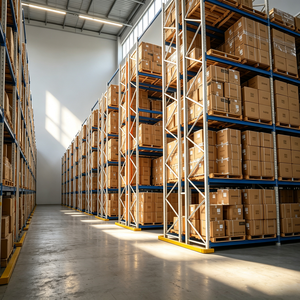
- Steel Grade: Certified high-tensile Q235B cold rolled
- Flexibility: Modular upright height adjustments
- Safety: 5-claw high shear connection locks
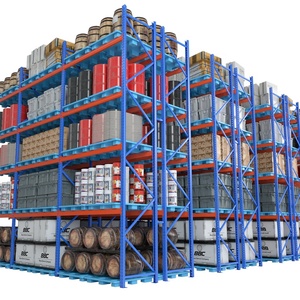
- Architecture: Multi-tier high-density vertical bay
- Optimization: Up to 85% vertical cubic utilization
- Compatibility: Counterbalance, reach & VNA trucks
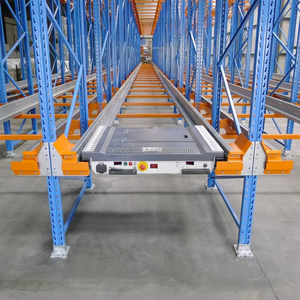
- Automation: Independent robotic carrier platform
- Lane Depth: Up to 40 pallets deep per storage lane
- Battery: Fast-charging industrial lithium iron pack
Enterprise Scale, Custom Engineering & Global Export Mastery
Founded in 2001, Guangzhou Heda Shelves Co., Ltd. has evolved into an international benchmark for structural steel racking fabrication. With full in-house cold roll-forming, laser profiling, and multi-tier robotic coating lines, we deliver OEM/ODM supply chain resilience to distributors, EPC contractors, and multinational third-party logistics (3PL) operators worldwide.
Finite Element Seismic Analysis
Every OEM racking structural calculation accounts for regional seismic coefficient profiles (e.g., Chilean NCh 2369, Peruvian E.030, Colombian NSR-10, European EN 15512). Upright cross-sections and heavy-gauge baseplates are dynamically verified via FEA simulation prior to mill rolling.
Continuous CNC Roll-Forming
Utilizing high-precision multi-stage rolling stations with automated in-line hydraulic punching, our upright omega profiles guarantee dimensional tolerance deviations under ±0.5mm across spans reaching up to 14 meters in a single continuous section.
Multi-Stage Surface Pretreatment
All fabricated structural members undergo rigorous 9-stage degreasing, pickling, neutralising, and phosphating washes prior to electrostatic high-adhesion powder application. Surfaces consistently pass 500-hour neutral salt-spray evaluations according to ASTM B117 protocols.
Export Container Load Optimization
Custom nestable packaging designs and modular upright stacking configurations maximize 40HQ ocean container volume up to 98% utilization, dramatically decreasing sea-freight landed unit costs while preventing surface abrasions over 45-day maritime transits.
Structural Metallurgy & Structural Mechanical Engineering Criteria
A rigorous examination of steel chemistry, column profile mechanics, and torsional stiffness limits required for fail-safe high-density logistics storage infrastructures.
Cold-Formed High-Yield Upright Frame Mechanics
Industrial steel shelving stability relies fundamentally on the post-buckling capacity of the vertical upright column. Unlike generic structural hot-rolled sections, high-bay uprights manufactured by Heda Shelves utilize prime cold-rolled steel conforming to GB/T 700 Q235B and high-yield Q355B (equivalent to ASTM A1011 SS Grade 50 and EN 10025-2 S355JR). The proprietary 13-fold omega profile creates localized stiffeners at the re-entrant corners, effectively suppressing local plate buckling under extreme axial load combinations.
Beam deflection ratios are stringently governed by the $L/200$ serviceability limit state under maximum design load (with an ultimate limit safety factor exceeding $1.65$). Beam connectors incorporate forged 3-, 4-, or 5-tooth claw brackets stamped from 3.5mm thick structural plate, creating high-moment frame rigidity ($K_b$) that eliminates torsional rotation during seismic cyclic loading.
| Engineering Attribute | Standard Grade (Q235B) | High-Tensile Grade (Q355B) |
|---|---|---|
| Yield Strength ($f_y$) | ≥ 235 MPa | ≥ 355 MPa |
| Tensile Strength ($f_u$) | 370 – 500 MPa | 470 – 630 MPa |
| Elongation at Break ($A_5$) | ≥ 26 % | ≥ 22 % |
| Deflection Limit (Beam Span) | $L / 200$ Standard | $L / 250$ Precision/Automated |
| Finish Options | Epoxy-Polyester Coat | HDG / Galvanized Zinc Coil |
Seismic Anchor & Base Plate Configuration
Baseplates are CNC-punched from 6.0mm – 12.0mm structural hot-rolled plate, paired with M12 – M16 high-grade mechanical expansion or chemical wedge anchors embedded to minimum depths of 120mm into C25/30 reinforced industrial concrete slabs.
10-Stage Precision Manufacturing Workflow
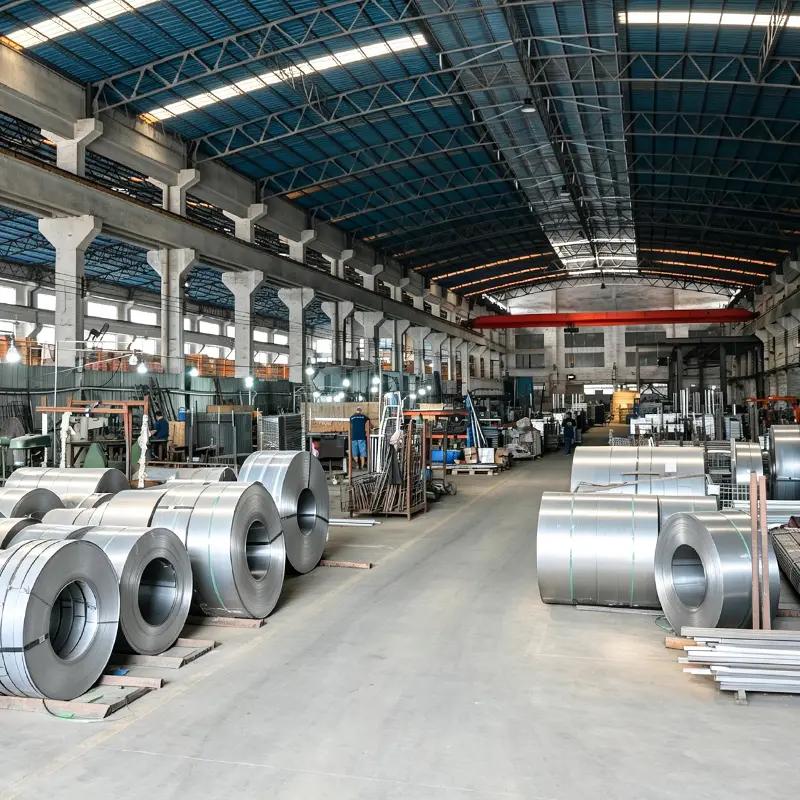
From chemical assay verification of incoming master coils to robotic bundle strapping, our 30,000 m² automated production floor executes millimeter-tight tolerances at every phase.
Raw Steel Assay
Spectrographic analysis of carbon, silicon, manganese, and phosphorus ratios in steel coils.
CNC Slitting
Continuous coil unrolling and precision longitudinal shearing within ±0.1mm tolerance.
In-Line Punching
Multi-station mechanical press punch blocks punch teardrop and diamond pitches at 50/75mm intervals.
Roll Forming
Progressive 20-stand roll-forming lines cold-form closed box beams and complex omega uprights.
Robotic Welding
6-axis robotic GMAW/MIG welding cells attach beam end-connectors with 100% seam penetration.
Shot Blasting
Mechanical wheel blasting cleans surface scale to Sa 2.5 cleanliness standard prior to wash.
9-Stage Wash
Degreasing, deoxidizing, zinc-phosphating, and deionized water rinsing tunnels ensure maximum adhesion.
Powder Coating
Automated Swiss Gema electrostatic guns deliver 60–90μm uniform thermosetting polymer layer.
Thermal Curing
Indirect gas-fired tunnel ovens cure coatings at 180°C–200°C for 25 minutes for ultimate cross-linking.
Export Staging
Edge protectors, shock-absorbent corrugated packaging, and heavy steel bundling for overseas transit.
Future Procurement Trends in Industrial Storage (2025–2030)
Global warehouse operators and commercial distributors are navigating shifting geopolitical supply lanes, heightened safety regulations, and rapid robotic integration. Discover the macro trends shaping industrial shelving procurement.
ASRS & Shuttle Readiness
Procurement teams are moving away from purely manual selective setups toward hybrid systems engineered with tight mechanical tolerances ($±1.0\text{mm}$) capable of accommodating automated 2-way and 4-way radio runner shuttles and micro-load AS/RS cranes without structural retrofits.
Certified Regional Compliance
Global buyers increasingly demand verified mill test certificates (EN 10204 Type 3.1) and verifiable adherence to localized building codes (e.g., American RMI MH16.1, Eurocode 3, Chilean NCh 433/2369) to fulfill insurer liability audits and commercial tenant safety covenants.
Low-Carbon & Galvanized Steels
Demands for hot-dip galvanized (HDG) and pre-galvanized high-yield strip steel are accelerating across cold-chain, pharmaceutical, and maritime port facilities. Buyers require closed-loop zero-VOC powder-coating applications that support LEED-certified green logistics park construction.
Total Landed Cost Efficiency
Unpredictable maritime container rates have made volumetric packing density paramount. Tier-one OEM suppliers that engineer structural components with interlocking nestability achieve up to 25% more steel weight per container, mitigating maritime freight cost inflation.
Technological Innovations in Modern Racking Production
How digital twins, high-speed fiber laser profiling, and automated structural monitoring are reshaping the lifespan and performance envelope of modern warehouse racks.
IoT Dynamic Load Telemetry
Modern mega-fulfillment centers are beginning to implement integrated strain-gauge load cells at column baseplates. Real-time telemetry alerts facility directors to localized beam overloading or structural deflection beyond permissible $L/200$ thresholds before micro-fractures occur.
Fiber-Laser 3D Notching
Replacing traditional rotary punching dies with high-wattage 3D multi-axis tube laser cutters enables custom beam connector slots, cut-outs, and miter-joints with zero burrs, reducing manual deburring labor and ensuring pristine robotic weld pools with zero thermal distortion.
Digital Twin CAD/BIM Layouts
Building Information Modeling (BIM) level-of-development (LOD) 300 to 400 models are now delivered prior to manufacturing. This integration ensures our structural frames precisely align with overhead sprinkler loops, HVAC ducts, LED fixtures, and floor slab joints without field clashes.
Advanced Polymeric Powder Resins
Next-generation carboxylated polyester and polyurethane powder coatings formulated with micronized PTFE provide exceptional scratch resistance during repeated pallet forklift entry, doubling the cosmetic and anti-corrosive service life of upright frames in humid distribution hubs.
Frequently Asked Questions on OEM Shelving & Racking Procurement
Comprehensive technical and logistical answers designed to assist supply chain managers, structural consultants, and warehouse procurement executives.
What specific steel grades are utilized for cold-rolled uprights and load beams?
We source prime hot-rolled and cold-rolled coil steels strictly meeting GB/T 700 Q235B (yield strength ≥ 235 MPa, tensile strength 370–500 MPa) and high-strength Q355B (yield strength ≥ 355 MPa, tensile strength 470–630 MPa). These conform structurally to ASTM A1011 and European EN 10025-2 S355JR standards. Every coil delivery is cross-verified via Mill Test Certificates (MTC) for precise chemical composition (C ≤ 0.20%, Mn ≤ 1.4%, S ≤ 0.045%, P ≤ 0.045%) and subjected to mechanical tensile tests in our internal metallurgical testing lab.
How does Heda Shelves calculate and engineer for severe seismic zone conditions?
Our structural engineering division includes registered civil and mechanical engineers specialized in seismic warehouse dynamics. We incorporate project-specific ground acceleration values ($S_s, S_1$), soil classification coefficients, and building importance factors per Chilean NCh 2369 / NCh 433, Peruvian E.030, Colombian NSR-10, or American ASCE 7 / RMI MH16.1. We dynamically resize baseplate dimensions, enlarge gusset stiffeners, utilize heavy-wall bracing channels, and prescribe high-tensile chemical wedge anchors to withstand dynamic cyclic ground reversals.
What surface finishing options are available for humid, coastal, or sub-zero facilities?
For standard dry indoor ambient distribution centers, our 9-stage electrostatic polyester powder coating delivers a resilient 60–90μm thick finish passing 500-hour salt spray testing. For high-humidity coastal ports (e.g., Santos, Callao, Guayaquil) or sub-zero refrigerated cold storage (-25°C to -30°C), we recommend batch hot-dip galvanizing (HDG) to EN ISO 1461 specifications (≥ 70–85μm zinc layer thickness) or pre-galvanized high-yield steel sheet fabrication, which provides sacrificial cathodic rust protection even if surface scratches occur.
What information is required to generate a complimentary 3D layout & structural proposal?
To deliver an engineered 3D layout, CAD drawing, and structural load calculation within 24 to 48 hours, our engineering department requires: (1) Architectural floor plan indicating clear ceiling height, column grid positions, dock doors, and floor obstructions; (2) Pallet specifications including overall width, depth, height, and maximum gross weight per pallet; (3) Material handling equipment (forklift) type, minimum aisle turning radius, and maximum mast lift reach; (4) Required SKU throughput rotation (FIFO vs LIFO); (5) Project location for regional seismic acceleration indexing.
How are components packed and staged to prevent transit damage in ocean containers?
Structural components undergo dedicated bundling protocols: Uprights are nested in high-density bundles separated by corrugated buffer strips, bound with heavy-duty polyester strapping, and wrapped in water-resistant plastic stretch film. Beam connectors are fitted with heavy corner guards. Small hardware items (safety locking pins, anchor bolts, shims, row spacers) are packed in reinforced wooden crates labeled with component part numbers matching the supplied assembly blueprints.
What factory quality inspection documentation accompanies export consignments?
Every commercial export order includes a comprehensive quality assurance dossier: (1) Mill Test Certificates (MTC) proving raw steel physical and chemical conformity; (2) Paint adhesion test reports (cross-hatch adhesion per ISO 2409); (3) Magnetic induction coating thickness measurement logs; (4) Dimension tolerance inspection sheets; (5) Certificate of Conformity for CE Certificate No. 2435-CPR-8605159 and ISO 9001:2015 registration. Pre-shipment video inspection and third-party audits (SGS, TÜV, Bureau Veritas) are regularly facilitated.
How is installation managed and validated across international warehouse sites?
Every shipment is delivered with step-by-step CAD installation shop drawings, bolt torque specifications, anchor hole drilling depths, and clear sequence charts. For most international projects, local mechanical installation contractors execute the assembly under direct remote video guidance from our senior engineering department. For high-density projects exceeding 5,000 pallet positions, automated shuttle racking, or structural mezzanines, on-site commissioning engineers can be dispatched to oversee alignment, plumbness, and torque verification.
What are standard manufacturing lead times and production capacities for large-scale tenders?
Backed by our 30,000 square meter production facility and 30,000-ton monthly fabrication throughput, standard selective pallet racking orders (1 to 5 forty-foot containers) ship within 14 to 21 business days following final CAD layout sign-off. Large-scale distribution center fit-outs (20 to 100+ containers) or customized multi-tier structural mezzanine projects are scheduled in phased production batches matching your site general contractor's construction timeline.
Ready to Engineer Your High-Efficiency Warehouse Storage System?
Connect directly with our senior structural racking engineers today. Receive a complimentary 3D layout, CAD structural drawing, and detailed container load calculation tailored to your facility parameters within 24 hours.